How Much to Tip a Louisiana Deer Guide
It's a question that many hunters, especially those new to guided experiences or visiting a new state like Louisiana, grapple with: "How much should I tip my deer guide?" You want to show appreciation for their hard work and expertise, but figuring out the appropriate amount can feel like navigating a swamp in the dark. This guide is here to shine a light on the etiquette of tipping deer guides in the Bayou State, ensuring you leave both your guide and yourself feeling good about the hunt.
Understanding the Role of Your Louisiana Deer Guide
Before we dive into the numbers, it’s crucial to understand just how much effort and investment goes into being a good deer guide, especially in a state like Louisiana with its diverse and challenging terrain. From the dense bottomlands of the Atchafalaya Basin to the piney woods of Kisatchie, our guides are constantly working to put you on game.
Beyond the Call: What Guides Really Do
Your guide isn't just there to point you towards a deer stand and wish you luck. Their job starts long before you ever set foot in camp. They spend countless hours scouting the property, identifying bedding areas, travel corridors, and prime feeding locations. This involves early mornings and late nights, pouring over maps, checking trail cameras, and enduring mosquitos and humidity to understand deer movement. A good guide knows the land like the back of their hand, whether it's understanding the nuances of a Hunting the Rut in the Early-Start Areas or pinpointing where bucks might be Where Atchafalaya Basin Bucks Bed.
Then there's the physical labor. They're often the ones hanging stands, clearing shooting lanes, and maintaining access trails. When you arrive, they're typically up before you, getting breakfast ready, transporting you to and from your hunting spot, and making sure all your gear is in order. If you're lucky enough to harvest a deer, they'll be right there to assist with tracking, Field Dressing a Deer in Warm Weather, and getting it back to camp for processing. This isn't just a job; for many, it's a lifestyle and a passion.
The Investment Guides Make
Think about the sheer amount of resources a guide invests. There's the cost of their hunting licenses, guide certifications, and often liability insurance. They spend significant money on fuel for trucks and ATVs, maintenance for their vehicles, and high-quality optics, calls, and other gear that might aid your hunt. Many guides also lease extensive tracts of private land, which can be a substantial annual expense, or invest heavily in developing relationships for access to prime hunting areas.
Their knowledge base is also a huge investment. Years of experience hunting in specific Louisiana Deer Hunting Area by Area or Hunting the Tensas River Basin provide them with an invaluable understanding of local deer behavior, weather patterns, and how to adapt tactics on the fly. This expertise isn't something you can just pick up overnight; it's honed over seasons of trial and error. When you're asking Questions to Ask Before Booking a Louisiana Hunt, their answers reflect this deep well of experience.
Standard Tipping Etiquette for Deer Hunts
So, what's the general expectation when it comes to tipping? While there's no hard-and-fast rule written in stone, there are widely accepted practices that help ensure your guide feels fairly compensated for their efforts.
The Typical Percentage Range
Most hunters in the industry suggest a tip that falls within a percentage of the total hunt cost. For deer hunts, a common range is 15% to 20% of the full package price. For instance, if your guided hunt cost a certain amount, a guide would typically expect a tip within that range. This percentage recognizes the comprehensive nature of their service, from pre-hunt preparations to post-hunt game recovery.
It's important to remember that this is a guideline. The exact amount can, and often should, fluctuate based on various factors. A basic day hunt might warrant a smaller total tip than an all-inclusive, multi-day lodge experience. Some guides or outfitters might even suggest a minimum tip, which should be communicated upfront if you're booking through platforms like BookYourHunt or GoHunt, where transparency is key.
Factors Influencing Your Tip Amount
While the 15-20% range is a good starting point, several elements can push your tip higher or keep it at the lower end of the spectrum. It's not just about harvesting a deer; it's about the overall experience.
Here’s a breakdown of factors to consider:
| Factor | Reasons for a Higher Tip | Reasons for a Standard or Lower Tip |
|---|---|---|
| Guide's Effort | Your guide went above and beyond: tireless scouting, multiple stand changes to match conditions, aggressive calling, helping with tracking a difficult blood trail, or recovering game from challenging terrain like a deep slough. They put in maximum effort regardless of deer activity. | Your guide did their job competently, but perhaps without exceptional effort. They put you in a stand, but didn't actively work to adapt to changing conditions or spent a lot of time on their phone. |
| Professionalism | Your guide was punctual, communicative, knowledgeable, and genuinely invested in your success and safety. They answered all your questions patiently and shared valuable insights about Louisiana Deer Herd Size or Hunting a Ridge-Top Saddle for Rutting Bucks. | Your guide was occasionally late, seemed disengaged, or lacked detailed knowledge. They might have been safe, but the overall professional demeanor was lacking. |
| Success & Quality | You harvested a trophy animal, or even just a deer you're incredibly proud of, and the guide's tactics were clearly instrumental. The guide provided excellent shot opportunities. | While a harvest isn't the sole determinant, if the guide repeatedly put you in stands with no sign or poor prospects, despite good deer numbers in the area, it might affect your perception of their effectiveness. |
| Hospitality | Beyond the hunt itself, the guide (and camp staff) made you feel welcome, comfortable, and well-cared for. This includes quality meals, clean accommodations, and a friendly atmosphere. Think about the warmth of Louisiana Deer Camp Traditions. | The accommodations were sparse, meals were mediocre, or the overall camp atmosphere felt unwelcoming. |
| Communication | The guide set clear expectations before and during the hunt, keeping you informed about deer movement, conditions, and plans. They checked in regularly and addressed any concerns promptly. | Communication was poor or inconsistent. You felt out of the loop, or your questions weren't fully answered. |
Ultimately, your tip is a reflection of your overall satisfaction with the guide's performance and your hunting experience.
When and How to Deliver Your Tip
The act of tipping itself also has its own etiquette. Timing and method are important to ensure your gesture is well-received.
The Right Time and Method
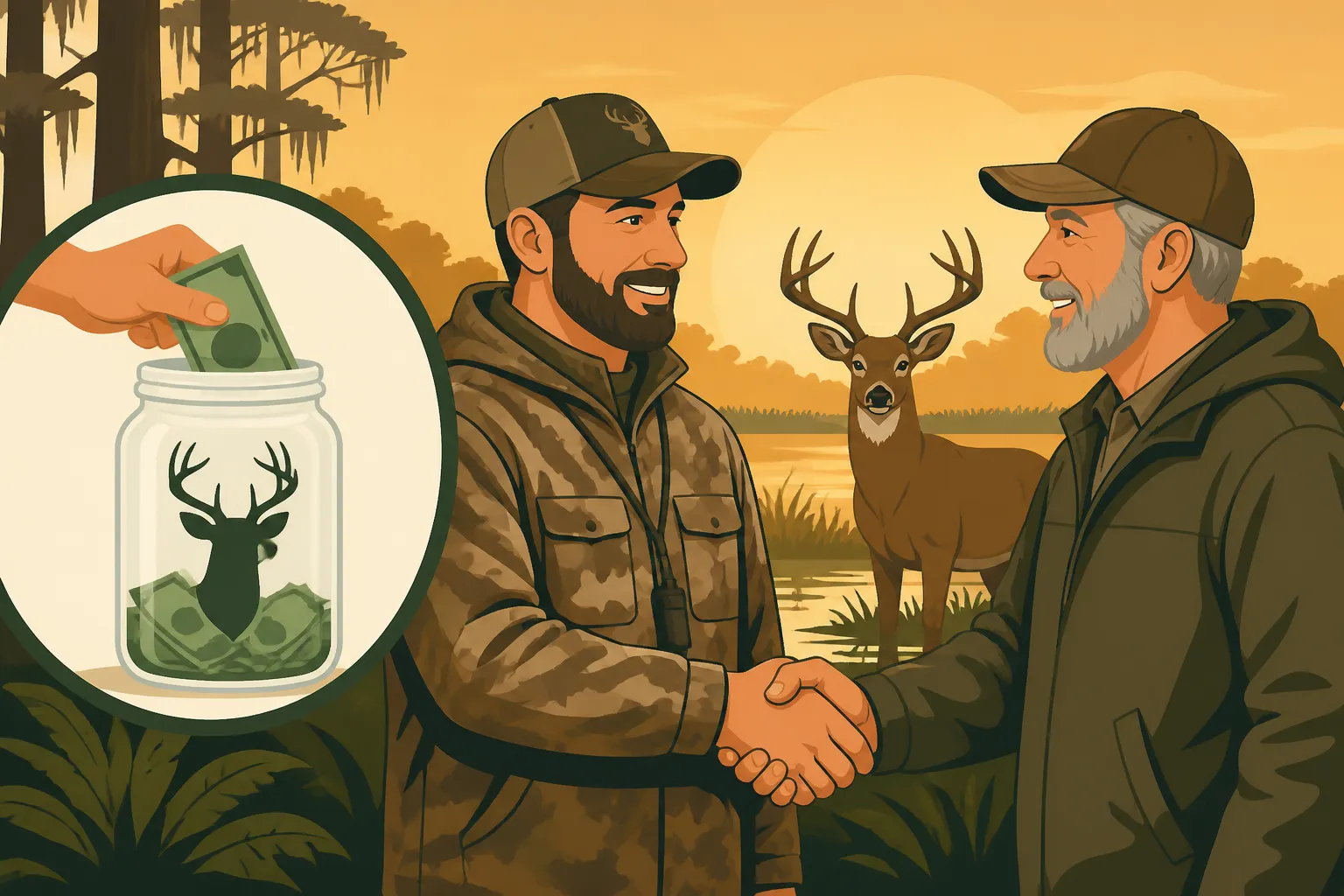
Generally, the best time to tip your guide is at the very end of your hunt, just before you depart. This allows you to experience the full scope of their service. Presenting the tip discreetly, in cash, is usually preferred. Cash is immediate, avoids any processing fees, and ensures the guide receives the full amount without delay. Slip it to them with a handshake and a heartfelt "Thank you for a great hunt" or "I really appreciate all your hard work."
Avoid making a big show of it or discussing your tip amount openly with other hunters unless you've already had a private conversation with your guide. This keeps things respectful and personal. If you've booked through a service like GoHunt, and they offer a way to add a tip post-hunt, that can be an option, but cash remains king.
Tipping Other Camp Staff
Often, a guided hunt isn't just about the guide; it's a team effort. If you're staying at a lodge, there might be cooks, housekeepers, or skinners who also contribute to your overall experience. These individuals work hard behind the scenes to make your stay comfortable, and their efforts deserve recognition.
Consider a separate tip for these staff members. A good rule of thumb for cooks might be a percentage of the total Lodge Accommodation and Meals cost, or a flat amount per day per hunter. For skinners or other support staff, a smaller, flat cash amount is usually appropriate. You can either give it directly to them or, if there's a designated "tip jar" or a clear instruction from the outfitter, follow that protocol. Don't overlook these folks; they are a vital part of the Louisiana Deer Camp Traditions that make your hunt memorable.
Navigating a Less-Than-Successful Hunt
Let's face it, hunting isn't always about punching a tag. Sometimes, despite everyone's best efforts, the deer just don't cooperate. This is where the tipping dilemma can feel most acute, but it's crucial to remember what you're actually tipping for.
Tipping for Effort, Not Just the Kill
This is perhaps the most important concept in hunting guide etiquette. You are tipping for the guide's effort, expertise, and dedication, not solely for the size of your harvest or even if you harvest at all. Weather can turn, deer can disappear, and sometimes, luck simply isn't on your side. A good guide will work tirelessly regardless of these external factors. If your guide busted their tail, adapted to tough conditions, and did everything in their power to give you opportunities, they've earned a good tip. They know the Louisiana Deer Harvest Records aren't always in their favor, but their commitment to your experience should be the primary consideration.
If you had a challenging hunt, perhaps experiencing Warm-Weather Sitting Strategy in Louisiana with no deer movement, but your guide was still engaging, knowledgeable about Hunting the Rut in the Long-Window Areas, and kept your spirits high, that effort is worth rewarding. It's about their performance in the face of adversity, not just the outcome of the hunt.
Communicating Expectations and Disappointments
If you genuinely feel that your guide's effort or professionalism was subpar, and it significantly detracted from your experience, it's okay to adjust your tip accordingly. However, this is a delicate situation. Before you make a decision, have a respectful and private conversation with the guide or, if applicable, the outfitter. Provide constructive feedback calmly and clearly, focusing on specific actions or lack thereof, rather than just the absence of a kill.
If you booked through a service like BookYourHunt or GoHunt, they often have review systems in place that allow you to provide feedback after your trip. This can be a valuable way to communicate your experience while also helping future hunters make informed decisions about Vetting a Louisiana Outfitter Before You Book. Remember, the goal is fair compensation and constructive improvement for the industry, not to create animosity. Most guides genuinely want you to have a great hunt and will appreciate honest, polite feedback.
Disclaimer
This article is for general informational purposes only and does not constitute professional advice. Laws, prices and regulations vary by location and change over time. Consult a qualified professional for guidance on your specific situation.