Run-and-Gun on Louisiana Public Land
There's nothing more frustrating than arriving at your carefully scouted deer stand on public land, sitting for hours, and seeing absolutely nothing but squirrels. Louisiana's public hunting lands are vast and often heavily pressured, making traditional sit-and-wait tactics incredibly challenging and sometimes downright unproductive. This guide will dive deep into the "run-and-gun" hunting philosophy, offering practical, boots-on-the-ground strategies to actively pursue game across Louisiana's diverse and demanding public tracts.
Understanding the Run-and-Gun Philosophy for Louisiana Public Land
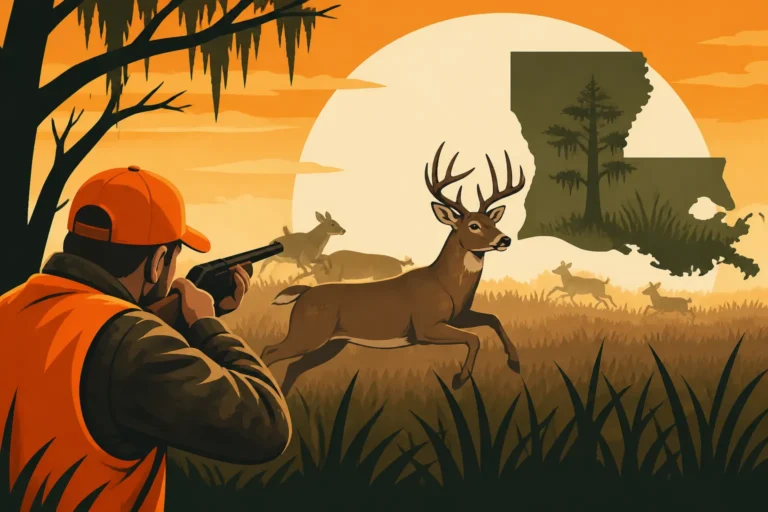
The traditional image of a hunter often involves patiently sitting in a tree stand or ground blind, waiting for game to come to them. While this can certainly be effective in certain scenarios, especially on private, managed lands, it often falls short on Louisiana's public hunting areas. Public land, by its very nature, sees more pressure, and game animals are almost always on the move, seeking refuge, food, or water. The run-and-gun approach isn't just about walking around aimlessly; it's a dynamic, adaptive strategy that allows you to cover more ground, react to fresh sign, and actively pursue game in real-time, making you a much more efficient and often more successful hunter.
Why "Run-and-Gun" Works in Louisiana's Diverse Habitats
Louisiana offers an incredible variety of public hunting landscapes, from the sprawling, waterlogged bottomland swamps of the Atchafalaya Basin to the rolling piney hills of Kisatchie National Forest, and even the unique coastal marsh fringes. Each of these environments presents its own set of challenges, but also opportunities for a mobile hunter. Traditional stand hunting might mean you're set up kilometers away from where a buck just started a fresh scrape line, or a gobbler is loudly sounding off from the roost. The sheer size and varied terrain mean that game distribution can be unpredictable.
For instance, in the vast floodplains, water levels fluctuate, pushing deer onto higher ground or concentrating hogs in specific dry pockets. In pine forests, recent timber operations or prescribed burns can drastically alter food sources and bedding areas, forcing game to relocate. A stationary hunter might miss these crucial shifts. The run-and-gun method, however, empowers you to follow these changes, interpreting the landscape as you go. You're not just waiting; you're actively searching for fresh tracks, rubs, scrapes, or listening for calls that indicate active game, then strategically moving to intercept them. This applies not only to deer but also to wild turkeys, feral hogs, and even small game like squirrels and rabbits, all of which thrive in Louisiana's wild places.
The Mindset Shift from Stationary Hunting
Adopting a run-and-gun approach requires a significant shift in mindset from the typical "sit-and-wait" hunter. It's less about finding the perfect spot for a season and more about finding a perfect spot for the next few minutes or hours. This means being comfortable with constant movement, active scouting, and making quick, informed decisions on the fly. You're essentially becoming a mobile scout, constantly reading the terrain, wind, and fresh sign, then strategically positioning yourself for a shot.
This isn't about aimless wandering through the woods. Every step should be purposeful, whether you're still-hunting a ridge, slipping along a creek bottom, or responding to a gobbler's call. You need to be ready to slow down, observe, listen, and then move again. The goal is to cover ground efficiently while remaining stealthy and observant, maximizing your chances of encountering game that is actively moving or feeding. It demands a high level of physical fitness, mental alertness, and an intimate understanding of animal behavior and habitat.
Essential Gear and Preparation for Mobile Public Land Hunting
Successfully employing the run-and-gun strategy relies heavily on having the right gear and doing your homework beforehand. You're going to be carrying everything you need on your back, potentially for miles, across uneven and often wet terrain. Every ounce counts, and every piece of equipment needs to serve a vital purpose. Preparation isn't just about loading your pack; it's also about understanding the land you'll be hunting long before opening day.
Lightweight Setup is Key
When you're constantly on the move, a heavy, cumbersome setup will quickly wear you down and compromise your stealth. The name of the game is minimalist efficiency.
- Backpack: A compact daypack is usually sufficient. Focus on essentials: water, high-energy snacks, a reliable first-aid kit, a headlamp (even if you don't plan to be out after dark, things happen!), and maybe a rain jacket. Leave anything you don't absolutely need behind.
- Tree Stand/Saddle: If you intend to get elevated, a lightweight climbing stand or, increasingly popular, a hunting saddle is crucial. A saddle offers unparalleled mobility, allowing you to quickly ascend almost any tree with suitable limbs for climbing sticks or ropes. It's incredibly light and packable, making it ideal for those quick, tactical setups when you find fresh sign in an unexpected spot. Traditional lock-on stands are often too bulky for true run-and-gun tactics, unless you have a specific spot in mind you know you'll return to.
- Weapons: Your weapon choice should also lean towards portability. For deer, a compact bow is excellent, especially a crossbow if legal in your area during archery season. For firearms season, a lightweight, maneuverable rifle or shotgun is preferred over a heavy magnum. For turkey, a nimble shotgun is essential for quick swings on birds that might appear unexpectedly.
- Footwear: This might be the most critical piece of gear for Louisiana's public lands. You need comfortable, waterproof boots that can handle mud, standing water, and miles of walking. Good ankle support is a lifesaver in uneven swampy terrain or navigating tangled undergrowth in pine forests. Nothing ruins a hunt faster than wet, blistered feet.
- Navigation: While old-school compass and map skills are invaluable, modern technology has revolutionized public land hunting. A reliable GPS unit or a smartphone with a robust hunting app is non-negotiable. Apps like GoHunt provide detailed satellite imagery, topo maps, and property boundaries, allowing you to scout new areas virtually, mark waypoints for fresh sign, and navigate confidently, even in areas with no cell service. Always download offline maps before heading out, as signal can be incredibly spotty deep in many Louisiana WMAs.
Pre-Season Scouting and In-Season Adaptability
Even for run-and-gun, pre-season scouting is absolutely vital. This isn't just about finding one stand location; it's about understanding the entire block of woods you plan to hunt. You're looking for patterns, potential travel corridors, various food sources, water access, and bedding areas. Utilize aerial photos and topo maps, often available through platforms like GoHunt or the LDWF app, to identify pinch points, funnels, creek crossings, and changes in elevation or habitat type. Identify potential entry and exit routes that minimize disturbance. Reading aerial photos for Central Louisiana Deer can give you a significant advantage.
Once the season starts, your pre-season intel becomes a flexible blueprint. You use it as a starting point, but you must be ready to adapt to what the woods are telling you that day. Did a cold front just move through? Are the acorns falling heavily in a new area? Did a rainstorm wash away old tracks but leave fresh mud for new ones? Look for fresh tracks, droppings, rubs, scrapes, and feeding activity. Listen for distant gobblers, the rustling of squirrels, or the grunts of hogs. This real-time data informs your next move. If you find a hot sign, your lightweight setup allows you to quickly move in, hang your saddle, or set up a small ground blind (Using a Ground Blind on Louisiana Public Land) in a matter of minutes, rather than being confined to a pre-determined, potentially unproductive spot. This constant recalibration is what makes the run-and-gun method so effective.
Strategic Application of Run-and-Gun Tactics Across Louisiana Public Lands
Applying run-and-gun tactics successfully is an art form, demanding keen observation, quick decision-making, and an understanding of how animals use different landscapes. It's about being proactive rather than reactive, always putting yourself in the best possible position.
Reading the Landscape for Quick Setups
The core of run-and-gun is identifying high-potential areas on the fly and making a quick, efficient setup. This means you need to develop an eye for "micro-funnels" – subtle terrain features that naturally channel animal movement. This could be a narrow strip of dry ground between two sloughs in a swamp, a saddle along a ridge line, a fallen log acting as a bridge over a creek, or a thicket bordering a more open timber stand. These are the places where animals are most likely to pass, offering you a momentary shot opportunity.
As you move, constantly scan for fresh sign. Are there fresh tracks in the mud along a creek bank? Is there a newly rubbed sapling or a freshly scraped patch of ground? These are immediate indicators of recent animal activity. Combine this with understanding wind direction and thermals, especially critical in Louisiana's varied topography. In bottomlands, early morning thermals often pull scent down, while afternoon thermals rise, dictating how deer move and how you should approach. You can learn a lot about Wind and Thermals in Swamp Bottomland that applies directly to your approach. Your goal is always to approach from downwind, using natural cover like thick brush or large trees to break up your silhouette as you move into a shooting position.
Specific Tactics for Different Public Land Types
Louisiana's public lands offer distinct challenges and opportunities for the run-and-gun hunter. Adapting your strategy to the specific habitat is crucial.
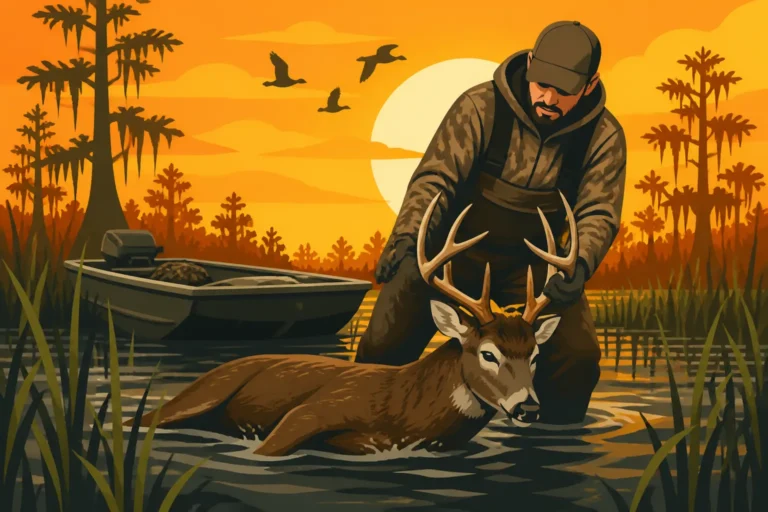
- Swamps and Bottomlands: Think places like the Atchafalaya Basin, Pearl River WMA, or Richard K. Yancey WMA. These areas are often defined by water, cypress-tupelo stands, and dense undergrowth. Deer and hogs here often stick to higher ground – natural levees, old logging roads, or small islands. Focus your movement along these elevated areas. Look for junctions where these high spots intersect, creating natural funnels. Access can often be gained by canoe or kayak, allowing you to penetrate deeper into remote areas where game is less pressured. For specific strategies, understanding Hunting the Atchafalaya Basin Swamp Deer is invaluable. The key is to move slowly, using the dense cover to your advantage, and being prepared to shoot quickly when an animal appears from the thickets.
- Piney Hills: Areas like Kisatchie National Forest are characterized by rolling hills, pine plantations, and hardwood creek bottoms. Deer often use ridge lines for travel and saddles as crossing points between drainages. Clear-cuts, especially those a few years old with thick regrowth, can be prime bedding and feeding areas. When hunting these areas, consider Hanging a Stand on a Kisatchie Ridge to get an elevated view of travel routes. Still-hunting, a slow, deliberate form of run-and-gun, is incredibly effective here. You essentially become the predator, moving slowly, stopping to scan and listen, then taking a few more steps. This tactic is well-described in guides on Still-Hunting Kisatchie Hills Wilderness. Look for signs like chewed pine cones (squirrels), hog rooting, or deer rubs along logging roads or ATV trails.
- Coastal Marsh: While primarily known for waterfowl, the edges of the coastal marsh, such as parts of Sabine WMA or Cameron Parish, can hold a surprising number of feral hogs. These hogs often stick to higher spoil banks, cheniers (oak ridges), and the edges of rice fields or cane fields. Moving along these slightly elevated strips of land can put you in hog country. Understanding the unique landscape from resources like Hunting Cameron Parish Marsh Ducks can help you visualize these challenging but rewarding environments.
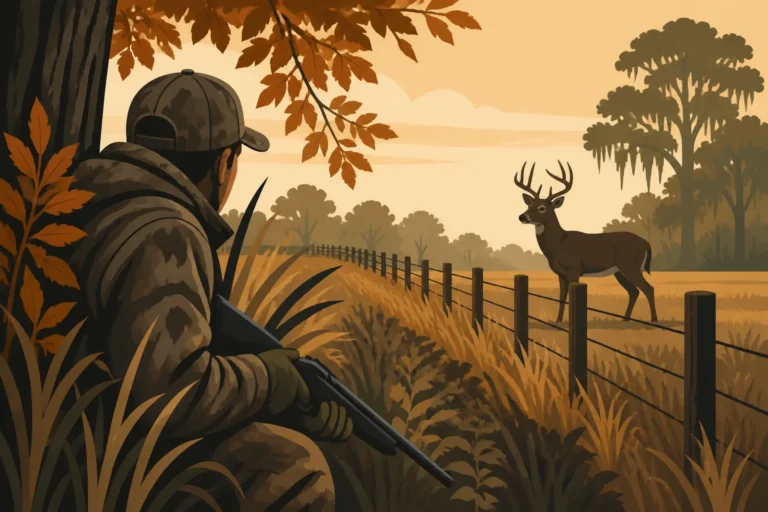
- Farm Country Edges: Some WMAs border agricultural lands. Here, deer and hogs will often stage in thick cover during the day and move into crop fields (like soybeans or corn) at night. Focus your run-and-gun efforts on the transition zones – fencerows, small woodlots, creek bottoms, or drainage ditches that provide cover and funnel movement. Resources like Hunting a Standing Cornfield in Farm Country can help you understand these dynamic environments. Early morning and late evening often provide the best opportunities as animals move to and from feeding areas.
Calling and Decoying on the Move
Integrating calling and even minimalist decoying into a run-and-gun strategy can dramatically increase your success, particularly for deer and turkey.
- Deer: When still-hunting or moving into a new area, subtle deer calls can be highly effective. A soft grunt or a doe bleat can pique a buck's curiosity without giving away your exact location. If you find fresh rub lines or scrapes, pausing to use light rattling sequences (Rattling and Grunting in Louisiana) can often pull in a buck that is actively cruising for does. The key is moderation – use calls sparingly and subtly to avoid spooking game, especially on pressured public land.
- Turkey: The run-and-gun strategy is almost synonymous with turkey hunting, especially on public land where birds are often scattered and wary. Start with locator calls (owl hoots, crow calls) to try and get a gobbler to sound off from the roost. Once you hear one, quickly and quietly move to set up within range, using terrain features and natural cover for concealment. Light, soft yelps, clucks, and purrs can then be used to draw the bird in. Don't be afraid to break down and move if the bird hangs up or goes silent; persistence and mobility are key. There are many great tips for Run-and-Gun Turkey Tactics on Public Land that can improve your success.
- Hog: While not typically called in the same way as deer or turkey, hogs are creatures of habit. If you find fresh rooting or tracks, you can use a thermal imager (many hunting apps, including GoHunt, offer features to mark and scout potential hog activity areas, although thermal units are separate gear) to scan for heat signatures during low-light conditions, where legal. On public land, a run-and-gun approach for hogs often means tracking fresh sign, moving into position for a shot, and taking opportunities as they arise, often without the use of bait.
Post-Shot Considerations and Ethical Hunting
The work isn't over once you pull the trigger. In fact, on Louisiana's public lands, the recovery process can be the most challenging part of the hunt. Ethical hunting also extends beyond the shot to how you interact with the land and your fellow hunters.
Tracking and Recovery Challenges
Dense vegetation, soft ground, and water are common in many Louisiana public hunting areas, making blood trailing a downed animal incredibly difficult. Always mark the exact spot where the animal was standing when you shot it, and the direction it ran. If possible, pick up the blood trail immediately. Move slowly and methodically, marking each piece of sign with flagging tape or brightly colored leaves. If the blood trail peters out, perform a grid search around the last confirmed sign.
Don't push an animal too hard, too fast, especially if you suspect a marginal hit. Give it time to lie down and stiffen up. Returning with a fresh set of eyes or even a tracking dog (where permitted by WMA rules) can be invaluable. If you find yourself tracking after dark, resources like Blood Trailing After Dark in Louisiana can provide crucial advice. Always be mindful of private property boundaries; if an animal crosses onto posted land, you must obtain permission from the landowner before attempting recovery. Retrieving game from private land in Louisiana without permission is considered trespassing and can lead to serious legal issues.
Respecting Fellow Hunters and the Resource
Public land is a shared resource, and it's essential to practice good etiquette. This means being mindful of other hunters, keeping noise to a minimum, and never intentionally interfering with someone else's hunt. Leave no trace behind – pack out everything you pack in, including spent shell casings, food wrappers, and flagging tape.
Crucially, always adhere to all Louisiana Department of Wildlife and Fisheries (LDWF) regulations, including bag limits, season dates, and specific WMA rules. Many WMAs have unique regulations regarding vehicle access, camping, and stand placement. Always check the current regulations pamphlet and any specific WMA signs before hunting. Furthermore, ensure you understand Louisiana Deer Reporting Requirements and report your harvest promptly through the LDWF website or app. This data is vital for wildlife management and helps ensure healthy game populations for future generations of hunters.
| Feature | Traditional (Stationary) Hunting | Run-and-Gun (Mobile) Hunting |
|---|---|---|
| Pace | Slow, patient, waiting for game to come to you | Active, dynamic, constantly seeking out game |
| Gear Weight | Can accommodate heavier gear (e.g., large stands, lots of amenities) | Minimalist, lightweight, highly portable gear is essential |
| Area Coverage | Limited to proximity of stand/blind | Covers vast amounts of ground, explores diverse habitats |
| Adaptability | Low; fixed position, harder to react to changing conditions | High; easily adapts to fresh sign, shifting game patterns |
| Physical Exertion | Low to moderate (depends on hike to stand) | High; requires good physical fitness and stamina |
| Success Relies On | Pre-scouted hot spots, game movement predictability | Real-time sign reading, quick decision-making, stealth, persistence |
| Best For | Consistent game patterns, heavily baited/fed areas (private land) | Pressured public land, diverse terrain, unpredictable game movement |
Disclaimer
The information provided in this guide is for general informational purposes only and does not constitute legal advice. Hunting regulations in Louisiana are subject to change, and it is the hunter's responsibility to review and comply with all current state laws and specific wildlife management area regulations set forth by the Louisiana Department of Wildlife and Fisheries (LDWF). Always prioritize safety and ethical hunting practices.