Louisiana Hog Trapping Success Rates
The ongoing battle against feral hogs in Louisiana can feel like a losing one sometimes. These intelligent, prolific creatures wreak havoc on our fields, forests, and wetlands, leaving a trail of destruction that frustrates landowners and hunters alike. When you're trying to gain control, understanding the realistic success rates of hog trapping isn't just about numbers; it's about setting yourself up for real wins against a truly formidable opponent. This guide will walk you through what genuinely influences your trapping success and how to tip the odds in your favor.
Understanding What "Success Rate" Means in Hog Trapping
Before we dive into how to improve your success, it's crucial to define what "success" even means in the world of hog trapping. It's not a one-size-fits-all metric, and your definition will heavily influence your approach and expectations.
Defining Success for the Hunter
For some, success might mean removing a single nuisance hog that's been tearing up a backyard or a small plot. For others, particularly those managing larger properties or agricultural lands, success is measured by the complete elimination of an entire sounder – that close-knit family group of hogs – or significantly reducing the overall hog population on a particular tract.
Think about it this way: if you've got a sounder of twenty hogs routinely destroying your deer food plot, catching just two or three might feel like a win in the short term, but it's not a long-term solution. True success, in many cases, means catching most, if not all, of that sounder in one go. If you only catch a few, the remaining, now educated, hogs become incredibly wary and much harder to trap again. This is where methods like continuous-catch traps shine, allowing you to hold captured hogs while more enter.
Factors Influencing Trap Effectiveness
The effectiveness of any trapping operation isn't just luck; it's a careful dance between several key factors. Your trap's performance hinges on things like its location, the type of bait you're using, the design of the trap itself, the existing hog pressure in the area, and even environmental conditions like weather. A trap set in a high-traffic hog area with irresistible bait and consistent pre-baiting is naturally going to have a much higher "success rate" than one haphazardly placed with old, stale feed. It's about creating an environment where the hogs feel safe and incentivized to enter the trap, rather than seeing it as a threat.
The landscape of Louisiana also plays a huge role. Are you trapping in dense bottomland hardwoods, open agricultural fields, or thick coastal marsh? Each environment presents its own challenges and opportunities for trap placement and concealment. Knowing your specific terrain and the behavior of the hogs in it is paramount.
Key Factors That Dramatically Impact Your Trapping Success
Achieving consistent hog trapping success is less about a magic bullet and more about mastering several interconnected elements. Ignoring any one of these can significantly reduce your chances of catching hogs.
The Right Trap for the Right Situation
Choosing the correct trap is foundational. You wouldn't use a squirrel trap for a hog, right? But the nuances go deeper. There are several primary types of traps, each with its own advantages and ideal scenarios:
- Box Traps: These are typically single-entry, smaller traps, often good for catching one or a few hogs at a time. They're often portable and easier to deploy by a single person. However, if you catch a dominant sow or boar, the others in the sounder might become wary and avoid the trap. They're usually not ideal for catching an entire sounder.
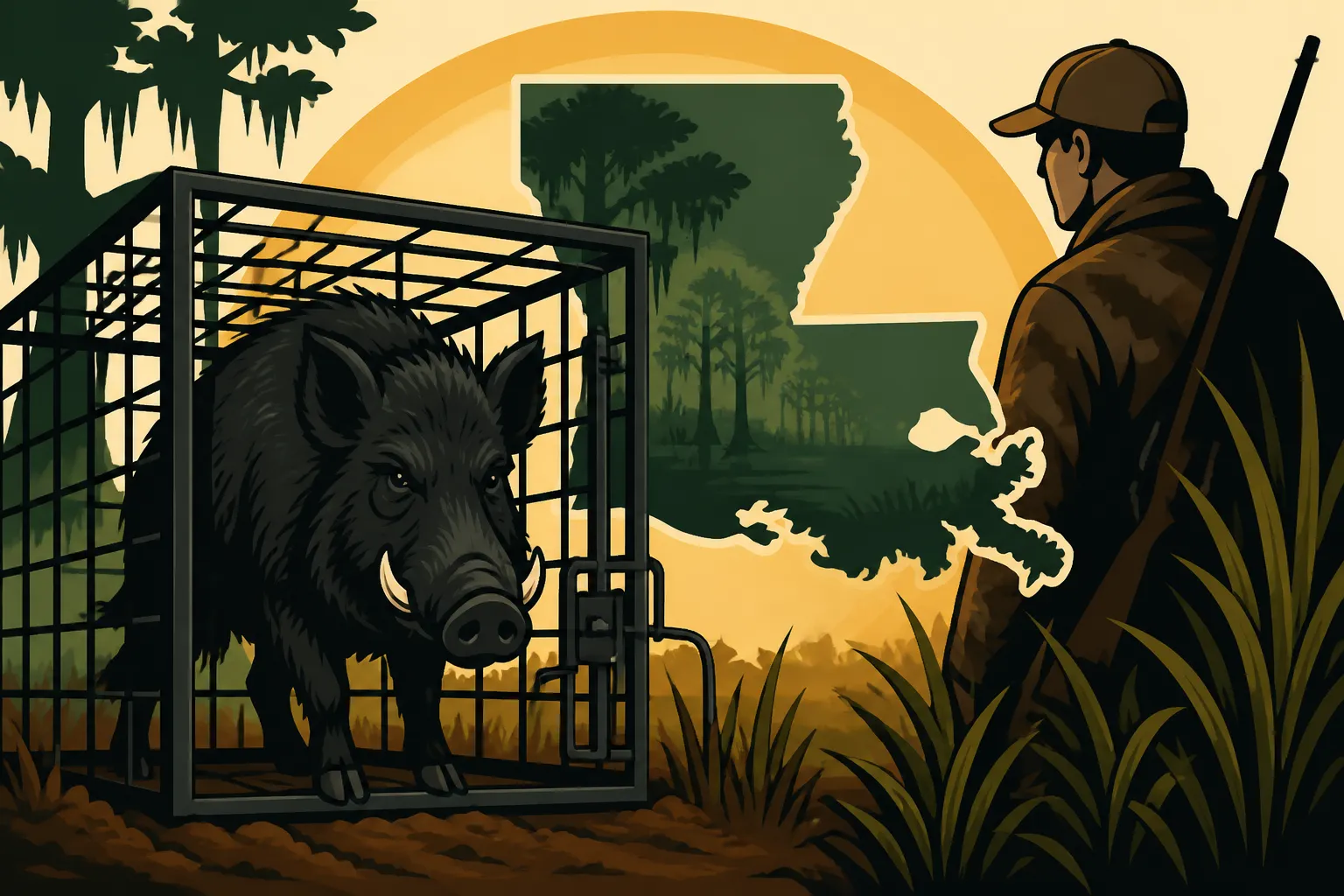
- Panel Traps (Corral Traps): Constructed from multiple hog panels, these are much larger enclosures designed to catch entire sounders. They can be round, square, or irregular shapes. The key here is typically a trigger mechanism that drops a gate once enough hogs are inside. These require more effort to build and move but offer a much higher chance of "total sounder removal."
- Continuous Catch Systems: These represent some of the most advanced trapping technology available, often incorporating remote monitoring and smart gates. Systems like the BoarBuster or Pig Brig are designed to allow hogs to enter and exit freely during the pre-baiting phase, building confidence, and then, once the entire sounder is present, the gate can be closed remotely. These significantly increase the success rate of catching whole groups, reducing trap shyness. When researching different trap systems, you might find user reviews and product comparisons on platforms or apps like GoHunt, giving you an idea of what works for others in similar terrain and helping you weigh the pros and cons for your specific needs.
| Trap Type | Capacity | Portability | Initial Cost Factor | Sounder Removal Potential | Best Use Cases |
|---|---|---|---|---|---|
| Box Trap | 1-3 Hogs | High | Low-Medium | Low | Small nuisance issues, single hog removal |
| Panel (Corral) Trap | Entire Sounder (5-20+) | Medium-Low | Medium-High | High | Population reduction, agricultural protection |
| Continuous Catch | Entire Sounder (5-30+) | Low (often fixed) | High | Very High | Comprehensive population control, wary hogs |
Baiting Strategy and Pre-Baiting Importance
Hogs are smart, and they don't just wander into strange new structures without reason. That's why your baiting strategy, especially pre-baiting, is paramount. You need to make the trap site a regular, safe feeding spot before you ever set the trigger.
- The Right Bait: Sour corn is a classic for a reason – hogs absolutely love it. The fermentation process makes it highly attractive and easily digestible. Other options include fermented grains, commercial hog attractants, old pastries, or even overripe fruit. Experiment to see what the hogs in your specific area prefer.
- Pre-Baiting: This is the game-changer. For several days, or even a week or two, scatter bait around and inside your unset trap. Let the hogs come and go freely, getting comfortable with the trap's presence. Use trail cameras to monitor their activity and confirm the entire sounder is consistently entering the trap to feed. Only when you're confident they're all comfortable should you set the trigger. This step alone can dramatically increase your success rate and prevent "educated" hogs who might otherwise avoid a newly set trap. You can learn more about Building and Freshening a Hog Bait Site to keep hogs coming back.
Trap Placement and Concealment
Where you put your trap is almost as important as the trap itself. You need to think like a hog.
- Travel Corridors: Hogs often follow established trails, creek bottoms, fencerows, or field edges. Placing a trap directly in a well-used travel corridor increases the chances of discovery.
- Water Sources: Hogs need water, especially in Louisiana's heat. Areas near sloughs, ponds, or muddy wallows are natural gathering points.
- Feeding Areas: If hogs are tearing up a particular field or oak flat, that's a prime location.
- Concealment: While modern continuous-catch traps are often robust and don't require extensive camouflage, traditional panel and box traps can benefit from some concealment. Brush in the trap with local vegetation, break up its outline, and minimize human scent around the area. Hogs have an incredible sense of smell and can detect foreign odors easily. For more general scouting tips that apply to all game, check out Scouting Louisiana Public Land Before Season.
Consistent Monitoring and Follow-Up
Leaving a trap unchecked for days is a recipe for failure, and it's also unethical.
- Regular Checks: You need to check your traps at least once every 24 hours, and often more frequently, especially in warm Louisiana weather. Trapped hogs can become stressed, injured, or even die from heat exposure or fighting if left too long.
- Efficient Dispatch: Once hogs are trapped, you need a plan for humane and efficient dispatch. This is a critical part of the process, and understanding Shot Placement on a Feral Hog is essential.
- Resetting and Relocating: If a trap isn't catching hogs after a reasonable period of pre-baiting and setting, don't be afraid to move it. Hogs shift their patterns, and what was a hot spot last week might be barren today. Learn how to adapt.
- Reporting: Don't forget Louisiana's reporting requirements for feral hog harvests on some public lands. Being aware of Louisiana Feral Hog Regulations will keep you compliant.
Common Pitfalls That Lower Louisiana Hog Trapping Success
Even with the best intentions and gear, mistakes can happen. Recognizing these common pitfalls can help you avoid them and boost your success rates significantly.
The "Set It and Forget It" Mentality
This is perhaps the biggest reason for trapping failure. Hogs are not like passive pest rodents; they are incredibly intelligent and adaptable. Simply placing a trap with some bait and walking away for a week rarely yields sustained success.
Imagine you set up a beautiful new panel trap, put some sour corn inside, and leave it for five days. You come back to find the bait gone, tracks all around, but no hogs. What happened? It's likely that a few curious hogs investigated, perhaps even ate the bait from outside or cautiously entered and exited before the full sounder committed. Without diligent pre-baiting and active monitoring, those initial interactions can "educate" the hogs, making them permanently wary of that trap, or even similar traps, in the future. They learn to associate the structure with danger or discomfort, making them much harder to catch later. This "set it and forget it" approach also poses ethical concerns, as trapped animals can suffer unnecessarily if not checked promptly.
Insufficient Pre-Baiting or Poor Bait Choice
Another common mistake is rushing the pre-baiting phase or using bait that simply isn't appealing enough to the local hogs.
- Rushing Pre-Baiting: As mentioned, hogs are cautious. If you put out bait for just a day or two and then set the trap, you might catch a few curious youngsters, but the older, wiser sows and boars will likely stay outside, observing. They won't commit until they're absolutely certain the trap site is a safe, reliable food source. Building that confidence takes time – sometimes a week, sometimes two, depending on hog pressure and local food availability. Skipping this step often results in catching only a fraction of a sounder, leaving the rest to continue their destructive ways, now with a healthy dose of trap shyness.
- Poor Bait Choice: While sour corn is usually a winner, not all hogs respond to the same bait with equal enthusiasm. Using dry, untreated corn, stale leftovers, or bait that's been sitting out too long and molded can be ineffective. Hogs prefer fresh, fermented, or highly aromatic baits. If your initial bait isn't attracting them, you need to change it up. Ignoring hog preferences is like trying to catch a fish with the wrong lure – you might get lucky, but consistent success will elude you.
Trap Shyness and Educated Hogs
This is the bane of many hog trappers. Hogs that have had a negative experience with a trap, or even just seen other hogs caught, can become "trap shy" or "educated." They learn to avoid the traps altogether, making future efforts incredibly difficult.
A classic scenario involves a sounder where a few sub-adults get caught in a small box trap. The rest of the sounder, witnessing the capture and distress, will often learn to give that particular trap, and even similar setups, a wide berth. These educated hogs are incredibly challenging to catch. They'll eat bait scattered outside the trap, but won't cross the threshold. Overcoming trap shyness requires patience and often a change in strategy, such as switching to a larger, continuous-catch system where they can feed freely for an extended period, or using highly novel baits they haven't associated with danger. You might even consider hunting as a primary method if you are dealing with very trap-shy hogs, as described in Hunting Hogs Without Bait or Dogs.
Maximizing Your Chances: Pro Tips for Higher Success Rates
Now that we've covered the basics and common pitfalls, let's talk about how to truly excel at hog trapping in Louisiana. These pro tips combine smart strategy with an understanding of hog behavior.
Scouting and Trail Camera Intelligence
You can't effectively trap what you can't find, or don't understand. Comprehensive scouting is your first line of defense and offense.
- Read the Land: Look for fresh tracks, rooting, wallows, rubs on trees, and well-worn trails. These are all indicators of hog activity. Pay attention to transition areas like where timber meets a field, or where a ridge drops into a slough.
- Trail Cameras are Your Best Friend: Place trail cameras in potential trap locations and along known travel routes. This isn't just about seeing if hogs are there, but when they are there, how many are in the sounder, and how they are using the area. Seeing consistent activity, especially of an entire sounder, will tell you precisely when to deploy your trap and when to set the trigger after pre-baiting. Utilizing mapping apps, such as those found on GoHunt, helps you visualize terrain and identify potential hotspots before you even set foot on the ground, making your scouting efforts much more efficient.
- Identify the Target: Trail cams help you confirm that the entire sounder, including the dominant sow (often the matriarch who leads the group), is regularly entering the pre-baited trap area. Catching the entire sounder, particularly the breeding sows, is key to long-term population control.
Advanced Trapping Techniques (Continuous Catch)
For serious hog problems and highly intelligent sounders, traditional traps can fall short. This is where advanced continuous-catch systems truly shine.
- The Concept: Unlike standard traps that catch a few hogs and often educate the rest, continuous-catch systems are designed to allow hogs to enter and exit freely during an extended pre-baiting phase. This builds tremendous confidence. The gate mechanism is often lifted or held open, allowing free movement in and out of the enclosure.
- Remote Operation: Many of these systems, like the BoarBuster, incorporate remote-controlled gates and live-feed cameras. You can monitor the trap from your phone or computer, watching the sounder enter and feed. Once the entire sounder is inside, you can trigger the gate remotely. This eliminates human presence and the chance of spooking partial sounders.
- High Success Rate: Because you're waiting for the whole sounder to be inside, the success rate for removing large groups of hogs in a single capture event is significantly higher. This is crucial for making a real impact on hog populations. While these systems represent a higher initial investment, their effectiveness often outweighs the cost in terms of time saved and damage prevented. For effective Trapping Louisiana Feral Hogs, these advanced methods can be invaluable.
Combining Trapping with Other Control Methods
Trapping is powerful, but it's not always the only answer. The most successful hog control programs often integrate multiple strategies.
- Integrated Pest Management: Think of it as an integrated pest management approach for hogs. Trapping is your primary tool for removing large numbers of animals, especially entire sounders.
- Follow-Up with Hunting: Once a sounder has been trapped, there might be a few stragglers who were absent or educated. This is where targeted hunting can be effective. This could involve Night Hunting Hogs With Lights on Private Land, which is legal on private land with landowner permission, or even organized Running Dogs on Louisiana Feral Hogs in areas where it's permitted. The goal is to keep pressure on the remaining hogs and prevent them from forming new sounders or becoming too established.
- Consistency is Key: Hogs reproduce incredibly fast. A sow can have multiple litters in a year, with each litter containing numerous piglets. This means your control efforts must be consistent and ongoing. Don't trap a sounder and then quit for six months; another group will quickly move in. Stay vigilant, re-scout, and be prepared to deploy traps again as needed. Implementing a year-round approach, especially on private land where Louisiana's Year-Round Hog Rule on Private Land allows for continuous control, is essential. Ultimately, the goal is to manage hog populations to reduce the damage they cause, and a multi-faceted approach almost always yields the best long-term success rates.
Disclaimer
This article is for general informational purposes only and does not constitute professional advice. Laws, prices and regulations vary by location and change over time. Consult a qualified professional for guidance on your specific situation.