Louisiana Turkey Gobbling Activity Timing
There’s nothing quite like the sound of a spring gobbler hammering on the roost in the predawn Louisiana woods, but sometimes, those birds seem to have a mind of their own, gobbling up a storm one minute and falling silent the next. It's frustrating when you put in the effort, only to find the woods eerily quiet or the gobblers just not talking. This guide will dive deep into understanding the intricate timing of Louisiana turkey gobbling activity, helping you unravel the mystery behind when and why these wily birds choose to sound off, so you can adapt your strategy and increase your chances of calling one into range.
The Daily Rhythm of the Louisiana Gobbler: Peaks and Valleys
Wild turkeys, especially the gobblers, operate on a pretty predictable daily schedule, even if external factors can influence it. Understanding these rhythms is absolutely crucial for knowing when to be in the woods and, more importantly, when to expect a response. It's not just about sunrise; it's a whole symphony that plays out from dark to dark.
Predawn and Fly-Down Frenzy
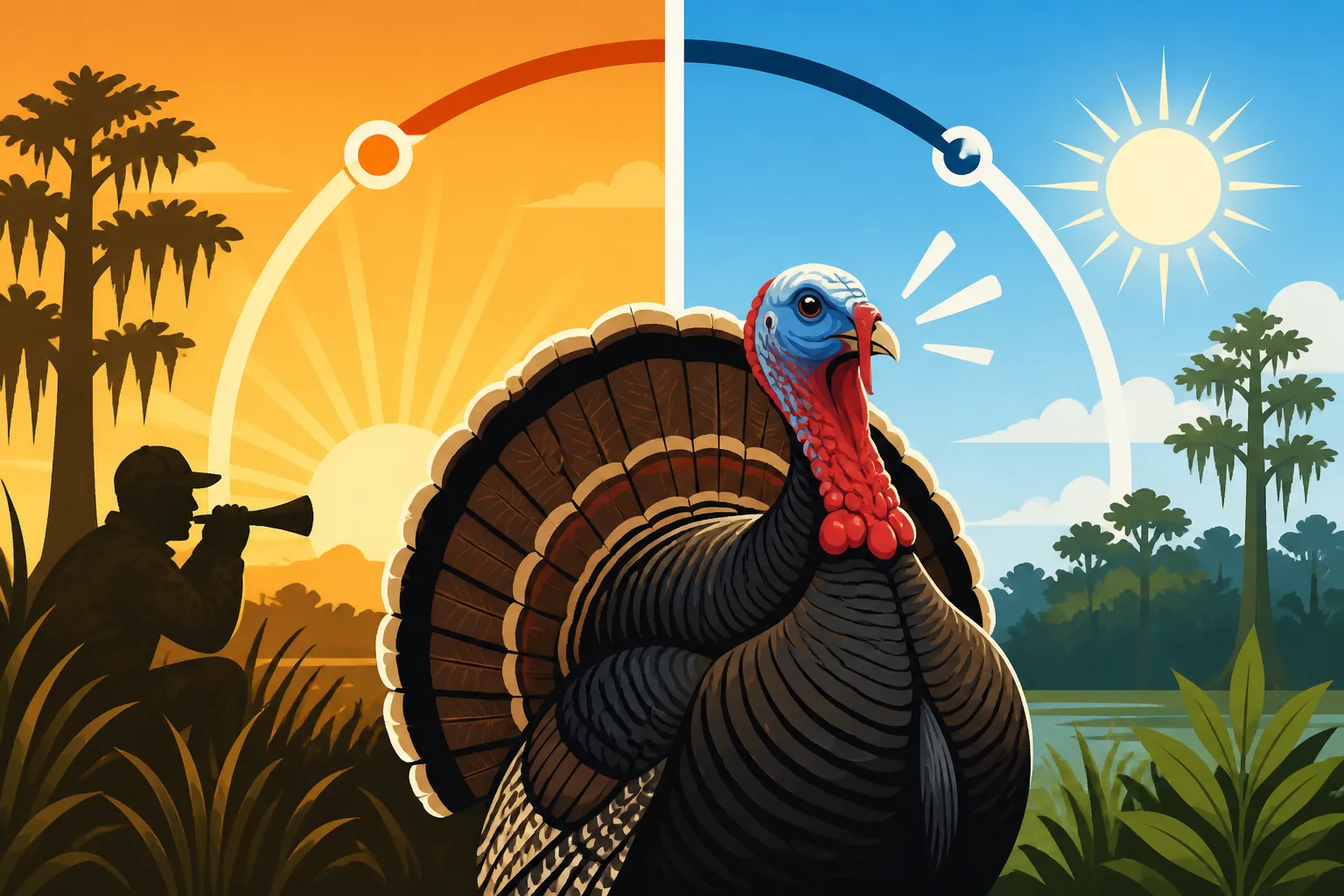
This is what every turkey hunter dreams of: that cacophony of gobbling that erupts before the first sliver of light hits the horizon. As turkeys wake up on their roosts, often in tall pines or cypress trees along a creek bottom, they'll start sounding off. It's a territorial display, a way for gobblers to announce their presence to hens and rival males. This initial flurry is usually the most intense part of the day, with gobblers often hammering multiple times from their limb. The excitement builds as light increases, leading to the actual fly-down.
Once a gobbler flies down from the roost, typically within the first 30 minutes to an hour of legal shooting light, the gobbling can either continue in full force or diminish significantly. If he has hens with him, he might gobble less on the ground, content to strut and breed. If he's alone, he's more likely to continue gobbling as he searches for company. Your best bet is to be set up well before first light, ready to make a soft tree yelp or an owl hoot to elicit that crucial shock gobble that gives away his position. Being too late means missing this prime window when he's most vocal and vulnerable, looking to establish his domain for the day.
Mid-Morning Lull and the Search for Lonely Hens
After the initial fly-down excitement, especially if a gobbler has collected a harem of hens, things tend to quiet down. This can be one of the most challenging periods for hunters because the birds are often spread out, feeding, and the gobbler might be too busy with his real hens to respond to your calls. It feels like the woods have gone completely silent, and many hunters pack up and head out, feeling defeated. However, this mid-morning lull isn't always a bust.
While the primary gobbling might subside, some gobblers, particularly those that were unsuccessful in attracting hens early, will start looking for company again. These "lonely" gobblers can become more responsive to calling as the morning progresses, especially once the hens they were with disperse to nest or feed on their own. This is a great time to implement "run-and-gun" tactics, covering ground and trying different setups, listening for those sporadic, often quieter, mid-morning gobbles. You might find a bird that's been overlooked, cruising a field edge or working a ridge, ready to commit to a well-placed call. Patience is truly a virtue during this period; don't give up just because the woods aren't ringing with sound.
Late Morning to Early Afternoon Resurgence
Just when you might be thinking about lunch, a subtle shift often occurs. As hens leave gobblers to attend to their nests, gobblers can become lonely and start actively seeking companionship again. This can lead to a noticeable resurgence in gobbling activity, often from 9:30 AM to noon, or even a bit later. These birds are now without their real hens and are much more prone to responding to your calls.
This period can be incredibly productive, sometimes even better than the fly-down if you're dealing with heavily "henned-up" gobblers in the early morning. It’s also a time when many other hunters have left the woods, reducing pressure on the birds. Focus on travel corridors, field edges where hens might have dispersed, or creek bottoms where gobblers might naturally travel. Using a mapping app like GoHunt can help you identify these natural travel routes and potential setup locations away from where other hunters might have been. This late-morning activity is a prime example of why you should stay in the woods longer than you might think; the best action often happens after the early rush.
Influential Factors on Gobbling Behavior
It's not just the clock that dictates when a Louisiana gobbler sounds off. A host of environmental and biological factors can either ignite a gobbling frenzy or put a complete damper on it. Understanding these influences can help you predict gobbling activity and plan your hunts more effectively.
Weather Conditions and Barometric Pressure
The weather plays a massive role in how vocal turkeys are. A crisp, clear morning with light winds and stable barometric pressure is often ideal for gobbling. Turkeys, much like humans, appreciate comfortable conditions. When the air is calm, their calls carry further, making it easier for them to communicate across their territory.
On the flip side, adverse weather can significantly reduce gobbling. Heavy rain, strong winds, or rapidly dropping barometric pressure often lead to quieter birds. Turkeys become more focused on survival and less on broadcasting their presence. Light drizzle or fog, however, can sometimes make for surprisingly good hunting, as sound might carry differently, or the birds might feel more secure. Extreme heat, common in Louisiana's later spring season, can also suppress gobbling, pushing activity to the cooler parts of the day. A reliable weather app, or a tool like GoHunt that often integrates weather data, can be your best friend here, helping you decide whether to head out or adjust your expectations.
Breeding Cycle and Hen Presence
The single biggest factor influencing gobbling activity is the turkey's breeding cycle and the availability of hens. Early in the spring season, when hens are just beginning to consider nesting, gobblers are typically at their most vocal. They're trying to attract as many hens as possible, and intense gobbling is their primary advertisement. This is often when you hear the most widespread and aggressive calling.
As the season progresses and more hens become bred and begin sitting on nests, the dynamics shift. Gobblers might become "henned up," meaning they're with a group of real hens and have less incentive to gobble at your calls. They have what they want, so why risk drawing in a rival? This is where patience comes in, waiting for those hens to leave the gobbler to lay eggs or sit on their nests. Later in the season, particularly if the initial breeding phase has passed and hens are committed to nesting, the gobblers can become "lonely." These post-peak gobblers are often the most susceptible to aggressive calling, as they're now desperate for companionship. Understanding Hunting the Rut in the Early-Start Areas and Hunting the Rut in the Long-Window Areas can give you more specific insights into these breeding cycles by deer area, which often correlates with turkey behavior too, as they respond to similar environmental cues.
Hunting Pressure and Previous Encounters
Turkeys are not dumb, especially not after they've heard a few hunters' calls or had a close call. Hunting pressure can drastically impact gobbling activity. On public lands or heavily hunted private tracts, gobblers often become "call shy" or simply reduce their gobbling to avoid detection. They learn quickly that loud, consistent gobbling attracts danger.
This doesn't mean they stop gobbling entirely, but their activity might become more sporadic, quieter, or limited to specific times when they feel safer. They might gobble once or twice on the roost, fly down silently, and only gobble again when they're truly lonely or have moved to a more secluded area. For hunters, this means you need to be more patient, employ softer calling, or even try "silent" approaches like still-hunting or setting up quietly in known strutting zones. Run-and-Gun Turkey Tactics on Public Land can be effective, but sometimes, a quieter, more patient approach is needed. Scouting before the season can give you a leg up, helping you find those less-pressured areas where birds might be more vocal.
Adapting Your Strategy to Gobbling Timing
Knowing when and why a turkey gobbles is only half the battle; the other half is knowing how to use that information to your advantage. Your tactics need to be as fluid as the gobbler's moods.
Early Morning: Roost and Fly-Down Tactics
The first hour of legal light is often your best chance for a quick success, especially if you're targeting a vocal bird. Getting to your chosen setup location well before daylight is non-negotiable. Use the darkness to your advantage to get as close as safely possible to a roosted bird without bumping it. Once you hear that first gobble, you know where he is. A soft owl hoot or crow call can often get him to shock gobble, confirming his exact position.
When setting up, consider where he's likely to fly down. Look for open ground, a logging road, or a field edge near his roost tree. Place decoys in a visible spot, perhaps a jake and a hen, to entice him directly to your position. Your calling should start softly before fly-down – a few tree yelps to mimic a waking hen. Once he's on the ground, calling intensity can increase slightly, but don't overdo it. The goal is to make him believe a hen is waiting for him. If he's hot, don't call too much; let him come. If he hangs up, a little more coaxing might be necessary. This is precisely the scenario detailed in Calling a Louisiana Gobbler Off the Roost.
Mid-Morning to Late Morning: The Patient Pursuit
When the woods fall silent after the initial morning rush, it's tempting to throw in the towel. But this is where the seasoned hunter distinguishes themselves. Instead of leaving, shift your tactics. This period calls for more aggressive scouting and patience. This is a great time to be mobile, doing a bit of "run-and-gun" as described in Run-and-Gun Turkey Tactics on Public Land, moving every 15-20 minutes, stopping to call from different points. Try a variety of calls – yelps, clucks, purrs – and listen intently.
Often, lonely gobblers will be silently cruising food sources or travel corridors. Look for fresh tracks, droppings, and strut marks. Set up overlooking a field or a known travel funnel, and call intermittently, varying your volume and cadence. Sometimes, a "cold call" – a series of yelps from a new setup – can pique the interest of a gobbler that wasn't talking earlier. If you strike a bird that’s gobbling sporadically, patience becomes paramount. He might be coming, but slowly, meticulously. Resist the urge to call too often and give away your position. Sometimes, sitting tight for an hour or more in a good spot will pay off when a gobbler finally commits.
Understanding the Daily Gobbling Cycle
To summarize the typical gobbling activity, especially during the peak breeding season, here's a general guide:
| Time of Day | Gobbling Intensity | Gobbler Behavior | Hunter Strategy |
|---|---|---|---|
| Predawn – Fly-down | High to Very High | Roosted, displaying, looking for hens, then flying down. | Get close, set decoys, soft tree yelps, be ready for commitment. |
| Fly-down – 8:30 AM | High (if alone) / Low (if hen-up) | Often with hens, strutting and breeding. If alone, actively searching for company. | Match calling intensity to situation. If hens present, call to hens. If alone, call to gobbler. |
| 8:30 AM – 10:00 AM | Low to Moderate | Hens disperse to nest. Gobblers become lonely, might roam quietly. | Patience, soft calling, move to new areas, listen intently for sporadic gobbles. |
| 10:00 AM – 12:00 PM | Moderate to High | Lonely gobblers actively seek hens. Less competition, less pressure. | More aggressive calling can work. Target travel corridors, field edges. Don't give up! |
| 12:00 PM – 3:00 PM | Low to Moderate | Usually quietest period, but some persistent birds will still gobble sporadically. | Deep woods cruising, trying to locate quiet birds, or focus on food/water sources. |
| 3:00 PM – Sunset | Low to Moderate (re-roost) | Gobblers moving back towards roosting areas, may gobble as they seek a spot. | Listen for distant gobbles heading to roost. Can try to intercept or pinpoint for next morning's hunt. |
This table provides a general framework, but remember that every day, every bird, and every area can be different. The key is to be adaptable.
Regional Nuances in Louisiana Gobbling
Louisiana's diverse habitats mean that gobbling activity can have subtle differences depending on where you're hunting. What works in the piney hills of North Louisiana might need slight adjustments in the river bottoms or closer to the coastal plains. This is where local knowledge and prior scouting truly shine.
Piney Hills and Hardwood Ridges
In areas like the Kisatchie National Forest or the rolling piney hills of North Louisiana, gobblers often roost in the tallest pines, especially those along ridges or creek drainages. Their gobbling can carry a long way through the open timber. However, the terrain can also make pinpointing their exact location challenging due to echoes and sound deflection. In these areas, gobbling tends to be quite strong early, especially on clear mornings, as birds announce their presence across vast stretches of timber.
You'll often find these birds working ridge tops or feeding in hardwood bottoms. Learning to read the topography, as discussed in Reading a Ridge for Central Louisiana Deer, can be highly beneficial, even for turkeys. When a gobbler is on a ridge, he can often see and hear for great distances. If he's in a bottom, his gobble might be muffled, but he might also be more willing to come through thick cover. Hunters should pay attention to how sound carries and be prepared to move quickly but quietly to cut off a bird that's gobbling and moving.
River Bottoms and Swampy Terrain
The big river bottoms, like those along the Tensas River, or the cypress-tupelo swamps, present a different challenge. Gobblers here might roost in massive cypress trees or towering oaks. Their gobbling can sound muffled or travel differently through the dense, often flooded, woods. Birds here might gobble just as intensely, but the sound doesn't carry as far, and locating them can be tricky. You might hear a gobble that sounds close, only to find the bird is across a slough or a hidden creek.
The presence of water can also influence travel patterns. Gobblers might stick to high ground, cypress knobs, or old logging roads. They might also be more hesitant to cross water to reach a hen call. In these environments, quieter, more subtle calling can sometimes be more effective, as loud calling can make it harder to pinpoint their movement through the thick cover. Persistence, and knowing how to navigate the terrain – perhaps by using an airboat or pirogue for access as you would for Hunting Atchafalaya Basin Swamp Deer – are crucial.
Regional Breeding Season Variations
Louisiana is divided into different turkey hunting areas (A, B, and C), and while the general gobbling patterns remain, the peak intensity might shift slightly based on when the breeding season truly gets into full swing for each area. Area A, for instance, often has an earlier and longer season, meaning hunters encounter a broader range of gobbling activity from early season, intense gobbling to later season, sporadic gobbling from lonely birds.
Understanding the specific season dates for your area, like those covered in Louisiana Turkey Area A, B and C Rules, is vital. If you're hunting early in a particular area, expect more widespread gobbling, especially on crisp mornings. If you're hunting in late April, you might need to adapt to more subdued gobbling and focus on finding those solitary, post-breeding gobblers who are now desperate for company. The same general principles apply, but the emphasis on certain tactics might shift with the calendar.
Disclaimer
This article is for general informational purposes only and does not constitute professional advice. Laws, prices and regulations vary by location and change over time. Consult a qualified professional for guidance on your specific situation.