Louisiana Diamondback Rattlesnake Encounters Afield
There's a unique thrill that comes with stepping into the wild lands of Louisiana, whether it's the deep pines, the rolling hills, or the dense bottomland. But with that wildness comes a certain respect for its inhabitants, and few inspire as much cautious reverence—or outright fear—as the venomous snakes that call our state home. The thought of encountering a diamondback rattlesnake, particularly when you're focused on deer sign or tracking a gobbler, can really get under a hunter's skin. It’s a genuine concern, and knowing how to identify these powerful reptiles, avoid their preferred haunts, and react safely in the unlikely but serious event of an encounter can truly make the difference between a minor scare and a full-blown emergency. This guide will walk you through everything you need to know to hunt safely and confidently in Louisiana's beautiful, yet sometimes dangerous, wild spaces.
Understanding Louisiana's Diamondbacks
When you’re out in the woods, the last thing you want is a surprise encounter with something venomous. Knowing your adversary, or rather, understanding the natural behavior and appearance of a diamondback rattlesnake, is the first step in prevention. These aren't just any snakes; they're formidable creatures that deserve a wide berth and a healthy dose of respect. Louisiana's wild places are their home, and we're just visitors.
Identifying the Eastern Diamondback
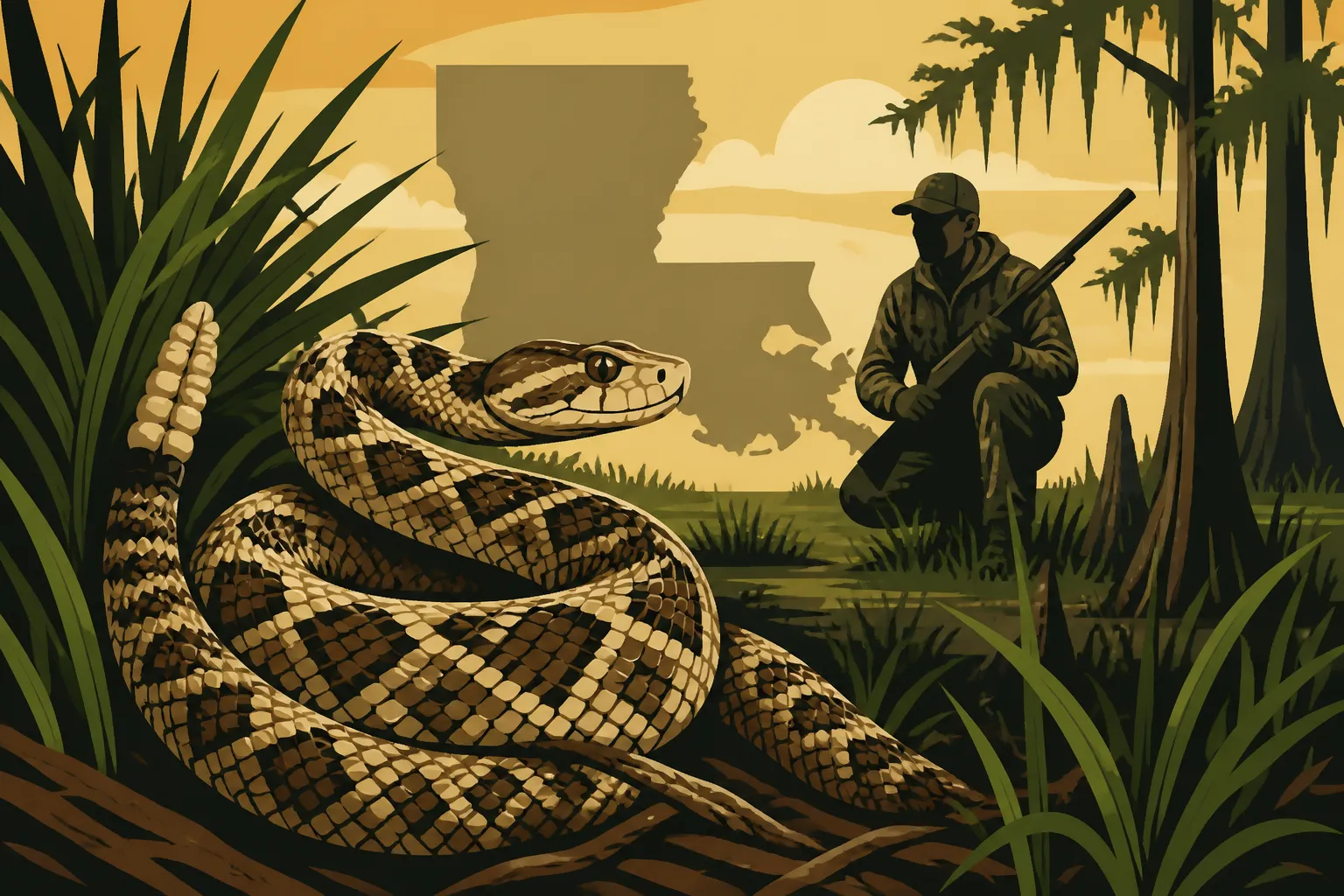
The Eastern Diamondback Rattlesnake (Crotalus adamanteus) is truly a magnificent, if intimidating, animal. It's North America's heaviest venomous snake and can reach impressive lengths, often exceeding five feet, with some giants pushing past seven. When you're talking about a snake that size, it demands attention. The most striking feature, and the one that gives it its name, is the series of dark diamond-shaped patterns, often outlined in cream or yellow, running down its back. These diamonds are set against a background of brown, gray, or yellowish-tan.
Their scales are heavily keeled, meaning they have a ridge down the center, giving them a rough, dull appearance rather than a shiny one. Look for a large, triangular head, noticeably wider than its neck, and two prominent diagonal dark stripes on each side of the face, running from the eye down to the jawline. Of course, the most iconic identification feature is the rattle at the end of its tail. While not every diamondback will rattle before it strikes, the presence of those interlocking segments is an unmistakable sign you're dealing with a rattlesnake. It’s always best to be alert, because sometimes that rattle only comes as a last resort, after you’ve already stumbled too close.
Where They Call Home and Why It Matters to Hunters
Eastern Diamondbacks typically prefer drier habitats within their range, gravitating towards pine forests, sandy scrublands, and palmetto thickets. While Louisiana is famous for its swamps and marsh, areas like the Kisatchie National Forest Hunting in central Louisiana, the extensive piney woods of North Louisiana, and particularly the longleaf pine habitats of the Hunting the Florida Parishes can be prime territory for these snakes. They love to bask in sunny spots, often near fallen logs, stump holes, or dense clumps of palmetto and wiregrass. These are the very places where a hunter might be still-hunting, glassing for deer, or setting up a ground blind.
The overlap between hunting seasons and snake activity is also a critical consideration. While many snakes become less active in the coldest parts of winter, Louisiana often experiences mild periods during deer and small game seasons. Warm spells, even in December or January, can bring a diamondback out to soak up the sun. Furthermore, hunters by nature often venture off-trail, pushing through dense cover, climbing over logs, or reaching into brush to retrieve game or set up a stand. This puts them directly into the snake's living room, so to speak, increasing the risk of an unexpected encounter. Understanding their preferred terrain, especially if you're Scouting Louisiana Public Land Before Season using aerial maps, can help you plan your routes and avoid high-risk areas.
Prevention and Precaution: Staying Safe Afield
Nobody wants to deal with a snake bite, especially not deep in the woods or far from a road. The best defense is a good offense, and when it comes to venomous snakes, that means prevention and vigilance. Being prepared for the possibility, rather than ignoring it, is key to a safe hunting experience.
Essential Gear and Clothing for Protection
Your choice of clothing can be your first line of defense against a snake bite. It’s not about being invincible, but about adding layers of protection between you and a potential strike.
- Snake Boots or Gaiters: This is arguably the most crucial piece of gear. High-quality snake boots, typically rising to the knee, or snake gaiters worn over your regular boots, offer significant protection against a strike. Most bites occur on the lower leg and ankle, so covering this vulnerable area is paramount. Don’t skimp on these; they’re an investment in your safety.
- Thick Pants: Even with snake boots, a sturdy pair of pants provides additional insurance. Denim, heavy canvas, or briar-resistant hunting pants add another layer that can deflect or at least slow down a snake's fangs. When you're pushing through thick brush or walking through tall grass, these pants offer both snake and thorn protection.
- Gloves: While less common for rattlesnake bites, reaching into brush piles, under logs, or into a ground hole without looking could put your hands at risk. A good pair of durable work gloves or hunting gloves can offer some basic protection when you need to move cover or retrieve something.
- Headlamp: If you find yourself tracking game in low light, or even walking to and from your stand before dawn or after dusk, a powerful headlamp is critical. Many snakes are active at these times, and you absolutely need to see where you're putting your feet.
Remember, the goal isn't to be completely immune, but to significantly reduce the risk and severity of a potential bite. When navigating tough terrain, consulting maps from resources like GoHunt can help you visualize elevation changes or dense areas that might hold more snakes, allowing you to plan safer routes.
Situational Awareness and Smart Trail Habits
No amount of gear can replace good old-fashioned awareness and smart decision-making in the field. This is where your hunter education really kicks in, reinforcing general safety principles that apply just as much to wildlife encounters as they do to firearm handling.
- "Look Before You Step, Look Before You Reach": This is the golden rule, the mantra for anyone walking through snake country. Before placing your foot, visually scan the ground where you intend to step. Look for anything out of place – a coiled snake, a patch of scales, or even just a strange shape. The same goes for reaching. Never blindly reach into thick brush, into a hollow log, or under a rock. Use a stick or your boot to probe the area first.
- Avoid Known Snake Habitats: While you can’t always steer clear, be extra cautious in areas known for snake activity. These include thick underbrush, piles of fallen leaves, rocky outcroppings, old abandoned structures, and dense palmetto thickets. When hunting areas like the Louisiana Wildlife Management Areas, which often have diverse habitats, understanding the specific terrain you’re in can guide your caution.
- Use a Walking Stick: A sturdy walking stick isn't just for balance. It can be a vital tool for probing potential hiding spots ahead of you, tapping the ground to alert snakes to your presence (they feel vibrations), and even gently nudging a snake to move if it's blocking your path from a safe distance.
- Watch Your Step During Critical Times: Warm, sunny days, even in the middle of hunting season, can bring snakes out to bask. Pay extra attention during midday sun. If you’re hunting early-season deer or Hunting Louisiana's Year-Round Feral Hogs, when temperatures are still high, assume snakes are active.
- Group Awareness: If you're hunting with a partner, maintain appropriate spacing and communicate. Let each other know if you spot anything, and ensure you're aware of where everyone is moving. This kind of teamwork, often taught in Louisiana Hunter Education Requirements, is crucial for overall safety. When trying to decide on routes through unfamiliar public land, apps like GoHunt can be invaluable for identifying trails, open areas, and potential dense cover that might harbor snakes.
What to Do in an Encounter (and a Bite)
Even with the best precautions, encounters can happen. The key is to react calmly and correctly, especially in the rare and unfortunate event of a bite. Panic is your enemy in these situations, potentially leading to worse outcomes.
If You See a Rattlesnake
Seeing a diamondback coiled up or slithering across your path can certainly make your heart pound. Your immediate reaction is vital.
- Stop, Assess, and Give Space: As soon as you spot it, freeze. Don't make any sudden movements that could startle the snake. Identify what kind of snake it is (a quick glance at the diamonds and rattle will usually confirm). If it's a diamondback, your priority is to give it space. Rattlesnakes are not inherently aggressive; they prefer to avoid confrontation and will usually only strike if they feel threatened, cornered, or surprised.
- Back Away Slowly: Once you've assessed the situation, slowly and calmly back away from the snake. Maintain visual contact, but increase the distance between you and the reptile. Give it a wide berth, looping around if necessary. Don't turn your back on it until you are well out of its strike range, which can be up to half its body length, but usually less.
- Do Not Provoke or Attempt to Handle: This cannot be stressed enough: do not poke it with a stick, throw rocks at it, or attempt to kill it. This drastically increases your risk of being bitten. Leave the snake alone. It wants nothing more than for you to leave it alone, too. If it's on a trail, wait for it to move on, or find a wide detour. Remember, you are a large, noisy intruder in its habitat.
- Understand the Rattle: While the rattle is a clear warning sign, don't rely on it. A snake might be surprised, cold, or simply choose not to rattle before striking. Sometimes, the first you know of its presence is the sound of the rattle, or worse, the sight of it. Your ears are a valuable tool, but your eyes and careful foot placement are your primary defense.
Immediate Actions After a Bite
A snake bite is a medical emergency. How you react in the moments immediately following a bite can significantly impact the outcome.
- Stay Calm and Call for Help Immediately: This is the most critical step. Panic will only increase your heart rate, potentially speeding up venom circulation. As calmly as possible, call 911 or your local emergency number. Provide your exact location – this is where a mapping app like GoHunt, with its GPS capabilities, can be a lifesaver. Give clear directions or coordinates to the nearest accessible point for emergency responders. If you’re hunting remotely, like in the Atchafalaya Basin Swamp Deer country or a deep section of Kisatchie, communicating your location precisely is paramount.
- Minimize Movement: Keep the bitten limb as still as possible. Movement can cause the venom to spread more quickly through your lymphatic system and bloodstream. If possible, immobilize the limb with a makeshift splint, but do not make it so tight that it cuts off circulation.
- Remove Constrictive Items: If the bite is on a hand or foot, immediately remove any rings, watches, bracelets, or tight clothing. Swelling can occur rapidly and make these items impossible to remove later, potentially causing further injury.
- Keep the Bitten Area Below Heart Level: If possible, keep the bitten area lower than your heart. This can help to slow the spread of venom, though this is a secondary concern to minimizing movement and getting help.
- DO NOT Use Harmful Folk Remedies: This is a huge one. Forget everything you’ve seen in old Westerns or survival shows. Do NOT cut the wound, try to suck out the venom, apply a tourniquet, use ice, or ingest any substances like alcohol or pain relievers. These methods are ineffective, often harmful, and can cause more tissue damage or accelerate venom absorption. Antivenom administered by medical professionals is the only effective treatment. Trust the professionals and focus on getting to medical care. Your preparation, including knowing Louisiana Hunter Education Requirements, should emphasize this.
Debunking Myths and Misconceptions
There are a lot of old wives' tales and cinematic exaggerations about snakes that can actually put you in greater danger if you believe them. Separating fact from fiction is essential for genuine safety.
Common Snake Myths That Can Harm You
Misinformation regarding snake encounters is rampant, and acting on these myths can turn a bad situation into a catastrophic one.
- Myth: "They always rattle before striking."
- Reality: Absolutely not. While rattlesnakes often use their rattle as a warning, they won't always do so, especially if they are surprised, feel cornered, or are young and haven't fully developed their rattling mechanism. Sometimes the first sound you hear is the actual strike, or the rattle after they've struck. Always assume a rattlesnake is dangerous even if silent.
- Myth: "You should cut an 'X' over the bite and suck out the venom."
- Reality: This is incredibly dangerous and utterly ineffective. Cutting the wound can introduce bacteria, cause severe bleeding, and damage nerves and tendons. Sucking out venom rarely removes any significant amount and can introduce bacteria from your mouth into the wound, causing infection. It's a Hollywood trope that has no place in real-world first aid.
- Myth: "Apply a tourniquet to stop the venom from spreading."
- Reality: Another dangerous myth. A tourniquet can restrict blood flow so severely that it causes tissue death (necrosis) in the limb, potentially leading to amputation. Snake venom primarily affects the lymphatic system and tissues, not just arterial blood flow. Keeping the limb still and getting medical attention is the correct approach.
- Myth: "You need to kill the snake and bring it to the hospital for identification."
- Reality: This is an unnecessary risk. Trying to kill a venomous snake, especially after you've already been bitten, puts you or others in further danger. Medical professionals do not need the snake for identification. They will treat based on symptoms and general knowledge of local venomous species. Focus on getting yourself or the victim to safety and medical care, not on collecting a specimen.
It’s easy to get caught up in the drama of a snake encounter, but sticking to facts and proven medical advice is paramount.
Being Prepared, Not Paranoid
While it's important to be respectful and aware of potential dangers, there’s no need to live in constant fear when you're enjoying Louisiana's beautiful hunting grounds. Preparation helps manage that fear and ensures you’re ready for the unexpected.
- Carry a Well-Stocked First-Aid Kit: Beyond snake bite specifics, a comprehensive first-aid kit is essential for any hunting trip. Include basics like bandages, antiseptic wipes, pain relievers, and any personal medications. Knowing where your nearest emergency services are located and having reliable communication is part of this preparation.
- Know Your Route and Emergency Exits: Before you head into a hunting area, especially on public land like the Richard K. Yancey Wildlife Management Area or Hunting the Tensas River Basin, study your maps. Identify potential access points for emergency vehicles, understand how far you are from major roads, and have a clear exit strategy. This is where modern hunting apps, like GoHunt, truly shine. You can mark your truck, your stand locations, and even potential emergency rendezvous points. This mapping capability allows you to visualize your hunting area and plan your movements safely, making it much easier to guide emergency services if the worst should happen.
- Charge Your Phone and Carry a Backup Power Bank: Your phone is your lifeline. Ensure it’s fully charged before you leave, and consider carrying a portable power bank, especially for longer hunts or when you’re going deep into remote territory.
- Understand that Encounters are Rare but Require Respect: While the thought of a diamondback rattlesnake bite is terrifying, actual bites are relatively uncommon. Snakes want to avoid humans as much as we want to avoid them. Most bites occur when people try to handle or kill snakes, or step on them accidentally. By taking sensible precautions, staying vigilant, and knowing how to react, you can significantly reduce your risk and continue to enjoy everything Louisiana's diverse hunting landscape has to offer, from chasing deer in the Piney Hills Versus Basin Deer to Hunting Small Private Tracts in Louisiana. Knowing where Louisiana Cottonmouth Range in Swamp Country is can also help differentiate what you might encounter in different parts of the state.
Remember, the goal isn't to be paralyzed by fear, but empowered by knowledge. Be smart, be safe, and enjoy the hunt!
| Safe Practices for Snake Country | Dangerous Myths & What NOT to Do |
|---|---|
| Wear snake boots/gaiters | Assume all snakes rattle before strike |
| Wear thick, protective pants | Cut the bite wound |
| Look where you step and reach | Suck venom from the wound |
| Use a walking stick to probe ahead | Apply a tourniquet to the limb |
| Back away slowly if you see a snake | Attempt to kill or capture the snake |
| Call 911 immediately after a bite | Apply ice to the bite area |
| Minimize movement of the bitten limb | Ingest alcohol or pain relievers |
| Remove tight jewelry/clothing | Rely on folk remedies |
Disclaimer
This article is for general informational purposes only and does not constitute professional advice. Laws, prices and regulations vary by location and change over time. Consult a qualified professional for guidance on your specific situation.