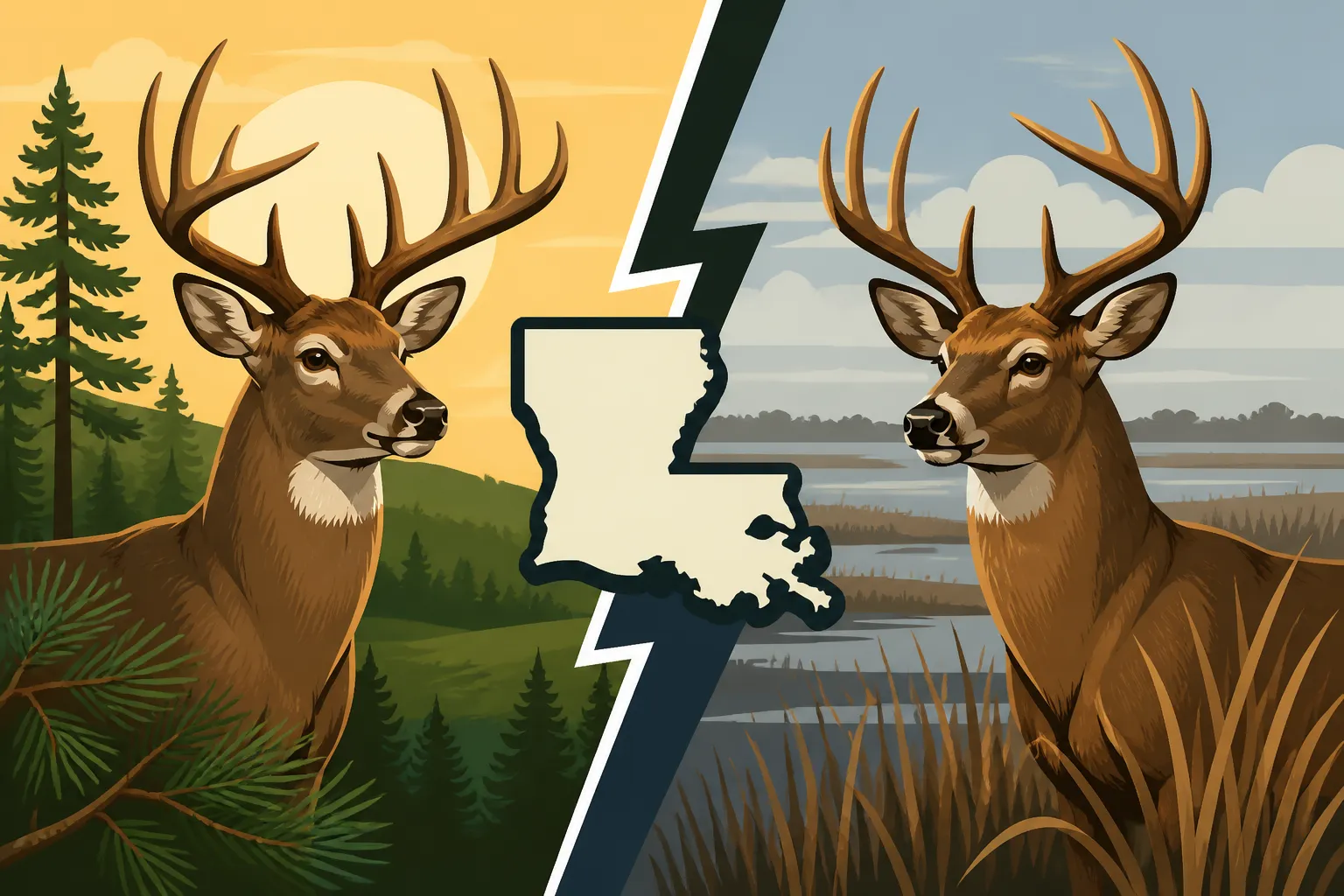
Piney Hills Versus Basin Deer
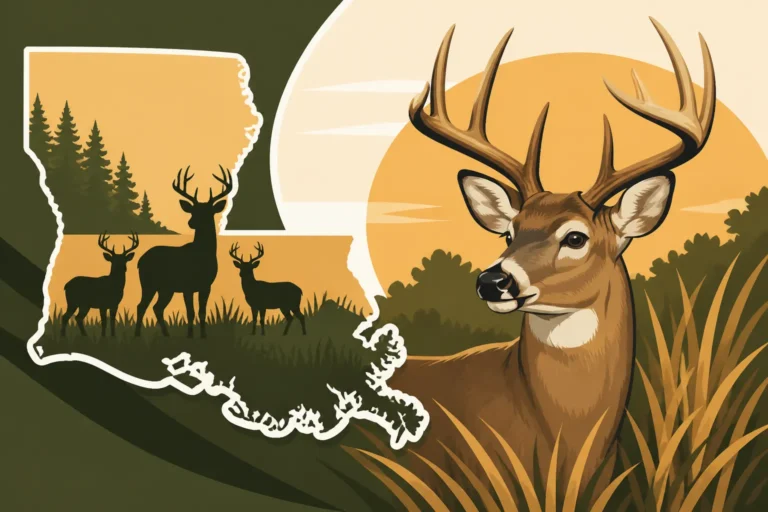
Many Louisiana deer hunters find themselves at a crossroads when planning their season: do you head north to the rolling Piney Hills or venture deep into the cypress-tupelo swamps and bottomlands of the Atchafalaya Basin? Each region presents a unique challenge, from navigating dense undergrowth to understanding the ebb and flow of water, often leaving hunters wondering where they'll find the most success and the most rewarding experience. This guide dives deep into the distinctions between these two iconic Louisiana deer habitats, helping you decide where to focus your efforts.
Unpacking the Geographical and Habitat Differences
Louisiana's diverse landscape offers dramatically different environments for whitetail deer, and understanding these fundamental differences is key to successful hunting. The Piney Hills and the Basin represent two ends of this habitat spectrum, each molding the deer that live there and the strategies required to pursue them.
The Distinctive Landscape of Louisiana's Piney Hills
When you picture Louisiana's Piney Hills, imagine a landscape far removed from the stereotypical flat, watery bayous. This region, primarily found in the northern and central parts of the state, is characterized by its gently rolling hills, sandy soils, and vast expanses of longleaf and loblolly pines. While you might find scattered hardwoods, especially in creek bottoms and draws, it's the towering pines that define the canopy here. The understory often consists of wax myrtle, yaupon, and saw palmetto, which can create surprisingly dense pockets of cover despite the more open feel of the pine forests themselves.
Hunters in the Piney Hills often find themselves navigating a terrain of ridges, steep creek drainages, and expansive clear-cuts in various stages of regrowth. These clear-cuts, while initially appearing stark, quickly become excellent bedding and browse areas for deer. The ground cover here can be a mix of crunchy pine straw on drier ridges, making stealth a real challenge, and richer, softer soil in the bottomlands. Public land options like the vast Kisatchie National Forest offer prime examples of this habitat. If you're planning a trip, getting familiar with Hunting North Louisiana's Piney Hills can give you a solid head start. This environment is less about water and more about elevation changes and the impact of timber management practices on deer movement.
The Enigmatic World of the Louisiana Basin and Bottomlands
In stark contrast to the Piney Hills, the Louisiana Basin and its associated bottomland hardwood forests are defined by water. These are the flat, low-lying floodplains, the cypress-tupelo swamps, and the intricate network of bayous, sloughs, and lakes that characterize much of South and Central Louisiana. This habitat is dominated by water oaks, bitter pecan, and overcup oak, which are all adapted to periodic flooding, along with a dense undergrowth of palmetto, cane, and various water-loving plants. Seasonal flooding isn't just a possibility here; it's a defining feature that dictates everything from deer movement to human access.
Hunting in these bottomlands means becoming intimately familiar with boat access points, understanding the nuances of changing water levels, and being prepared for truly wild, expansive tracts of land. The Atchafalaya Basin, the Pearl River Wildlife Management Area, and the Tensas River Basin are iconic examples where deer have adapted to life alongside, and often in, the water. Vehicle access is frequently limited, making boats or even small pirogues essential for reaching prime hunting spots. This environment requires a completely different mindset and set of skills, emphasizing stealth in dense cover and an intimate knowledge of how deer navigate these watery labyrinths. If you're looking for an adventure in this unique habitat, exploring Hunting the Atchafalaya Basin provides invaluable insights.
Decoding Deer Characteristics and Genetics
The distinct habitats of Louisiana's Piney Hills and the Basin not only influence hunting methods but also profoundly shape the very characteristics of the deer populations themselves. From body size to antler development and behavioral patterns, the whitetails in each region have evolved to thrive in their specific environments.
Piney Hills Deer: Size, Antlers, and Behavior
Deer inhabiting the Piney Hills typically exhibit a generally smaller body size compared to their bottomland counterparts. This isn't due to a lack of health but rather a reflection of the less fertile, sandy soils and a browse diet that, while abundant, might not always be as nutrient-rich or diverse as what's found in the alluvial floodplains. While these deer are robust and healthy, they often don't pack on the sheer pounds that a Basin buck might.
When it comes to antlers, Piney Hills bucks, on average, tend to have smaller racks with fewer points. Again, this is largely attributed to nutritional factors. However, don't let this deter you; mature, impressive bucks are still taken regularly, and the challenge of consistently finding and harvesting them in this terrain is immensely rewarding. Behaviorally, these deer might be somewhat more accustomed to human activity, given the prevalence of logging, hiking, and other outdoor pursuits in areas like Kisatchie National Forest. They tend to be more dispersed across the landscape, requiring hunters to cover more ground and focus on finding concentrated food sources or distinct travel corridors.
Basin Deer: Adaptations, Body Mass, and Survival
In stark contrast, deer found in the Louisiana Basin and fertile river bottoms are often renowned for their larger body size. The rich, alluvial soils of these floodplains contribute to a more diverse and nutrient-dense forage base, allowing deer to reach impressive weights. It's not uncommon to encounter a Basin buck that can tip the scales significantly heavier than one from the Piney Hills.
Antler development in Basin deer can also be exceptional, often displaying greater mass and spread. While the dense cover sometimes makes it challenging to accurately judge a deer's rack until it's very close, the potential for a truly large-bodied, heavy-antlered buck is a significant draw for many. These deer are highly adapted to life surrounded by water; they are excellent swimmers, regularly traversing bayous and sloughs, and intuitively know how to utilize the slightest rise in elevation as bedding or travel routes during floods. Their elusive nature is often a result of the vastness of their habitat and the sheer density of cover, making them a formidable challenge for any hunter. Understanding Where Atchafalaya Basin Bucks Bed is crucial for patterning these water-wise whitetails.
Navigating the Unique Hunting Challenges and Strategies
Whether you prefer the rolling timberlands or the sprawling swamps, each habitat demands a tailored approach. The strategies that lead to success in the Piney Hills will often fall flat in the Basin, and vice versa. It's about adapting your mindset and your gear to the environment you choose to tackle.
Tactics for the Openness and Undergrowth of Piney Woods
Hunting the Piney Hills requires a keen understanding of terrain and timber management. While the pine stands can sometimes feel open, clear-cuts and replanted areas quickly become dense thickets that deer call home. Spot and stalk tactics can be surprisingly productive in newer clear-cuts, where visibility allows you to glass for feeding deer from a distance. However, in older timber or dense replants, classic treestand setups remain a staple. Positioning stands along ridge-top saddles, near intersections of logging roads, or overlooking creek bottoms that serve as natural travel corridors are common strategies. For those looking to set up effectively, a guide on Treestand Setups in Kisatchie National Forest offers practical advice.
Another key aspect is shot distance. With more open timber and long lanes in clear-cuts, longer rifle shots are often more common here than in the dense bottomlands. Choosing the right caliber and practicing at extended ranges becomes crucial. Still-hunting, moving slowly and deliberately through the woods, can be effective but demands extreme stealth due to the often-crunchy pine straw underfoot. Utilizing mapping tools like those offered by GoHunt can be incredibly beneficial for scouting these areas, identifying key terrain features, and planning your approach, helping you to pinpoint those elusive bucks. Understanding how to interpret the terrain is critical, and learning to Read a Ridge for Central Louisiana Deer can significantly improve your odds.
Mastering the Swamps and Waterways of the Basin
Hunting the Louisiana Basin is an immersive, often physically demanding, experience that requires specialized knowledge and equipment. Access is frequently limited to boats, meaning you'll need to be proficient at navigating bayous, understanding tides, and being prepared for varying water levels. Treestand setups in the Basin must often contend with seasonal flooding, requiring stands to be hung higher or placed on the highest available ground. Ground blinds can also be effective, especially when brushed in naturally, but keeping yourself dry and above the water is a constant consideration.
The dense cover in the Basin typically means shorter-range engagements. Archery and primitive firearms are popular choices here, as shots are often measured in yards rather than tens of yards. Tracking a deer through the Louisiana leaf litter, mud, and water can be incredibly challenging, sometimes even requiring a boat for recovery if the deer crosses a slough or deep ditch. Be prepared for thick vegetation that will test your patience and your ability to move quietly. Deep dive tactics for this unique environment are detailed in Basin Tactics for Louisiana Swamp Deer, offering strategies to overcome the challenges. Recovering a deer from these watery expanses is a skill in itself, so reading up on Dragging a Deer Out of a Swamp is a wise move.
Critical Food Sources and Deer Movement Patterns
Understanding what deer eat and how they move in response to those food sources is arguably the most critical aspect of deer hunting. In Louisiana, the Piney Hills and the Basin offer dramatically different menus and, consequently, different patterns of deer behavior.
Upland Forage and Mast Crops in the Piney Hills
In the Piney Hills, deer rely heavily on acorn crops, particularly from the scattered red oaks and white oaks found along creek bottoms and ridges. A good mast crop year can concentrate deer, while a poor one scatters them as they search for alternative forage. Early-season hunting might find deer browsing on succulent green growth in clear-cuts or young pine plantations. As the season progresses, hunters often focus on identifying areas with a consistent acorn drop.
On private lands in the Piney Hills, planted food plots play a significant role in attracting and holding deer. However, on public lands like Kisatchie National Forest, hunters must rely on natural food sources and understand how deer react to the forest's natural cycles. Deer in this habitat may move longer distances to reach preferred mast trees or fresh browse, especially if local food sources are scarce. If you've been wondering about strategies when the acorns are scarce, check out Hunting After a Poor Acorn Year for some practical advice. The presence of logging operations also impacts food sources by creating new browse opportunities, which can be both a blessing and a curse depending on the timing.
Bottomland Browse and Aquatic Plants in the Basin
The bottomland hardwood forests of the Basin offer a far more diverse and often more consistent array of food sources. The variety of oak species (water oak, willow oak, overcup oak, nuttall oak) means that even if one species has a poor year, another might produce, providing a more reliable mast crop throughout the season. Beyond acorns, deer gorge on palmetto berries, cane shoots, willow browse, and a plethora of aquatic and semi-aquatic plants. The sheer abundance and year-round availability of forage contribute to the larger body sizes seen in Basin deer.
Deer movements in the Basin are primarily influenced by water levels. During periods of high water, deer congregate on the highest ground available, creating natural funnels and concentrating their activity. Understanding these "high spots" – old spoil banks, natural levees, or small islands – is paramount. Conversely, when water levels are low, deer disperse more widely across the vast bottomland. Predicting their movements requires a deep understanding of the environment, including subtle factors like Wind and Thermals in Swamp Bottomland, which can guide your stand placement near these crucial food and travel corridors. GoHunt's detailed satellite imagery can be a fantastic tool for identifying these subtle elevation changes that are often invisible from the ground.
Understanding Population Dynamics and Management
The health and density of deer populations differ significantly between Louisiana's Piney Hills and the Basin, reflecting distinct ecological factors and management approaches. Both regions present unique challenges and opportunities for wildlife biologists and hunters alike.
Deer Population Trends in the Piney Hills
Deer populations in the Piney Hills, while healthy, generally exhibit lower densities compared to the prime bottomland habitats. This is largely a function of the less fertile soils and a more limited, albeit consistent, natural food base. The landscape, heavily influenced by commercial timber operations, experiences frequent habitat changes due to logging and prescribed burns. These activities, while sometimes disruptive in the short term, can create excellent browse and cover for deer in their various stages of regrowth, leading to localized population boosts.
The Louisiana Department of Wildlife and Fisheries (LDWF) manages Piney Hills deer for a sustainable harvest, often focusing on balancing herd health with hunter opportunity. While the region may not be known for producing the sheer numbers of "trophy" class bucks as some other states, it consistently offers a rewarding hunting experience for those who appreciate the challenge. Understanding North Louisiana Deer Density can help set realistic expectations for your hunt. Management efforts here often concentrate on creating healthy forests that support deer, rather than solely maximizing numbers.
Herd Health and Management in the Louisiana Basin
The Louisiana Basin and its rich alluvial soils can support considerably higher deer densities than the Piney Hills. The abundant and diverse food sources contribute to robust populations and larger-bodied deer. However, this environment also presents its own set of management challenges. Outbreaks of Epizootic Hemorrhagic Disease (EHD) can occasionally impact Basin deer, particularly during drought conditions when deer congregate around fewer water sources, facilitating disease transmission.
More recently, concerns about Chronic Wasting Disease (CWD) have become a significant factor in certain Basin areas, particularly near the Tensas River Basin. The LDWF has implemented specific regulations regarding carcass movement and mandatory testing in designated CWD Management Zones to monitor and mitigate the spread of this serious neurological disease. Hunters in these areas must be diligent about compliance. For comprehensive details, consulting Louisiana's Chronic Wasting Disease Zones is essential before you head out. These management strategies aim to maintain overall herd health and prevent the spread of diseases while still providing ample hunting opportunities. Using digital mapping tools like GoHunt can help hunters visualize these CWD zones and ensure they are operating within the regulations, contributing to the health of Louisiana's deer herd.
Choosing Your Louisiana Deer Hunting Adventure
Deciding between the Piney Hills and the Basin ultimately comes down to what kind of hunting experience you're truly seeking, your skill set, and the resources you have at your disposal. Both offer incredible opportunities, but they demand different commitments.
Weighing Your Priorities: Trophy vs. Experience
If your primary goal is to put a substantial amount of venison in the freezer or pursue a truly large-bodied buck, the Louisiana Basin often presents a greater potential for impressive body weights and antler mass due to its rich forage. However, achieving that success in the Basin comes with a significant investment of effort, specialized equipment (like boats), and a willingness to embrace a truly wild, often challenging, environment. The "trophy" in the Basin might be as much about the experience and overcoming the elements as it is about the rack itself.
The Piney Hills, on the other hand, might offer a more "traditional" deer hunting experience, with more open terrain, potentially longer shots, and generally easier access. While the deer might not always match the sheer size of their Basin cousins, the thrill of still-hunting a ridge or patiently waiting over a clear-cut can be incredibly rewarding. It's often a less physically demanding hunt, but still requires keen scouting and woodsmanship. If the journey and the immersive wilderness experience are as important as the harvest, both regions offer unique satisfaction.
Accessibility, Pressure, and the Hunt You Seek
Accessibility is a major differentiator. Many Piney Hills WMAs and national forest lands can be accessed by vehicle, requiring shorter walks to hunting spots, though the most productive areas might still be a good hike from the road. This often translates to higher hunting pressure, especially during opening weekends. For insights into managing crowds, understanding Opening Weekend Tactics by Deer Area is very useful. However, the sheer size of areas like Kisatchie National Forest means you can still find solitude if you're willing to put in the miles.
The Basin often requires boat access, which inherently limits hunter numbers to those with the means and skills to navigate its waterways. While this can mean less foot traffic in some areas, key access points and high ground during floods can still see significant pressure. The difficulty of the terrain naturally filters out many hunters, offering a more remote feel for those willing to brave it. Ultimately, whether you prefer battling dense crowds for a chance at a familiar kind of hunt or embracing the wilderness to pursue a truly elusive, water-wise deer, Louisiana offers both adventures. You need to consider Hunting Pressure on Louisiana Public Land regardless of where you decide to hunt, as some level of competition is almost always a factor.
| Feature | Piney Hills | Atchafalaya Basin / Bottomlands |
|---|---|---|
| Terrain | Rolling hills, sandy soils, pine forests | Flat, low-lying floodplains, cypress-tupelo swamp |
| Primary Vegetation | Loblolly/longleaf pine, scattered hardwoods | Water oak, bitter pecan, willow, palmetto |
| Water Influence | Minimal, creek bottoms | Dominant, seasonal flooding, bayous, sloughs |
| Deer Body Size | Generally smaller to medium | Larger, often heavier |
| Antler Potential | Good, but often less mass/spread than Basin | Excellent potential for mass/spread |
| Access | Vehicle, ATV, foot | Primarily boat, some limited road/foot |
| Hunting Style | Treestand, still-hunt, spot & stalk (clear-cuts) | Treestand (flood-adaptable), still-hunt, boat access |
| Typical Shot Distances | Medium to long (rifles common) | Short (archery/primitive firearms common) |
| Primary Food Sources | Acorns (scattered), browse in clear-cuts | Abundant and diverse mast, dense browse, aquatic plants |
| Key Challenge | Crunchy ground, dispersed deer, open timber | Water levels, dense cover, navigating by boat |
Disclaimer
The information provided in this guide is for general informational purposes only and does not constitute professional hunting advice. Hunting regulations, seasons, and conditions can change rapidly. Always consult the latest Louisiana Department of Wildlife and Fisheries (LDWF) regulations and local ordinances before engaging in any hunting activities. Safety should always be your top priority.