Night Hunting Hogs With Lights on Private Land
The ceaseless battle against feral hogs is a reality for so many landowners and hunters across Louisiana. You plant a beautiful food plot, tend to your property, and then overnight, a sounder of hogs moves through like a destructive force, rooting up everything in their path. It’s infuriating, disheartening, and a constant financial drain. Traditional daytime hunting, while satisfying, often barely scratches the surface of the problem because these intelligent animals quickly learn to go nocturnal under pressure. This comprehensive guide is here to equip you with the knowledge, legal insights, and practical strategies you need to effectively combat these destructive pests by night, using lights on your private land.
Understanding Louisiana's Feral Hog Problem
Feral hogs aren't just a nuisance; they're an ecological and agricultural disaster in progress across the state. They breed at an astonishing rate, have no natural predators of consequence, and adapt to hunting pressure with incredible speed, often becoming completely nocturnal. If you've spent any time in the fields or woods of Louisiana, you've seen their impact firsthand – the rooted-up earth, the destroyed crops, the damaged habitat. It's a never-ending cycle of frustration.
The Ecological Impact of Feral Swine
These animals are absolute bulldozers of the ecosystem. Their constant rooting disturbs sensitive plant communities, leading to erosion and altering soil composition. They compete directly with native wildlife, like deer, turkeys, and small game, for critical food resources like acorns and other mast crops. Think about a year with a poor acorn crop; while native species struggle, hogs will clean out what little is available, leaving nothing for others. They also prey on ground-nesting birds, fawns, and even young domestic livestock. This isn't just about protecting your crops; it's about safeguarding the delicate balance of Louisiana's wild places. The problem is widespread, and it's why understanding How Many Feral Hogs Louisiana Has and their devastating effects is so critical.
Agricultural Damage and Economic Strain
For farmers and private landowners, the damage caused by feral hogs isn't just an inconvenience; it's a significant financial burden. They devastate row crops like corn, soybeans, and rice, rooting up freshly planted fields or trampling mature plants. Pastures are ripped apart, making them unusable for livestock. Fences are destroyed, requiring costly repairs. It’s estimated that feral hogs cause hundreds of millions of dollars in agricultural damage annually across the United States, and Louisiana certainly bears its share of that cost. Many a farmer has woken up to find a week's worth of hard work undone in a single night by a relentless sounder. This widespread damage is why the state gives landowners broad discretion in managing them. If you're curious about the specifics, you can delve into Crop Damage Hogs Cause in Louisiana.
Rapid Reproduction and Adaptive Behavior
One of the most frustrating aspects of the feral hog problem is their incredible reproductive capacity. Sows can begin breeding as early as six months old, have multiple litters per year, and produce large litters, often with 4-8 piglets. This means that even if you remove a significant number of hogs, their population can rebound with alarming speed. Furthermore, they are incredibly intelligent and adaptive. They quickly learn to associate human activity with danger, shifting their movements to nocturnal hours, especially on properties with hunting pressure. This is precisely why night hunting with lights becomes such a potent tool – it exploits their nocturnal tendencies and gives hunters an edge they often lack during daylight hours.
Louisiana's Legal Framework for Night Hunting Hogs
Unlike deer, turkey, or waterfowl, feral hogs are not classified as game animals in Louisiana. They are considered an exotic, invasive species. This crucial distinction dictates how and when you can hunt them, especially on private land. The Louisiana Department of Wildlife and Fisheries (LDWF) recognizes the immense damage these animals cause and provides significant latitude for their control, including night hunting.
Private Land Exemptions and Year-Round Rules
On private land in Louisiana, you generally have far more flexibility when it comes to hunting feral hogs. The most significant aspect is that there are no closed seasons, no bag limits, and no time-of-day restrictions. This means you can hunt hogs 365 days a year, 24 hours a day, provided you have permission from the landowner. This is a critical distinction from hunting regulated game species. You don't need to purchase special tags or abide by specific seasons. This open-ended approach reflects the state's recognition of the severe threat hogs pose. Always confirm that you have Do Feral Hogs Need Landowner Permission? before stepping foot on someone's property, even for hog control.
Light Source Rules for Night Hunting
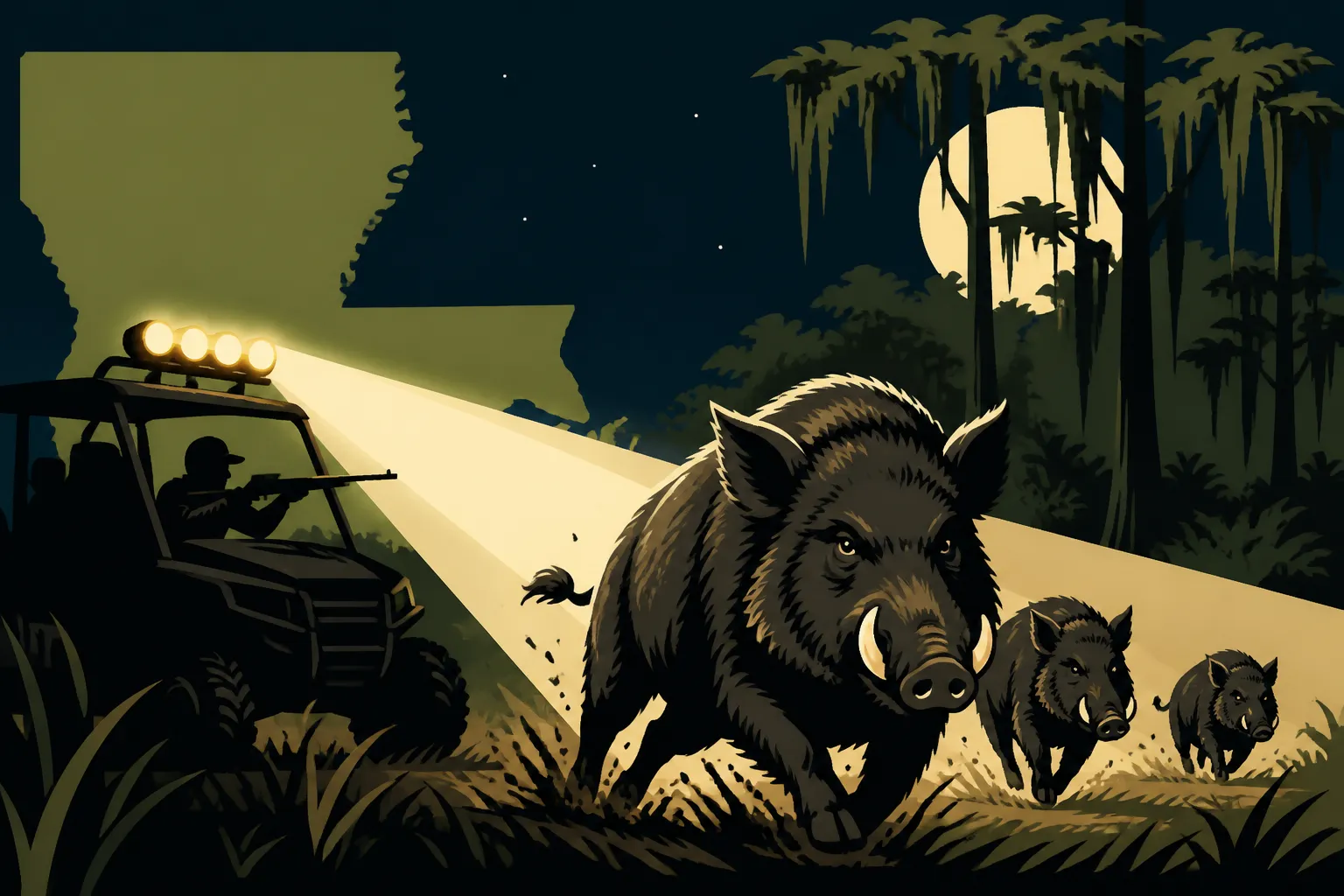
This is where the "lights" come into play, and Louisiana's rules are quite clear and permissive for hogs on private land. The state specifically allows the use of artificial lights, including headlamps, weapon-mounted lights, thermal imaging, and night vision devices, when hunting feral hogs at night on private property. This isn't just a convenience; it's an absolute necessity for safe and effective nocturnal hunting. You can shine a light on them, locate them with thermal, and take them out. This liberality is a direct response to the problem these animals present. For a deeper dive into the specifics, check out Night Hog Hunting Light Rules in Louisiana.
Caliber and Weapon Restrictions
When it comes to the type of firearm or archery equipment you can use for night hunting hogs on private land, Louisiana is also very accommodating. There are no caliber restrictions for centerfire rifles, shotguns, or handguns, and no limitations on archery equipment (compound bows, crossbows, traditional bows). The primary consideration should always be ethics and effectiveness: choose a cartridge and bullet combination that will humanely dispatch a hog, which can be surprisingly tough animals. Common choices include .223/5.56, .308, 6.5 Creedmoor, and larger shotgun slugs. The goal is to anchor them quickly, minimizing tracking in the dark and ensuring a clean kill.
Essential Gear for Night Hunting with Lights
Effective night hunting of feral hogs isn't just about legal permissions; it's about having the right tools for the job. The darkness is your ally against the hogs, but it can also be a significant challenge without specialized equipment. Investing in quality gear will dramatically increase your success rate and, more importantly, your safety.
Thermal and Night Vision Optics
These technologies are game-changers for night hunting. They allow you to see in ways that traditional lights simply cannot, giving you a distinct advantage over nocturnal hogs.
- Thermal Imaging: This technology detects heat signatures, making hogs (or any living creature) glow brightly against a cooler background, even in complete darkness or through light cover. You can spot a hog sounder in a dense brush line that you'd never see with a spotlight. The clarity varies between models, but even entry-level thermal scopes can detect hogs at impressive distances. Brands like Pulsar and ATN are popular choices. When researching these, many hunters will consult resources like GoHunt for reviews and comparisons to find the best fit for their budget and needs.
- Night Vision: Unlike thermal, night vision amplifies ambient light (starlight, moonlight) to create a visible image. It's more akin to seeing in black and white or shades of green. While it requires some ambient light, many modern digital night vision devices can also be paired with an invisible infrared (IR) illuminator to provide their own light source, making them effective even on the darkest nights. It offers more detailed identification of targets than thermal, which is helpful for confirming you're shooting at a hog and not a deer.
Each has its pros and cons, and many serious hog hunters will use a combination – thermal for scanning and spotting, and night vision for target identification and shooting.
Here's a quick comparison:
| Feature | Thermal Imaging | Night Vision | Weapon-Mounted Visible Light |
|---|---|---|---|
| Detection | Excellent (heat signature) | Good (ambient light amplification + IR) | Fair (direct illumination) |
| Identification | Moderate (silhouette, heat pattern) | Excellent (detailed image) | Excellent (detailed image) |
| Light Required | None | Minimal ambient light, often uses IR illuminator | None (produces its own light) |
| Stealth | High (no visible light emitted) | High (IR illuminator generally invisible to eye) | Low (emits bright, visible light) |
| Cost | High | Moderate to High | Low to Moderate |
| Through Cover | Excellent (can "see" through light brush, fog) | Poor (blocked by cover, fog) | Poor (blocked by cover, fog) |
| Battery Life | Moderate | Good | Excellent |
Weapon-Mounted Lights
For those not ready to jump into the world of thermal or night vision, a powerful weapon-mounted light can still be highly effective. These are typically LED lights that attach directly to your rifle or shotgun, often with a pressure switch for momentary activation. The key here is brightness and beam quality. You want a tight, powerful beam that can illuminate hogs at realistic shooting distances. Some lights offer adjustable focus, allowing you to flood an area or focus a tight beam. While not as stealthy as thermal or night vision (hogs will react to the sudden bright light), they are much more affordable and can be very effective, especially over bait sites or in open fields. Colors like red or green are often favored by hunters as they are thought to be less alarming to animals than white light, though scientific evidence on this can be mixed.
Suppressors for Noise Control
A suppressor (often called a silencer) is an incredibly valuable tool for night hunting feral hogs. While they don't make your firearm completely silent, they significantly reduce the muzzle blast, making follow-up shots easier and reducing the noise impact on your ears and those of nearby hunters. Crucially, a suppressor can also reduce the sound signature enough that the remaining hogs in a sounder might not immediately scatter after the first shot, potentially allowing for multiple kills. This is a huge advantage when dealing with large groups of hogs. Additionally, it's a courteous measure if hunting near neighbors or residential areas. Always ensure you comply with all federal and state laws regarding suppressor ownership and use.
Calls and Baiting Strategies
Even at night, calls and bait can be highly effective. Feral hogs are constantly looking for food, and a well-placed bait site can draw them in.
- Baiting: Corn is the classic choice, but adding attractants like soured corn, jello mix, or commercially available hog attractants can make it even more irresistible. A feeder that dispenses corn at specific times can train hogs to show up consistently. When Building and Freshening a Hog Bait Site, consider its location carefully—away from sensitive areas, with a good backstop, and accessible for stealthy approaches at night. Remember, while baiting is generally allowed for hogs on private land, always double-check local regulations or WMA rules if hunting public ground, as baiting restrictions for other species might apply.
- Calls: While often associated with deer or turkey, some hog calls mimic distressed piglet sounds or feeding grunts. These can sometimes draw curious hogs in closer, especially when used subtly in conjunction with a bait site. However, hogs are wary, so overuse can make them flee.
Tactics for Effective Night Hunting on Private Land
Successful night hunting isn't just about having the right gear; it’s about employing smart tactics that exploit hog behavior and the cover of darkness. Stealth, patience, and knowing your property are paramount.
Scouting and Setup Prior to the Hunt
Just like with any other hunting endeavor, thorough scouting is the foundation of a successful hog hunt. You need to know where the hogs are feeding, bedding, and traveling. This involves daylight observation, checking for fresh rooting, tracks, and droppings. Trail cameras are invaluable for determining when hogs are active, which routes they use, and how large the sounders are. Many hunters use advanced mapping tools, like those found on the GoHunt platform, to mark areas of activity, potential ambush points, and safe shooting lanes. Pay close attention to terrain features like creek beds, thickets, field edges, and natural funnels that hogs might use as travel corridors.
Once you've identified active areas, consider your setup. Are you going to sit in a ground blind, a treestand, or approach on foot? For night hunting, a comfortable ground blind (well-brushed in for concealment) often provides the best platform for stable shooting and minimizing detection, especially if you plan to use a visible light. Make sure your shooting lanes are clear and, most importantly, that you have a safe backstop beyond your target area. Remember, bullets travel far, and even at night, safety cannot be compromised. Consider Using a Ground Blind on Louisiana Public Land principles, but apply them to your private property.
Stalking Techniques Under the Cover of Darkness
Stalking hogs at night with thermal or night vision can be incredibly exhilarating and effective. The key is extreme stealth. Hogs have an incredible sense of smell and hearing, and while their eyesight might not be the best, they are still adept at detecting movement and anomalies in their environment.
- Wind Direction: Always approach from downwind. This is non-negotiable. Hogs will smell you long before they see or hear you.
- Slow and Deliberate Movement: Take small, quiet steps, checking the ground ahead for crunchy leaves or twigs. Move during natural pauses in the environment, like a gust of wind or distant traffic noise.
- Utilize Cover: Even in the dark, using shadows, brush lines, and terrain features to break up your silhouette is important.
- Scanning: Continuously scan with your thermal or night vision device to locate hogs and monitor their behavior. If they appear agitated or alert, freeze and wait for them to calm down before resuming your stalk.
- Communication (if hunting with a partner): If hunting with a partner, establish clear, non-verbal signals beforehand. Hand signals or quiet whispers can prevent accidental spooking.
The goal is to get within an ethical shooting distance, typically 50-150 yards, without being detected. This requires immense patience and discipline.
Ambush Points and Bait Sites
For many, setting up an ambush over a known hog travel route or a actively baited area is the most effective night hunting tactic.
- Bait Site Ambush: If you're using bait, position your stand or blind where you have a clear, safe shot at the hogs that come to feed. Often, this means setting up 50-75 yards away from the bait pile. You want to be far enough not to be easily scented or heard, but close enough for a confident, ethical shot. Set up well before dark, allowing your scent to dissipate and for the woods to settle. When the hogs arrive, they will likely be focused on feeding, giving you a prime opportunity.
- Travel Corridor Ambush: Hogs often use the same trails to move between bedding and feeding areas. Identifying these Scrape Lines Along a Logging Road or established paths and setting up an ambush point can be highly productive. Choose a spot where you have good visibility along the trail and a clear shot. Again, wind direction is paramount. Patience is key, as hogs might not show up at a set time.
When using a weapon-mounted light, wait until the hogs are at the bait or clearly visible in your shooting lane before flicking on the light. The sudden illumination will likely freeze them for a few seconds, giving you a chance for a precise shot. With thermal or night vision, you can already see them, so you simply need to acquire your target and make the shot.
Safety Considerations for Night Hunting Hogs
Night hunting, while effective, carries inherent risks due to reduced visibility. Prioritizing safety is paramount, not just for yourself but for anyone else in the vicinity. Complacency has no place when hunting in the dark.
Confirming Your Target and Backstop
This is the absolute golden rule of night hunting: always positively identify your target and know what is beyond it. The shadows and low light can play tricks on your eyes, even with the best optics. Never take a shot at a "blob" or a "movement." Confirm it's a hog, and confirm there's a safe backstop – a hill, a thick wooded area, or open ground – where your bullet won't travel to unintended places. Many tragic hunting accidents occur because hunters failed to confirm their target in low light. If there's any doubt, do not shoot. This is even more critical in Louisiana's often flat terrain, where natural backstops can be scarce. Always consider the potential impact zone.
Communication and Hunting Partners
If you're hunting with a partner or in a group, clear and consistent communication is vital. Before the hunt, establish:
- Designated Hunting Zones: Each hunter should know their assigned area to prevent accidental shots at a partner.
- Check-in Procedures: A system for checking in and out, or periodic communication (via radio or text, if signal allows) to confirm locations.
- Emergency Plans: What to do if someone gets lost, injured, or if an animal is wounded and needs tracking.
- No-Shoot Zones: Clearly define any areas where shots should never be taken, such as towards roads, buildings, or property lines.
It's often safer to hunt with a partner at night, as two sets of eyes are better than one, and assistance is readily available in case of an issue. However, this also means coordinating movements and shot opportunities even more carefully.
Field of Fire and Obstacles
Before dark, carefully scout your shooting lanes and identify any potential obstacles that could deflect a bullet or obscure your view. Twigs, small branches, and tall grass can all interfere with your shot, especially if using a visible light that casts harsh shadows. Clear any small obstructions within your immediate field of fire from your stand or blind.
When moving, be acutely aware of your surroundings. It's easy to trip over roots, logs, or uneven terrain that you can't see. Move slowly and deliberately. If you're carrying a loaded firearm, keep the muzzle pointed in a safe direction at all times, and only take the safety off when you are ready to shoot at a positively identified target with a clear background.
After the Shot: Processing and Management
Successfully taking a hog at night is only half the battle. What you do next is crucial, both for ensuring a humane end for the animal and for proper management and public health.
Field Dressing and Recovery in the Dark
Once a hog is down, the work begins. Approaching a downed hog at night requires caution, as wounded animals can be dangerous. Give the animal time to expire before approaching. Use a bright headlamp to confirm it's truly down.
- Tracking: If the hog runs, Blood Trailing After Dark in Louisiana can be incredibly challenging. Thermal optics can sometimes help locate a downed animal by its residual heat signature, but if the trail is difficult, it's often better to back out and wait for daylight to prevent pushing a wounded animal further. Mark the last known blood or sign carefully.
- Field Dressing: Field dressing a hog at night is messy but necessary, especially in warm Louisiana temperatures. This immediately begins the cooling process, which is vital for meat quality. Have a good, sharp knife, gloves, and plenty of water or wipes. You can refer to Field Dressing a Deer in Warm Weather for principles that largely apply to hogs, focusing on quick gut removal. Be mindful of potential diseases that can be transmitted from hogs, like brucellosis, so wear gloves and avoid contact with blood and internal organs if you have open cuts.
Carcass Disposal and CWD Concerns
Proper disposal of hog carcasses is critically important, particularly given the ongoing concerns about Chronic Wasting Disease (CWD) in deer and other diseases that hogs can carry. While CWD primarily affects cervids (deer, elk), improper carcass disposal can attract other wildlife and potentially contribute to disease spread.
- On-site Disposal: The most common method on private land is to leave the carcass in a remote area for scavengers, provided it's far from homes, water sources, and public view.
- Burial: Burying the carcass deep enough to deter scavengers is another option.
- Landfill: Some landfills accept animal carcasses, though you should call ahead to confirm their policies.
- CWD Zone Considerations: If you are hunting in or near a designated CWD Management Zone in Louisiana, the LDWF has specific regulations regarding carcass movement. Hogs, while not susceptible to CWD, can interact with deer, and proper disposal is part of overall wildlife health management. Always check the latest LDWF guidelines, especially concerning Louisiana Carcass Movement Restrictions if applicable to your area.
Utilizing the Harvested Meat
Feral hog meat can be delicious, but proper handling is crucial. The quality of the meat can vary depending on the hog's age, diet, and sex (boars, especially older ones, can have a strong musky odor that makes the meat unpalatable).
- Cooling: Rapid cooling is key. After field dressing, get the carcass into a cooler with ice, or hang it in a cool place, as quickly as possible.
- Processing: Many hunters process their own hogs, turning the meat into sausage, ground meat, or roasts. If you're not comfortable with home processing, take it to a reputable wild game processor.
- Recipes: Don't let good meat go to waste! Feral hog meat is incredibly versatile. From smoked pulled pork to delicious Cooking a Wild Turkey Breast inspired recipes (substitute with hog backstrap), there are countless ways to enjoy your harvest. Utilizing the meat is not only a reward for your efforts but also a respectful way to manage the resource, ensuring that the animal's life contributes to your table rather than merely being discarded.
Remember, night hunting feral hogs with lights on private land is a powerful tool in your wildlife management arsenal. With the right gear, smart tactics, and an unwavering commitment to safety, you can make a real dent in the hog population on your property and protect Louisiana's natural resources and agricultural bounty.
Disclaimer
Always consult the most current Louisiana Department of Wildlife and Fisheries regulations before engaging in any hunting activities, as laws and rules can change. This guide is for informational purposes only and does not supersede official state regulations. Ensure you have all necessary licenses and permits, and always prioritize safety.