What Lodge Meals Typically Include
Heading out for a guided hunt in Louisiana is an incredible experience, but let's be honest, beyond the thrill of the chase, many of us wonder about the creature comforts – especially when it comes to food. It's frustrating to arrive at a lodge only to find the meal expectations you had in your head don't quite match reality, or worse, to realize too late that your dietary needs weren't communicated. This guide will walk you through what you can typically expect from the dining experience at a Louisiana hunting lodge, ensuring you're well-fed and ready for your next adventure.
The Foundation: Three Square Meals (and Often More)
When you book a guided hunt that includes lodging, you're usually signing up for a package that takes care of your stomach from dawn till dusk, and sometimes even through the night. The general expectation is three solid meals a day, but the style, timing, and offerings can vary significantly depending on the outfitter, the type of hunt, and even the region of Louisiana you're hunting in. It’s always a good idea to clarify these details upfront.
Hearty Breakfasts for Early Starts
Your day in the Louisiana wilderness often begins well before the sun peaks over the cypress trees. This means breakfast at the lodge is designed to be substantial and fuel you for hours in the field or blind. You'll rarely find yourself scrambling for coffee or a quick bite.
Typically, you can expect a classic Southern breakfast spread. Think crispy bacon, savory sausage, fluffy scrambled eggs, and probably some grits. Biscuits with gravy are a common sight, offering a comforting, carby start to a cold morning. You might also find pancakes or waffles, fresh fruit, and of course, plenty of coffee to shake off the morning chill, along with juice and milk. It's the kind of meal that sticks with you, providing the energy needed for a long sit in a deer stand or a chilly morning in a duck blind. Some lodges might even have a designated cook who's up earlier than you are, getting these dishes prepared fresh. When considering a booking, sites like BookYourHunt often detail the included amenities, and checking those descriptions can give you a clue about the breakfast style.
Lunch in the Field or Back at Camp
Lunch can be the most variable meal of the day. For some hunts, especially those where you're deep in the Atchafalaya Basin Swamp Deer country or tucked away in a remote marsh blind, lunch might be packed to-go. This could mean sandwiches, wraps, bags of chips, fruit, and perhaps a granola bar or a cookie. It’s practical, easy to eat quickly, and keeps you in the action. Think about those days in a layout blind hunting coastal rice fields; you're not heading back to a lodge for a sit-down meal.
Other times, if the hunting area is close to the lodge, or if there's a break in the action, you might head back for a hot lunch. This could be anything from bowls of chili or stew to classic deli sandwiches with a side of potato salad. Some lodges might even whip up a quick jambalaya or a pot of red beans and rice, giving you a taste of local flavor mid-day. The key is flexibility, and outfitters generally plan lunch around the practicalities of the hunt itself. It’s one of those details that might be covered under What a Louisiana Deer Hunt Package Includes or What's Included in a Marsh Lodge Stay.
Dinners: The Culmination of the Day
Dinner is often the highlight of the day's dining, a chance to relax, recount stories of the hunt, and enjoy a more elaborate meal. This is where many lodges truly shine, offering hearty, often home-cooked, Southern-style cuisine.
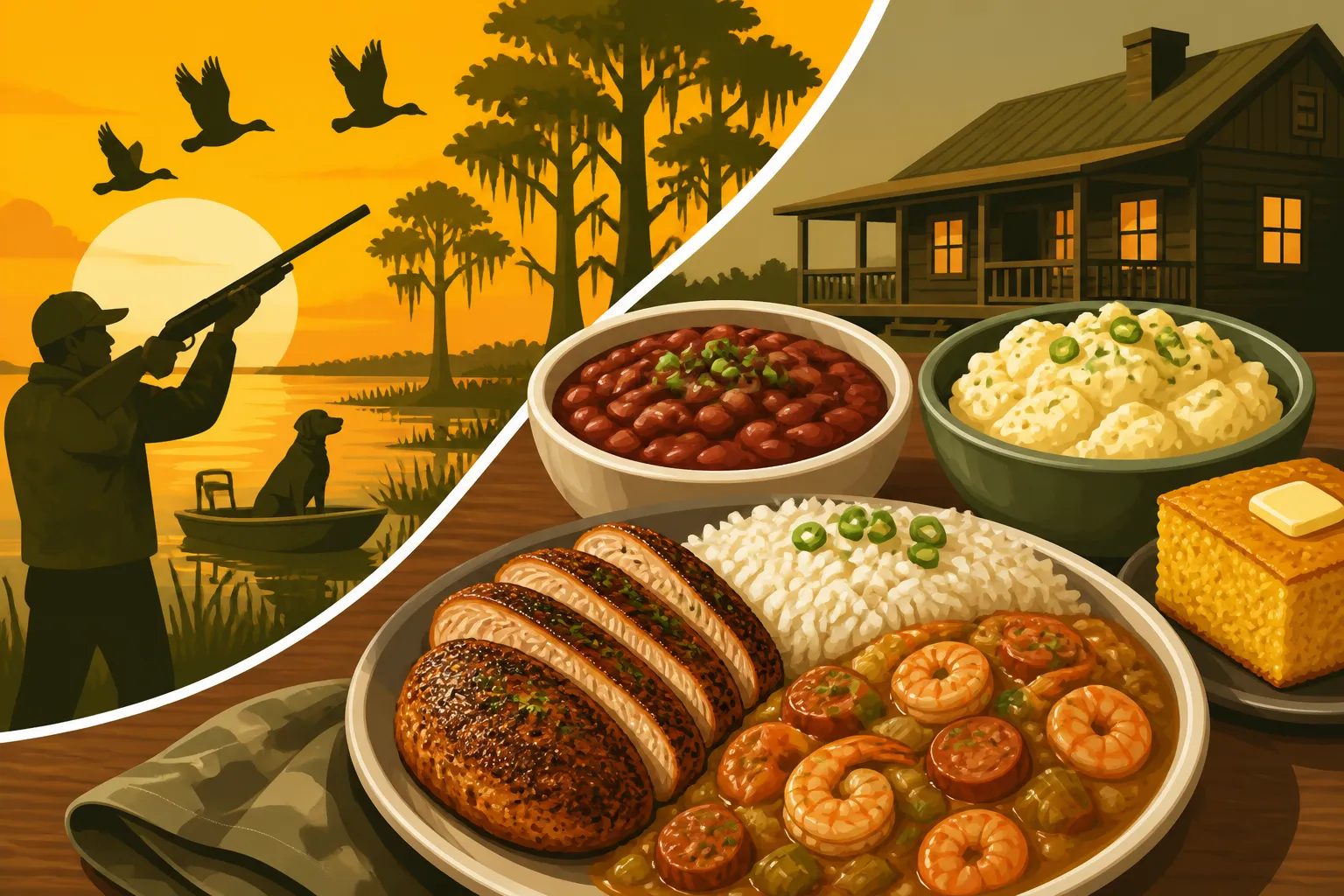
Expect generous portions of dishes like roasted chicken, pork loin, beef brisket, or even local specialties like fried catfish or shrimp Creole. Sides typically include staples like mashed potatoes, green beans, cornbread, and salads. Dessert is frequently included, perhaps a peach cobbler or pecan pie. The atmosphere is usually communal, with hunters gathering around a large table, sharing their experiences from the day. Some outfitters really lean into the Louisiana Deer Camp Traditions with their dinner offerings, making it a truly immersive experience. If you’re lucky, and if anyone in your group successfully harvested game, some guides might even prepare a dish from the day's take, though this isn't always standard practice and should never be an expectation.
Factors Influencing Your Lodge's Culinary Offerings
The specific food experience you get can depend on several key elements. It's not a one-size-fits-all situation in the diverse hunting landscapes of Louisiana.
Type of Hunt and Location
A deer camp tucked deep in the Kisatchie National Forest Hunting country might offer a different culinary experience than a sprawling lodge catering to Waterfowl Hunting the Louisiana Coastal Marsh.
- Remote Camps: For hunts in very remote areas, food might be simpler, more robust, and easier to prepare for larger groups. Think slow-cooked stews, Dutch oven meals, and hearty casseroles. Logistics for fresh ingredients can be a challenge, so convenience and satisfying fare take precedence.
- Coastal Marsh Lodges: These often have more developed kitchens and may focus on local seafood, reflecting their proximity to the Gulf. Fresh fish, shrimp, oysters, and even alligator might make appearances on the menu, especially for all-inclusive packages. A lodge that hosts Booking a Coastal Marsh Duck Lodge clients will often emphasize fresh, local fare.
- Piney Hills or Farm Country: In areas like North Louisiana's piney hills or farm country, meals might lean more towards classic Southern comfort food, reflecting the agricultural bounty of the region.
Outfitter Style and Budget
Just like any business, hunting outfitters have different operational styles and price points.
- All-Inclusive Luxury: High-end, all-inclusive packages often boast gourmet chefs, diverse menus, and perhaps even complimentary alcoholic beverages with dinner. These lodges pride themselves on a full culinary experience, often detailing their meal plans extensively when you're researching on platforms like GoHunt. This falls under the realm of What's Included in an All-Inclusive Deer Package.
- Mid-Range Outfitters: Most outfitters fall into this category, providing excellent, satisfying, and plentiful meals that are typically home-cooked or caterer-prepared. The focus is on quality, quantity, and comfort, rather than haute cuisine.
- Basic Camps: Some more budget-friendly options might offer simpler meals, or even operate on a "bring your own groceries" model with a communal kitchen. Always check the fine print!
The Role of the Cook
Often, a dedicated cook or kitchen staff manages the meals. These folks are usually seasoned pros, often locals, who know how to feed hungry hunters. Their presence ensures consistent quality and allows guides to focus on the hunt itself. In smaller operations, sometimes the guides or even the outfitter themselves might pitch in with the cooking, especially at more intimate camps.
Here's a quick overview of typical meal offerings:
| Meal Type | Common Offerings (Examples) | Beverages Included? | Notes |
|---|---|---|---|
| Breakfast | Scrambled eggs, bacon, sausage, grits, biscuits & gravy, pancakes/waffles, fruit | Coffee, juice, milk | Hearty, pre-hunt fuel. Often served early. |
| Lunch | Sandwiches (deli meat, PB&J), wraps, chips, fruit, cookies, chili, stew, red beans & rice, jambalaya | Water, sodas, iced tea | Can be packed to-go for field, or hot meal back at lodge/camp. |
| Dinner | Roasted chicken, pork loin, beef brisket, fried catfish, shrimp Creole, gumbo, mashed potatoes, green beans, cornbread | Water, iced tea, sodas (sometimes beer/wine in higher-end) | Often the most elaborate meal, served communally. Desserts common. |
| Snacks/Misc. | Coffee/hot chocolate (all day), pastries, granola bars, trail mix, fruit | Often self-serve | Available for early mornings, mid-day energy boosts, or late-night munchies. |
Special Dietary Needs and Requests
This is a crucial area where communication is key. Many hunters have specific dietary needs, allergies, or preferences, and it's absolutely vital to address these before you arrive.
Communicating Your Needs Upfront
Do not wait until you are sitting at the dinner table on the first night to mention your gluten intolerance or nut allergy. When you are Questions to Ask Before Booking a Louisiana Hunt, explicitly inquire about how the outfitter handles dietary restrictions. Most reputable outfitters are happy to accommodate, but they need advance notice to plan menus and shop for special ingredients.
Provide clear, detailed information about:
- Allergies: Severe allergies (e.g., peanuts, shellfish, dairy) need to be highlighted for safety.
- Intolerances: Gluten, lactose, etc., can be managed with proper planning.
- Dietary Preferences: Vegetarian, vegan, low-carb, or specific religious dietary requirements (e.g., kosher, halal) might require more extensive adjustments.
- Medical Conditions: If you have diabetes or other conditions that require specific meal timing or food types, share this with the outfitter.
Be realistic with your expectations. While a lodge will likely avoid allergens and provide alternatives for common restrictions, they might not be able to offer a full gourmet vegan menu in a remote camp. However, a good outfitter will make a genuine effort to ensure you have suitable and satisfying options. If you're booking through a platform like GoHunt or BookYourHunt, there's usually a section to add notes or special requests during the booking process, or you can follow up directly with the outfitter via email or phone.
What if the Lodge Can't Accommodate Everything?
In some rare cases, particularly with smaller, more rustic operations, full accommodation might not be possible. If this is the situation, ask if you can bring some of your own supplemental foods. Many hunters with very specific diets choose to pack their own snacks, protein bars, or even a few prepared meals just in case. It's always better to be over-prepared than underfed.
Making the Most of Your Lodge Dining Experience
Beyond just sustenance, lodge meals are an integral part of the overall hunting adventure. They offer a unique opportunity to connect with fellow hunters and guides.
Embrace Local Flavors
Louisiana is a culinary paradise, and many hunting lodges will incorporate local dishes into their menus. Don't be shy to try the regional specialties like gumbo, jambalaya, etouffee, boudin, or cracklins. These aren't just meals; they're a taste of the culture and heritage that makes hunting in Louisiana so unique. It’s part of the Louisiana Deer Camp Traditions.
Hydration is Key
While meals are a focus, remember to stay hydrated throughout the day. Water, coffee, and sometimes juices or sodas are generally available. Especially in Louisiana's often warm weather, proper hydration is crucial for energy and focus in the field.
Consider Tipping Your Cook
If there's a dedicated cook who has gone above and beyond to provide delicious meals and accommodate any special requests, consider including them in your gratuities. Just as you would for Tipping Guides and Boat Captains, showing appreciation for good food and service is a thoughtful gesture.
Planning for Non-Hunting Guests
If you are thinking of Bringing a Non-Hunting Guest to a Louisiana Lodge, ensure you clarify the meal arrangements for them as well. Some lodges include meals for all guests in their package, while others might charge an additional fee for non-hunting companions. It’s a detail worth confirming so there are no surprises.
In essence, while the primary focus of your trip is the hunt itself, the meals provided at a Louisiana lodge are often a delightful and memorable part of the experience. Good communication with your outfitter regarding your expectations and any dietary needs will ensure your belly is as happy as your hunting heart.
Disclaimer
This article is for general informational purposes only and does not constitute professional advice. Laws, prices and regulations vary by location and change over time. Consult a qualified professional for guidance on your specific situation.