How Much to Tip an Alligator Guide
Getting ready for a guided alligator hunt in Louisiana is an exciting prospect, full of anticipation for that primal experience in our bayous and marshes. You've likely spent time preparing for the hunt itself – maybe even gone through the lottery process to get those coveted tags. But once the hunt is over, a question often comes up that can leave even experienced hunters a little unsure: "How much should I tip my alligator guide?" It's a valid concern, and one that many folks quietly ponder. This guide is here to demystify the process, explain what goes into a great guided alligator hunt, and help you determine a fair and appropriate gratuity for the hard-working professionals who make these unique adventures possible.
Understanding the Role of Your Alligator Guide
Many folks think of an alligator guide as simply someone who puts them on a gator. While that's certainly a core part of the job, it's just scratching the surface of the immense effort, expertise, and dedication these individuals bring to the table. An alligator hunt, whether it's by hook-and-line or snatch hook, involves specialized knowledge of our intricate Louisiana waterways, understanding gator behavior, and an unwavering commitment to safety.
The Expertise They Bring
An alligator guide isn't just a boat driver; they are navigators of a complex ecosystem, intimately familiar with local waterways and gator habits. They spend countless hours before your hunt scouting, checking lines, and monitoring conditions to ensure the best possible chance for success. Think about the unique challenges of our Louisiana environment: fluctuating water levels, shifting mud, hidden cypress stumps, and knowing which areas hold the biggest or most active gators. This isn't knowledge you pick up overnight; it's gained from years, often generations, of being on the water. They know exactly where to set Hook-and-Line Alligator Setups for optimal results, understanding currents, depths, and gator travel routes. Their ability to read the water, spot signs of activity, and predict gator movement is truly impressive. They’re also experts at judging the size of an alligator from a distance, which is crucial when trying to harvest a legal animal, especially in a state where Judging a Legal Forty-Eight-Inch Alligator is a key skill.
The Effort Behind the Scenes
The "hunt" often begins long before you ever step foot in the boat. Guides might be out at dawn, or even before, checking baits, repairing lines, and making adjustments based on weather patterns or previous activity. If you've booked a multi-day hunt, this process is continuous. Once an alligator is on the line, the guide's work really ramps up. It takes skill and strength to manage a powerful animal like a gator, and they’re often doing the heavy lifting to get it alongside the boat and safely dispatched. They’re teaching you the techniques for Landing an Alligator From a Small Boat while ensuring everyone remains safe. This isn't just about the physical exertion; it's about quick decision-making under pressure and ensuring a clean, ethical harvest. After the hunt, they're often responsible for the initial processing, tagging, and sometimes even delivering the gator to a processor, all of which adds considerable time and labor.
Safety and Logistics
Safety in the Louisiana swamp is paramount, and your guide is your primary guardian. Navigating shallow bayous, dealing with powerful wildlife, and operating specialized equipment all carry inherent risks. Your guide is responsible for maintaining the boat, ensuring all safety gear is aboard and functional, and making sure everyone understands and adheres to safety protocols. This includes handling firearms or other dispatch tools, teaching you how to properly interact with a hooked gator, and keeping a watchful eye on environmental conditions that can change rapidly in our state. Beyond safety, there's a whole world of logistics: managing licenses, understanding Louisiana Alligator Legal Methods, and ensuring all tags are correctly applied. They're making sure your adventure stays legal and ethical, which is a huge load off your mind as a hunter.
General Tipping Etiquette in the Hunting World
Tipping hunting guides is a long-standing tradition, rooted in appreciation for their hard work and the specialized service they provide. While specific percentages can vary, the underlying principle is consistent: recognize and reward exceptional effort and a successful experience. Alligator hunting, while unique, falls under this general umbrella.
Industry Standards for Guides
Across the hunting industry, a typical gratuity for a guide ranges from 15% to 20% of the total hunt cost. This is a common starting point for most guided trips, whether you're chasing deer, ducks, or, in this case, alligators. The amount can fluctuate based on a few key factors, which we'll delve into. It's important to view the guide's fee as compensation for their time, equipment, and expertise, and the tip as a bonus reflecting the quality of your experience. If you're wondering What a Guided Alligator Hunt Costs, remember that the initial price typically covers the guide's operational expenses and basic services, but not necessarily the above-and-beyond effort that makes a hunt truly memorable. Many hunters use platforms like BookYourHunt or GoHunt to find and research guides, and these platforms often include information on what to expect regarding gratuities in their FAQs or booking details, providing transparency right from the start.
Factors Influencing Your Tip
So, what makes a 15% tip become a 20% or even higher one? Several elements play into this:
- Effort: Did your guide work tirelessly, even when conditions were tough? Did they try multiple spots, adjust tactics, and stay positive despite challenges? A guide who puts in maximum effort, regardless of the outcome, deserves recognition.
- Safety: Did you feel safe and confident throughout the entire experience? Safety is non-negotiable, and a guide who prioritizes it and maintains a professional demeanor earns higher regard.
- Knowledge: Was your guide incredibly knowledgeable about alligators, their habitat, and the hunting methods? Did they share insights, answer questions, and enhance your understanding of the experience?
- Professionalism: Was the guide punctual, well-prepared, and courteous? Did they manage expectations well and make you feel welcome?
- Success (but not solely): While harvesting an alligator is often the goal, it shouldn't be the only factor. Sometimes, despite a guide's best efforts, Mother Nature doesn't cooperate. If the guide still provided an excellent experience, taught you a lot, and worked hard, a good tip is still warranted. However, a successful hunt often elevates the experience and can certainly justify a higher tip.
- Going Above and Beyond: Did the guide offer extra assistance with gear, provide excellent conversation, take great photos, or help with processing far beyond what was expected? These added touches make a huge difference.
When a Tip Isn't Just About the Kill
It’s easy to get caught up in the "kill" aspect of hunting, but a truly great guide understands that the experience itself is paramount. You might have drawn a tag through the Applying for the Alligator Recreational Lottery, which is a thrill in itself, and the hunt is the culmination of that excitement. Imagine a scenario where the weather turns sour, or the gators just aren't cooperating. A top-notch guide will still make the most of the day, perhaps shifting focus to educating you about the marsh, pointing out other wildlife, or sharing incredible stories of past hunts. They might explain why the gators are behaving a certain way, or show you signs of activity you wouldn't notice on your own. This educational and immersive aspect is incredibly valuable. They might even teach you about Louisiana's New Recreational Alligator Season rules and how they've changed over time. If you walk away with a deeper appreciation for Louisiana's wetlands, learned a ton, and had a fantastic time, even without pulling the trigger, that guide still earned their gratuity.
Calculating Your Alligator Guide's Gratuity
Deciding on the exact amount can still feel a bit ambiguous. While the 15-20% rule is a good baseline, let's explore how to apply it, considering the nuances of alligator hunting and the various individuals who might contribute to your experience.
Percentage-Based Tipping
For most guided alligator hunts, using a percentage of the total hunt cost is the most straightforward and widely accepted method. If your hunt package, for example, cost a certain amount, applying 15-20% to that figure gives you a solid range for your tip.
Example Scenario:
Let's say you booked a two-day guided alligator hunt. The listed price for the guide's service, boat, bait, and tagging fees might be represented by a certain amount.
- Hunt Cost: (Let's say X amount – we can't use actual figures)
- 15% Tip: 0.15 * X
- 20% Tip: 0.20 * X
This range allows you to adjust based on the factors discussed earlier. If your guide was exceptional, went above and beyond, and you had a truly memorable experience, lean towards the higher end. If everything was satisfactory but not necessarily extraordinary, the lower end of the range is perfectly acceptable. When researching guide services, reputable platforms or booking sites often include details about expected gratuities. Some hunters even find their guides through specialty sites or aggregators like BookYourHunt or GoHunt, where client reviews sometimes touch on tipping practices.
Flat-Rate Tipping Considerations
While percentage-based tipping is common, some hunters prefer a flat-rate approach, especially if the hunt cost is variable or if they feel a flat amount better reflects the effort involved. This might be more common on shorter, single-day hunts, or if you're Booking an Alligator Hunt as a Lottery Winner and only paying for the guide's service, not the tag itself.
Consider a flat rate if:
- Your hunt was deeply discounted: Perhaps you got a special rate, but the guide's effort was still full price. Tipping on the actual value of the service, rather than a discounted price, is a good practice.
- The "hunt cost" is hard to define: If you're on a unique trip where various services are bundled, a flat rate you feel comfortable with, considering the guide's time and skill, might be easier.
- You're only paying for a portion of the experience: For example, if a friend bought the tags and you're just pitching in for the guide, a flat amount might feel more appropriate than calculating a percentage of an unknown total.
A good way to gauge a flat rate is to think about daily wages for highly skilled labor, multiplied by the number of days the guide truly worked for you. Remember, this isn't just the hours you were in the boat, but also the scouting, prep, and post-hunt work.
Don't Forget the Deckhands and Camp Staff
Often, a guided alligator hunt isn't a one-person show. Many operations involve deckhands, spotters, or other camp staff who contribute significantly to your comfort and success. These individuals are just as crucial to the smooth running of your trip, often doing much of the physical labor, boat maintenance, or making sure the camp runs efficiently.
How to include them:
- Ask the guide: Politely ask your guide if there's anyone else you should consider tipping. They'll appreciate the thoughtfulness and can often advise on how best to distribute gratuities.
- Allocate a portion of your total tip: If you plan on a 15-20% total, you might give the lead guide the majority, and then set aside a smaller, fixed amount for each additional crew member.
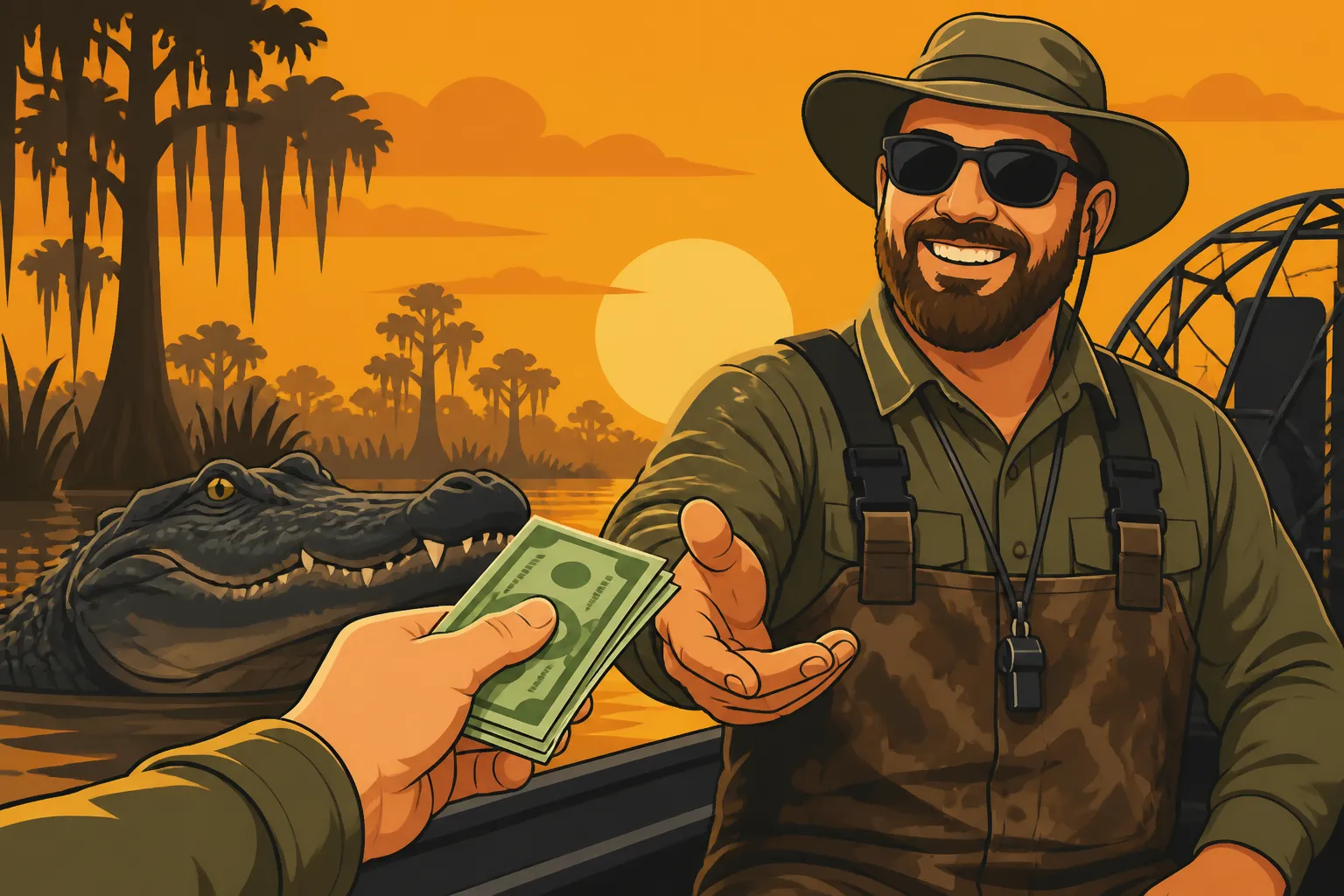
- Hand it directly: Whenever possible, hand tips directly to the individuals involved. This ensures they receive your appreciation directly.
- Camp Staff: If your hunt involves lodging or meals prepared by camp staff, a separate, smaller gratuity for them is a thoughtful gesture. Think of it similarly to tipping waitstaff or hotel housekeepers.
Here's a quick reference table to help visualize how various factors might influence your decision:
| Factor | Lower Tip Indication (e.g., 10-15%) | Higher Tip Indication (e.g., 15-20%+) |
|---|---|---|
| Effort | Minimal visible effort, seemed disengaged | Tireless, determined, went extra miles to find opportunities |
| Safety | Felt rushed or somewhat unsafe, minor oversights | Safety was paramount, clear instructions, felt secure |
| Knowledge | Basic information, not very conversational | Deep understanding, shared insights, answered all questions |
| Professionalism | Punctual but otherwise unremarkable, some disorganization | Highly organized, personable, attentive, went above & beyond |
| Success | Unsuccessful hunt, little effort from guide | Successful harvest, guide worked hard, ethical shot |
| Overall Experience | Mediocre, forgettable | Exceptional, highly memorable, fun, educational |
| Additional Crew | No other staff involved, or minimal interaction | Multiple crew members contributing to the experience |
Remember, these are guidelines. The most important thing is that you feel comfortable with your decision and that your tip genuinely reflects your appreciation for the hard work and skill your alligator guide and their crew put into your hunt.
Making the Most of Your Alligator Hunt Investment
Beyond the financial aspect of a tip, there are other meaningful ways to show appreciation for your alligator guide and ensure you get the most out of your entire hunting experience. Building good relationships, providing honest feedback, and being a responsible hunter all contribute to a richer outdoor life for everyone involved.
Communicating Your Appreciation
Sometimes, a heartfelt "thank you" can be just as valuable as a generous tip. As you hand over the gratuity, take a moment to look your guide in the eye and express specific things you appreciated about their service. Was it their patience in explaining Snatch-Hook Alligator Tactics? Their calm demeanor when the gator put up a fight? Their knowledge of Where Louisiana's Biggest Alligators Live? Be specific. Guides often work long, sometimes grueling, hours away from their families, and knowing that their efforts were genuinely appreciated can be incredibly motivating. It affirms their passion and validates their hard work.
Feedback and Reviews
In today's digital age, online reviews are gold for guides and outfitters. After your hunt, take the time to write an honest, detailed review on the guide's website, social media, or any booking platform you used (like BookYourHunt or GoHunt). Highlight what they did well, mention any specific crew members who stood out, and describe your overall experience. This not only serves as a public thank you, but it also helps other prospective hunters make informed decisions and gives the guide valuable marketing. If you had any constructive criticism, consider sharing it directly and privately with the guide first, giving them a chance to improve. Many guides also appreciate a personal call or email a few days after the hunt to talk through the experience.
Building Relationships for Future Hunts
Hunting guides, especially those specializing in unique quarry like alligators, are often sought after. If you had an excellent experience, maintaining a relationship with your guide can lead to future opportunities, potentially even exclusive ones. They might offer you first dibs on certain dates, share insights about Louisiana's Recovering Black Bear season or other hunts they offer, or simply keep you in mind for prime hunting windows. A good guide values loyal clients who are respectful, appreciative, and easy to work with. Sending a holiday card, dropping an email to check in during the off-season, or just staying in touch can cement that relationship. Who knows, they might even become a great contact for general advice on Hunting the Atchafalaya Basin for other species or offer advice on Alligator Hunting Louisiana's Coastal Marsh.
Your guided alligator hunt in Louisiana is an investment in an unforgettable experience. By understanding the guide's role, applying thoughtful tipping etiquette, and communicating your appreciation, you ensure that investment pays dividends for both you and the dedicated professionals who make these adventures possible.
Disclaimer
This article is for general informational purposes only and does not constitute professional advice. Laws, prices and regulations vary by location and change over time. Consult a qualified professional for guidance on your specific situation.