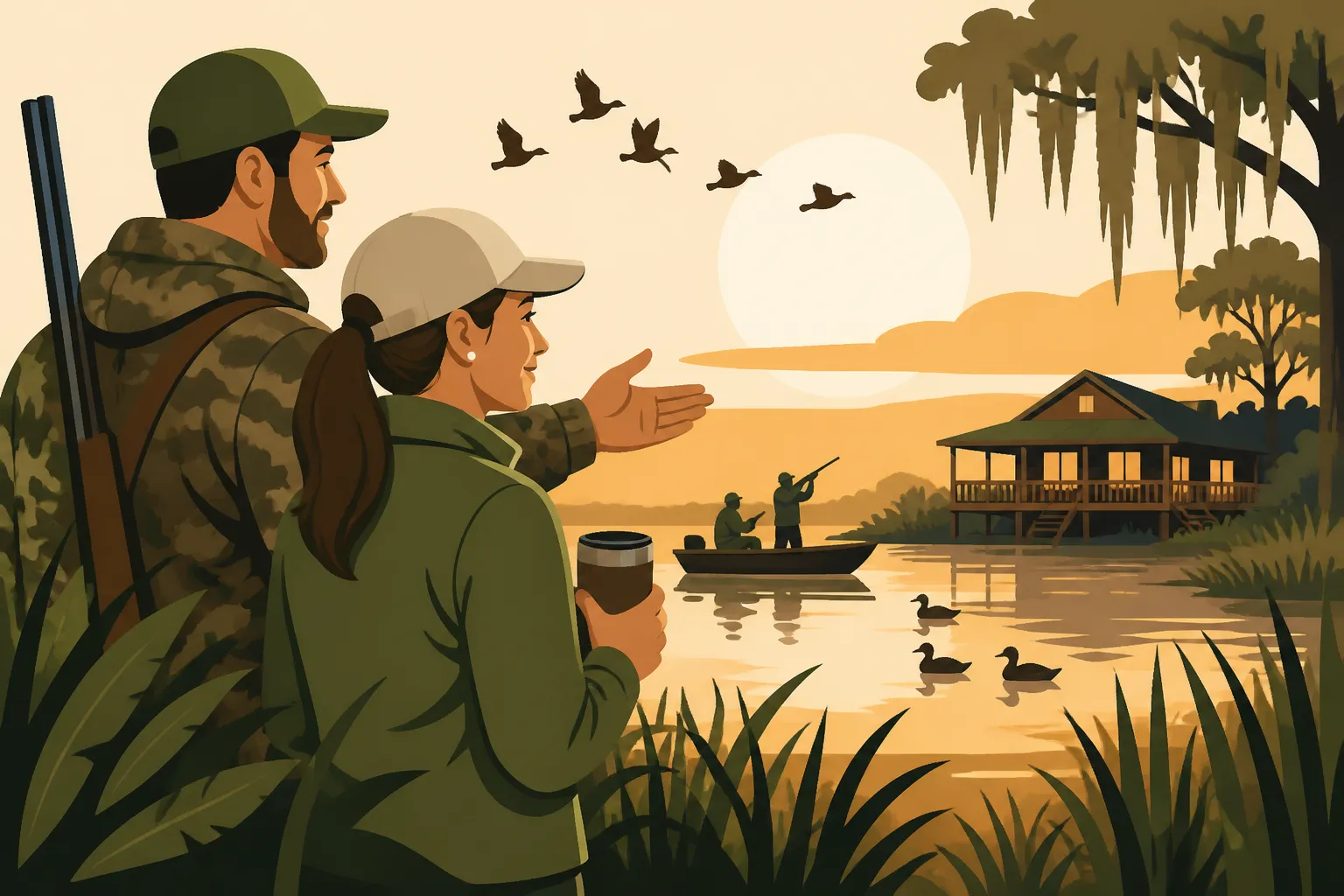
Bringing a Non-Hunting Guest to a Louisiana Lodge
It's a common dilemma for hunters: you're heading off for an incredible experience at a Louisiana hunting lodge, ready to immerse yourself in the bayou or the piney woods, but your spouse, friend, or family member who doesn't hunt wants to come along. The idea of sharing the atmosphere and the camaraderie is wonderful, but the reality of a hunting camp often clashes with the expectations of a non-hunting guest, not to mention the lodge's own policies and pricing. This guide will help you navigate the ins and outs of bringing a non-hunting companion to a Louisiana lodge, ensuring a smooth experience for everyone involved.
Understanding Lodge Policies for Non-Hunting Guests
When you picture a hunting lodge, you probably envision early mornings, muddy boots, game cleaning stations, and a bunch of folks swapping stories about the big buck that got away. It's an environment specifically tailored for the pursuit of game. Because of this, lodges often have very specific rules and pricing structures when it comes to accommodating non-hunting guests.
Why Lodges Have Specific Rules
First and foremost, hunting lodges are businesses built around hunting. Their insurance, staffing, and facilities are all geared towards supporting hunters. Bringing a non-hunting guest introduces a different dynamic that needs to be managed. For instance, there are liability concerns if a non-hunter wanders into an active hunting area or if they aren't fully aware of the safety protocols in place. The lodge also has a certain capacity for lodging and dining, and every bed and plate counts, especially during peak season. A non-hunting guest still utilizes resources, from utilities and housekeeping to meals and common area access.
Furthermore, many lodges aim to cultivate a specific atmosphere focused on the hunt. While they are usually welcoming, a guest who isn't participating in the primary activity might inadvertently disrupt the flow or conversation. It's not about being exclusive, but about maintaining the core purpose of the operation. Before you even think about mentioning a non-hunter, it's crucial to understand that the lodge's priority is the hunting experience for its paying hunters.
Common Non-Hunter Fees and What They Cover
It might come as a surprise to some, but most lodges charge a fee for non-hunting guests, even if they're sharing a room with a paying hunter. These fees are not arbitrary; they cover the actual costs of accommodating an additional person. Think about it: every guest consumes meals, uses towels, hot water, and electricity, and occupies a space that could otherwise be allocated to a hunter. These are real operational expenses that a lodge incurs.
The fee structure can vary significantly. Some lodges might charge a flat daily rate that includes all meals and access to common amenities. Others might break it down, charging per meal or per night of lodging. It's important to clarify exactly what these fees include. For example, does it cover access to any recreational facilities on site, like a small pond for fishing (if applicable and if your guest has the appropriate Louisiana Hunting Licenses and What They Cost or fishing license), or just basic room and board? Never assume a non-hunter can stay for free, or that their costs will be negligible. Always get a clear breakdown of the non-hunter rate and what is encompassed within that price point. This transparency upfront helps avoid any uncomfortable surprises during check-out.
Guest Activities and Restrictions
One of the biggest areas of misunderstanding is what a non-hunting guest can actually do while at the lodge. In many cases, non-hunters are strictly prohibited from accompanying hunters into the field. This isn't just about disturbing game; it's a significant safety and liability issue. Hunting can be dangerous, and untrained individuals in hunting areas pose a risk to themselves and others. Lodges often have strict rules about who can be in the woods, especially during active hunts, to ensure the safety of all parties.
So, what can a non-hunting guest do? Generally, they can enjoy the lodge's common areas, read, relax, maybe take a walk around the immediate lodge grounds if it's safe and permitted. If the lodge is in an area with local attractions, like a nearby town with shops or historical sites, they might be able to explore those during the day. Some lodges, particularly those with a more "resort-like" feel, might offer amenities such as swimming pools, nature trails, or even guided non-hunting activities, but these are exceptions rather than the norm for a dedicated hunting operation. It is absolutely essential to discuss these possibilities directly with the outfitter beforehand. Do not plan on your non-hunting guest being able to sit in a deer stand with you or join a duck hunt, as this is almost universally disallowed.
Communicating and Planning with Your Lodge
Bringing a non-hunting guest isn't something to spring on an outfitter at the last minute. Open and honest communication from the very beginning is the cornerstone of a successful trip for everyone.
Early Communication is Key
The moment you start considering bringing a non-hunting guest, you need to bring it up with the lodge or outfitter. This means before you put down a deposit or confirm your booking. Why so early? Because it allows the lodge to assess their capacity, adjust their planning, and clearly communicate their policies and fees. Surprising them closer to your arrival date can lead to an awkward situation, potential denial of accommodation, or a less-than-ideal experience if they're scrambling to make arrangements.
A simple phone call is often better than an email for this kind of detailed discussion. It allows for a real-time back-and-forth, where you can ask follow-up questions and get immediate clarifications. This early conversation is also your chance to get a feel for the lodge's flexibility and willingness to accommodate your specific request. If they seem hesitant or unhelpful, it might be a sign that it's not the right fit for a mixed group trip.
Questions to Ask the Outfitter
When you speak with the outfitter, come prepared with a comprehensive list of questions. The more detailed your understanding, the fewer surprises there will be. Here’s a checklist to get you started, and remember to use platforms like BookYourHunt or GoHunt for initial research on available lodges, but always follow up directly with the specific outfitter for these granular details:
- Is it even possible to bring a non-hunting guest during my chosen dates? Some lodges might have peak weeks where non-hunters are simply not an option due to space constraints or the intensity of the hunting schedule.
- What are the exact fees for a non-hunting guest, per day or per night? Get this in writing if possible, or at least confirmed via email after your call.
- What specifically is included in the non-hunter fee? Meals (all three, or just dinner?), lodging, access to specific amenities, etc.
- Are there any age restrictions for non-hunting guests? This is especially important if you're thinking of bringing a younger family member.
- Can they join for all meals with the hunting party? Some lodges might prefer non-hunters dine separately during specific times.
- What are the rules for non-hunters using common areas (living rooms, dining areas, patios)? Are there specific quiet hours?
- Are there any local attractions or activities nearby that a non-hunter could enjoy during the day? This shows you're thinking ahead for their experience.
- What in-camp activities, if any, are available for non-hunters? (e.g., small gym, pool table, reading areas, Wi-Fi access).
- Under what circumstances, if any, can a non-hunter accompany a hunter into the field or to a blind/stand? (Be prepared for a "no" on this one, as mentioned before).
- What is the cancellation policy specifically for non-hunting guests? This might differ from the hunter's cancellation policy.
- Is there cell service or Wi-Fi available for them to stay connected or entertain themselves?
Asking these questions upfront, similar to how you would approach Questions to Ask Before Booking a Louisiana Hunt for yourself, helps you understand the full scope of what you're signing up for.
Preparing Your Guest for the Lodge Environment
Once you've confirmed that your non-hunting guest can join, and you understand all the logistics, it's your responsibility to prepare them. Set realistic expectations right away. A hunting lodge is generally not a five-star resort, and it operates on a hunter's schedule. This means very early mornings, often before dawn, with hunters making noise, getting geared up, and heading out. The smell of coffee will be strong, and excited chatter might fill the air.
Explain the daily schedule: you'll be out hunting for most of the daylight hours, meaning they'll have significant stretches of time on their own. Dinners are usually a lively affair, filled with hunting stories and camaraderie, which can be wonderful but also intense for someone not directly involved. Advise them on what to pack: comfortable, casual clothes, plenty of reading material, headphones, a laptop or tablet for entertainment, and any snacks or drinks they might prefer outside of meal times. Ensure they understand the importance of quiet hours and respecting the hunters' focus. This preparation helps them feel included and also understand where they fit into the lodge's rhythm. Louisiana Deer Camp Traditions often involve a certain flow that non-hunters need to appreciate.
Making the Lodge Experience Enjoyable for Everyone
The goal is to have a great hunting trip for you and a pleasant, relaxing experience for your non-hunting guest. It's a balance, and it requires a bit of thoughtful planning.
Balancing Hunting Time with Guest Time
You're at the lodge to hunt, and that's your primary focus. However, if you've brought a guest, part of your responsibility is to ensure they also have a good time. This means finding a balance between your dedicated hunting hours and quality time with your guest. Perhaps you can plan to have afternoon breaks together, enjoy meals as a group, and engage in conversations during the evenings. It's often helpful to carve out specific times when you're fully present with them, even if it's just for an hour or two.
Consider if there are any short, non-hunting excursions that you could do together in the local area during the middle of the day, if your hunting schedule allows. Maybe a quick drive to a nearby historic site, a local market, or simply a relaxed coffee break in a nearby town. These small gestures can make a big difference in their overall enjoyment and prevent them from feeling isolated. Remember, they came to spend time with you, not just to sit alone in a lodge.
Activities and Amenities for Non-Hunters
To truly make their stay enjoyable, think about what your non-hunting guest enjoys doing. Do they love to read? A comfortable chair and good lighting are essential. Are they into board games or puzzles? Bringing some along could be a great idea. Some lodges might have a communal fire pit where evening stories are shared, offering a relaxed environment for everyone to gather. If the lodge is near a body of water and offers fishing, and your guest has a license, that could be an option. However, always confirm availability and licensing requirements with the lodge first.
Here's a table to help visualize common non-hunter amenities and activities:
| Amenity/Activity | Availability (General) | Notes |
|---|---|---|
| Lodge Common Areas | High | Living rooms, dining areas, outdoor patios. Usually available for relaxing, reading. |
| Wi-Fi/Internet Access | Moderate | Increasingly common, but connection quality can vary in rural areas. Essential for remote work or entertainment. |
| Local Sightseeing/Shopping | Varies | Depends heavily on the lodge's location. Some are near charming towns, others are remote. Requires personal transportation. |
| On-site Recreational Facilities | Low-Moderate | Think swimming pools, hot tubs, small gyms. More common in higher-end or "resort-style" lodges. Not typical for all hunting camps. |
| Fishing (on-site) | Low | Only if the lodge has a fishable pond/lake and permits guest fishing. Requires a valid Louisiana fishing license. |
| Nature Walks/Hiking (on-site) | Low-Moderate | May be permitted on immediate lodge grounds; generally not in active hunting areas. Always ask for safe, designated paths. |
| Board Games/Books | Moderate | Some lodges provide, but best to bring your own for guaranteed entertainment. |
| Spa/Wellness Services | Very Low | Extremely rare for hunting lodges. If desired, look for lodges near towns with such facilities. |
Keep in mind that while some lodges might lean towards a more luxurious experience, many traditional hunting camps are simpler and focus purely on the hunting aspects. Managing expectations is critical.
Respecting the Hunting Focus
While you want your guest to have a good time, it's also important that they understand and respect the primary purpose of the lodge. This means being mindful of noise levels, especially during early mornings when hunters are preparing or returning from hunts. They should understand that hunters are focused, often tired, and might not always be available for conversation. Encourage your guest to appreciate the unique atmosphere of the camp without disrupting it.
This also extends to the practicalities of the hunt. They should know not to open doors to areas where hunters are cleaning game or storing gear unless invited. Understanding the rhythms of the lodge – the early breakfasts, the midday quiet, the celebratory dinners – is crucial for seamless integration. By doing so, they become a welcome part of the camp, rather than an unexpected anomaly.
Alternative Options for a Shared Experience
Sometimes, a traditional hunting lodge might not be the best fit for a non-hunting guest. Thankfully, there are other ways to share a slice of the Louisiana outdoors experience.
Day Hunts or Shorter Stays
A full week at a hunting lodge can be a long time for someone who isn't hunting. Consider whether a shorter stay might be more appropriate for your guest. Perhaps they only join you for the first or last couple of days, enjoying the evening meals and camp stories, and then depart. This allows them to experience the camaraderie without the long stretches of solo time.
Alternatively, you might opt for day hunts yourself, especially if you're targeting a species like turkey or hogs that often involve shorter outings. You could book a guided day hunt for yourself, such as a Single-Day Turkey Guide Rates in Louisiana or a Day Rate for a Louisiana Deer Guide, and then return to a more general accommodation where your guest has been able to enjoy other activities during your absence. This offers flexibility and caters to both your hunting desires and their need for engagement. It's a way to introduce them to the hunting lifestyle without the full immersion of a multi-day lodge experience.
Lodges Catering to Families or Mixed Groups
The hunting industry is evolving, and some outfitters are starting to cater more to families or mixed groups where not everyone hunts. These lodges might be designed with more diverse amenities, offer non-hunting activities, or be located closer to attractions that can occupy a non-hunting guest. They might have more comfortable, private accommodations or even separate cabins for families.
When searching for a lodge, explicitly look for ones that advertise themselves as "family-friendly" or "non-hunter friendly." They might have specific programs for spouses or children, ensuring everyone has something to do. These operations understand the value of a comprehensive experience and are often more flexible with their schedules and offerings. However, expect these types of lodges to potentially command a different price point than a bare-bones hunting camp.
Non-Hunting Vacations Near Hunting Destinations
If your guest's interests are vastly different from hunting, and you want them to have complete freedom and enjoyment, consider booking separate accommodations. You could book your hunting trip, perhaps staying at a lodge or a modest camp, while your guest books a stay in a nearby town or city that offers attractions they would enjoy. For example, if you're Hunting the Tensas River Basin in Northeast Louisiana, your guest might prefer to stay in Monroe or Vicksburg (just across the river in Mississippi) and explore local shops, museums, or riverfront activities.
You could then meet up in the evenings for dinner, or during midday breaks, or even spend a full non-hunting day together if your schedule allows. This approach gives your guest complete independence to pursue their own interests without feeling like they're "waiting around" at a hunting camp. It removes any pressure on the lodge to entertain a non-hunter and ensures everyone gets the vacation they truly desire. This might involve slightly more logistical planning and potentially higher overall costs with two separate accommodations, but it often leads to a more fulfilling experience for both parties. Remember to factor in travel time if you choose this option.
Disclaimer
This article is for general informational purposes only and does not constitute professional advice. Laws, prices and regulations vary by location and change over time. Consult a qualified professional for guidance on your specific situation.