Single Hunter Versus Group Booking Rates
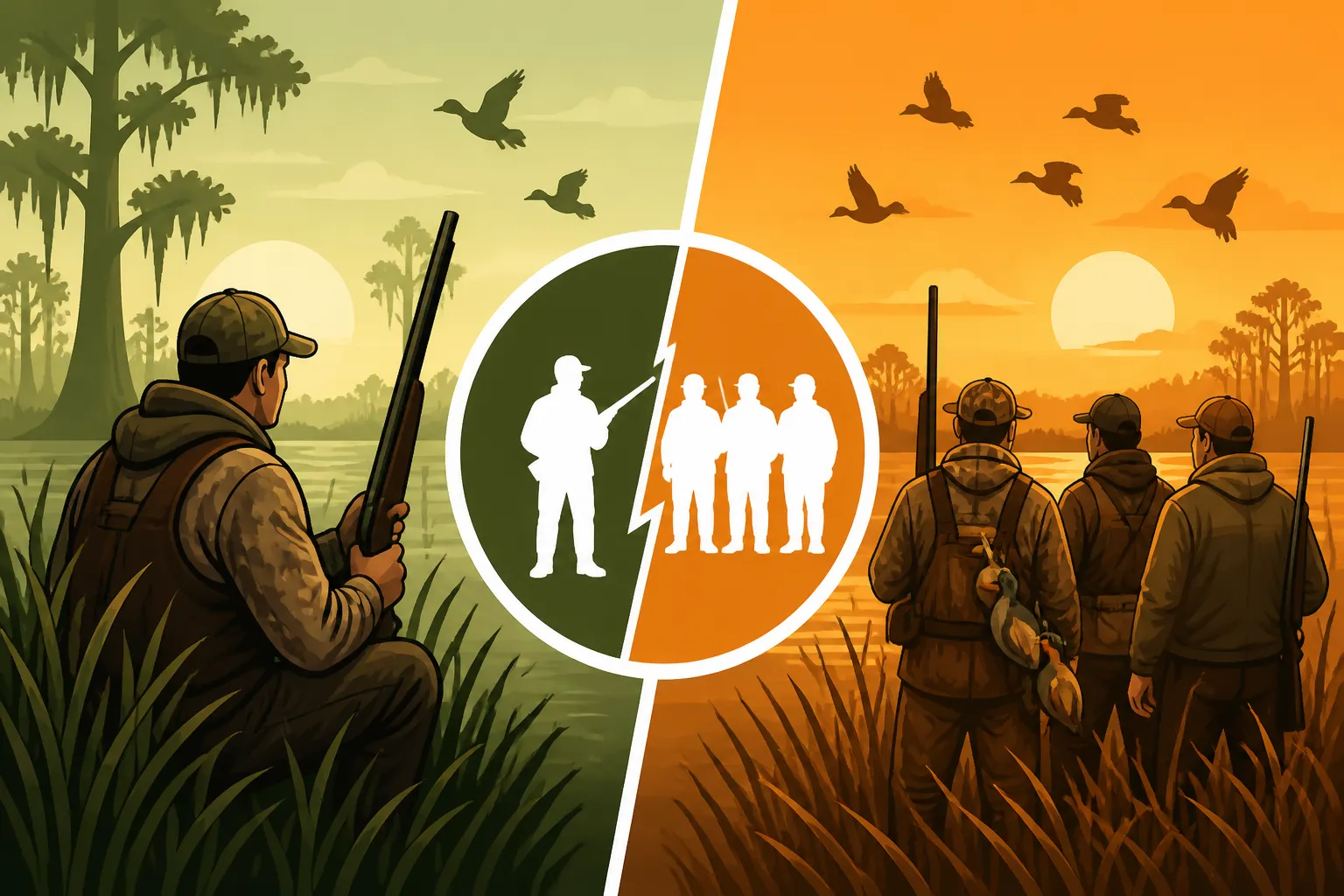
Trying to figure out the best way to book a guided hunting trip in Louisiana, whether it's for deer in the piney hills or ducks in the marsh, often boils down to a fundamental question: do you go it alone or bring a crew? It's a real head-scratcher because the number of hunters can dramatically impact the per-person cost, the outfitter's flexibility, and even the overall experience. This guide aims to pull back the curtain on single hunter versus group booking rates, helping you understand the financial and practical considerations for your next Bayou State adventure.
The Fundamental Difference: Solo Versus Group Pricing Models
When you start looking into guided hunts in Louisiana, from chasing trophy bucks in the Florida Parishes to calling gobblers in the river bottomlands, you'll quickly notice that outfitters don't always price things the same way for an individual as they do for a group. It's not just about splitting the cost; there are underlying economic principles at play for the outfitter, and these trickle down directly to what you'll pay.
Understanding Fixed Costs in Guided Hunts
Every guided hunt, regardless of whether it's for one person or six, comes with a set of fixed costs that the outfitter has to cover. Think about it: the guide's time, the fuel for the boat or truck, the wear and tear on equipment like blinds or UTVs, the cost of maintaining access to private land, and even the administrative time spent booking and preparing for your trip. These are expenses that largely remain constant, whether one hunter shows up or a full party.
For instance, if a duck guide is taking you out into the coastal marsh, they're launching a boat, motoring out to a blind, setting decoys, and spending several hours in the field. The amount of fuel burned or the guide's hourly wage doesn't necessarily double if they take two hunters instead of one. The blind itself can typically accommodate a certain number of people. When those fixed costs are spread across more hunters, the individual share for each person naturally decreases. This is why you often see a higher per-person rate for solo hunters compared to a slightly reduced rate per person when booking with a small group. It's simply the outfitter trying to make their trip economically viable.
Variable Costs and Their Impact
While fixed costs stay relatively steady, there are also variable costs that fluctuate with the number of hunters. These might include things like extra ammunition for a shooting range session pre-hunt, additional meals if the package includes lodging, or potentially more processing fees if the outfitter assists with that. For example, if you're booking a multi-day package at a Coastal Marsh Duck Lodge, more hunters mean more provisions are needed.
However, these variable costs are usually much smaller on a per-person basis than the fixed costs. The biggest savings for a group still come from dividing those significant fixed expenses among more individuals. This dynamic means that while a solo hunter might pay a premium for personalized attention, a group essentially gets a "volume discount" because they're helping the outfitter hit their operational break-even point more efficiently. It's a give-and-take that ultimately shapes the prices you see advertised.
The Benefits and Drawbacks of Booking Solo
Venturing out on a guided hunt by yourself in Louisiana can be an incredibly rewarding experience, offering a level of intimacy and focus that's hard to achieve with a larger group. However, it's essential to understand that this personalized experience often comes with a different price tag and some unique considerations.
Unparalleled Guide Attention and Flexibility
One of the most significant advantages of booking a guided hunt as a single hunter is the undivided attention you'll receive from your guide. Imagine a scenario where you're Hunting a Ridge-Top Saddle for Rutting Bucks in Kisatchie National Forest. With just you and the guide, every whispered instruction, every subtle adjustment in strategy, and every decision about where to go next is tailored precisely to your preferences and skill level. The guide isn't juggling the needs or opinions of multiple clients; their focus is solely on making your hunt successful and enjoyable.
This also translates to incredible flexibility. If the weather changes unexpectedly, or if the game isn't cooperating in a particular spot, a solo guide can pivot much more easily. They can suggest moving to a different stand, trying a new calling sequence, or even shifting to a different part of the property without needing to consult a whole group. This level of adaptability can be a game-changer, especially on challenging days. You're essentially paying for a highly customized experience, and that's a huge plus for those who prefer a more personal journey.
Higher Per-Person Cost and Potential for Loneliness
The most immediate drawback for a solo hunter is almost always the higher per-person cost. As we discussed, those fixed operational costs for the outfitter don't disappear just because there's only one person in the boat or truck. To make the trip financially viable, the outfitter will often charge a premium for a single hunter, sometimes making the individual rate significantly higher than what each person in a group would pay. If you're comparing What a Guided Louisiana Deer Hunt Costs for a single hunter versus a group, you'll see this reflected clearly.
Beyond the financial aspect, some hunters might find a solo trip a bit lonely, especially if they're used to the camaraderie of hunting with friends or family. The shared stories, the jokes, and the collective excitement of a successful hunt can be a big part of the experience for many. While your guide will certainly be good company, it's a different dynamic than being with your usual hunting buddies. It's something to weigh: are you seeking solitude and intense focus, or is the social aspect of the hunt just as important to you?
The Advantages and Considerations of Group Hunts
Booking a guided hunt with a group of friends or family is often the most popular option for many hunters heading to Louisiana. It offers a blend of shared experiences and can be a more budget-friendly approach, though it comes with its own set of planning challenges.
Spreading the Cost and Shared Experience
The primary, undeniable advantage of booking a guided hunt as a group is the cost savings on a per-person basis. When you and your buddies book a guided Louisiana hog hunt package, for instance, those fixed expenses like the guide's fee, vehicle usage, and even certain lease access costs are divided among everyone. This significantly brings down the individual price, making guided hunts more accessible for many. Outfit a group of four for a night hunt with thermal gear, and you'll often find that the cost per person is much more palatable than if one person tried to book that same experience alone.
Beyond the financial benefits, group hunts foster a fantastic shared experience. There's a special bond forged when you're all waking up before dawn, sharing stories in the duck blind, or celebrating a successful harvest together. The memories made with friends and family on a Louisiana adventure, whether it's Waterfowl Hunting the Louisiana Coastal Marsh or a deer drive, often last a lifetime. Plus, if one person in the group is less experienced, the collective knowledge and support can make for a more comfortable and educational trip for everyone.
Coordinating Schedules and Compromising on Preferences
While the benefits are clear, coordinating a group hunt can be a logistical puzzle. Getting everyone's schedules to align, especially for a multi-day trip, can be tougher than finding a mature buck in thick bottomland. And once you've picked dates, you then have to agree on the specifics: what type of hunt, what species, what location. One person might be dead set on a Primitive Firearms Deer Hunting in Louisiana trip, while another is dreaming of spring gobblers. Reaching a consensus requires good communication and a willingness to compromise.
Furthermore, with more people, the guide's attention is naturally split. They have to cater to the needs and skill levels of everyone in the group, which means less one-on-one time compared to a solo hunt. There might be less flexibility to change plans on the fly if someone in the group isn't up for it, or if one hunter wants to try a different tactic that the rest of the group doesn't agree with. Sometimes, the bigger the group, the more diluted the individual experience can feel. It's important to set expectations upfront within your group about flexibility and shared decision-making.
Navigating the Booking Process for Both Options
Regardless of whether you're flying solo or bringing a whole party, the booking process for a guided hunt in Louisiana requires research, clear communication, and understanding what you're getting into. Many outfitters cater to both types of clients, but knowing what to ask and where to look can make all the difference.
Researching Outfitters and Asking Key Questions
Start by doing your homework. Look for outfitters that specifically mention accommodating single hunters or that have clear pricing structures for groups of various sizes. Online platforms can be incredibly helpful here. For example, sites like BookYourHunt often allow you to filter by the number of hunters, giving you a quick overview of who caters to solo adventurers versus larger parties. Similarly, GoHunt resources might highlight outfitters known for specific types of experiences that lend themselves well to one or the other. When you reach out, be upfront about your group size.
Here are some crucial questions to ask, whether you're alone or with a crowd:
- Pricing Structure: "What is your per-person rate for a single hunter versus a group of [X]?" "Are there any discounts for larger groups?" This will directly address the core of your query.
- Availability: "Do you have specific dates reserved for smaller or larger groups?" Some outfitters might have prime dates blocked off for full lodge bookings, making it harder for a single hunter to squeeze in.
- Inclusions: "What exactly is included in the package for my group size?" This could range from meals and lodging to specific gear or processing services. You'll want to know if it's an all-inclusive experience or if you'll have extra costs for things like ammunition or trophy prep. What's Included in an All-Inclusive Deer Package provides a good framework for what to expect.
- Guide-to-Hunter Ratio: "What is your typical guide-to-hunter ratio for my group size?" For a solo hunter, it's usually 1:1. For a group, it might be 1:2 or 1:3, which is important for managing expectations about individual attention.
- Cancellation Policy: Understanding the Cancellation Terms in Louisiana is vital for any booking, but especially for groups where coordinating reschedules can be a nightmare.
- References: Always ask for references from past clients, particularly those who booked as a single hunter or a group similar to yours. Their experiences can give you invaluable insight. You can also learn a lot by Vetting a Louisiana Outfitter Before You Book.
Booking Flexibility and Expectations
Booking as a single hunter might offer more flexibility in terms of last-minute openings, as it's sometimes easier for an outfitter to fit one person into a slot that opened up. However, for popular dates, especially How Far Ahead to Book Louisiana Opening Weekend for gun season or early duck season, solo slots can be snapped up quickly too.
For groups, booking far in advance is almost always a necessity. The more people involved, the harder it is to find a contiguous block of time that works for everyone and for the outfitter. Be prepared to put down a deposit well in advance to secure your dates.
It's also important to manage expectations for the hunt itself. A solo hunt often comes with intense focus and personalized strategy. A group hunt, while still guided, might involve more shared decisions, less individual attention, and a greater emphasis on the collective experience. Both are fantastic in their own right, but the best experience is often one where your expectations align with the reality of the booking.
Summary Comparison: Solo vs. Group Hunts
To help you visualize the differences, here's a quick comparison of the common characteristics you'll encounter when booking a guided hunt in Louisiana:
| Feature | Single Hunter Booking | Group Hunter Booking |
|---|---|---|
| Per-Person Cost | Typically higher | Generally lower due to shared fixed costs |
| Total Trip Cost | Lower (less people = less overall expense) | Higher (more people = more overall expense) |
| Guide Attention | Very high, often 1:1 | Shared among group members, less individual |
| Flexibility In-Hunt | High, easier to change plans or locations | Moderate, depends on group consensus and guide's capacity |
| Booking Lead Time | Can sometimes find last-minute openings, but prime dates still go fast | Requires significant advance booking to coordinate multiple schedules |
| Social Aspect | Focused on guide interaction, potential for solitude | High camaraderie, shared memories with friends/family |
| Customization | Very high, hunt tailored to individual preferences | Moderate, needs to accommodate group's collective desires |
| Logistical Challenge | Low for booking, high for personal gear/planning | High for booking coordination, shared planning |
Ultimately, the choice between a solo trip and a group excursion depends on your priorities: is it maximum cost efficiency and shared memories, or personalized attention and uncompromised flexibility? Louisiana offers incredible hunting opportunities for both, and understanding these dynamics will ensure you pick the right path for your next adventure. You might also want to look into Louisiana Lodge and Package Hunts as a group option, or explore Multi-Day Versus Day-Rate Deer Guides if you're leaning solo.
Disclaimer
This article is for general informational purposes only and does not constitute professional advice. Laws, prices and regulations vary by location and change over time. Consult a qualified professional for guidance on your specific situation.