Louisiana Turkey Population Trends
It’s a feeling many of us know all too well: the first hint of daylight, the gobble echoing through the timber, and that undeniable rush of anticipation. But then, there are those seasons where the woods just feel… quieter. The birds seem scarcer, the gobbling less frequent, and you can’t help but wonder what’s happening to Louisiana’s wild turkey populations. This guide dives deep into the current trends, challenges, and hopes for these incredible game birds in our state.
Understanding Louisiana's Wild Turkey History and Recovery
To truly appreciate where our wild turkeys stand today, we have to look back at their journey. It hasn't always been the success story we know, and understanding the past helps us understand the present pressures.
The Decline and Near Extinction of Wild Turkeys
It's hard to imagine, but there was a time when the majestic gobble of a wild turkey was rarely heard across Louisiana. By the early 20th century, years of unregulated hunting practices combined with widespread habitat destruction—think massive timber clear-cutting and agricultural expansion—had pushed our turkey populations to the brink. It wasn't just Louisiana; many states across the U.S. saw their wild turkey numbers plummet. It's a stark reminder of how quickly even abundant wildlife can disappear without thoughtful management and conservation efforts. Hunters and conservationists of that era must have felt a profound sense of loss, watching a quintessential American game bird vanish from their beloved swamps and pine forests.
The Triumph of Restoration Efforts
Thankfully, that wasn't the end of the story. Beginning in the mid-20th century, a monumental effort was launched to bring wild turkeys back from the brink. The Louisiana Department of Wildlife and Fisheries (LDWF), along with various conservation organizations, embarked on an ambitious trap-and-transfer program. This involved capturing wild turkeys from healthy populations in other states or more robust areas within Louisiana and relocating them to suitable, but turkey-empty, habitats.
These efforts were painstakingly slow and required incredible dedication. Turkeys were often trapped using cannon nets, carefully handled, and then released into new territories. Over several decades, this persistent work paid off handsomely. We saw successful reintroductions in areas like the Tensas River Basin, the Kisatchie National Forest, and various WMA lands. The success of this program is a testament to what dedicated conservation can achieve, transforming a near-extinct species into a thriving population that supports hunting seasons today. If you're curious about the specifics, you can learn more about How Turkeys Were Restored to Louisiana. It's a truly inspiring chapter in our state's wildlife history.
Current Population Status and Key Trends
So, after all that effort, where do we stand now? It’s a complex picture, one that requires a close look at the data and a bit of boots-on-the-ground understanding.
Statewide Turkey Population Estimates
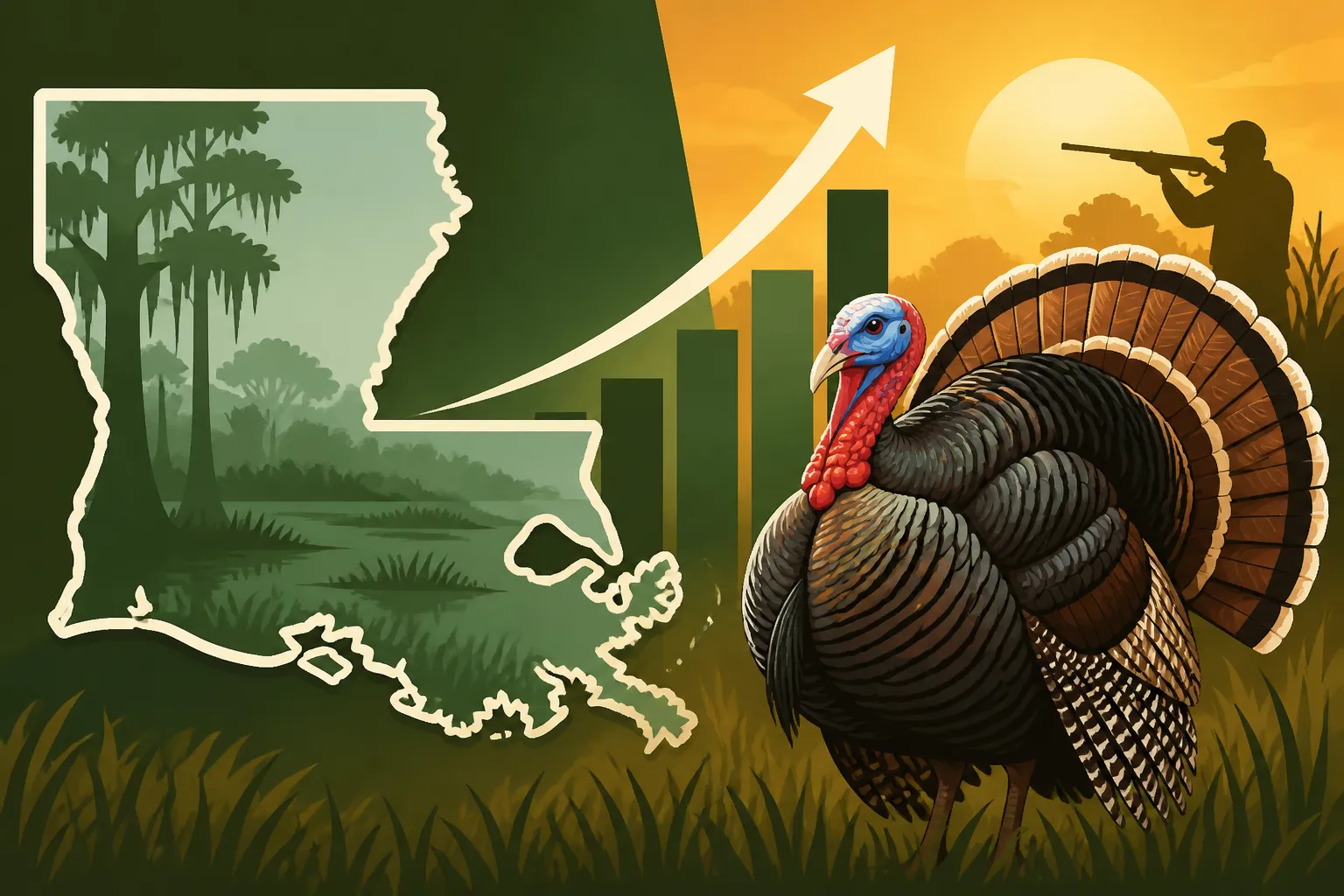
Trying to get an exact headcount of wild turkeys across a state like Louisiana is, understandably, a monumental task. They’re elusive, move through dense cover, and cover vast territories. However, the LDWF utilizes various survey methods, including hunter harvest data, brood surveys, and professional observations, to estimate the statewide population. While precise numbers fluctuate year to year based on environmental factors and survey methodology, recent estimates suggest a healthy, though somewhat stable to slightly declining, population in many areas.
These numbers are often discussed in terms of "birds per square mile" or general population trends rather than a hard figure. What’s important for hunters to grasp is the overall direction of the population. Are we seeing growth, stability, or decline? This is where staying informed is crucial. Tools like GoHunt can be invaluable for accessing and understanding statewide harvest reports and LDWF data as it becomes available, helping you get a clearer picture of the health of the turkey population in your hunting areas. The department continuously refines its methods to provide the most accurate picture possible, guiding management decisions that directly affect hunting opportunities.
Regional Differences in Turkey Densities
One of the most critical aspects of understanding Louisiana’s turkey population is recognizing that it's far from uniform. Turkey densities vary significantly across the state due to habitat, land use, and historical reintroduction success.
For instance, the rolling piney woods of North Louisiana, particularly around areas like the Kisatchie National Forest, often boast robust turkey numbers. These regions offer a fantastic mosaic of mature timber, open understories, and diverse forage, which turkeys absolutely thrive in. Compare that to the vast, dense bottomland hardwoods of the Atchafalaya Basin, where turkeys might be present but are generally less concentrated and often harder to access.
The Florida Parishes, in the southeastern part of the state, also have a strong history of good turkey populations, often benefiting from a mix of timber and agricultural edges. On the other hand, some of the coastal parishes or intensively farmed regions might have very limited turkey habitat and, consequently, lower densities. If you're looking for prime turkey ground, understanding Where Louisiana Turkeys Are Densest can significantly increase your scouting success and hunting opportunities. LDWF often provides regional breakdowns in their annual reports, which can highlight these geographical differences.
Factors Influencing Turkey Populations
Wild turkeys are sensitive creatures, and their populations are impacted by a wide array of environmental and human-influenced factors. It’s never just one thing; it’s usually a combination that tips the scales.
Habitat Changes and Their Impact
Habitat is king when it comes to wildlife, and turkeys are no exception. The quality and quantity of suitable habitat directly influence their ability to reproduce, find food, and evade predators. Modern forest management practices, such as timber clear-cutting followed by replanting in dense monoculture pine plantations, can temporarily reduce habitat quality. While these areas might provide food in the early stages of regrowth, they eventually become too thick to offer the open understory and mature roost trees that turkeys prefer.
Conversely, prescribed burns, when managed correctly, can be incredibly beneficial. By clearing out dense undergrowth, burns create open travel lanes, promote the growth of herbaceous plants that turkeys feed on, and make insect life more accessible. Agricultural practices also play a role; fields can provide food sources, but extensive monoculture farming reduces the diversity of vegetation and potential nesting cover. Urban and suburban encroachment further fragments habitats, isolating turkey populations and making them more vulnerable. Understanding how these changes affect Nest Predation and Louisiana Turkey Hatches is crucial, as successful nesting directly impacts future populations.
Weather Patterns and Reproduction Success
Louisiana’s weather is notoriously fickle, and these unpredictable conditions can have a profound impact on turkey reproduction. The period from late spring through early summer, when hens are nesting and poults are hatching, is particularly critical. Prolonged periods of heavy rainfall during this time can be devastating for young poults. They are highly susceptible to hypothermia and drowning, and wet conditions also reduce the insect populations that poults rely on for protein during their rapid growth phase.
On the flip side, extreme droughts can also be detrimental. A lack of moisture can reduce the availability of natural food sources like acorns, berries, and insects, making it harder for hens to get into prime nesting condition and for poults to find sustenance. LDWF biologists closely monitor Poult-to-Hen Ratios and What They Mean because these figures are a direct indicator of reproductive success and offer a preview of future turkey numbers. A few bad weather years in a row can lead to noticeable dips in the turkey population, and it takes time for those numbers to rebound.
Predation and Disease Pressures
Predation is a natural part of the ecosystem, but an imbalance can put significant pressure on turkey populations, especially poults and nesting hens. Common predators like raccoons, opossums, skunks, and snakes are notorious nest robbers, making it incredibly difficult for hens to successfully hatch a clutch of eggs. Coyotes, bobcats, and even feral hogs, which are abundant in many parts of Louisiana, are also major threats to both eggs and adult birds. Feral hogs, in particular, are incredibly destructive, rooting up nests and competing directly for food sources.
Diseases can also sweep through turkey populations, sometimes with devastating effects. Avian pox, blackhead disease, and various respiratory infections are just a few examples. While LDWF monitors these threats, outbreaks can be hard to control in wild populations. The presence of a robust population of Coyotes and Predators in Louisiana can complicate turkey recovery efforts, requiring a holistic approach to habitat and predator management to ensure turkey numbers remain healthy.
Monitoring and Management by LDWF
The Louisiana Department of Wildlife and Fisheries is the primary agency responsible for safeguarding our state's wild turkey populations. Their work is continuous, relying on science, hunter cooperation, and adaptive management.
LDWF's Role in Population Surveys
The LDWF employs a multifaceted approach to monitor turkey populations, ensuring that management decisions are grounded in the best available science. One key method involves conducting annual brood surveys during the summer months. Wildlife biologists and even trained citizen volunteers drive specific routes and record observations of hens with their poults. This data helps calculate crucial poult-to-hen ratios, which provide insights into the year's reproductive success.
Another cornerstone of LDWF's monitoring strategy is the collection of hunter harvest data. Every legally harvested turkey in Louisiana must be reported to the LDWF. This mandatory reporting, typically done through the department's website or app, provides invaluable information on harvest rates, effort, and even the age and sex structure of the harvested birds. This data is critical for assessing population health and adjusting season regulations. Your participation as a hunter in accurately reporting your harvest is not just a legal requirement; it's a vital contribution to conservation. Planning your hunt and access can be streamlined using resources, and a platform like GoHunt can help integrate public land information, mapping, and regulations, making it easier for hunters to comply and contribute data.
Management Strategies and Regulations
Based on the data collected from surveys and hunter harvests, the LDWF implements a variety of management strategies aimed at sustaining and enhancing wild turkey populations. These strategies often include setting specific season lengths and bag limits for different hunting areas. For example, some areas might have shorter seasons or more restrictive bag limits if their populations are showing signs of stress, while others with robust numbers might offer more generous opportunities. You can find detailed information on Louisiana Spring Turkey Season Rules and specific regulations for Louisiana Turkey Area A, B and C Rules in the annual hunting digest.
Beyond regulations, the LDWF actively engages in habitat improvement projects on public lands, such as Wildlife Management Areas (WMAs) and Kisatchie National Forest. These projects might include prescribed burning to create better foraging conditions, selective timber harvesting to promote desired habitat structure, or planting specific food plots that benefit turkeys. They also work with private landowners to provide technical advice on habitat management, understanding that a significant portion of Louisiana's turkeys reside on private property. It's a continuous, dynamic process of assessment and adjustment, all designed to ensure the future of turkey hunting in Louisiana.
Hunter Impact and Ethical Considerations
Hunters are often the most passionate advocates for wildlife, and our actions in the field directly influence the populations we cherish. Understanding our role is paramount for long-term sustainability.
Harvest Rates and Sustainability
When you fill a tag, you become a data point in the larger picture of Louisiana's turkey management. The LDWF meticulously tracks Louisiana Spring Turkey Harvest Numbers each year, and these statistics are vital for understanding the impact of hunting pressure on specific turkey populations. A sustainable harvest is one that allows enough birds, particularly hens, to survive and reproduce, ensuring a healthy population for future seasons. If harvest rates become too high in certain areas, particularly of gobblers before they've had a chance to breed, it can potentially impact reproductive success.
This is why regulations on bag limits, season lengths, and even the timing of the season are so important. They are designed to distribute hunting pressure and ensure that enough birds remain to replenish the flock. As ethical hunters, it's our responsibility not only to abide by these regulations but also to understand the reasoning behind them. Sometimes, exercising self-restraint, especially if you observe a local population seems down, can be the most ethical choice, even if it means an empty vest. It's about thinking beyond just your individual hunt and considering the health of the species.
The Hunter's Role in Conservation
Beyond simply following the rules, turkey hunters play a crucial, active role in conservation. Our license fees directly fund the LDWF's wildlife management programs, including those dedicated to turkey research and habitat improvement. But our contributions go further. When we report our harvests accurately and promptly, we provide the LDWF with the data they need to make informed management decisions. If the LDWF initiates voluntary surveys, such as those asking about gobbling activity or hen observations, participating in these efforts gives biologists a more comprehensive picture.
Furthermore, hunters are often the first to notice changes in local wildlife populations or habitat conditions. Reporting unusual sightings, potential disease outbreaks, or significant habitat alterations to the LDWF can provide valuable intelligence. Educating ourselves and others about ethical hunting practices, habitat needs, and the importance of responsible land stewardship solidifies our role as conservationists. Utilizing planning tools that integrate official LDWF data, like GoHunt, not only makes your hunt more efficient but also implicitly supports better data collection and information dissemination, which is a win for conservation. Our passion for chasing longbeards makes us natural stewards of the wild places they call home.
Future Outlook for Louisiana Turkeys
Looking ahead, the path for Louisiana's wild turkeys presents both significant challenges and genuine reasons for optimism. It’s a delicate balance that requires continued vigilance and adaptation.
Challenges Ahead for Turkey Populations
The future of wild turkeys in Louisiana, much like other wildlife species, faces a number of hurdles. Climate change is one of the most pressing. Shifting weather patterns, including more extreme rainfall events or prolonged droughts during critical nesting periods, could significantly impact reproductive success. Continued habitat fragmentation due to urban sprawl and certain agricultural or timber practices remains a concern, isolating turkey populations and making them more vulnerable to localized declines.
Furthermore, the increasing prevalence of diseases, as well as the ever-present threat of burgeoning predator populations like feral hogs and coyotes, will continue to put pressure on turkey numbers. Ensuring that turkeys have sufficient, high-quality habitat that allows them to thrive in the face of these challenges is paramount. This means ongoing vigilance from LDWF and the active participation of hunters and landowners in habitat improvement efforts.
Hope for Sustained and Growing Flocks
Despite the challenges, there is abundant reason for hope and continued success for our Louisiana turkeys. The dedicated team at LDWF is constantly engaged in research and adaptive management strategies, learning from each season and adjusting plans to best serve the species. Their commitment to science-based conservation means that our turkey populations are being carefully monitored and managed.
Moreover, the passion and dedication of Louisiana's turkey hunters are a powerful force for good. Organizations like the National Wild Turkey Federation (NWTF) and local conservation groups are actively involved in habitat restoration projects, education, and advocacy, often working hand-in-hand with the LDWF. The very nature of Wild Turkeys in Louisiana and their resilience, combined with our collective efforts to protect their habitat and manage their populations responsibly, points towards a future where the sound of a gobbler echoing through the pines remains a cherished part of our spring traditions. Understanding their habitat preferences, such as Louisiana Turkey Roost Tree Preferences, further aids in effective conservation efforts.
Factors Affecting Louisiana Turkey Populations
| Factor Category | Specific Factors | Impact on Turkey Populations | Management / Conservation Efforts |
|---|---|---|---|
| Habitat | Forest Management (Clear-cutting, Reforestation) | Initial decline from clear-cutting, dense young stands offer poor habitat; mature timber with open understory is ideal. | Prescribed burns, selective thinning, promotion of diverse forest structures. |
| Agricultural Practices | Can provide food but reduces nesting cover; extensive monoculture reduces overall habitat diversity. | Establishing buffer zones, hedgerows, diversified crops. | |
| Urban/Suburban Development | Leads to habitat fragmentation, isolation of populations, increased human-wildlife conflict. | Land-use planning, green corridors, acquisition of conservation easements. | |
| Reproduction | Weather during nesting/hatching (Rain, Drought) | Heavy spring rains can cause poult mortality (hypothermia, drowning); drought can reduce food sources. | Limited direct control; focus on robust habitat for resilience. |
| Nest Predation (Raccoons, Hogs, Snakes) | Significant loss of eggs and poults; feral hogs destroy nests and compete for food. | Predator control (where feasible), robust nesting cover. | |
| Health | Diseases (Avian Pox, Blackhead) | Can cause localized outbreaks and population declines. | Monitoring, research, maintaining healthy habitats for strong immune systems. |
| Predation | Coyotes, Bobcats, Feral Hogs | Direct predation on adults, poults, and eggs; feral hogs also cause habitat degradation. | Habitat improvements, targeted predator management (where appropriate). |
| Human Impact | Hunting Pressure | Unregulated or excessive harvest can reduce breeding stock; sustainable harvest is critical for population health. | Season lengths, bag limits, area-specific regulations, mandatory harvest reporting. |
| Hunter Participation (Reporting, Surveys) | Provides crucial data for LDWF to make informed management decisions. | Education, easy reporting systems (apps, online portals). |
Disclaimer
The information provided in this guide is for general informational purposes only and is not intended as legal advice. Hunting regulations and wildlife management practices in Louisiana are subject to change. Always consult the most current Louisiana Department of Wildlife and Fisheries (LDWF) official regulations and advisories before participating in any hunting activities.