Louisiana Deer Population Estimate
Every deer season, it feels like we're all playing a guessing game. You hit the woods, see sign, maybe even a few deer, but in the back of your mind, you’re always wondering, "Just how many deer are really out here?" It’s a common frustration, especially when some days feel like the woods are empty. This guide is here to shed some light on the elusive world of Louisiana's deer population estimates, helping you understand how these numbers are figured and what they mean for your hunting strategy.
Understanding Louisiana's Deer Population: More Than Just a Number
For Louisiana hunters, knowing the pulse of the deer herd is vital. It’s not just about bragging rights or how many deer you see from your stand; it directly influences season lengths, bag limits, and even the health of the herd itself. But let’s be real, counting every single deer in our dense swamps, pine forests, and agricultural fields is next to impossible. It's a far cry from counting cattle in a pasture.
The Elusive Nature of Whitetail Counting
If you've ever tried to scout a new piece of public land or even a familiar private tract, you know how incredibly adept whitetails are at disappearing. Our Louisiana landscape, from the thick palmetto bottoms to the vast cypress-tupelo swamps, offers an endless labyrinth of cover. Deer can simply melt away, making direct visual counts wildly inaccurate. Factors like dense vegetation, the nocturnal habits of mature bucks, and the sheer scale of the habitat make it a monumental task for even the most dedicated wildlife biologists. We're talking about vast areas where visibility can be limited to just a few yards, even in winter. It's enough to make any hunter scratch their head and wonder if anyone truly knows how many deer are out there.
Why Accurate Estimates Matter for Hunters
Despite the challenges, accurate deer population estimates are crucial for wildlife management. The Louisiana Department of Wildlife and Fisheries (LDWF) relies on these numbers to make informed decisions about hunting seasons, bag limits, and antler regulations. If the population is thriving in a particular area, they might offer more liberal harvest opportunities, like longer either-sex windows. Conversely, if numbers are declining due to factors like disease or habitat loss, they might impose more conservative limits to allow the herd to rebound. These decisions directly impact your hunting experience and success each year. Understanding the reasoning behind these regulations can help you appreciate the science that goes into managing our incredible deer resource. After all, nobody wants to see the herd suffer, and thoughtful management ensures we have deer to hunt for generations to come.
How LDWF Estimates Deer Numbers
So, if counting every deer isn't feasible, how exactly does the LDWF come up with these population figures? It's a blend of boots-on-the-ground data, hunter participation, and scientific methods, all designed to paint the clearest picture possible of our whitetail populations. It's a complex puzzle, but each piece helps biologists understand the health and trends of the herd.
Harvest Data and Hunter Reporting
One of the most valuable sources of information comes directly from us, the hunters. Every time you harvest a deer and report it, you're contributing vital data. This includes details like the date, location (down to the Deer Area), sex, and sometimes even antler measurements. The LDWF compiles this information to track harvest trends over time. For example, a consistent increase in doe harvest in a specific area might indicate a healthy, growing population that can sustain higher female take, helping to balance the herd's sex ratio and keep it within the habitat's carrying capacity. This data, especially for Louisiana Annual Deer Harvest, is a cornerstone of their estimates. It's a collective effort, and honestly, sometimes it feels like a chore, but that quick report after a successful hunt truly makes a difference in statewide management. Make sure you know The Louisiana Deer Reporting Deadline each year.
Camera Surveys and Research Studies
Beyond harvest data, biologists employ various scientific methods. Trail cameras, widely used by hunters, are also powerful tools for population monitoring. Researchers strategically place cameras across different habitat types, collecting countless images of deer. By analyzing the frequency of deer sightings, distinguishing between individual animals, and noting buck-to-doe ratios and fawn recruitment, they can extrapolate population density estimates. This non-invasive method provides insights into deer behavior, age structure, and health without directly disturbing the animals. In certain research zones, LDWF also conducts spotlight surveys at night, driving routes and counting deer seen, which provides another snapshot of the population. Organizations like GoHunt often integrate similar data points into their mapping and scouting tools, giving hunters an edge by showing potential deer concentrations based on habitat and historical data. These research studies often give us a peek into critical metrics like Louisiana Fawn Survival Rates.
Habitat Assessment and Carrying Capacity
Deer populations aren't just about deer; they're intrinsically linked to their environment. Wildlife biologists meticulously assess habitat quality, including food sources (acorns, browse, agricultural crops), water availability, and cover. Every habitat has a "carrying capacity"—the maximum number of deer it can sustainably support without suffering long-term damage. If a deer population exceeds its carrying capacity, it can lead to overbrowsing, habitat degradation, and an increased risk of disease. By understanding the health of the habitat in regions like Hunting the Atchafalaya Basin or Hunting the Tensas River Basin, biologists can gauge whether current deer numbers are sustainable or if adjustments to harvest strategies are needed to maintain ecological balance. This holistic approach ensures that deer thrive in harmony with their environment.
Deer Density Across Louisiana's Diverse Habitats
Louisiana is a tapestry of varied landscapes, and deer populations reflect this diversity. You wouldn't expect the same deer density in a cypress swamp as you would in a pine plantation, right? This regional variation is a cornerstone of understanding Louisiana's Ten Deer Hunting Areas Explained and how deer thrive in different environments.
River Bottoms and Swamps: The Basin's Bounty
When you talk about big deer numbers and productive habitat in Louisiana, the river bottomlands and vast swamps often come to mind first. Areas like the Atchafalaya Basin and the Tensas River Basin are renowned for their fertile soils, abundant mast crops (especially acorns), and dense cover, which provide ideal conditions for deer to thrive. These areas typically support higher deer densities due to the richness of the environment. The constant flow of nutrients from rivers and the sheer scale of undisturbed habitat mean deer often have everything they need to grow and reproduce successfully. However, these environments also present unique challenges for hunters, from navigating treacherous waters to battling dense vegetation, but the potential rewards often make it worthwhile. GoHunt's mapping layers can be particularly useful here, showing bottomland hardwood concentrations and elevation changes that often dictate deer movement in these areas.
Piney Hills and Uplands: North Louisiana's Numbers
Shift north to the piney hills and uplands, and you find a different kind of deer habitat. These areas, particularly within Kisatchie National Forest Hunting and other managed timberlands, often feature extensive pine plantations mixed with hardwoods in creek bottoms. While not as rich in natural browse as the river bottoms, these areas can still support robust deer populations, especially where timber management practices create early successional growth that deer readily browse. Deer densities here might be slightly lower than in prime bottomland, but they can still be excellent, especially with good mast crops in the hardwood drains. Hunters often find success focusing on edges, clear-cuts, and the transitions between pine and hardwood stands, which act as natural travel corridors and feeding areas. Understanding Piney Hills Versus Basin Deer is crucial for tailoring your hunting approach.
Coastal Marsh and Agricultural Fields: Unique Challenges
Our coastal marsh and expansive agricultural fields present yet another unique picture. While the marsh might seem inhospitable, deer can be found in surprising numbers on higher ground, shell ridges, and in transitional zones between marsh and dryer land. These populations are often localized and depend on the availability of fresh water and browse. Agricultural fields, on the other hand, especially those planted with corn, soybeans, or winter wheat, act as massive food plots, drawing deer in from surrounding cover. While deer densities might not be uniform across these vast areas, specific pockets can hold very high numbers, particularly where food and cover converge. Hunting these areas requires different tactics, often focusing on field edges, funnels, and isolated patches of timber. It’s a completely different ballgame than hunting deep in a swamp, but it can be incredibly productive for White-Tailed Deer Across Louisiana.
Here's a simplified look at deer density by major habitat type in Louisiana:
| Habitat Type | Typical Deer Density (Deer per sq. mile) | Key Features for Deer | Common Challenges for Hunters |
|---|---|---|---|
| River Bottoms/Swamps | 25-40+ | Abundant mast, dense cover, fertile soil | Limited access, thick vegetation, water levels, bugs |
| Piney Hills/Uplands | 15-30 | Managed timber creates browse, varied terrain, hardwood drains | Open woods in some areas, less natural browse than bottoms |
| Agricultural Fields | 20-35 (localized high) | Abundant food source, good cover in crop fields and edges | Limited cover outside fields, private land access, visible |
| Coastal Marsh/Transitional | 10-25 (localized) | Diverse forage on ridges, fresh water sources | Remote access, salt intrusion, highly localized populations |
Note: These are generalized estimates and can vary significantly based on specific locations, annual conditions, and management practices.
Factors Influencing Louisiana's Deer Population Trends
Deer populations are dynamic, constantly shifting in response to a myriad of factors. It's not a static number; it's a living, breathing estimate that wildlife biologists are always monitoring. Understanding these influences can give you a better grasp of why deer numbers might seem up in one area and down in another.
Disease, Predators, and Environmental Impacts
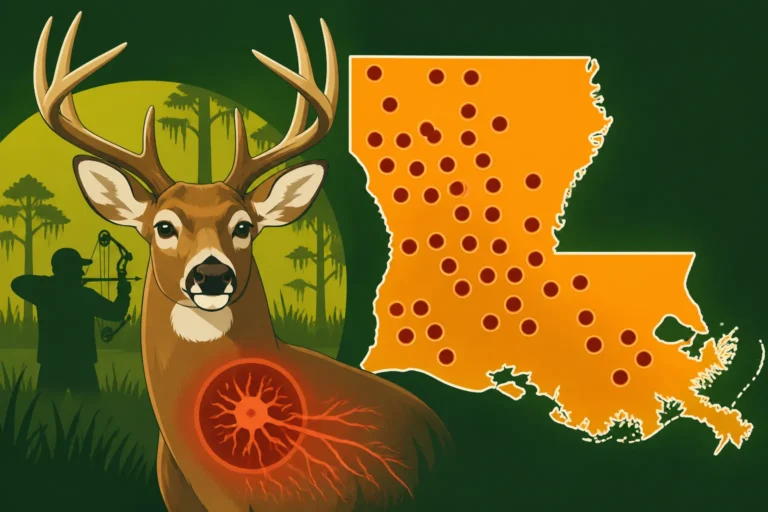
Unfortunately, deer are susceptible to various diseases, just like any other wildlife population. Hemorrhagic disease (EHD), while not as widespread as CWD, can cause significant localized die-offs, especially during hot, dry summers when deer congregate around limited water sources. More recently, Louisiana's Chronic Wasting Disease Zones have become a major concern, impacting both herd health and management strategies. The presence of CWD can lead to localized population declines and stricter carcass movement regulations. Beyond disease, natural predators like coyotes also play a role, particularly in fawn mortality. While they rarely decimate an entire deer herd, they can certainly keep numbers in check, especially in areas with lower habitat quality. Add in environmental factors like severe droughts or major floods that displace deer or destroy food sources, and you can see how complex the picture becomes.
Hunting Pressure and Management Strategies
You, the hunter, are one of the most significant factors influencing deer populations. Hunting pressure, both on public and private lands, directly affects herd numbers and age structure. In areas with high hunter density, deer can become warier and more nocturnal, impacting both harvest success and observation rates. The LDWF uses its management strategies, like specific season dates, bag limits, and antler restrictions, to fine-tune these pressures. For example, a focus on increasing doe harvest in an overpopulated area can help balance the sex ratio and improve overall herd health. Conversely, protective measures for bucks, like antler point restrictions in some areas, aim to allow more young bucks to mature. These strategies are often tailored to specific areas, recognizing that a "one-size-fits-all" approach simply doesn't work across the diverse landscape of Louisiana. This is why paying attention to the specific rules for your preferred hunting ground, whether it's a WMA or private land, is so important. When you're Scouting Louisiana Public Land Before Season, you need to factor in potential pressure.
Habitat Changes and Development
Our rapidly changing landscape also exerts immense pressure on deer populations. Urban and suburban sprawl eats away at natural habitats, fragmenting once-contiguous deer ranges. This can lead to isolated populations, increased road mortality, and more human-deer conflicts. On the flip side, certain land management practices, like responsible timber harvesting, can actually create beneficial early successional habitats that provide abundant browse for deer for several years. Agricultural practices also play a huge role; large tracts of row crops can provide a rich food source, but also create reliance on these seasonal resources. Understanding how these macro-level changes impact local deer populations helps biologists anticipate trends and develop appropriate management responses. A reliable mapping app like GoHunt can highlight these land use changes, showing you where development is creeping in and where new clear-cuts might be creating fresh deer habitat. These changes directly influence Louisiana Deer Herd Size over time.
What Current Estimates Suggest for Louisiana Hunters
So, after all the data collection, scientific analysis, and consideration of countless factors, what's the takeaway? What do the current estimates tell us about the state of Louisiana's deer herd, and how can you use this information to become a more successful hunter?
Overall State Trends and Regional Variations
Overall, Louisiana's deer population has shown remarkable resilience. While statewide estimates for Louisiana Deer Population Estimate can fluctuate, the general trend has been stable to slightly increasing in many areas, particularly where habitat is plentiful and managed well. However, it's crucial to remember that "statewide" doesn't mean "everywhere." There are significant regional variations. For instance, areas impacted by severe weather events or disease outbreaks might see temporary dips. Conversely, regions with excellent habitat, strong conservation efforts, and optimal buck-to-doe ratios might be experiencing growth. For example, the Florida Parishes have a reputation for producing Why the Florida Parishes Grow Big Bucks, which is often tied to healthy, well-managed populations. It’s a dynamic picture, and staying informed about the specifics for the deer areas you hunt is far more useful than looking at a broad statewide average. You can often find detailed breakdowns in the LDWF's annual Reading a Louisiana Harvest Report.
How to Interpret Estimates for Your Hunting Area
As a hunter, the best way to leverage these population estimates is to look at them in conjunction with your personal scouting and observations. If the LDWF reports that your hunting area, say Deer Area 2, has a stable or growing population, that's a good indicator that conditions are favorable. However, a high population estimate doesn't automatically guarantee you'll see a buck every sit. Factors like hunting pressure, food availability, and weather on a given day still play massive roles.
- Focus on Localized Data: Instead of just looking at statewide numbers, dive into the specific data for your hunting area or parish. The LDWF often provides more granular information that can be incredibly insightful.
- Combine with Scouting: Use population data as a foundational layer, then build upon it with your own boots-on-the-ground scouting, trail camera surveys, and knowledge of specific deer behavior in your neck of the woods. A mapping tool like GoHunt can help you overlay historical harvest data or habitat analysis with your own scouting intel.
- Adapt Your Strategy: If your area has a high doe population, consider exercising those either-sex days to help balance the herd. If buck numbers are lower but age structure is improving (meaning more mature bucks), it might be a year to focus on quality over quantity, letting younger bucks walk. Understanding Louisiana Buck Age Structure can greatly influence your decision-making.
Ultimately, Louisiana's deer population is a precious resource, and responsible hunting, informed by the hard work of wildlife biologists and the collective data from hunters like us, helps ensure its vitality for years to come.
Disclaimer
The information provided in this guide is for general informational purposes only and is subject to change. Hunting regulations, season dates, and population estimates are determined by the Louisiana Department of Wildlife and Fisheries (LDWF) and can vary. Always consult the most current official LDWF hunting regulations and advisories before planning any hunting activity.