Flooded Timber Versus Marsh Duck Guides
When you're dreaming of a Louisiana duck hunt, the first big question often isn't if you're going, but where you're going to hunt. The Bayou State offers two incredibly distinct waterfowl experiences: the mystical quiet of flooded timber or the expansive, vibrant chaos of the coastal marsh. This guide will help you understand the fundamental differences between booking a guided flooded timber duck hunt versus a guided marsh duck hunt, so you can pick the adventure that truly calls to you.
Understanding the Landscape: Flooded Timber Duck Hunting
There’s something truly magical about hunting ducks in flooded timber. It’s an experience that’s etched into the soul of many a waterfowler, offering a stark contrast to almost any other type of duck hunting. This isn't just about shooting ducks; it's about immersing yourself in a unique, ancient ecosystem.
The Unique Appeal of Timber Hunting
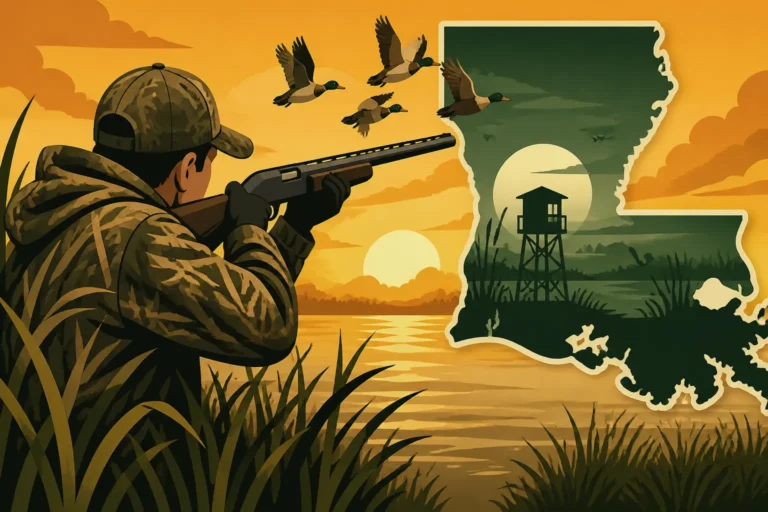
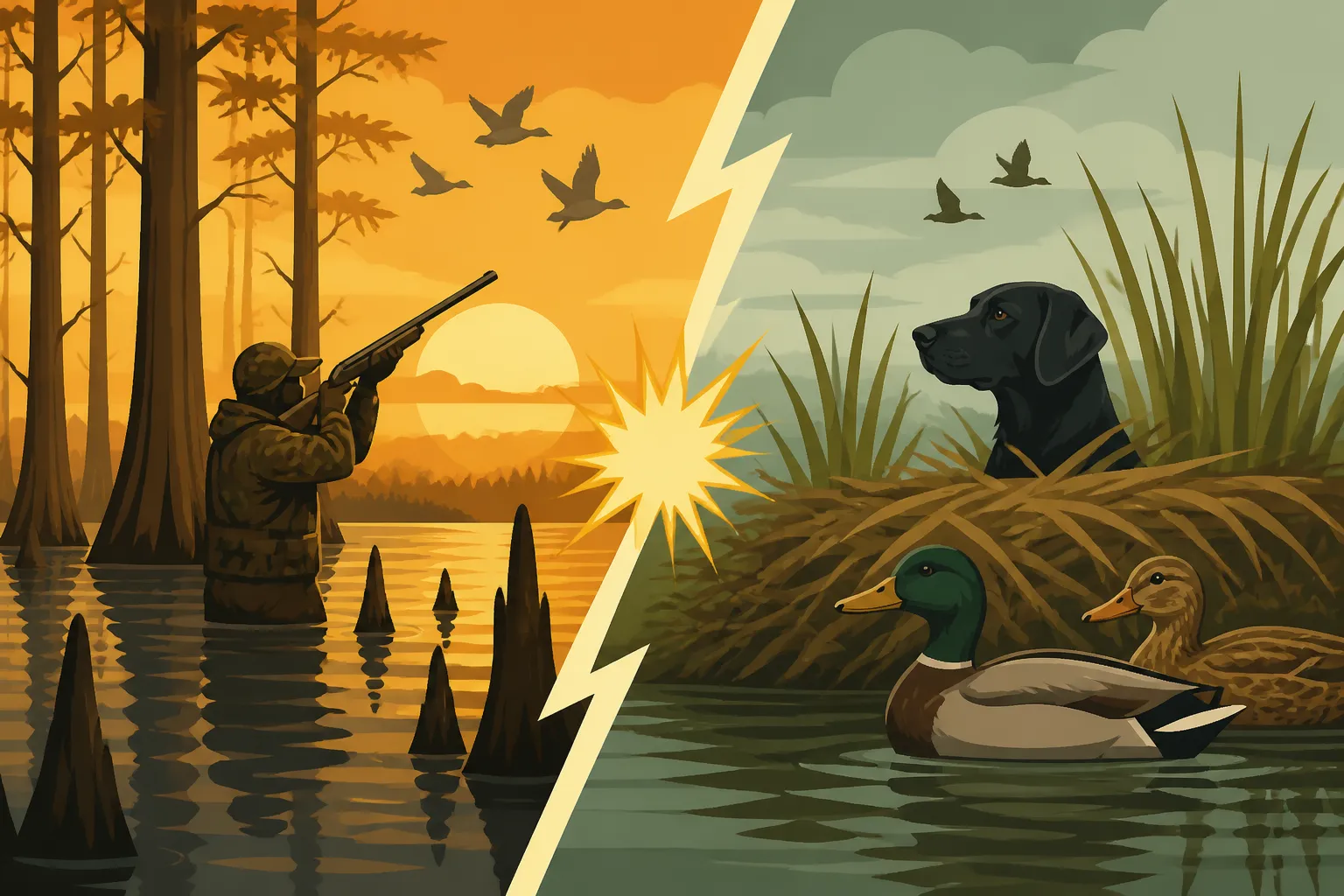
Imagine standing knee-deep in dark, still water, surrounded by ancient cypress and tupelo trees reaching for the sky. The air is often calm, sometimes misty, and the only sounds are the drip of water from leaves and the distant calls of unseen birds. Then, a faint whistle breaks the silence, growing louder as a flock of mallards, wood ducks, or gadwall descends through the canopy, their wings cupped, banking hard into your decoys. This is the essence of flooded timber hunting. It’s a tight, intimate setting where the ducks commit hard, often landing right in your spread. The cover is dense, providing natural concealment, and the hunt often feels like a stealth operation, relying on sharp calling and precise decoy placement to funnel birds through the timber. It requires patience and a keen eye, as the ducks can appear and disappear quickly among the trees. For many, it's the pinnacle of duck hunting, a true test of woodsmanship and calling prowess. If you're looking to target primarily mallards, often referred to as "greenheads," flooded timber is their absolute preferred habitat, especially when colder weather pushes them south along the Louisiana Waterfowl on the Mississippi Flyway.
Typical Timber Setups and Tactics
Guided flooded timber hunts often involve specialized boats, typically shallow-draft aluminum vessels with mud motors, capable of navigating tight sloughs and stump-filled backwaters. Your guide will have a "honey hole" or several, usually a pocket within a larger timber block where acorns or other food sources are abundant, or a natural flyway that ducks consistently use. Decoy spreads are generally smaller and more natural-looking than in open water, often consisting of mallard and wood duck decoys strategically placed to create a landing zone. Motion decoys, like spinning wing models, are less common or used sparingly to avoid an unnatural look in the dense cover. Hunters might stand in the water, use small stools, or sit on submerged logs, blending seamlessly into the environment. Calling is crucial, with guides often employing nuanced, realistic calls to coax birds down through the timber. It’s less about aggressive hailing and more about soft, inviting chuckles and quacks that sound like contented ducks feeding. Success hinges on the guide's deep understanding of local duck movements, feeding patterns, and the subtle art of timber calling. You'll often find yourself in spots where the guide has spent countless hours Working Flooded Timber for Mallards, learning every eddy and tree line.
Embracing the Vastness: Louisiana Marsh Duck Hunting
Stepping into the Louisiana coastal marsh is like entering another world entirely. It's a vast, windswept landscape of open water, grassy islands, and winding bayous, stretching as far as the eye can see. This environment demands a completely different approach to duck hunting, offering its own unique set of thrills and challenges.
The Dynamic Environment of the Marsh
The marsh is a place of grand scale and endless horizons, where the sky feels bigger and the wind always has a story to tell. Here, ducks aren't funneling through trees; they're soaring across miles of open airspace, often in massive flocks. The primary species you'll encounter can be incredibly diverse, including pintails, wigeon, gadwall, teal, mottled ducks, and a variety of diving ducks, alongside the ever-present mallards. This ecosystem is heavily influenced by tides, weather fronts, and the sheer volume of migrating birds that descend upon it each fall and winter. The soundscape is different too – the constant chatter of coots, the distant honk of geese, and the rush of wings over vast open water. Hunting the Vermilion Parish Marsh or the sprawling areas near Cameron Parish offers a prime example of this environment. The marsh demands vigilance, as ducks can appear from any direction, often at high speeds, making for fast-paced, action-packed shooting. It’s a hunt that tests your ability to spot birds at a distance, judge their flight paths, and shoot accurately in often windy conditions. The sheer abundance and variety of birds can be staggering, making every moment an anticipation of the next big flight.
Common Marsh Hunting Methods and Gear
Guided marsh hunts typically involve larger, stable boats capable of crossing open water, sometimes airboats for traversing shallow mud flats, or even specialized marsh buggies. Blinds can vary widely, from permanent pit blinds dug into levee banks to portable panel blinds set up in shallow water, or even boat blinds camouflaged with marsh grass. Given the wide-open nature, decoy spreads are often much larger, designed to be visible from a greater distance to passing flocks. Spreads might include hundreds of decoys, often featuring a mix of species to mimic a bustling feeding area. Motion decoys, especially spinning wing decoys, are very effective in the open marsh where they can be seen from afar. Calling is also different; guides often use louder, more aggressive hail calls to grab the attention of high-flying birds, followed by excited feeding calls to draw them in. It's about broadcasting your presence across the vast landscape. Retrieval dogs are almost a necessity given the open water and thick vegetation, and a good retriever is a vital part of the team. Guides in the marsh are experts at Reading a Marsh Pond for a Morning Flight, understanding how tide cycles and wind direction will influence where birds will fly and feed. For those interested in Layout Blind Hunting Coastal Rice Fields, which is a variation of marsh-edge hunting, the principles of large spreads and long-distance calling still apply.
Key Differences and Considerations for Guides
Choosing between a flooded timber or marsh duck guide isn't just about personal preference; it also involves understanding the practical differences in how these hunts are conducted and the specialized expertise required.
Equipment and Access Requirements
The equipment needs for each type of guided hunt are significantly different, reflecting the unique challenges of their respective environments. A flooded timber guide will rely on boats designed for tight maneuvering and shallow water, often equipped with powerful mud motors that can push through thick vegetation and over submerged obstacles. Their gear will include specialized decoys, sometimes even water-resistant stools or portable blinds that blend into the woody cover. Access often means navigating intricate bayous, sloughs, and flooded forests, which demands intimate knowledge of hidden channels and potential hazards like submerged stumps.
Conversely, a marsh duck guide will likely operate larger, more robust boats, perhaps even airboats or shallow-draft vessels designed for traversing vast, shallow mud flats and open bodies of water. Their equipment might include numerous full-body decoys or extensive decoy spreads, layout blinds, or permanent pit blinds that require specific installation. Access in the marsh involves understanding tidal movements, navigating miles of open water, and knowing where the birds are likely to feed or raft up based on wind and water levels. A guide specialized in Waterfowl Hunting the Louisiana Coastal Marsh will have a fleet of boats and equipment tailored to that specific, often saltwater-influenced environment. When you're searching for a guide, platforms like BookYourHunt allow you to filter by these specific hunt types, helping you narrow down your options to guides equipped for your desired experience.
Guide Expertise and Local Knowledge
While all good duck guides possess a wealth of knowledge, the specifics of that expertise vary considerably between timber and marsh specialists. A flooded timber guide's true value lies in their intimate, almost encyclopedic knowledge of specific timber holes, feed trees, and subtle changes in water levels that dictate duck movement. They often spend countless hours scouting before and during the season, identifying which trees are dropping acorns, where ducks are roosting, and the precise flight paths within the dense woods. Their calling skills are often finely tuned to the close-quarter interactions of timber hunting, knowing when to call aggressively and when to go completely silent.
A marsh guide, on the other hand, is a master of reading the vast, ever-changing marsh landscape. Their expertise includes understanding complex tidal charts, recognizing subtle changes in salinity that affect food sources, and predicting duck movements across miles of open water based on wind direction, barometric pressure, and temperature. They know where to set up blinds that offer the best concealment against the wide-open backdrop and how to effectively deploy large decoy spreads to draw in birds from extreme distances. Their calling is often powerful and designed for long-range attraction, but they also know when to switch to softer, more enticing calls as birds commit. Before booking, checking reviews on sites like GoHunt can often highlight a guide's specific strengths, whether they're known for their "timber wizardry" or their "marsh mastery."
Here's a quick comparison of the two guided hunt styles:
| Feature | Flooded Timber Duck Hunt (Guided) | Marsh Duck Hunt (Guided) |
|---|---|---|
| Environment | Dense cypress/tupelo swamps, shallow flooded woods | Expansive open water, grassy islands, winding bayous, coastal flats |
| Primary Species | Mallards, Wood Ducks, Gadwall, Pintails | Pintails, Wigeon, Gadwall, Teal, Mottled Ducks, Divers, Mallards |
| Hunting Style | Intimate, close-quarters, stealth-focused, nuanced calling | Large-scale, long-range calling, fast-paced, open-air shooting |
| Decoy Spreads | Smaller, natural-looking, often static | Larger, extensive, often with many motion decoys |
| Blind Types | Natural cover, small boat blinds, standing in water | Pit blinds, panel blinds, large boat blinds, layout blinds |
| Access | Shallow-draft boats, mud motors, navigating tight sloughs | Larger boats, airboats, navigating open water, tidal flats |
| Guide Expertise | Knowledge of specific timber holes, food sources, close calling | Reading tides, wind, large-scale duck movements, long-range calling |
| Challenges | Navigating dense cover, precise shooting in tight windows | High winds, spotting birds at distance, retrieving in open water |
Choosing Your Perfect Louisiana Duck Hunt
Deciding between flooded timber and marsh duck hunting can feel like a big decision, but it really comes down to what kind of experience you're hoping to have and what excites you most. Both offer unforgettable memories, just in very different packages.
Matching Your Skill Level and Expectations
Consider your own hunting style and experience when making your choice. If you love the challenge of intricate calling, tight-window shooting, and a more intimate, almost "stalking" feel, then flooded timber might be your ideal. The thrill of ducks spiraling down through the trees, banking hard, is truly something special. Timber hunting can sometimes be more physically demanding if you're wading, but the shooting can be less impacted by strong winds. It’s often a very focused experience, targeting specific pockets of birds. For those new to duck hunting, or someone looking for a more "controlled" environment, the guidance and setup of a timber guide can be really beneficial.
On the other hand, if you thrive on wide-open spaces, high-volume shooting opportunities, and seeing massive flocks of diverse waterfowl, the marsh is calling. The unpredictable nature of birds working from miles away, often in challenging wind, makes for an exhilarating experience. Retrieving ducks in the marsh can sometimes be more involved due to the terrain, but the sheer variety of birds and the constant action can be incredibly rewarding. If you're looking for an all-inclusive experience that combines lodging, food, and guides, many Booking a Coastal Marsh Duck Lodge options exist, which can simplify logistics for you. Both types of hunts offer different levels of beginner-friendliness, but a good guide will always tailor the experience to your group's skill set.
Logistical Factors and Trip Planning
Beyond the hunting style, several practical logistics should influence your decision. Think about the time of year you plan to hunt. While ducks are present throughout the season, certain periods might favor one environment over another for specific species or concentrations. For instance, colder weather often pushes more mallards into the timber. The Duck Migration Timing Through Louisiana can definitely influence where the best action will be.
Consider your group size. Some flooded timber spots might be better suited for smaller groups due to limited space, while large marsh spreads can accommodate more hunters. The overall cost will also be a factor; while general rates for guided hunts can be found, the specific amenities, duration, and reputation of a guide will vary. For instance, What a Day of Guided Marsh Ducks Costs can give you a starting point, but always confirm what's included.
Finally, think about your travel and lodging preferences. Are you looking for a remote, rustic experience, or do you prefer a lodge with all the comforts? Many marsh lodges offer multi-day packages that include meals and accommodations, while timber guides might operate out of smaller, more localized bases. Both BookYourHunt and GoHunt are excellent resources for comparing different guide services, checking availability, and understanding what each package offers, helping you plan your ultimate Louisiana duck hunting adventure down to the last detail. And don't forget to familiarize yourself with Louisiana Duck Zone Rules and the Louisiana Duck Daily Bag Limit before your trip!
Disclaimer
This article is for general informational purposes only and does not constitute professional advice. Laws, prices and regulations vary by location and change over time. Consult a qualified professional for guidance on your specific situation.