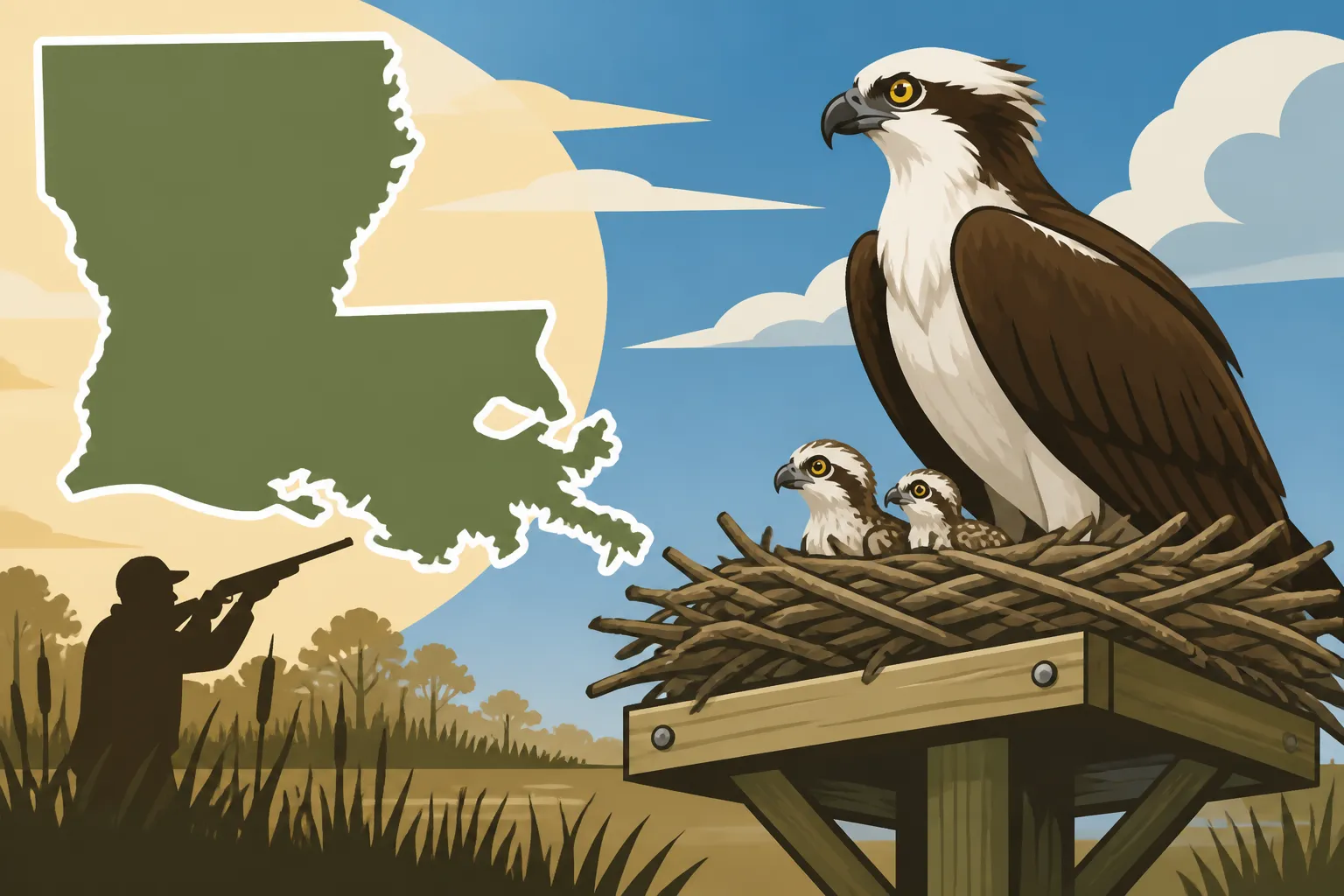
Louisiana Osprey Nesting Platforms
It's heartbreaking to witness the decline of any wildlife species, and sometimes, even in our rich Louisiana ecosystems, some of our most majestic birds face an uphill battle. If you've ever seen an osprey, that incredible fishing hawk, you know the power and grace they embody. But finding safe, sturdy nesting sites can be a real challenge for them, especially with increasing development and natural changes to our landscape. This guide is all about understanding why osprey nesting platforms are so vital in Louisiana, how they help these magnificent raptors thrive, and how you can be part of the solution, whether you're a landowner, an avid birder, or just someone who cares about our state's wildlife.
The Call for Conservation: Why Ospreys Need Our Help in Louisiana
Ospreys, sometimes called "fish hawks," are truly a marvel to watch, soaring overhead before plunging feet-first into the water to snatch a fish. Here in Louisiana, we are fortunate to have these birds, especially around our vast coastal marshes, cypress swamps, and along the edges of our bayous and rivers. However, even with seemingly abundant water, suitable nesting sites are becoming harder to find for them.
Historically, ospreys would build their large, bulky nests atop dead snags, tall cypress trees, or even large, sturdy hardwoods that offered commanding views of their fishing grounds. They like open areas where they can easily fly in and out, and where they can spot potential predators. But as our state changes, with increasing human activity, land development, and even the effects of hurricanes and coastal erosion, those natural super-sized nest sites are dwindling. Many of the old-growth trees that provided such robust platforms are gone, or they're in areas that are now too disturbed for the birds to feel safe. This isn't just a Louisiana problem, but it's certainly one we see acutely in our low-lying, watery landscapes. Louisiana Coastal Wetland Loss and Access is a huge factor in how all our wildlife adapts, and ospreys are no exception.
The availability of secure nesting sites is a critical limiting factor for osprey populations. Without a safe place to lay eggs, hatch chicks, and raise their young, these birds simply cannot reproduce effectively. Their nests are substantial structures, often weighing hundreds of pounds and measuring several feet across, built from sticks, grasses, and whatever other debris they can find. They need a strong, stable foundation that can withstand the elements, including our fierce Louisiana thunderstorms and high winds. When natural options are scarce, ospreys sometimes try to nest in precarious locations like utility poles, which can be dangerous for both the birds and our infrastructure. This is where human intervention, in the form of nesting platforms, becomes not just helpful, but often essential for their continued success.
Understanding Osprey Habitat and Platform Location
Finding the right spot for an osprey nesting platform isn't just about sticking a pole in the ground and hoping for the best. It's about understanding the osprey's needs, their hunting habits, and their territorial instincts. These birds are primarily piscivores, meaning they eat almost exclusively fish. This dictates their preferred nesting locations: they need to be within easy flying distance of abundant fishing grounds. Think about large open bodies of water like lakes, expansive marshes, wide rivers, or coastal bays. If there's good fishing, there's potential for an osprey to call it home.
Ideal platform placement usually involves a high, prominent structure that offers an unobstructed view of the surrounding area. Ospreys are not typically shy of human presence, especially if they associate it with a safe nesting site, but they do appreciate a bit of distance from heavy, constant disturbance. A good rule of thumb is to place platforms at least a few hundred yards from busy roads, residential areas, or places with frequent boat traffic, though this can vary. They also need enough open airspace for their large wingspan to maneuver during takeoff and landing. Before you even think about building, spend some time observing the area. Are there ospreys already present? Do you see them hunting? Are there any existing natural nests or snags they might be using, even temporarily? That kind of reconnaissance is invaluable. Tools like GoHunt can be useful for looking at aerial imagery and topographical maps, helping you identify potential water sources and open areas that might fit the bill.
The height of the platform is another crucial consideration. Ospreys prefer to nest high, typically 20 to 50 feet off the ground, sometimes even higher. This elevation provides protection from ground predators like raccoons, snakes, and even bobcats. It also gives them that crucial vantage point for hunting and surveying their territory. Think about it: a bird that relies on spotting fish from a distance needs a good perch. When considering public lands, always check with the managing authority, like the Louisiana Department of Wildlife and Fisheries (LDWF) for Louisiana Wildlife Management Areas or the U.S. Fish and Wildlife Service for Louisiana National Wildlife Refuges, before attempting any installation. They often have specific guidelines or even ongoing conservation projects you could join.
Designing and Building an Effective Osprey Platform
When it comes to building an osprey platform, simplicity and durability are key. These aren't intricate birdhouses; they're sturdy, open structures designed to support a large, heavy nest and provide safety for the young. The goal is to replicate the kind of strong, elevated base a large tree snag would offer.
Materials and Construction
Most successful osprey platforms consist of a sturdy, rot-resistant pole set deeply into the ground, topped with a square or rectangular wooden platform. Treated lumber, such as pressure-treated pine, is a common choice for the platform itself due to its resistance to rot and insects. The platform typically measures around 3 feet by 3 feet, or slightly larger, and should have a low edge or railing (about 4-6 inches high) to keep nest materials contained and prevent young birds from accidentally falling out. The platform should also have some open spaces or wire mesh at the bottom to allow for drainage, preventing water from pooling.
The support pole is arguably the most critical component. It needs to be strong enough to withstand significant weight and wind. Utility poles, often retired from service, are a popular and effective choice due to their height and durability. If using a new pole, think about heavy-duty galvanized steel poles or large-diameter, treated wooden poles, like those used for telephone lines or power distribution. The pole must be sunk deep into the ground, usually 6-10 feet, depending on soil conditions and pole height, and ideally secured with concrete for maximum stability. This is particularly important in Louisiana's often soft, wet soils. Installing these can be a major undertaking, often requiring heavy equipment, so it's not a casual weekend DIY project for everyone.
For an extra touch, some platforms include a few "starter sticks" wired to the platform. This isn't strictly necessary, as ospreys are excellent nest builders, but it can sometimes encourage initial interest from prospecting pairs. It's like putting out a welcome mat. Remember, the goal is to provide a safe, stable base, not to build the entire nest for them. They'll take care of the interior decorating themselves!
Platform Design Considerations
| Feature | Description | Why it Matters |
|---|---|---|
| Pole Height | 20-50 feet (higher is often better) | Protection from ground predators, good vantage point for hunting. |
| Platform Size | 3' x 3' to 4' x 4' square or rectangular | Accommodates large nest, allows room for multiple chicks. |
| Side Railing | 4-6 inch height, sturdy wood or galvanized mesh | Prevents nest materials from blowing away, keeps chicks from falling. |
| Drainage | Gaps between boards, wire mesh bottom, or drill holes | Prevents water accumulation, keeping nest dry and healthier for chicks. |
| Material | Pressure-treated lumber, galvanized steel, retired utility pole | Longevity, weather resistance, structural integrity against wind/weight. |
| Visibility | Unobstructed view for 360 degrees | Critical for hunting success and spotting threats. |
| Proximity to Water | Within 1/2 to 1 mile of ample fishing grounds | Ensures easy access to food source for adult ospreys and hungry chicks. |
| Predator Guards | Optional conical sheet metal collar on pole below platform | Adds an extra layer of protection against climbing predators. |
The optional predator guard is a smart addition, especially if the pole is accessible to climbing animals. A wide, smooth metal cone installed below the platform can deter raccoons and snakes from reaching the nest. These measures, combined with proper placement and robust construction, give ospreys the best possible chance of successfully raising their young.
Installation and Long-Term Maintenance
Once you've got your platform designed and the materials gathered, the installation itself is the next big hurdle. As mentioned, this often isn't a one-person job. Heavy lifting equipment, such as a boom truck or bucket truck, might be necessary to safely erect a tall, heavy pole and secure the platform at height. Safety is paramount during installation; working with tall poles and at heights carries inherent risks.
The Installation Process
For a new, untreated wooden pole, it's wise to treat the section that will be buried with a wood preservative to extend its lifespan. Digging the hole deep enough – often 6 to 10 feet – is crucial for stability. In areas with soft marshy soil, you might need a wider hole and more concrete to ensure it doesn't lean or fall over time. Once the pole is set and plumbed (perfectly vertical), concrete can be poured around the base to anchor it firmly. After the concrete cures, the platform structure can be attached to the top of the pole. This usually involves heavy-duty bolts and brackets to ensure it's securely fastened. Some designs build the platform first and then raise the entire assembly. Whichever method, ensure all connections are robust.
Remember, patience is key after installation. Ospreys are wild birds, and they operate on their own timelines. A newly installed platform might not be occupied immediately. It could take weeks, months, or even a season or two for a pair to discover it and decide it's the perfect spot. Keep an eye on it, but don't get discouraged if it's not an instant success. Often, if one platform is successful, nearby platforms tend to get used more quickly. This suggests a bit of a "follow the leader" effect among raptors.
Ongoing Care and Common Challenges
Osprey platforms, while built for durability, aren't completely maintenance-free. Periodically, especially after severe weather events like hurricanes or strong cold fronts that can bring heavy winds, it's a good idea to inspect the platform. Look for loose bolts, damaged wood, or any signs of structural compromise. If a nest has been used for several years, it can become incredibly heavy with accumulated materials. Sometimes, if the nest gets too large and heavy, it might need to be carefully trimmed back during the off-season (when birds are not nesting) to reduce stress on the platform structure.
One common issue can be the accumulation of trash or non-natural debris in the nest. Ospreys are opportunistic builders, and sometimes they'll incorporate plastic bags, fishing line, or other human-made items into their nests. While often harmless, too much fishing line can pose an entanglement risk to chicks. If you notice a significant amount of such material and can safely access the platform during the non-nesting season, it might be prudent to remove it. You could also keep an eye out for birds that seem distressed or injured around platforms. Louisiana Wildlife Rehabilitation for Injured Game services can be crucial if you find a bird in trouble.
Another challenge, especially in some parts of Louisiana, can be competition from other birds, particularly owls or even geese, who might try to use the platform. While this is less common, it can happen. Generally, ospreys are pretty good at defending their chosen territory. In rare cases, if the platform is truly preventing ospreys from nesting due to persistent occupation by another species, you might need to consult with wildlife professionals for advice.
Ultimately, installing and maintaining an osprey nesting platform is a rewarding way to contribute directly to the conservation of these magnificent birds. It takes effort and commitment, but seeing a pair of ospreys successfully raise their young on a platform you helped provide is an incredible experience. It's a tangible way to make a difference for Louisiana's diverse and precious wildlife, from the smallest marsh critters to the soaring fish hawks.
Disclaimer
This article is for general informational purposes only and does not constitute professional advice. Laws, prices and regulations vary by location and change over time. Consult a qualified professional for guidance on your specific situation.