Where Louisiana Turkeys Are Densest
The quest to find dense turkey populations in Louisiana can feel like chasing a ghost if you don't know where to start. Many hunters arrive in areas with seemingly perfect habitat, only to find the woods eerily silent. The truth is, turkey distribution in our state isn't uniform; some regions are simply turkey hotspots, while others require a lot more legwork. This guide will help you understand where Louisiana's turkeys are densest, why that is, and how you can use this knowledge to fill your tag.
Understanding Louisiana's Turkey Landscape
Before we dive into specific locations, it's really helpful to grasp the broader picture of wild turkeys in Louisiana. It’s a story of both challenge and triumph, deeply influencing where we find these magnificent birds today.
Historical Context of Turkey Restoration
Believe it or not, Louisiana’s wild turkey population was once in dire straits. Decades ago, over-hunting and widespread habitat destruction nearly wiped them off the map. It's tough to imagine a time when gobblers weren't echoing through our spring woods, but that was the reality for a long while. Thankfully, through incredible conservation efforts, including trapping birds from healthier populations in other states and carefully relocating them here, our turkey numbers have made an impressive comeback. These efforts, detailed more in How Turkeys Were Restored to Louisiana, were instrumental in re-establishing populations.
This history directly impacts current turkey density. The areas where turkeys were first reintroduced, or where conditions were most favorable for them to thrive and expand from those initial release sites, are often the same places that boast robust populations today. It wasn't just about dropping birds off; it was about ensuring they had the right environment to multiply.
General Distribution Across the State
Today, you'll find wild turkeys across much of Louisiana, but it's far from a homogenous spread. Think of it like a patchwork quilt: some squares are rich with birds, while others are pretty sparse. Generally, you’ll encounter turkeys in areas with mature forests, whether they be longleaf pine stands, mixed pine-hardwood forests, or bottomland hardwoods. These habitats provide essential components like large roosting trees, diverse food sources (acorns, insects, seeds), and adequate cover for nesting and escape from predators.
While they're present in many parishes, the true "density" often correlates with larger, unbroken tracts of timber and less fragmented habitat. Unfortunately, urban sprawl and agricultural conversion continue to shrink some of these critical areas, making it even more important to understand where the strongholds remain. We’re looking for those pockets where the birds have space, food, and the safety to flourish.
Key Regions for Dense Turkey Populations
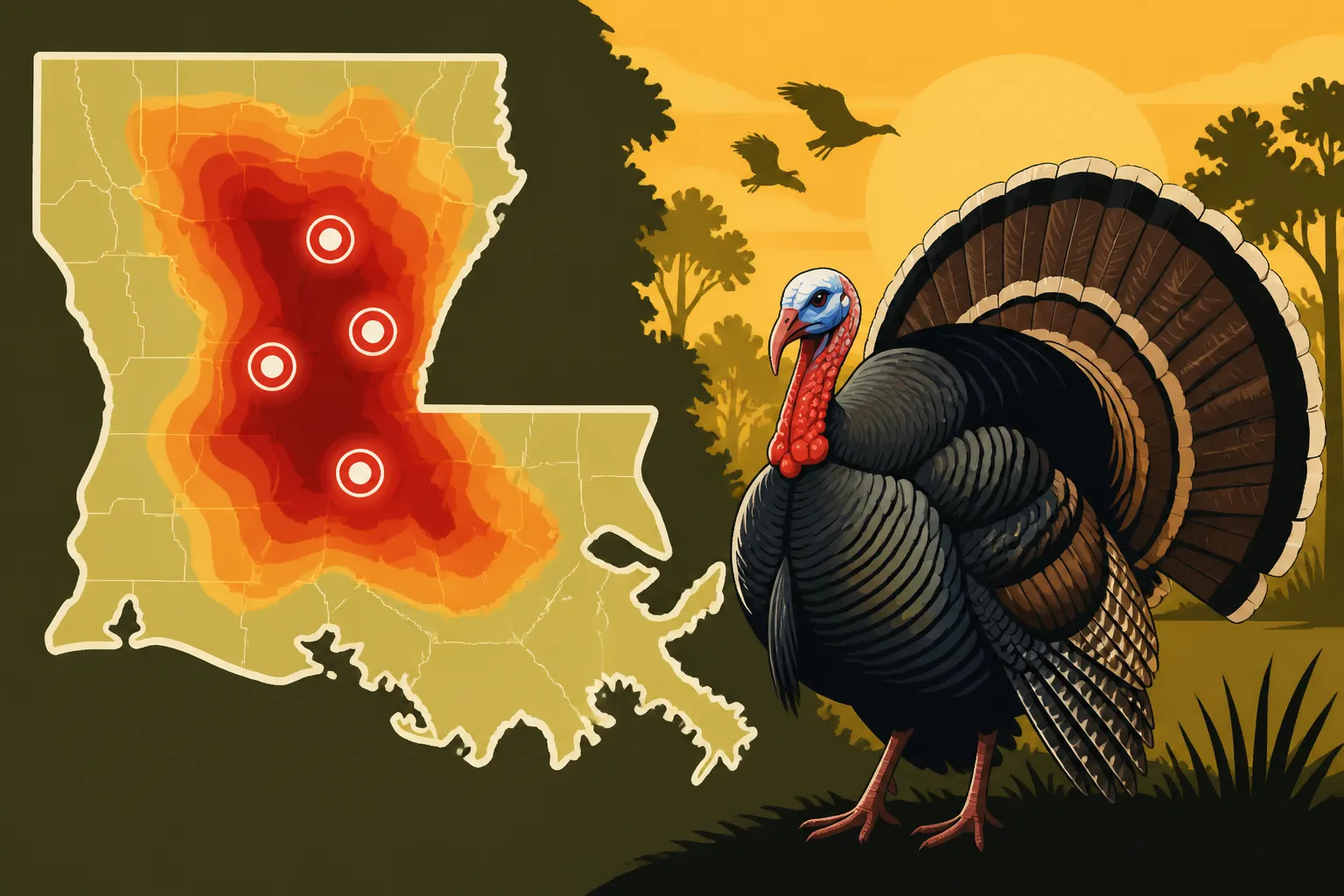
When you’re dreaming of that quintessential Louisiana gobble at first light, certain regions should immediately come to mind. These are the areas where habitat, historical management, and current land use have converged to create prime turkey country.
North Louisiana's Piney Hills and River Bottoms
Venture into North Louisiana, especially the rolling piney hills, and you’ll often find some of the state's most consistent turkey hunting. Parishes like Union, Lincoln, Bienville, and Jackson are frequently mentioned when discussing healthy turkey numbers. These areas are characterized by vast stretches of mature pine forests, often interspersed with hardwood drains and creek bottoms. The towering pines offer excellent roosting habitat, while the hardwood areas provide crucial mast crops like acorns, which turkeys absolutely gorge on.
Places like parts of the Kisatchie National Forest Hunting offer significant public land opportunities within these piney hills, though hunting pressure can be a factor. Even on private land, where intensive timber management for pine production is common, turkeys can thrive if there are enough mixed stands, mature timber components, and diverse understory. When planning a hunt here, using a mapping app like GoHunt can help you identify mature timber blocks and natural funnels that birds might use. Scouting these areas involves looking for roost trees, dusting bowls, and scratch marks in the leaf litter.
Another component of North Louisiana's turkey strength lies in its river bottoms. While sometimes distinct from the piney hills, areas along the Ouachita, Red, and Tensas rivers, with their rich bottomland hardwood forests, can also hold good numbers of birds. These riverine systems provide a different but equally vital habitat.
The Florida Parishes: A Turkey Hotbed
Southeast Louisiana, often referred to as the Florida Parishes, is another region renowned for its turkey density. This includes parishes such as Washington, Tangipahoa, St. Helena, and East Feliciana. This area distinguishes itself with a unique blend of rolling topography, mixed pine and hardwood forests, and a significant amount of well-managed private land. The diverse habitat, coupled with landowner interest in wildlife management, has fostered robust turkey populations here.
The Florida Parishes often have a mix of agricultural fields bordering timber, providing varied food sources and open areas where turkeys love to strut and feed. It's common to see large, old oaks and hickories in these areas, providing excellent mast and prime roosting locations. Hunters in these parishes often find success by focusing on the edges where different habitat types meet, like where a pine ridge drops into a hardwood bottom, or where timber borders a pasture or crop field. The birds here can be quite vocal, making it a great place to try different calling techniques, whether it's soft clucks and purrs or more aggressive gobbler yelps. Understanding The Florida Parishes ecosystem is key to unlocking its potential.
Tensas River Basin and Other Bottomland Hardwoods
While the Tensas River Basin is most famous for its incredible deer hunting, specifically for trophy whitetails, it also holds a respectable turkey population in certain areas. This region, characterized by vast tracts of bottomland hardwood forest, fertile soils, and a network of sloughs and bayous, offers a different kind of turkey hunting experience. Places like the Tensas River National Wildlife Refuge Hunting can be productive, but the sheer vastness and dense cover often make finding birds a greater challenge than in the piney hills.
Turkeys in these bottomland areas rely heavily on the mast crops produced by oak and pecan trees. They'll often roost in the tallest trees near water and spend their days foraging through the rich forest floor. Access can sometimes be tricky due to the wet nature of the terrain, often requiring boat access or navigating through thick undergrowth. Patience and meticulous scouting are paramount here. When hunting these areas, focus on higher ground that might offer a slight elevation advantage, look for old logging roads or dry ridges that turkeys might use as travel corridors, and pay close attention to recent flood patterns which can concentrate birds on remaining dry patches.
Factors Influencing Turkey Density
Turkey populations aren't just a matter of random chance; they're deeply influenced by a combination of environmental and human-related factors. Understanding these helps you predict where you might find more birds and why certain areas just seem to hold more gobblers.
Habitat Quality and Food Sources
At the heart of any healthy turkey population is high-quality habitat. Turkeys are quite specific in their needs, and if those needs aren't met, their numbers will struggle. The key elements they require include:
- Mature Timber for Roosting: Turkeys need tall, sturdy trees to safely roost in at night, providing protection from ground predators. Large pines, cypress, and mature hardwoods fit the bill perfectly. Without these, birds are more vulnerable and less likely to inhabit an area consistently.
- Diverse Understory for Nesting and Brood Rearing: Hens need dense, protective cover to build their nests and raise their poults. This usually means thick briars, palmettos, or dense young timber that keeps predators at bay. Areas lacking this critical nesting cover will struggle with recruitment, impacting the overall Poult-to-Hen Ratios and What They Mean and thus the population.
- Abundant and Varied Food Sources: Turkeys are omnivores, and their diet changes with the seasons. They feast on acorns, pecans, various seeds, grasses, berries, and a wide array of insects. Areas with a consistent supply of these foods, often found in diverse forest ecosystems or near agricultural fields, will naturally support more birds. After a poor acorn year, for instance, turkey populations might be more scattered as they search for alternative food sources, making Hunting After a Poor Acorn Year a different challenge.
- Water Sources: While turkeys don't need standing water like ducks, they do need access to water, usually found in creeks, ponds, or dew-covered vegetation.
Forest management practices play a huge role here. Clearcutting large tracts without leaving buffer zones or diverse stands can devastate turkey habitat. Conversely, selective logging that promotes diverse age classes of trees and maintains mast producers can be beneficial. Using resources like GoHunt to analyze satellite imagery can help you identify areas with a good mix of mature timber, open understory, and potential food sources.
Land Management and Hunting Pressure
The way land is managed, whether by private landowners, state agencies, or federal entities, significantly impacts turkey density.
- Private Land Management: Many of Louisiana's densest turkey populations are found on privately owned land, particularly large timber company holdings or farms where wildlife management is a priority. These landowners often implement practices like prescribed burning, food plot planting, and selective timber harvesting to enhance turkey habitat. They also have the ability to control hunting pressure, leading to older, more numerous, and often less wary birds. Establishing good relationships with landowners for access can yield fantastic results.
- Public Land Challenges: Public hunting lands, like Wildlife Management Areas (WMAs) and National Forests, face different challenges. While they provide invaluable access, they often experience higher hunting pressure. This pressure can disperse birds, make them more cautious, and sometimes lead to lower success rates, as detailed in Hunting Pressure on Louisiana Public Land. However, excellent habitat still exists on public land, and determined hunters willing to walk further or scout harder can find success. The key is often to find those overlooked pockets that don't get as much foot traffic.
- Limited Access Areas: Sometimes, areas with limited human access—think remote bottomland tracts or difficult-to-reach pockets of timber—can act as natural sanctuaries, allowing turkey populations to grow undisturbed.
Weather Patterns and Reproduction Success
While we can't control the weather, it's a critical factor in how turkey populations fluctuate year to year. The spring nesting and brood-rearing period is particularly vulnerable.
- Wet, Cold Springs: Prolonged periods of cold, wet weather during late spring and early summer can be devastating for turkey poults. Young poults are susceptible to hypothermia, and excessive rain can reduce insect populations, which are a vital food source for growing chicks. A string of bad nesting seasons can lead to a noticeable dip in turkey numbers a year or two later.
- Drought Conditions: While not as immediately lethal to poults as cold rain, severe drought can impact food availability. Fewer insects, stressed vegetation, and poor mast crops can reduce the overall health and reproductive success of the flock.
- Predation: While not directly weather-related, predator populations (coyotes, bobcats, raccoons, opossums, snakes) significantly impact nesting success and poult survival. Good habitat provides cover, but a healthy ecosystem with balanced predator numbers is also important for turkey recruitment.
Practical Advice for Locating Turkeys
Knowing where the turkeys are generally densest is one thing; actually finding them on a specific day is another. It takes strategy, patience, and a bit of good old-fashioned woodsman know-how.
Scouting Before the Season
The absolute best way to increase your odds of locating turkeys is to put in the legwork before the season even opens. This pre-season scouting is non-negotiable for consistent success.
- Look for Physical Sign: Turkeys leave plenty of clues. Look for dusting bowls (shallow depressions in dry dirt where birds "bathe"), droppings (j-shaped for gobblers, blob-like for hens), feathers (especially large primary wing feathers near roosts), and scratch marks in leaf litter where they've been foraging.
- Identify Roosting Areas: Turkeys typically fly up to roost in large trees near open areas at dusk and fly down at dawn. Look for large pines or hardwoods, particularly on ridges or near water sources. Finding fresh droppings under large trees is a dead giveaway. You can even try "roosting" birds by listening for their fly-up cackles just before dark, or their morning gobble from the roost. Roost Hunting Louisiana Gobblers is a very effective tactic.
- Utilize Mapping Applications: Modern mapping tools are incredible for pre-season scouting. Apps like GoHunt allow you to zoom in on satellite imagery, identify different timber types (mature hardwoods vs. pine plantations), pinpoint potential food plots, locate creek drainages, and mark access points. You can effectively "scout from your couch" to narrow down potential hotspots before you even set foot in the woods. Look for transitions in habitat, as these "edge" areas are often preferred by turkeys.
- Talk to Locals: Wildlife biologists, foresters, and other local hunters can often provide invaluable insights into specific areas, recent sightings, or general turkey trends.
Utilizing Public Land Resources
If you're primarily a public land hunter, you'll need to be extra diligent. Louisiana offers some fantastic public hunting opportunities, but competition can be stiff.
- Research WMAs and National Forests: The Louisiana Department of Wildlife and Fisheries (LDWF) website is a treasure trove of information. Look up specific WMAs that have a history of turkey harvest or are known for good turkey habitat. Each WMA often has specific rules and regulations you need to be aware of. Consider areas like portions of the Kisatchie National Forest, Richard K. Yancey WMA, or the Pearl River WMA, all of which can hold turkeys. Knowing how to use the Finding a Louisiana WMA Near You tool is essential.
- Scout Deeper and Harder: On public land, the easiest-to-access areas often get the most pressure. Be willing to walk further, use a boat if necessary, or explore areas that look less appealing on a map but might hold hidden gems. A small, overlooked block of timber tucked away could be your honey hole.
- Hunt During Off-Peak Times: If possible, try to hunt during weekdays or later in the season when crowds thin out. This can give you a better chance at encountering less-pressured birds.
Reading the Land and Listening
Once you're actually in the field, your senses are your most important tools. Turkeys are masters of their environment, and learning to interpret their movements and calls is key.
- Listen Actively: Turkeys are vocal birds, especially during the spring breeding season. Listen for distant gobblers, hen yelps, clucks, and purrs. Being able to pinpoint the direction and distance of a call is critical for making your move. Calling a Louisiana Gobbler Off the Roost is often the first step in a successful morning.
- Observe the Terrain: Pay attention to natural travel corridors like logging roads, field edges, or creek bottoms. Turkeys prefer to walk rather than fly, so they'll use the path of least resistance. Identifying these routes helps you set up in an ambush position. Turkey Tactics for North Louisiana Field Edges will differ from those in the deep woods.
- Be Patient and Adaptable: Turkey hunting often involves a lot of sitting and waiting, but sometimes a "run-and-gun" approach is necessary, especially on public land when trying to locate birds. Don't be afraid to move if an area is quiet, or if the birds aren't responding to your calls. You might need to adjust your setup, perhaps Setting Up Against a Big Oak to break up your silhouette. Every day, and every bird, is different.
Louisiana Turkey Density by Region
| Region/Habitat Type | General Turkey Density | Key Characteristics | Hunting Strategy |
|---|---|---|---|
| North Louisiana Piney Hills | High to Moderate | Mature pines, mixed hardwoods, rolling terrain, good mast crops | Roost hunting, aggressive calling, focus on ridges and hardwood drains |
| Florida Parishes | High | Mixed timber, agricultural edges, rolling hills, strong private land management | Patient setups, seeking private land permission, diverse calling scenarios |
| Tensas River Basin | Moderate to High | Bottomland hardwoods, riverine systems, dense cover, high mast production | Extensive scouting for high ground and travel corridors, understanding flood impacts |
| Central Louisiana (Mixed) | Moderate | Pine plantations, scattered hardwoods, agricultural fringes | Focus on timber edges, food plots, less pressured public land pockets |
| Coastal Plain (Southwest) | Low to Moderate | Pine savannah, agricultural, fragmented timber, residential development | Spot and stalk in remaining timbered areas, permission hunting on larger tracts |
Ultimately, finding where Louisiana turkeys are densest comes down to understanding their habitat needs, researching the historically productive regions, and putting in the effort to scout. Whether you're chasing them on public land or a private lease, these insights will give you a significant advantage in pursuing one of Louisiana's most exciting game birds.
Disclaimer
This article is for general informational purposes only and does not constitute professional advice. Laws, prices and regulations vary by location and change over time. Consult a qualified professional for guidance on your specific situation.