Hunting North Louisiana Piney Hills
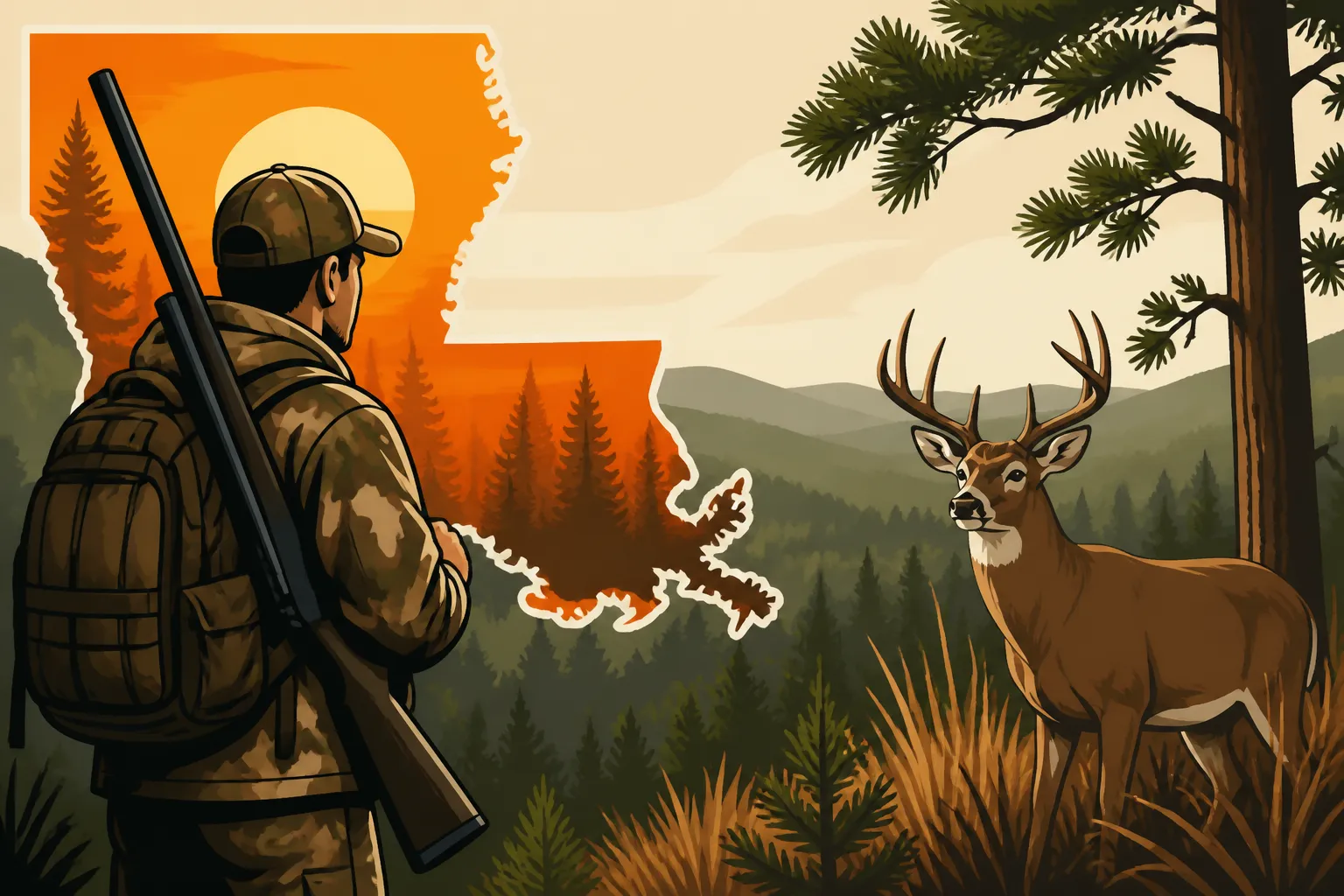
Trying to navigate the seemingly endless rows of pine trees in North Louisiana's rolling hills can feel like searching for a needle in a haystack, especially when you're after elusive whitetails or even a mess of squirrels. This landscape, a stark contrast to the dense river bottoms or sprawling coastal marshes, presents its own unique set of challenges and opportunities for hunters. This comprehensive guide will peel back the layers of the piney woods, offering actionable strategies to help you unlock the potential of this distinctive hunting territory.
Understanding the North Louisiana Piney Hills Landscape
The piney hills of North Louisiana, particularly those stretching across parishes like Bienville, Claiborne, Lincoln, and Union, offer a vastly different hunting experience compared to the floodplains of the Mississippi River or the cypress-tupelo swamps further south. This isn't your typical flatland hunting; here, the terrain rolls and dips, shaped by ancient river systems and years of timber management. Getting a handle on these nuances is your first step to consistent success.
The Unique Blend of Pines and Hardwoods
When most people hear "piney hills," they often envision monoculture pine plantations. While these are certainly a dominant feature, the magic of North Louisiana's hunting lies in the pockets of mixed hardwoods and mature pines that break up the landscape. These areas are crucial for wildlife. Young pine plantations, especially those 3-7 years old, can provide incredible bedding cover and browse, but they're often nearly impenetrable. Older pines, on the other hand, offer more open understories but might lack the dense cover deer crave. The key is finding where these different timber stages meet or where hardwood drains cut through the pines. These transitions are magnets for deer movement and food sources.
Key Terrain Features and Their Impact
The rolling topography isn't just scenic; it dictates how deer move and where they feed. You'll find distinct ridges, steep draws, and winding creek bottoms. Ridges often serve as natural travel corridors, especially when they connect different food sources or bedding areas. Deer frequently use the leeward side of a ridge (the side protected from the wind) for bedding or traveling during colder weather. Draws and creek bottoms, particularly those with mature hardwoods, are critical funnels. They often hold water, providing a consistent resource, and their sheltered nature makes them ideal travel routes, especially when crossing open areas. Understanding how to Reading a Ridge for Central Louisiana Deer applies perfectly here, as the same principles of elevation, wind, and cover dictate deer movement. Using a robust mapping system like the one offered by GoHunt can be incredibly helpful for identifying these elevation changes and potential funnels before you even step foot in the woods.
Deer Behavior and Movement in Piney Hills
Deer in the piney hills behave differently than their counterparts in bottomlands or agricultural fields. Their patterns are intrinsically linked to the timber cycles, food availability, and topography. Unraveling these behaviors is paramount to putting yourself in the right place at the right time.
Utilizing Different Timber Stages for Food and Cover
Deer are masters of adaptation, and in the piney hills, they leverage every stage of timber growth. Young pine plantations, often referred to as "dog hair thickets," are almost impenetrable to humans but offer incredible security cover and browse for deer. Bucks will often bed in these dense areas during daylight hours, only emerging at dusk. As pines mature, the canopy closes, shading out undergrowth, and these areas become less attractive for browse but can still offer cover if enough ground vegetation remains. The real hotspots are often the hardwood stringers and creek bottoms that crisscross the pine stands. These areas retain crucial food sources like acorns, persimmons, and varied browse, even when the pine stands themselves are less productive. During the rut, these hardwood pockets can become prime cruising grounds for bucks searching for does.
Seasonal Food Sources and Bedding Patterns
Food availability shifts dramatically throughout the season in the piney hills. Early season might see deer hitting remaining soft mast or early-dropping acorns in the hardwood drains. As the season progresses, white oak and red oak acorns become critical, making those hardwood pockets even more valuable. If it's a Hunting After a Poor Acorn Year, deer might be forced to rely more heavily on browse from young clear-cuts or planted pines, concentrating them in different areas. During the late season, with acorns depleted, deer will often turn to evergreen browse or any remaining mast. Bedding patterns also change with the seasons. During warmer weather, deer might bed closer to water sources or in thicker cover for shade. In colder months, south-facing slopes in dense pines can offer thermal cover, becoming preferred bedding sites. Access to a tool that provides satellite imagery and contour maps, like what GoHunt offers, can greatly assist in predicting where deer might bed based on these factors.
Travel Corridors and Funnels
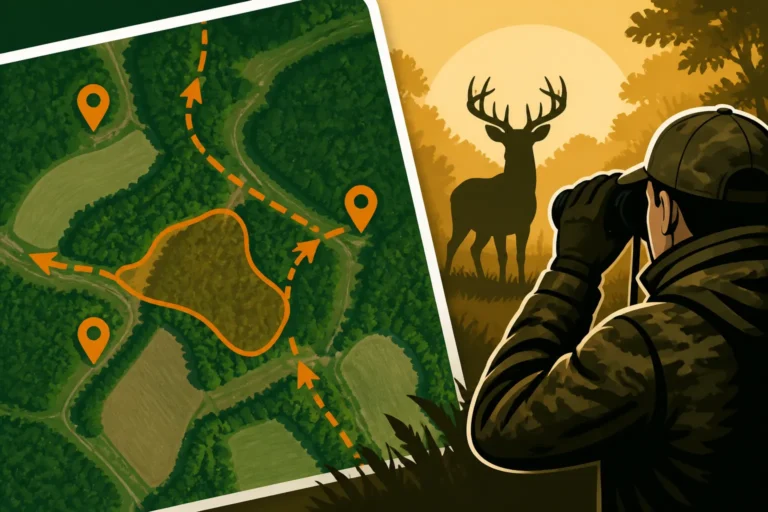
Identifying consistent travel corridors is key to ambushing deer in the piney hills. Deer naturally seek the path of least resistance, which often means using old logging roads, subtle saddles between ridges, or the edges of dense thickets. Creek bottoms, even dry ones, act as natural funnels, concentrating deer movement. Any break in continuous timber, like a small clear-cut or a powerline right-of-way, can also create a funnel as deer cross from one area of cover to another. Imagine a deer needing to get from a bedding area in a dense, young pine plantation to a feeding area in a hardwood drain a quarter-mile away. It will likely utilize the easiest, most covered route, which could be an old logging road or a subtle dip in the terrain. These are the spots where a well-placed treestand can be incredibly effective, as discussed in Treestand Setups in Kisatchie National Forest.
Effective Hunting Strategies for Piney Hills
Hunting the North Louisiana piney hills demands a mix of patience, stealth, and an intimate understanding of the terrain. Different strategies work best depending on the time of year, the specific habitat you're in, and the pressure the deer are facing.
The Art of Still-Hunting and Ground Blinds
Still-hunting is a highly effective, albeit challenging, method in the piney hills. It involves moving slowly, taking a few steps, then pausing to observe and listen, essentially hunting with your eyes and ears as much as your weapon. This is particularly productive when you're working through areas with varying timber densities or along the edges of hardwood drains. The goal isn't to cover ground quickly but to intercept deer moving naturally. In areas like the Kisatchie Hills Wilderness, where the terrain can be rugged and cover abundant, still-hunting can be extremely rewarding. You might find deer bedded on a sunny slope or working through a thicket. For those who prefer to remain concealed, Using a Ground Blind on Louisiana Public Land can be a great option, especially in areas with good natural brush to help blend it in. Ground blinds are excellent for ambush points near food sources or along known travel routes, offering concealment and scent control.
Strategic Treestand Placement
Treestands remain a go-to for many piney hills hunters, offering an elevated vantage point and helping to get your scent above a deer's nose. Ideal placement often involves focusing on saddles between ridges, creek crossings, or pinch points where travel is restricted. Look for areas where multiple deer trails converge or where scrapes and rubs indicate consistent activity. If you're targeting a feeding area, position your stand downwind. If it's a travel corridor, consider prevailing winds and thermals. Mornings often see thermals rising, so a stand on a ridge top might pull your scent upwards. Evenings, as thermals fall, might make a stand in a draw more advantageous. Pay attention to transition zones — the edges where young pines meet mature timber, or where pines give way to hardwoods. These "edge habitats" are prime for deer activity.
Reading Sign and Scouting with Technology
Effective scouting is the backbone of successful piney hills hunting. Beyond simply looking for tracks, start reading the landscape. Fresh rubs on small pine saplings or larger hardwoods indicate buck activity. Scrape lines along logging roads or field edges can be magnets during the rut. Pay attention to browse lines and droppings to determine what deer are eating and how recently. Using technology like the LDWF App can provide crucial information on public land boundaries and regulations, while a comprehensive hunting app like GoHunt can layer satellite imagery with topographic maps, showing you elevation changes, potential funnels, and even public/private land boundaries. This allows you to identify potential hotspots from home, saving valuable time in the woods. By knowing Scouting With the LDWF App you can easily identify your specific deer area, too, which is important when planning your hunting trips across the state.
Small Game and Other Species in the Piney Hills
While deer often take center stage, the North Louisiana piney hills are teeming with other hunting opportunities. From quick-footed squirrels to elusive wild turkeys and omnipresent feral hogs, this diverse habitat supports a variety of game.
Squirrels and Rabbits: Bushytails and Brush Busters
The mixed pine and hardwood forests are prime habitat for both gray and fox squirrels. Gray squirrels tend to favor the denser canopy of hardwoods, particularly those mast-producing trees like hickory and oak. Fox squirrels, being larger, are often found in more open pine stands or along the edges of fields. Squirrel Hunting Louisiana Hickory Groves can be incredibly productive here, especially during the early season when leaves are still on the trees, providing cover for both hunter and hunted. Look for cuttings on the forest floor, indicating squirrels have been feeding on acorns or pine cones.
Rabbit hunting, while less common than squirrel hunting, can also be fantastic in the piney hills, particularly in areas of thick brush, briar patches, and dense, young pine regrowth. These are the "brush busters" who love to dive into the thickest cover. A good dog or a small group of hunters working together can jump rabbits out of these dense spots. Targeting fencerows, overgrown clear-cuts, or natural openings with heavy undergrowth will yield the best results. Rabbit Hunting Thick Louisiana Brush is an exhilarating way to experience the woods.
Coyotes and Feral Hogs: Year-Round Opportunities
Coyotes are abundant in the piney hills and present a year-round hunting opportunity. They thrive in these mixed habitats, preying on small game and deer fawns. Calling coyotes, especially during the colder months, can be a thrilling experience. Look for elevated vantage points along clear-cuts or open timber stands where you can see a good distance. Understanding Louisiana Coyote Hunting Season Rules is important, although they are mostly year-round.
Feral hogs are another pervasive species across Louisiana, and the piney hills are no exception. They cause significant agricultural damage and habitat destruction, making their management a priority. Hogs often congregate in creek bottoms and hardwood drains where food and water are readily available, especially if there's standing water or muddy wallows. Hunting hogs, whether still-hunting, ambushing from a stand, or running dogs, is a fantastic way to extend your time in the woods and help local landowners. Remember, Hunting Louisiana's Year-Round Feral Hogs means you can pursue them anytime, though specific methods might be restricted on public land or during certain seasons.
Navigating the Challenges of Piney Hills Hunting
Every hunting environment has its quirks, and the North Louisiana piney hills are no different. Understanding and preparing for these challenges can significantly impact your success and overall enjoyment of the hunt.
Public Land Pressure and Finding Seclusion
Many of the prime piney hills areas, especially within the Kisatchie National Forest, are public land, and that often means pressure. Opening weekends, especially the firearms opener, can see high hunter densities. To combat this, you'll need to work harder to find seclusion. Hunting Pressure on Louisiana Public Land is a real factor. This often means walking further than most hunters are willing to go, or utilizing less obvious access points. Don't be afraid to cross that creek or climb that extra ridge. Often, just a few hundred yards off a main road, you'll find areas that see significantly less human traffic. Using your mapping software to identify remote corners or difficult-to-access pockets can give you a significant advantage. The deeper you go, the more likely you are to find deer that are less wary and more likely to stick to their natural patterns.
Understanding Wind and Thermals in Rolling Terrain
The rolling topography of the piney hills makes managing your scent even more critical and challenging than in flatland areas. Wind currents here are rarely straightforward; they swirl and eddy, especially in draws and across saddles. On cool mornings, thermals tend to rise, carrying your scent upwards from low-lying areas. As the day warms, they might switch and fall. In the evenings, thermals typically fall down into the valleys. Always consider not just the prevailing wind direction, but how the terrain will influence it. A stand on a ridge might seem ideal for wind, but a subtle draw below it could funnel your scent directly to approaching deer. Constant vigilance, a good scent control regimen, and adaptable stand placement are crucial.
Dealing with Thick Brush and Dense Timber
While some pine stands offer open walking, many areas, especially young plantations or regenerating clear-cuts, are incredibly thick. This dense cover, while great for deer, can be a nightmare for hunters. It makes silent movement difficult, obscures visibility, and can be physically exhausting to navigate. Invest in durable hunting clothing that can withstand briars and thorns. When moving through thick areas, take it slow, pick your steps carefully, and pause frequently. Sometimes, the best approach is to hunt the edges of these thickets rather than trying to penetrate them entirely. Deer will often skirt the perimeter, using the dense cover for security while having easier access to adjacent, more open areas. Even tracking a deer through this kind of dense cover can be a monumental task, but knowing Tracking a Deer Through Louisiana Leaf Litter can give you an edge. Once your hunt is complete, don't forget to Checking a Louisiana Deer Harvest Online to ensure you're in compliance with regulations.
| Feature / Challenge | Description | Hunting Strategy |
|---|---|---|
| Rolling Hills & Ridges | Varied elevation, natural travel corridors. | Hunt ridge saddles, use thermals to your advantage, still-hunt leeward slopes. |
| Pine Plantations (Young) | Dense, impenetrable, excellent bedding & browse. | Hunt edges, trails leading in/out, use ground blinds for concealment. |
| Pine Plantations (Mature) | Open understory, less browse, some cover. | Focus on transition zones to hardwoods, identify travel lanes within. |
| Hardwood Drains | Consistent food (acorns, persimmons), water, natural funnels. | Primary ambush points, especially during mast drops. Still-hunt slowly. |
| Public Land Pressure | Crowds, educated deer. | Hike deeper, identify remote access points, hunt weekdays if possible. |
| Thick Brush / Thickets | Great cover for deer, challenging for hunters. | Hunt edges, wear durable gear, move slowly and deliberately. |
| Wind & Thermals | Swirling, unpredictable air currents. | Constant scent control, adapt stand placement to daily conditions, use elevated stands. |
| Food Source Variability | Depends on mast crop, timber stage. | Scout frequently, identify primary and secondary food sources, adapt to acorn crop fluctuations. |
Disclaimer
Hunting is an inherently dangerous activity. Always prioritize safety, follow all local and state regulations, and ensure you have the proper training and equipment. The information provided in this guide is for educational purposes and should not be taken as legal advice or a substitute for personal research and adherence to Louisiana Department of Wildlife and Fisheries guidelines. Conditions in the field can change rapidly, and personal responsibility is paramount.