Early Goose Season Tactics in Louisiana
There's nothing quite like the rush of an early morning spread in a freshly cut field, anticipating the sight and sound of hundreds of geese descending from the sky. But if you've ever tried chasing these smart birds in Louisiana's early season, you know it can be incredibly frustrating. The weather can be unpredictable, the birds can be surprisingly wary for early arrivals, and figuring out the ever-changing regulations feels like a puzzle. This guide is here to cut through that confusion, giving you a clear roadmap to success for hunting early season geese in the Pelican State.
Deciphering Louisiana's Early Goose Season Regulations
Louisiana's early goose season offers some incredible opportunities, but it's built on a foundation of specific rules, particularly concerning what's known as the Light Goose Conservation Order (LGCO). Understanding these regulations isn't just about staying legal; it's about maximizing your time in the field and taking advantage of the unique tools and strategies allowed.
Understanding Season Dates and Zones
When we talk about "early goose season" in Louisiana, we're primarily referring to the fall segment of the Light Goose Conservation Order. This period usually kicks off in mid-September and can run through late October, providing a window before the traditional duck and regular goose seasons really get going. This timing is critical because it means you're often hunting light geese (snow, blue, and Ross's geese) that haven't been heavily pressured yet, although they're certainly not "dumb."
These specific dates are set by the Louisiana Department of Wildlife and Fisheries (LDWF) annually, so it's absolutely vital to check the current year's hunting pamphlet or the LDWF website. The LGCO aims to reduce the population of these geese due to their impact on fragile arctic breeding grounds, and because of this, the season is often statewide, without the complex zone distinctions you might see for ducks or other goose species. This simplifies things for hunters, allowing more widespread access to prime fields. Knowing exactly when and where you can legally hunt is the first step to a successful outing.
Bag Limits and Licensing Requirements
One of the most appealing aspects of the Light Goose Conservation Order is the incredibly generous bag limits. During this early season, hunters can take up to 20 snow, blue, and Ross's geese daily, with no possession limit. This isn't your typical two or three-bird daily limit; it’s designed to be an aggressive population management tool. This means if you get into a good flight, you can put a serious dent in the population and fill your freezer.
However, even with the relaxed limits, you still need to be properly licensed. All hunters, including residents and non-residents, must possess a valid Louisiana hunting license. Additionally, you’ll need a Louisiana Migratory Bird License and be Harvest Information Program (HIP) certified. What's often overlooked, and is a unique feature of the LGCO, is that during the conservation order phase, a federal duck stamp is not required for light geese. This is a significant cost saving and removes one barrier for entry. Make sure you understand all the requirements, which can be found in detail in guides like Louisiana Hunting Licenses and What They Cost and Louisiana Migratory Bird Certification. Always double-check these details with the official LDWF regulations, as they can sometimes change from year to year.
Identifying Your Quarry: Key Goose Species in Louisiana's Early Season
Louisiana sits squarely on the Mississippi Flyway, a superhighway for migratory birds, and as the cooler weather hints at its arrival, certain goose species start making their way south. For the early season hunter, knowing which geese you’re targeting and understanding their specific behaviors is crucial.
The Abundant Light Geese: Snow and Blue
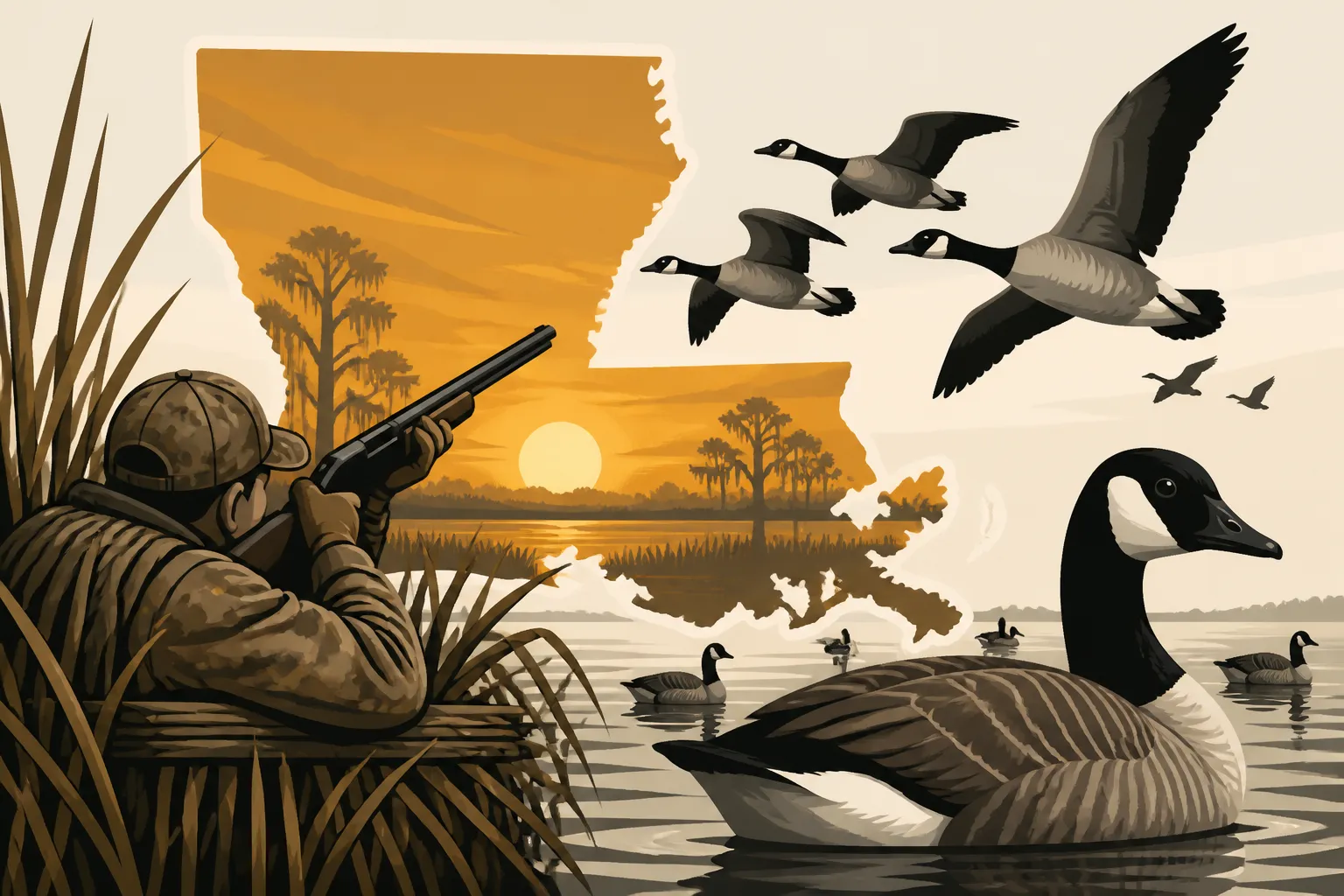
When you're out there in Louisiana's early goose season, your primary targets are overwhelmingly the snow goose and its darker cousin, the blue goose, along with the less common Ross's goose. These birds are collectively known as "light geese," and their sheer numbers during migration can be breathtaking. Snow geese are predominantly white with black wingtips, while blue geese display a dark body with a white head. They often fly and feed together in massive, noisy flocks that can literally darken the sky.
These birds are voracious grazers, typically found in agricultural fields that offer stubble from harvested rice, soybeans, or corn. They'll also frequent open pastures. Their diet consists primarily of waste grain and the tender shoots of winter wheat or grasses. Their flocking behavior means that if you find one, you're likely to find hundreds, if not thousands. However, their numbers don't make them easy. They possess incredibly keen eyesight and are notoriously wary, constantly scanning the skies for anything out of place. This wariness, even in the early season, means your concealment and decoy spread must be top-notch. Finding these large concentrations is key, and tools like GoHunt can be invaluable for pinpointing large open agricultural areas on satellite imagery where these birds are likely to land.
Specklebellies: A Prize of the Regular Season
While the early goose season is primarily focused on light geese, many hunters also have their eyes on the Greater White-fronted Goose, affectionately known as the "specklebelly" due to the distinctive barring on its white belly. These geese are highly prized for their table fare and their unique call. However, it's important to clarify: specklebellies are not part of the Light Goose Conservation Order.
Their season typically aligns with the broader regular waterfowl season in Louisiana, which usually begins later than the early light goose season. This means that if you encounter specklebellies during the LGCO, they are generally out of season for harvest, and the generous light goose bag limits do not apply to them. Specklebellies tend to travel in smaller family groups, are often found in different habitat types than light geese—frequenting more natural marsh areas, wet pastures, and smaller grain fields, sometimes closer to water. Their distinctive two-note "la-lunk" call is unmistakable. While they are a fantastic bird to hunt, remember to always consult the current Louisiana Duck and Goose Bag Limits to ensure you're hunting them within their specific season dates and legal parameters. Misidentification can lead to serious legal trouble, so it's always best to be absolutely certain of your target.
Mastering Scouting and Decoy Spreads for Early Geese
The success of any goose hunt, especially during the early season when birds might still be settling into their patterns, hinges on two critical factors: thorough scouting and an effective decoy spread. These aren't just details; they're the foundation upon which your entire hunting strategy is built.
Pre-Season Scouting and Field Selection
You simply cannot overstate the importance of pre-season scouting for early geese. These birds, while numerous, are highly mobile and their feeding habits can change daily depending on weather, food availability, and hunting pressure. Before you even think about setting up a spread, you need to know where the geese are actually feeding. This means putting in windshield time, driving around agricultural areas, and observing flocks from a distance. Look for large concentrations of birds actively feeding in a field. Pay attention to their entry and exit routes—the general direction they fly in from their roosting area and where they leave to go back.
Identifying a consistent feeding field is your goldmine. Once you've found a promising spot, observe it for a few days if possible to confirm their patterns. Consider using online mapping tools, much like those offered by GoHunt, to scrutinize satellite imagery for field access, natural cover, and potential goose sign (though you won't see geese from satellite imagery, you can identify attractive habitat). If the chosen field is on private land, which is often the case for prime goose hunting, securing permission from the landowner is paramount. This can sometimes be the biggest hurdle, so start knocking on doors early. Remember, scouting isn't just about finding birds; it's about understanding their daily routine. For more tips on finding the best spots, check out articles like Scouting Louisiana Public Land Before Season and Getting Private Land Permission in Louisiana.
Crafting an Effective Decoy Spread
Once you've identified a hot field, your next challenge is convincing those wary geese to commit to your spread. For light geese, this almost always means a massive spread. We're talking hundreds, often thousands, of decoys. Geese are herd animals, and they feel safe landing in very large groups. A small spread of a dozen or two decoys simply won't cut it for snow and blue geese in a big open field.
There are several types of decoys to consider, each with pros and cons:
| Decoy Type | Pros | Cons | Best Use |
|---|---|---|---|
| Full Body | Highly realistic, durable | Expensive, bulky, heavy, takes up truck space | Small, strategic groups upwind of landing zone |
| Silo | Lightweight, stackable, affordable | Less realistic than full body | Adding volume, easy transport |
| Windsock | Very lightweight, compact, motion | Can look artificial in no wind | Mass numbers, creating motion and visibility |
| Rag Decoy | Cheapest, most compact, easy to carry | Lowest realism, needs wind for motion | Filling very large spreads, budget-friendly |
A truly effective spread will often combine these types. You might use full bodies or silos closest to your blind for maximum realism, with hundreds of windsocks or rags fanned out beyond them to create the illusion of a giant flock.
The pattern of your spread matters too. A common and effective setup is a "J" hook or a large "U" shape, with the open end of the "J" or "U" facing downwind, creating a clear, inviting landing zone directly in front of your blinds. Always place decoys facing into the wind, as real geese land and feed facing the wind. Incorporating motion is also critical. Rotary machines, flaggers, and even simple fishing line setups can mimic feeding and preening birds, adding realism that static decoys can't. Remember, geese want to see other geese comfortable and active on the ground. For more insights on field setups, articles like Layout Blind Hunting a Cut Rice Field can offer valuable perspectives, even if they focus on ducks.
Calling and Concealment for Wary Early Geese
You've done your homework, found the birds, and deployed a mountain of decoys. Now it's time for the final, crucial steps: convincing those sharp-eyed geese to commit and ensuring they don't see you.
The Art of Goose Calling
Calling for light geese during the early season is a different beast compared to calling for ducks or even specklebellies. Snow and blue geese communicate with a cacophony of high-pitched gaggles, murmurs, and excited barks. While traditional mouth calls can work, the Light Goose Conservation Order is unique in that it legally allows the use of electronic calls. This is a game-changer. Electronic callers, capable of producing realistic goose sounds at high volumes, can be incredibly effective at grabbing the attention of passing flocks and drawing them into your spread.
When calling, start loud to get their attention, especially if they're high or far away. Once they turn and start heading your way, tone it down and switch to softer, more subtle "feed" or "cluck" calls. The goal is to mimic a contented flock on the ground. Think about a symphony: a loud, attention-grabbing crescendo, followed by a softer, inviting harmony. Hunters often spend hours listening to real geese to perfect their calling sequences, and resources from platforms like GoHunt sometimes offer insights into effective sound profiles and calling strategies. The key is to sound natural and enthusiastic, convincing those inbound geese that your field is the place to be.
Effective Concealment and Blind Setups
This might be the single most important factor in early goose hunting success: absolute, total concealment. Geese have eyesight that rivals a hawk's. They can spot a stray head, a shiny gun barrel, or an unbrushed blind from hundreds of yards away, even in low light. In the wide-open agricultural fields of Louisiana, where cover is often minimal, this presents a significant challenge.
Layout blinds are the most common solution for field hunting. These low-profile blinds allow you to lie down flat in the field, becoming virtually invisible when properly prepared. However, simply setting a layout blind in a field isn't enough. You must brush it in meticulously. Collect natural vegetation from the surrounding field—stubble, grass, dirt clods, anything that matches the environment—and weave it into the stubble straps and netting of your blind. The goal is to make your blind look like just another clump of vegetation, a natural part of the field. For tips on blending into the landscape, consider articles such as Using a Ground Blind on Louisiana Public Land and Brushing In a Blind on a Field Edge.
Beyond brushing in your blinds, minimizing movement is crucial. Once geese are locked onto your spread and working their way in, any sudden movement will send them flaring. Resist the urge to peek over your blind, answer your phone, or adjust your position until the moment you decide to shoot. Wear camouflage that matches the field colors—earth tones, tans, and browns work best in most Louisiana agricultural settings. Even a patch of bright color can give you away. The effort you put into disappearing into the landscape will directly correlate with the number of geese you bring home.
Louisiana Early Goose Season: Key Considerations
Successfully hunting early geese in Louisiana isn't just about calling and decoys; it's also about understanding the unique environment and being prepared for the conditions you'll encounter. From weather patterns to gear, a little foresight goes a long way.
Weather and Its Impact on Early Season Hunting
Louisiana weather in September and October can be a mixed bag, to say the least. You might have scorching hot days with high humidity, or you could catch a cooler front that brings in a fresh wave of birds. Geese are highly influenced by weather. Overcast days with light winds are often ideal, providing natural cover and giving the birds something to "work" against when flying. Bright, sunny, calm days, on the other hand, can make them incredibly wary, as they can see everything for miles, and there's no wind to help them land.
Rain can also be a factor. While a light drizzle can sometimes improve hunting by making geese fly lower, heavy downpours can shut down activity and make field conditions miserable. Being prepared for everything from sweltering heat to unexpected showers is key. Think breathable camo for warmer days and reliable rain gear that can be easily shed. Hydration is critical when you're lying in a field for hours. Keep an eye on the forecast, but be ready for it to change on a dime – this is Louisiana, after all. You might even find birds moving earlier or later in the day depending on how hot it gets. Understanding Louisiana Waterfowl Migration Timing can help you anticipate general patterns related to cold fronts up north.
Gear Essentials for a Successful Hunt
Beyond your decoys and calls, a few key pieces of gear will make your early goose hunt more comfortable and effective.
First, invest in a good quality layout blind that's easy to set up and brush in. Brands like Avery, Final Approach, and Rogers Sporting Goods offer excellent options. The faster and more effectively you can conceal yourself, the better. Second, comfortable, waterproof boots are non-negotiable. Fields can be muddy or hold standing water, especially after a rain. Waders might even be necessary if you're working particularly wet areas or need to retrieve birds from ditches.
Third, reliable optics are essential for scouting. A good pair of binoculars (10×42 or 12×50) will allow you to spot distant flocks and observe their behavior without spooking them. Fourth, your shotgun. A 12-gauge shotgun with 3-inch or 3.5-inch shells loaded with large steel shot (BB, BBB, or T shot) is standard for geese. Always check local WMA regulations if hunting public land, as shot size and type can be restricted. Fifth, don't forget essentials like plenty of water, snacks, a headlamp for early morning or late evening setups/take-downs, and a quality decoy bag that can handle the volume of your spread. Lastly, a good dog can be an invaluable asset for retrieving downed birds, especially in thick cover or standing water.
Early Goose Season: A Rewarding Pursuit
Louisiana's early goose season, particularly the Light Goose Conservation Order, presents a fantastic opportunity for hunters willing to put in the effort. It's a chance to pursue abundant game, practice your field skills, and enjoy the unique experience of large-scale migratory bird hunting before the full swing of the regular waterfowl season.
The challenges are real: the extreme wariness of the birds, the demand for extensive decoy spreads, and the critical need for absolute concealment. But with meticulous scouting, understanding the nuanced regulations (especially regarding electronic calls and license requirements), and executing a well-planned setup, you can turn those challenging days into incredibly rewarding hunts. There's a profound satisfaction that comes from watching hundreds of geese commit to your spread, their wings cupped, legs down, anticipating a landing in the exact spot you've prepared. It's an experience unlike any other, and one that Louisiana offers in spades. So grab your calls, brush in your blind, and get ready for some serious early season action!
Disclaimer
Please note: Hunting regulations, season dates, and bag limits are subject to change annually by the Louisiana Department of Wildlife and Fisheries (LDWF). It is the hunter's responsibility to verify all current regulations before heading afield. This guide provides general information and should not be considered a substitute for official LDWF publications.