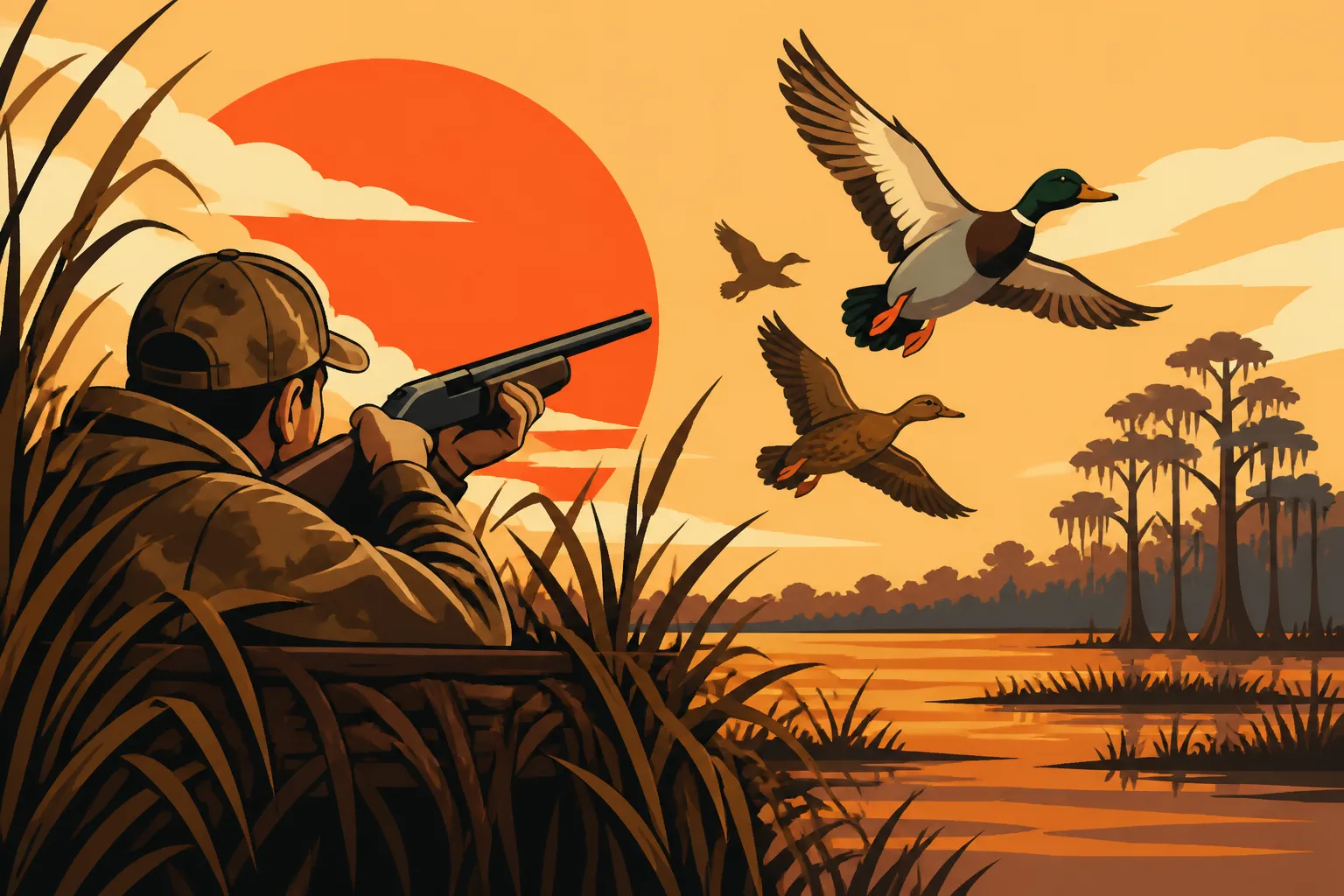
Hunting the Vermilion Parish Marsh
Hunting the vast, dynamic expanse of the Vermilion Parish Marsh can feel like stepping into another world entirely. This incredible landscape, with its endless stretches of Spartina grass, winding bayous, and shallow ponds, presents both unparalleled hunting opportunities and unique challenges that can easily overwhelm the unprepared. For those of us drawn to the raw beauty and bounty of Louisiana's coastal wetlands, this guide will lay out everything you need to know to plan a successful and safe hunting adventure in Vermilion Parish.
Understanding the Unique Vermilion Marsh Environment
The Vermilion Parish Marsh isn't just a place; it's a living, breathing ecosystem that changes with every tide and every season. Understanding its intricacies is the first step to becoming a successful hunter here. It's a land of contrasts, where saltwater meets fresh, and life thrives in abundance.
The Dynamic Landscape of Vermilion Parish
Imagine a sprawling mosaic of water and grass, constantly sculpted by the relentless forces of the Gulf of Mexico. That's the Vermilion Parish Marsh. This area is predominantly brackish marsh, a mix of freshwater runoff from the mainland and saltwater tides pushing in from the Gulf. This unique blend supports an incredible diversity of life, but it also means the environment is in a constant state of flux. Tides dictate everything, from boat access to where the ducks feed and rest. A pond that was easily accessible at high tide might become a mud flat just hours later, leaving you stranded if you’re not careful.
The dominant vegetation here is Spartina grass, which can grow several feet high, creating dense, mazelike cover. Interspersed within this grass are countless shallow ponds, narrow canals, and larger bayous that serve as vital arteries for water flow and wildlife movement. The shifting sands and silts mean that channels can fill in, new ones can open, and even familiar landmarks can disappear overnight, especially after a strong storm. It’s an environment that demands constant vigilance and respect, where understanding the rhythm of the water is as important as knowing your game. You can learn more about this incredible ecosystem by delving into the details of Louisiana Waterfowl Zones and Seasons.
Primary Game Species in Vermilion Parish Marsh
When most folks think about hunting the Vermilion Parish Marsh, waterfowl immediately comes to mind, and for good reason. This area is a crucial wintering ground for millions of migratory birds making their journey along the Mississippi Flyway.
- Waterfowl: The marsh is absolutely teeming with ducks, particularly dabblers like green-winged and blue-winged teal, gadwall, pintail, and widgeon. You'll also find plenty of mottled ducks, which are year-round residents. Diver ducks, such as scaup (dos gris) and canvasbacks, utilize the deeper ponds and bays, though often closer to the Gulf. Geese, especially specklebellies (white-fronted geese) and snow geese, also make their presence known, often feeding in nearby rice fields but roosting in the safety of the marsh. The sheer volume of birds here can be breathtaking, making for some unforgettable hunts. For specific duck insights, consider checking out Hunting Cameron Parish Marsh Ducks or Layout Blind Hunting Coastal Rice Fields.
- Feral Hogs: While not the primary draw, feral hogs are present in the marsh, particularly on spoil banks, natural ridges, and any higher ground that offers slightly drier footing. They’re constantly searching for roots and tubers, and can be a welcome bonus when you’re out for ducks. They're resilient, smart, and can provide an exciting challenge. For more general information on these animals, refer to Hunting Louisiana's Year-Round Feral Hogs.
- Alligators: Vermilion Parish is quintessential alligator country. Recreational alligator hunting is a highly regulated, lottery-based system here. If you're lucky enough to draw a tag, the marsh provides prime habitat for these ancient reptiles. The methods are specific and thrilling, often involving hook-and-line setups. More details can be found on Louisiana Alligator Legal Methods and Louisiana Alligator Lottery Application Window.
- Small Game: While less common than in uplands, you can occasionally find rabbits on higher, brushier banks, and opportunities for various marsh birds, though they usually play a supporting role to the main waterfowl event.
Accessing and Navigating the Vermilion Marsh
Getting into and around the Vermilion Parish Marsh is an adventure in itself. It's not a place you just "stroll" into. Specialized equipment and local knowledge are paramount for a safe and productive hunt.
Public vs. Private Land Access
One of the biggest hurdles for hunters in Vermilion Parish is navigating the patchwork of public and private land. A significant portion of the marsh is privately owned or leased, often by duck clubs or large landowners.
- Private Land: Many of the most productive duck hunting areas are controlled by private landowners or leaseholders. Gaining access often requires being part of a hunting club, booking with a guide, or, if you're incredibly fortunate, securing personal permission from a landowner. Hunting leases in this region can be highly sought after and costly due to the prime waterfowl habitat.
- Public Access: Thankfully, there are public hunting opportunities available. The Louisiana Department of Wildlife and Fisheries (LDWF) manages certain areas, which can provide excellent access for those willing to do their homework. The Vermilion Parish Marsh Public Access is a critical resource, though it’s important to remember that "public access" doesn't mean "easy access." These areas still require proper equipment and navigation skills. Always consult the latest LDWF regulations and maps for specific boundaries and rules before planning your trip. Apps like GoHunt are invaluable for identifying property lines and ensuring you stay on legal hunting ground, preventing accidental trespassing which can quickly ruin a hunt. Understanding the Louisiana Duck Zone Rules for this area is also critical.
Regardless of whether you're on public or private ground, a boat is almost always essential. The marsh is too vast and too wet for foot travel in most places.
Essential Gear and Navigation Techniques
Your gear choices in the Vermilion Marsh can literally make or break your trip. Preparation is key to both success and safety.
- Boats: This isn't your lake boat country. You need a specialized shallow-draft vessel.
- Mud Boats: These are perhaps the most common, equipped with surface-drive or long-tail mud motors designed to run through inches of water, over mud flats, and through thick vegetation. Brands like Gator-Tail or Pro-Drive are staples.
- Airboats: While faster and capable of traversing extremely shallow water, airboats are generally restricted to certain areas due to noise and environmental impact concerns. They are also significantly more expensive to operate.
- Pirogues/Kayaks: For very specific, hard-to-reach pockets, a pirogue or kayak can be stealthy and effective, allowing you to paddle into areas larger boats can't reach. However, they limit your gear capacity and require significant physical effort.
- Waders and Waterproof Clothing: You will get wet. Chest waders are non-negotiable, and high-quality waterproof jackets and pants are essential, even on clear days, given spray from the boat and potential rain.
- Navigation Tools: This is where modern technology shines.
- GPS Unit: A reliable handheld GPS is vital. Mark your launch point, your blind location, and any hazards.
- Mapping Apps: Apps like GoHunt, OnX Hunt, or Garmin BaseCamp downloaded to your phone or tablet are lifesavers. They provide detailed satellite imagery, property lines, and allow you to pre-plan routes and mark waypoints. Cell service is often nonexistent in the deep marsh, so ensure all maps are downloaded for offline use. This is especially useful when Scouting Louisiana Public Land Before Season.
- Compass and Paper Map: Always carry a backup. Batteries die, and electronics fail. Knowing how to read a compass and a physical map could save your life if you get disoriented in the fog or after dark.
- Safety Gear: Beyond the standard boat safety equipment, consider a satellite messenger (like a Garmin inReach) for emergency communication when out of cell range. Carry extra fuel, a full tool kit, a first-aid kit, and plenty of water and snacks.
- Scouting: Pre-season scouting, either by boat or by poring over satellite imagery, is absolutely critical. Look for areas with good cover, proximity to feeding grounds, and easy access channels. Pay attention to how tides affect different areas. You might be interested in Reading a Marsh Pond for a Morning Flight for specific scouting insights.
Effective Hunting Strategies for Vermilion Marsh
Hunting in the Vermilion Marsh requires specialized techniques tailored to the environment and the game you pursue. It’s a game of tides, wind, and understanding bird behavior.
Waterfowl Hunting Tactics
Louisiana's coastal marsh, especially in Vermilion Parish, is legendary for its duck hunting. The strategies employed here are often unique to this estuarine environment.
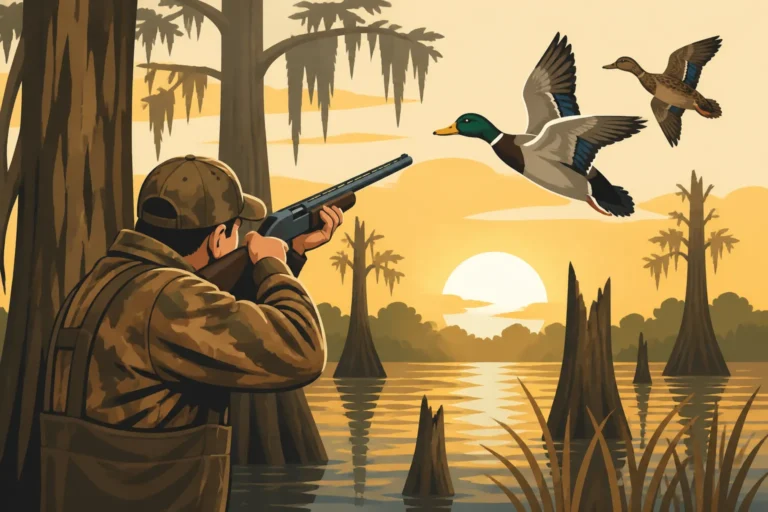
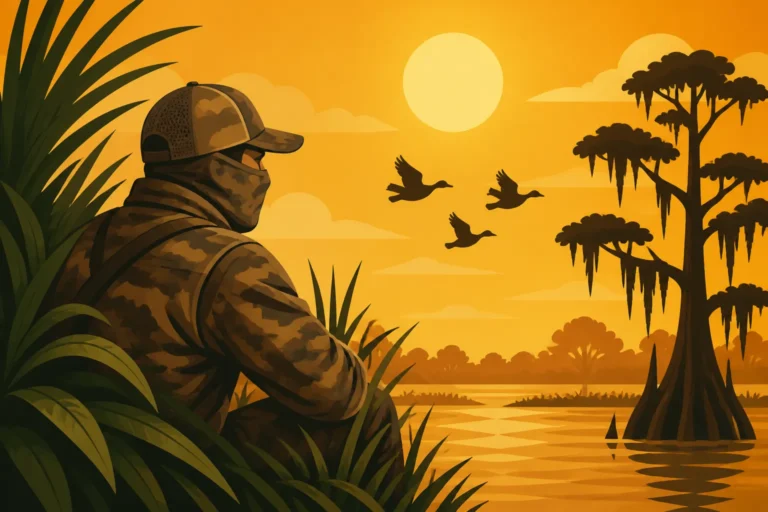
- Blind Types and Placement: Natural vegetation is your friend. Many hunters will cut and build temporary blinds from Spartina grass right on the edge of a pond or a bayou. Sometimes, a layout blind can be effective in areas of sparse cover, allowing you to blend seamlessly into the low-lying marsh. The key is to disappear into the landscape; birds here are incredibly wary. Think about the sun's position and the prevailing wind direction when choosing your blind site. A good spot will have the wind at your back, pushing incoming birds over your decoys.
- Decoy Spreads: Your decoy spread should mimic the natural behavior of ducks.
- Species-Specific Spreads: Match your decoys to the birds you expect to see most. For dabblers like teal and gadwall, a mix of these species, often with a few pintails for visibility, works well.
- Motion Decoys: Spinwing decoys (like Mojo or Lucky Duck) are highly effective in the marsh, especially on calm days, as they add vital movement to your spread, attracting birds from a distance.
- Numbers and Arrangement: Don't be afraid to put out a good number of decoys – a dozen or two for a small pond, or several dozen in larger open areas. Arrange them to create a landing zone in front of your blind, leaving an open "pocket" that looks inviting to incoming birds. Consider how Working Flooded Timber for Mallards offers different decoy considerations than open marsh.
- Calling Techniques: Marsh birds can be very responsive to calling, but subtlety is often key.
- Dabblers: Short, sharp greeting calls, chuckle, and feeding calls work well. Don't overcall; let the birds work your spread.
- Geese: If specklebellies are in the area, a good speck call can be incredibly effective. For snow geese, it's often about numbers and loud, insistent calling to get their attention.
- Timing and Tides: The tide is critical. Ducks often prefer to feed and loaf in shallow, exposed mud flats during low tide, or move into deeper ponds on a rising tide. Observe their patterns. Morning flights are typically best, but a strong tide swing can initiate movement throughout the day. Paying attention to Louisiana Waterfowl Migration Timing and knowing Why the Coastal Marsh Concentrates Ducks will also inform your strategy.
Opportunistic Hog and Small Game Hunting
While waterfowl is king, don't overlook the potential for other game. Hogs can be a pleasant surprise, and small game offers a different kind of challenge.
- Hog Hunting: In the marsh, hogs tend to stick to the slightly higher ground – natural ridges, old shell banks, and especially spoil banks created by dredging canals. These areas offer them drier bedding spots and access to roots and tubers.
- Still-Hunting/Stalking: This is often the most effective method. Move slowly and quietly along these elevated areas, using the tall grass for cover. Look for disturbed earth, tracks, and scat.
- Targeting Travel Corridors: Hogs will often use the same trails along a spoil bank. Setting up near a fresh crossing point or a wallow can pay off. Remember, you're looking for a bonus, not necessarily a dedicated hog hunt in this environment.
- Small Game: Rabbit hunting can be productive in areas with thicker brush on higher ground, like the edges of cheniers or old homesteads. It's often a walk-up affair, flushing rabbits from cover. Be aware of your surroundings and any potential other hunters, especially during duck season. Always ensure you have the appropriate Louisiana Hunting Licenses and What They Cost for any species you intend to pursue.
Safety and Conservation in the Coastal Marsh
Hunting in the Vermilion Parish Marsh is an incredible experience, but it comes with inherent risks. Prioritizing safety and upholding conservation ethics are paramount.
Navigational Hazards and Emergency Preparedness
The marsh is a vast, unforgiving place that can turn dangerous quickly. Proper preparation can mean the difference between a memorable hunt and a desperate situation.
- Getting Lost: This is perhaps the biggest danger. The uniform landscape of endless marsh grass makes it incredibly easy to become disoriented, especially in fog, rain, or at night. Always, always use a reliable GPS with pre-marked waypoints. Consider carrying a backup GPS or a compass and knowing how to use it. Many hunters share a float plan with someone reliable on shore, detailing their intended route and expected return time.
- Tidal Stranding: The drastic tidal swings can leave your boat high and dry, sometimes for hours. Understand the tide charts for your specific area and plan your ingress and egress accordingly. Never push the limits of your boat's draft.
- Weather Changes: Marsh weather can be unpredictable. A clear morning can quickly turn into a stormy, foggy, or windy nightmare. High winds can make navigation treacherous, and fog can reduce visibility to mere feet. Always check the forecast thoroughly and be prepared to cut your hunt short if conditions deteriorate.
- Submerged Obstacles: The marsh floor is littered with hidden hazards – sunken logs, old pilings, and oyster reefs. Proceed with caution, especially in unfamiliar areas. A prop strike can leave you immobile.
- Emergency Kit: Beyond the basic boat safety gear (life jackets, throwable device, horn), carry a comprehensive emergency kit:
- Communication: Satellite messenger (Garmin inReach, Spot X) is critical where cell service is absent.
- Medical: A well-stocked first-aid kit, including snakebite kits, is a must.
- Survival: Extra water, high-energy food, a space blanket, fire starter, knife, and a powerful spotlight or headlamp.
- Tools: Basic boat repair tools, spare prop, wrench, electrical tape, zip ties.
Always be prepared for the unexpected; it’s not a matter of if something will happen, but when.
Respecting the Environment and Wildlife
As hunters, we are stewards of the land and water. Our actions in the marsh have a direct impact on its delicate ecosystem.
- Leave No Trace: Pack out everything you pack in. This includes spent shotgun shells, food wrappers, and any trash. Leave the marsh cleaner than you found it.
- Ethical Hunting: Practice good sportsmanship. Know your effective range and only take clean, ethical shots. Wounded game in the marsh can be incredibly difficult to recover, leading to unnecessary suffering and wasted resources. Understand and adhere strictly to all bag limits and shooting hours.
- Coastal Erosion Awareness: Louisiana's coastal marsh, including Vermilion Parish, is facing severe land loss due to erosion, subsidence, and sea-level rise. Be mindful of your wake, especially in narrow channels, as it can accelerate bank erosion. Support conservation efforts that aim to restore and protect these vital wetlands.
- Wildlife Disease Monitoring: While less prevalent in waterfowl, it's always good practice to stay informed about potential wildlife diseases. For example, understanding Louisiana's Chronic Wasting Disease Zones is crucial for deer hunters, and while CWD doesn't affect waterfowl, being aware of overall wildlife health issues is part of responsible hunting.
- Reporting Violations: If you witness poaching or other illegal activities, report them to the LDWF. Protecting our natural resources is everyone's responsibility.
Hunting the Vermilion Parish Marsh is a challenging yet deeply rewarding experience that connects you to the wild heart of Louisiana. With thorough preparation, the right gear, a deep respect for the environment, and a healthy dose of patience, you're set for an unforgettable adventure in one of the state's most iconic hunting grounds.
Hunting Boat Comparison for Vermilion Parish Marsh
| Boat Type | Primary Use in Marsh | Pros | Cons | Best For |
|---|---|---|---|---|
| Mud Boat | Waterfowl hunting, general marsh access, traversing mud flats | Excellent in shallow water/mud, reliable, adaptable to various setups | Slower than airboats, can struggle in very thick, matted vegetation | Dedicated waterfowl hunters, general marsh exploration, robust utility |
| Airboat | Fast travel, accessing extremely shallow or matted areas | Fastest across marsh, can traverse matted vegetation and extremely shallow water | Very noisy, high fuel consumption, restricted in some areas, expensive | Guides, emergency response, large-scale scouting (where legal/permitted) |
| Pirogue/Kayak | Stealthy access to small ponds, narrow channels, scouting | Silent, highly maneuverable, low cost, environmentally friendly | Limited speed/range, minimal gear capacity, physically demanding | Stealthy, solo hunters, accessing very remote or restricted water bodies |
| Outboard (V-hull/Flat-bottom) | Larger bayous, open water, limited marsh access | Faster in open water, more comfortable, greater capacity | Prone to damage in shallow water/mud, easily stranded by low tides | Accessing the edge of the marsh from larger waterways, fishing |
Disclaimer
Please note that hunting regulations, seasons, and access can change. Always consult the latest official Louisiana Department of Wildlife and Fisheries (LDWF) regulations and local ordinances before planning any hunting trip. This guide provides general information and should not be considered a substitute for official legal documents or professional advice.