Handling a Bear After the Shot
Bringing down a Louisiana black bear is an incredible achievement, the culmination of scouting, patience, and precise shooting, but the real work often begins the moment that bear hits the ground. Many hunters, especially those new to bear hunting, quickly realize the immense challenge of handling such a large animal, particularly in the unforgiving heat and thick cover of the Louisiana swamps and bottomlands. This guide will walk you through the critical steps immediately after the shot, from confirming the kill and field dressing to the challenging task of extraction and final processing, ensuring you honor your harvest properly.
Immediate Steps After the Shot
The adrenaline surge after taking a shot at a bear is undeniable, but it's crucial to resist the urge to immediately rush in. Bears are incredibly tough animals, and a wounded bear can be extremely dangerous. Patience and a methodical approach are your best allies in ensuring both your safety and a successful recovery.
Marking the Spot and Waiting
First things first: clearly mark the exact spot where the bear was standing when you shot it, and then mark the last place you saw it. Use flagging tape, a brightly colored hat, or even your GoHunt app to drop a pin. This might seem like overkill in the moment, but in the dense Louisiana woods, things look different once the adrenaline fades. After marking, back out slowly and quietly. The waiting game is paramount. If you suspect a good shot, particularly a heart or lung shot, waiting at least 30 minutes to an hour is wise to allow the bear to expire. For less-than-ideal shots, or if the bear was agitated, a longer wait of 2-4 hours is often recommended. This gives the bear time to lie down and stiffen, reducing the risk of it traveling further or, worse, ambushing you.
Consider the specific challenges of the local terrain when deciding how long to wait. If you're hunting in a low-lying, watery area of the Atchafalaya Basin, or perhaps a dense palmetto thicket, a longer wait might be necessary to ensure the bear is completely expired before you attempt to track it. The last thing you want is a wounded bear disappearing into a virtually impenetrable swamp.
Notifying Authorities and Confirming the Kill
Louisiana's black bear season operates under a strict lottery system, meaning every bear harvest is carefully managed. Once you've waited and are ready to approach, do so with extreme caution, rifle ready. Circle wide around the last known location, looking for blood, tracks, or other sign before approaching directly. When you find the bear, approach from the rear, making noise to ensure it's truly down. A poke with a long stick or the butt of your rifle can confirm there's no residual movement before you get too close.
Immediately after confirming the bear is deceased, your next step is to comply with all legal requirements. For hunters participating in the Louisiana's Reinstated Black Bear Lottery, reporting your kill to the Louisiana Department of Wildlife and Fisheries (LDWF) is mandatory and time-sensitive. You'll need to contact them via phone to report the harvest and receive instructions for sealing and biological data collection. This is where all that effort put into Applying for a Louisiana Bear Lottery Tag and Attending the Mandatory Bear Hunter Course comes into play. They'll verify your tag and ensure compliance with rules like Judging a Legal Bear Versus a Cub before proceeding. Timely notification is critical to avoid any legal complications.
Field Dressing and Initial Preservation
Once the bear is down and reported, the clock starts ticking, especially in Louisiana's often warm and humid climate. Proper field dressing is not just about making the animal easier to transport; it's about preserving the meat and hide from spoilage. Bears can carry a thick layer of fat, which can quickly turn rancid if not cooled immediately.
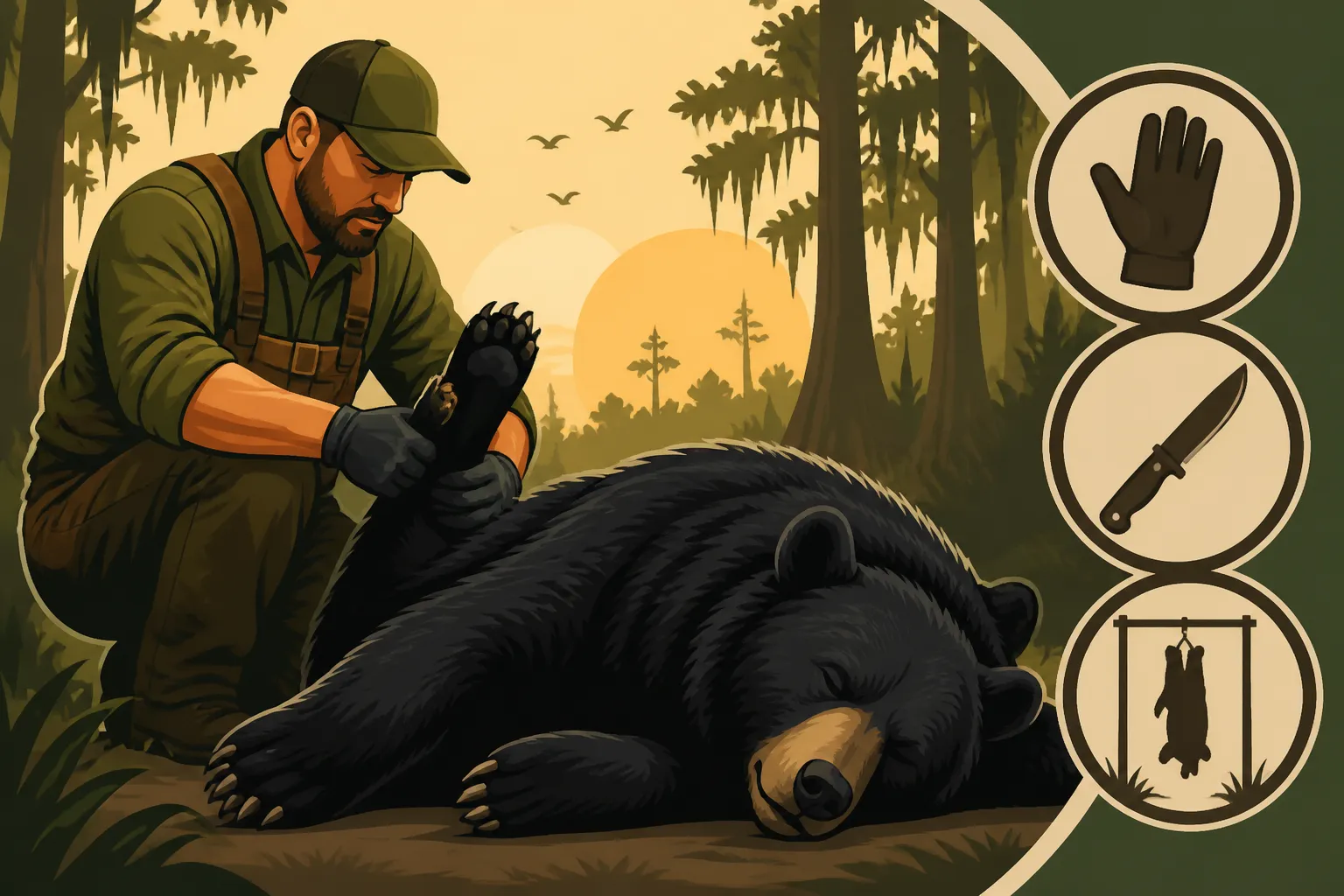
Essential Gear for Bear Recovery
Before you even step foot into bear country, you should have a dedicated recovery kit. Here's what's non-negotiable for a Louisiana bear hunt:
| Item | Purpose |
|---|---|
| Sharp Knife(s) | For field dressing and skinning. Carry at least two, or a sharpener. |
| Bone Saw/Hacksaw | Useful for quartering larger bears, especially through the sternum or pelvis. |
| Heavy-Duty Gloves | Protection from blood, hair, and potential bacteria. Nitrile under cut-resistant gloves are ideal. |
| Game Bags | Essential for protecting quartered meat from flies, dirt, and debris during transport. |
| Strong Rope/Winch | For dragging, hoisting, or maneuvering the heavy carcass, particularly in difficult terrain. |
| Flashlight/Headlamp | Tracking or recovery can easily extend into twilight or darkness, even with early morning shots. |
| First-Aid Kit | For minor cuts, scrapes, or other injuries that can occur during recovery. |
| Plenty of Water | Staying hydrated is crucial, as bear recovery is physically demanding work, often in the heat. |
| Coolers and Ice | For immediate meat cooling. Have them ready at the vehicle, or even bring small, soft-sided coolers into the field if quartering. |
Having these items readily accessible is a game-changer. Imagine trying to drag a 300-pound bear through a cypress swamp without adequate rope or having your only knife dull midway through field dressing. A well-prepared hunter understands that the hunt isn't over until the meat is in the freezer.
The Field Dressing Process for Bears
Field dressing a bear is similar to a deer but scaled up significantly due to their sheer size and fat layers. The primary goal is to remove the entrails as quickly as possible to begin the cooling process and prevent off-flavors from permeating the meat.
- Position the Bear: Ideally, roll the bear onto its back. This allows easier access to the belly for the incision and keeps the hair away from the cavity. If you're in a swampy area, try to find a slightly elevated piece of ground or a dry spot.
- Make the Incision: Starting at the breastbone, carefully make a shallow incision through the skin and fat, extending down to the pelvis. Be careful not to puncture the intestines. Once the initial cut is made, use a gut hook or your fingers to guide your knife, lifting the hide to prevent cutting into the organs.
- Open the Chest Cavity: If you plan to quarter the bear, you'll need to open the chest cavity. A bone saw is invaluable here, cutting through the sternum to fully expose the lungs and heart.
- Remove Organs: Reach into the chest cavity and cut the windpipe and esophagus as far up as possible. Pull down, severing any remaining membranes and connections, and roll the entrails out. Be prepared for a significant amount of material.
- Clean and Cool: Once the organs are removed, wipe out the cavity as best you can with clean cloths or paper towels (avoiding water if possible, as it can promote bacterial growth). Prop the cavity open with sticks or logs to allow air circulation. If you're quartering, start separating the major muscle groups. In Louisiana's heat, consider placing bags of ice inside the cavity or directly on the quarters if you have the means. The quicker you can reduce that core temperature, the better the meat quality will be. Remember, per Louisiana Bear Legal Harvest Rules, you might need to leave evidence of sex attached to the carcass or a major portion until it reaches the final processing point, so plan your cuts accordingly.
Transporting the Bear Out of the Field
This is often the most physically grueling part of the bear recovery process, especially if your successful shot occurred deep in the backcountry or within areas like the cypress-tupelo swamps common in The Atchafalaya Basin Bear Population or the Tensas River basin.
Strategies for Moving a Heavy Bear
A mature Louisiana black bear can easily weigh 200-400 pounds, with some even exceeding 500 pounds. Trying to drag a whole bear out of thick cover is often an exercise in futility and can lead to injury.
- Quartering: This is by far the most practical method for most hunters, especially if you're alone or deep in the woods. After field dressing, skin the bear and separate it into four quarters, plus the backstraps, tenderloins, and head/hide. Place each portion into separate game bags. This makes the load manageable for one or two people to carry out. You can even use a strong backpack frame designed for packing out game.
- Dragging with Assistance: If you have a group, a game cart, or an ATV, you might be able to drag a field-dressed bear. Use heavy-duty rope or even a specialized game sled. If dragging, try to keep the head up to prevent dirt and debris from accumulating on the hide or chest. The terrain will dictate what's feasible. In open piney woods, dragging is more viable than in dense cane breaks or muddy sloughs.
- Boat or Canoe: In many parts of Louisiana where bears roam, like the Atchafalaya River Basin or sections of Where Louisiana Black Bears Range Today along bayous, a boat or canoe can be your best friend. If you can get a boat close, loading the entire field-dressed bear or its quarters into it dramatically simplifies transport. Just be mindful of stability and capacity.
- Professional Assistance: Don't hesitate to call for help if needed. Many local hunting clubs or even professional retrieval services might be available for a fee. It's better to ensure the meat and hide are preserved than risk spoilage or injury trying to do it all yourself.
Legal Requirements for Transport and Tagging
Once the bear is broken down and ready for transport, ensure you're compliant with all LDWF regulations. Your harvest tag (which you would have received as part of the lottery system) must be immediately attached to the bear. The specific location for attachment can vary, so always refer to the current year's hunting regulations booklet, but typically it must be affixed to the carcass in a way that prevents its removal.
When transporting the bear, you might be required to keep evidence of sex naturally attached to the carcass until it reaches the point of final processing. This helps wildlife agents verify that you've harvested a legal bear, which ties back to the regulations around Judging a Legal Bear Versus a Cub. If you've quartered the bear, ensure that the required evidence stays with a major portion of the meat.
Upon returning from the field, you'll likely need to check in your bear at a designated LDWF check station or a biological sampling station. This is where biologists collect important data such as weight, sex, and sometimes teeth for aging. They may also collect tissue samples to monitor the health of the bear population and for disease surveillance, which is a crucial aspect of managing populations in areas where Bears Moving Into Central Louisiana or Why the Tensas Basin Holds the Most Bears are a focus. Always follow their instructions carefully.
Final Processing and Care at Home/Camp
The journey isn't truly complete until the meat is in the freezer and the hide is safely cared for. The effort you put in here directly impacts the quality of your table fare and the preservation of your trophy.
Skinning and Further Meat Care
If you decided to quarter the bear in the field, you’ve already started the skinning process. If you brought the bear out whole or mostly whole, skinning at camp or home is the next step.
- Skinning: For a full rug, specific cuts are needed. Lay the bear on its back and make cuts down the inside of each leg to the central belly cut. Carefully peel the hide back, using your knife to separate it from the muscle and fat. Pay close attention around the head, ears, and paws if you intend to have a skull or full-body mount. Remove as much fat as possible from the hide itself; bear fat can quickly taint a hide if not properly removed and salted.
- Meat Processing: Once the bear is skinned and quartered, the meat should be immediately placed on ice, either in coolers or a cold room. Bear meat can be excellent if handled correctly, but it's often richer and fattier than venison. Many hunters prefer to cut off as much fat as possible from the meat itself, as the fat is what can give bear meat a strong, sometimes gamey, flavor. Package the meat in freezer bags or butcher paper, labeling each package clearly.
- Taxidermy: If you're saving the hide for a rug or a skull for a Euro mount, consult your taxidermist before the hunt. They can give you precise instructions on field care for a bear hide and skull. Often, this involves salting the hide heavily and freezing it, or freezing the skull for later cleaning. Knowing what your taxidermist needs upfront can save you a lot of headache and ensure your trophy is preserved perfectly. The What Louisiana's Bear Training Course Covers will undoubtedly touch on these crucial aspects of post-harvest care.
Addressing Louisiana's Warm Climate Challenges
Louisiana's climate adds an extra layer of difficulty to game care. High temperatures and humidity accelerate bacterial growth, making rapid cooling non-negotiable.
- Immediate Cooling is Key: Never let bear meat sit without cooling. If you’re hunting in early season or during an unseasonably warm spell, fill the body cavity with ice packs or bags of ice immediately after field dressing.
- Professional Processors: Unless you are experienced in handling large game in warm weather, consider taking your bear to a professional wild game processor as soon as possible. They have the cold storage and expertise to quickly cool and process your meat, ensuring its quality. Ask local hunters or check with the LDWF for recommended processors in your area who are familiar with bear.
- Bear Fat Rendering: While you might trim a lot of fat from the meat, bear fat can be rendered down into lard for cooking, which is excellent for pastries, frying, or even soap making. Collect the clean fat and render it slowly over low heat until it becomes a clear liquid. Strain it and store it in jars in the refrigerator or freezer.
Handling a black bear after the shot is a monumental task, but with proper planning, the right gear, and a commitment to ethical meat and trophy care, it's a deeply rewarding experience. By following these steps, you'll ensure that your hard-earned harvest from the wilds of Louisiana is respected and preserved.
Disclaimer
The information provided in this guide is for general informational purposes only and does not constitute legal advice. Hunting regulations, seasons, and requirements can change rapidly. Always consult the most current Louisiana Department of Wildlife and Fisheries (LDWF) hunting regulations and local ordinances before engaging in any hunting activities. It is the hunter's responsibility to know and obey all applicable laws.