Spot-and-Stalk Tactics for a Bear Lottery Tag
Drawing a Louisiana bear lottery tag is truly a once-in-a-lifetime opportunity for most hunters, a dream come true that can quickly turn into a daunting challenge when you realize how elusive these animals can be in our dense bottomland and marsh. Spot-and-stalk hunting for black bears in Louisiana isn't like hunting open country; it demands an entirely different approach, one that blends careful observation, stealth, and a deep understanding of their habitat. This guide is dedicated to equipping you with the specialized tactics and mindset needed to maximize your chances of success when that coveted tag finally lands in your hands.
Understanding Louisiana Black Bear Behavior and Habitat for Spot-and-Stalk
Hunting black bears with a spot-and-stalk method in Louisiana requires an intimate knowledge of their daily routines, preferred food sources, and travel corridors, all heavily influenced by the unique, often thick and swampy, landscape. It's not about glassing vast expanses, but rather understanding small pockets of opportunity and being patient enough to exploit them.
Bear Movement Patterns and Habitat Preferences
Louisiana's black bears, particularly the Louisiana black bear subspecies found predominantly in the Tensas River Basin, Atchafalaya River Basin, and coastal marsh areas, are creatures of habit but masters of concealment. Unlike their western counterparts that might be found on open hillsides, our bears favor dense cover. They thrive in bottomland hardwood forests, which offer a rich buffet of acorns, persimmons, and palmetto berries, especially during the fall hunting season. You'll often find them utilizing areas with thick undergrowth for bedding and thermal cover, usually close to water sources like bayous, sloughs, and cypress swamps.
Their movement patterns are typically crepuscular, meaning they are most active during dawn and dusk. However, individual bears can be seen at any time, especially if food sources are abundant or if they've been undisturbed. On warm days, they might lay up in the deepest, shadiest thickets or even take a dip in cool water. Understanding these tendencies is paramount. For instance, after a good rain, bears might move more freely as the damp ground makes for quieter travel. A critical resource for gaining insights into their range and preferences is by studying information on Louisiana's Three Bear Subpopulations.
Key Food Sources and Seasonal Influences
Louisiana's diverse ecosystems provide a changing menu for black bears throughout the year. In early fall, acorns from oak trees – especially white oaks – are a primary draw. Bears will gorge on these high-calorie nuts to pack on weight for winter. Later in the season, persimmons, muscadines, and even some agricultural crops like corn or soybeans, if available near their habitat, become important.
Identifying these food sources and knowing when they are ripe and actively being consumed is crucial for your spot-and-stalk strategy. A successful hunt often starts by finding a productive food source that bears are regularly visiting. Look for torn-up ground under oak trees, broken branches in persimmon groves, or scat piles full of berry seeds. Don't underestimate the power of scouting. While the season is short and tags are limited, knowing Applying for a Louisiana Bear Lottery Tag is just the start; the real work begins long before opening day by understanding the bear's pantry.
Essential Gear and Scouting for Louisiana Bear Spot-and-Stalk
Success in a Louisiana bear spot-and-stalk hunt hinges on meticulous preparation. This isn't just about having the right weapon; it's about blending into the environment, knowing the terrain intimately, and being ready for a close-quarters encounter.
Topographical Maps and Satellite Imagery
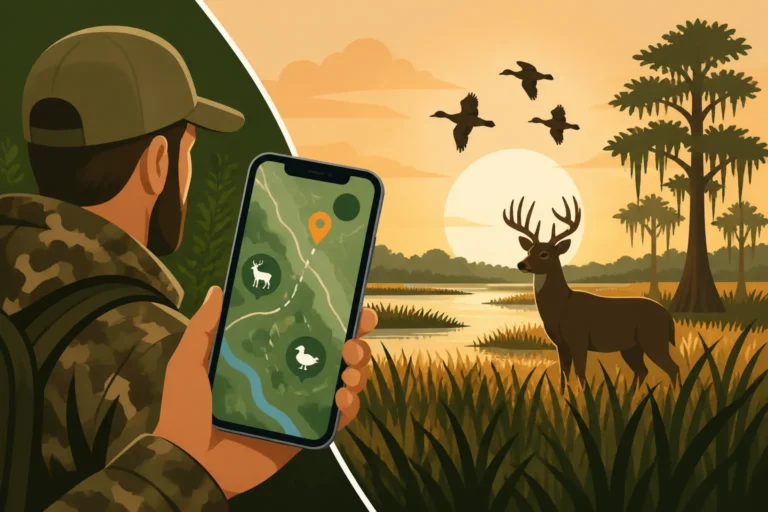
Before you even set foot in the woods, your scouting begins with maps. Detailed topographical maps and high-resolution satellite imagery are invaluable tools. They allow you to identify potential travel corridors, dense bedding areas, water sources, and food plots without disturbing the animals. Look for pinch points, ridge lines, sloughs, and creek bottoms that bears might use to move undetected. Platforms like GoHunt offer excellent mapping tools that allow you to overlay private land boundaries, topography, and aerial views, helping you identify subtle changes in elevation or cover that could funnel a bear. This digital groundwork is critical for planning your approach and escape routes.
Consider how bears would move through a specific area: where would they cross a ditch? Where is the thickest cover they might choose to bed in during the day? These aren't just questions for deer hunters; they apply equally, if not more, to bear hunting. If you're targeting areas like the Tensas Basin, understanding Where the Tensas Basin Holds the Most Bears will help you narrow down your focus and use these mapping tools more effectively.
Wind Checkers and Scent Control
In the thick, often stagnant air of Louisiana's swamps and bottomlands, scent control and constant wind awareness are non-negotiable. Black bears have an incredibly keen sense of smell, far superior to deer. A single puff of your scent carried on a fickle breeze can instantly ruin a meticulously planned stalk. You need a reliable wind checker that emits a fine powder to visualize even the slightest air movement. This is your constant companion, consulted every few steps.
Beyond wind, rigorous scent control is paramount. This means showering with unscented soap, washing hunting clothes in scent-free detergent, and storing them in airtight bags. Wearing carbon-activated clothing can also provide an additional layer of protection, though it's not a substitute for playing the wind. The humidity in Louisiana can make thermals tricky and unpredictable, even in seemingly flat terrain. Think about how Wind and Thermals in Swamp Bottomland can affect your approach, especially when planning to move through low-lying areas or along waterways where air currents can shift rapidly.
Optics, Footwear, and Clothing
Your choice of optics will differ from open-country hunting. Instead of high-power binoculars for long-range glassing, focus on a good quality pair of 8x or 10x binoculars that perform well in low light, suitable for the dense cover. A rangefinder is also essential for accurate shot placement once you identify a legal bear.
Footwear must be chosen for silent, comfortable, and waterproof movement. Rubber boots are often a necessity in the damp, muddy conditions of Louisiana's bear habitat. Look for boots that offer good ankle support for navigating uneven terrain and plenty of flexibility for quiet steps.
Clothing should be quiet, durable, and camouflaged to blend with the specific environment you'll be hunting in. Lightweight, breathable fabrics are key to managing the heat and humidity, but layering is still important for early morning chill. Don't forget bug spray, as mosquitoes and gnats can be relentless and distracting. And, of course, blaze orange or pink is required by law during firearms seasons, even for bear. Ensure you're familiar with Attending the Mandatory Bear Hunter Course, as it will cover specific gear and safety protocols.
Executing the Spot-and-Stalk in Dense Louisiana Cover
The moment of truth for a spot-and-stalk bear hunt in Louisiana is the actual execution in the field. This is where patience, stealth, and quick decision-making truly come into play.
Identifying Bear Sign and Initiating the Stalk
Unlike deer, bears often leave very distinct and obvious signs of their presence. When scouting, look for tracks, scat (often containing berries or nuts), claw marks on trees, and disturbed ground where they've dug for roots or tubers. Bears also love to rub on trees and posts, leaving hair and scent behind. Find these fresh signs, and you’ve found an area a bear is currently using.
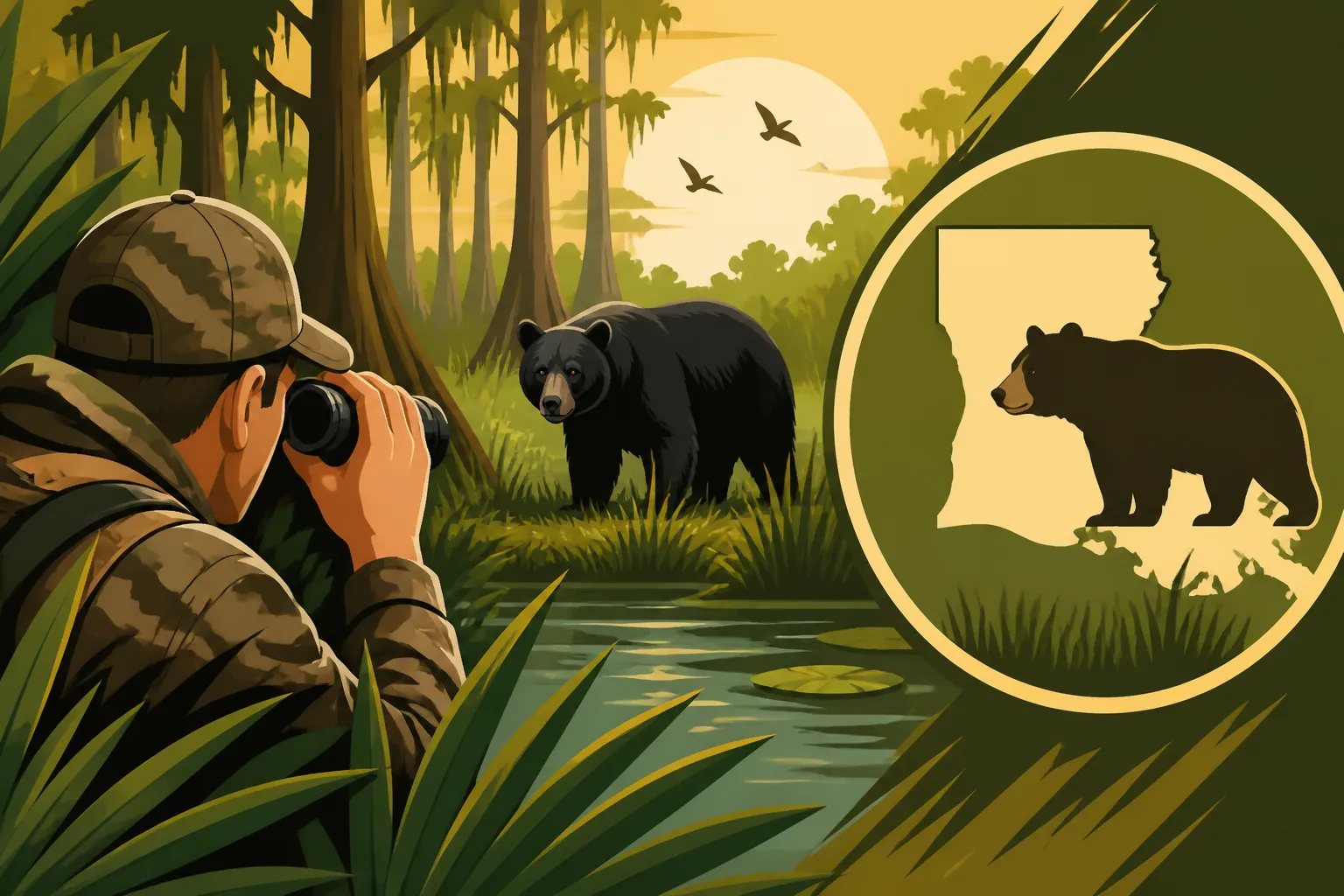
Once you spot a bear or fresh sign indicating one is close, the stalk begins. This is not a race. You need to move agonizingly slow, perhaps only a few steps at a time, constantly checking the wind, listening for subtle sounds, and scanning your surroundings. Use your binoculars to pick apart every shadow and thicket. Before moving, identify your next three steps and what cover you'll use to remain hidden. If you're in a WMA, remember to verify specific rules for Scouting Louisiana Public Land Before Season as some activities might be restricted.
Navigating Cover and Managing Wind Shifts
Louisiana's bear habitat is notorious for its thick undergrowth, palmetto flats, and tangled vines. Moving silently through this is a monumental challenge. Your approach should be dictated by the terrain, wind, and available cover. Always try to move into the wind or with a quartering wind that carries your scent away from the bear's suspected location. If the wind shifts, you must adapt immediately. Sometimes this means a complete repositioning, even if it adds significant distance or time.
When traversing thick areas, lift your feet high to avoid scraping leaves or snapping twigs. Use downed logs, creek beds, or natural depressions to your advantage for concealment. Avoid open areas at all costs. Imagine yourself as a shadow, moving with the utmost care. This is a game of inches, where every sound and movement can give you away. It's often more productive to sit and watch a promising area for an extended period, letting the bear come to you, than to blindly push through heavy cover.
The Ethical Shot and Bear Identification
When you finally get eyes on a bear, the immediate priority is proper identification. Louisiana has strict rules about harvesting a legal bear, primarily concerning their size. You must be able to clearly identify the bear as legal and not a sow with cubs, or a cub under 75 pounds. This is not always easy in heavy cover, especially with bears that can look larger or smaller than they are due to distance or angle. Take your time. Observe its gait, its size relative to surrounding objects, and look for any cubs. This critical step is covered extensively in Judging a Legal Bear Versus a Cub.
Once you've confirmed it's a legal animal, focus on a clear, ethical shot opportunity. The shoulder/chest area is the primary target, aiming for the heart and lungs. Be prepared for a quick follow-up shot if necessary. Remember, bears are incredibly tough animals. Knowing Shot Placement on a Louisiana Black Bear is non-negotiable for a clean, humane harvest. If the bear is moving, or your shot lane isn't clear, wait. There's no trophy worth an unethical shot and a lost animal.
Post-Shot Procedures and Ethical Considerations
Successfully taking a bear in Louisiana is a moment of immense satisfaction, but the work isn't over. Proper post-shot procedures are crucial for ethical recovery and adherence to regulations.
Tracking and Recovery in Challenging Terrain
Bears can travel a surprising distance after a shot, even a well-placed one. Unless you witness the bear drop, give it time – at least 30 minutes for a good shot, longer for a questionable hit – before beginning the track. Mark the spot where the bear was standing and the direction it ran. Look for blood, broken branches, or disturbed leaf litter. In Louisiana's dense cover and often muddy ground, tracking can be incredibly difficult.
Having multiple trackers can be a huge asset. Move slowly, scrutinizing every sign. If the trail goes cold, expand your search pattern in ever-widening circles. If it's getting dark, carefully decide whether to push the track or come back in the morning with more help and better light, weighing the risk of spoilage against losing the animal. Carrying a bright flashlight and extra batteries is essential, as many recoveries stretch into the evening. Be prepared for Handling a Bear After the Shot which includes tagging and immediate care.
Required Reporting and Meat Care
Louisiana requires all harvested bears to be reported to the Louisiana Department of Wildlife and Fisheries (LDWF) immediately. You'll need to contact the designated bear biologist or regional office within a specific timeframe – often within 24 hours of harvest – to get your tag validated and schedule a biological sample collection. This is a mandatory step that contributes to the ongoing management and study of Louisiana's recovering black bear population.
Once reported, field dressing your bear quickly is vital, especially in Louisiana's warm climate, to prevent meat spoilage. Bears have a thick fat layer, and this heat needs to dissipate quickly. If you have a long drag or boat ride ahead, quartering the bear in the field might be the most practical option. Cool the meat as rapidly as possible. This means getting it on ice or into a cooler as soon as you can. Consider how much meat yield you expect and plan for its transport and storage.
Final Thoughts on a Louisiana Bear Lottery Tag
Successfully harvesting a Louisiana black bear on a spot-and-stalk hunt is an experience unlike any other, demanding the utmost skill, patience, and respect for the animal and its habitat. From the initial detailed scouting with tools like GoHunt to the painstaking execution of the stalk and the diligent post-harvest care, every step is critical. Remember, this is more than just hunting; it's a deep dive into the wild heart of Louisiana, a true test of your abilities as a woodsman, and a contribution to the careful management of a magnificent species.
| Bear Sign Category | Specific Examples | What It Indicates |
|---|---|---|
| Tracks | Large, flat paw prints with prominent claw marks | Recent travel, size of bear (larger print = larger bear) |
| Scat | Piles of droppings with berries, nuts, or insect parts | Current diet, frequent feeding area, freshness indicates recent activity |
| Rub/Scratch Marks | Claw marks on trees (especially softer bark like cypress), rub marks on posts | Area used for communication, marking territory, or shedding winter coat |
| Feeding Sign | Torn-up ground under oak trees, broken branches in berry patches, flipped rocks | Active foraging for acorns, berries, roots, or insects |
| Beds | Depressions in dense cover, often under palmetto or thick brush | Resting area, bear might be nearby, especially during daylight hours |
| Hair | Strands caught on barbed wire, tree bark, or brush | Recent passage, can indicate size and health of the bear |
Disclaimer
Hunting carries inherent risks, and laws and regulations can change. Always consult the most current Louisiana Department of Wildlife and Fisheries (LDWF) regulations before heading afield. This guide is for informational purposes only and does not supersede official legal requirements or best safety practices.