Hunting a Standing Cornfield in Farm Country
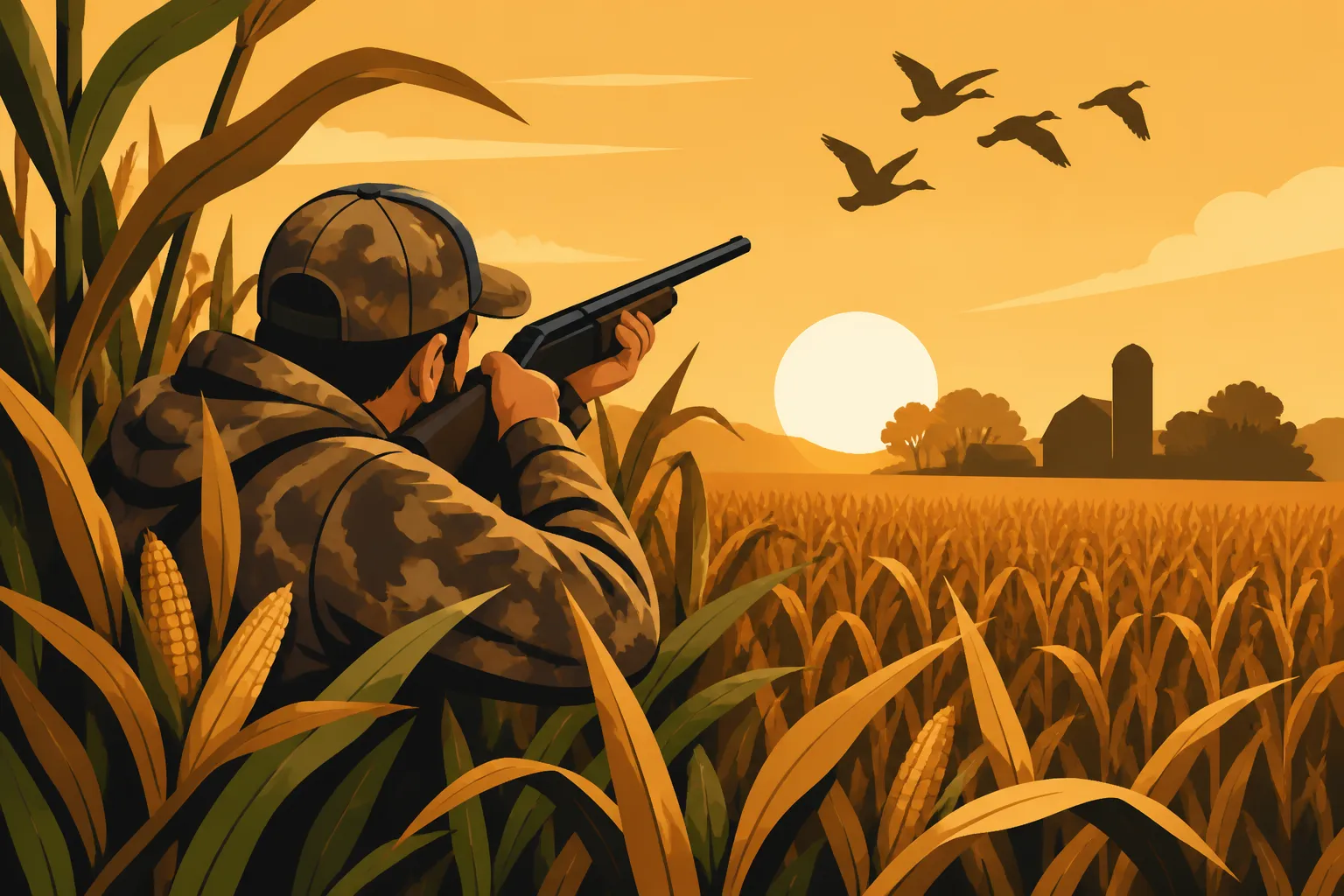
Hunting deer in a standing cornfield in Louisiana's farm country can feel like searching for a needle in a haystack—a really big, rustling, green haystack. You know the deer are in there, hunkered down, gorging themselves, feeling absolutely invisible, but actually laying eyes on one, let alone getting a shot, often seems like a pipe dream. This guide is dedicated to unraveling the mysteries of deer behavior within these agricultural fortresses and equipping you with the practical, hard-won strategies needed to successfully hunt them, turning that frustrating maze into a productive hunting ground.
The Allure and Challenge of Standing Corn for Louisiana Deer
For a white-tailed deer in Louisiana's agricultural belt, a standing cornfield isn't just a place to grab a snack; it's a five-star resort offering an all-inclusive package of food, cover, and security. From the moment the young corn stalks stretch skyward, they begin drawing deer in, and by late summer and early fall, these fields become prime real estate. Understanding this irresistible appeal is the first step to figuring out how to hunt them.
Why Cornfields Are Deer Magnets
Imagine being a deer: you're constantly seeking high-energy food sources to pack on weight before the rut and winter, and you need somewhere safe to hide from predators – two-legged ones especially. Standing corn delivers on both fronts with unparalleled efficiency. The stalks themselves, loaded with carbohydrates, provide a nutritional jackpot, perfect for growing big antlers and strong bodies. Beyond the food, the sheer density and height of a mature cornfield offer incredible concealment. A deer can disappear into those rows, move virtually undetected, and feel incredibly secure, even in areas with significant hunting pressure. They can bed down deep within the field, only emerging at specific times or moving short distances for additional browse. This combination of abundant sustenance and impenetrable cover makes cornfields a powerful draw for deer throughout the hunting season in places like the fertile farm parishes of Northeast Louisiana.
The "Invisible" Deer Phenomenon
One of the most frustrating aspects of hunting standing corn is what I call the "invisible deer" phenomenon. You might scout a perfect treeline bordering a massive cornfield, see fresh tracks leading right into it, and know with certainty that deer are living large inside. Yet, day after day, you sit and see nothing. The problem isn't that the deer aren't there; it's that the corn itself becomes their ultimate camouflage. The tall, rustling stalks mute sound, obscure sight, and provide an intricate labyrinth of deer-made trails through which they navigate. Even spotting a deer from a distance is next to impossible, as they only reveal themselves when they pop out at the very edge, or if you happen to catch a glimpse down a row. This makes traditional hunting methods, which rely on spotting and stalking or long-range visibility, incredibly challenging and often ineffective, leaving many hunters scratching their heads.
Seasonal Dynamics of Cornfield Usage
Deer use cornfields differently throughout the year, and recognizing these shifts can be key to your strategy. In the late summer and early fall, when the corn is green and the kernels are still developing, deer might browse on the leaves and tender ears. As the corn matures and dries, becoming a golden fortress, it transitions into a primary food source and bedding area, right through the archery and early firearms seasons. Once the combines roll through, usually late fall or early winter, the dynamics change entirely. Suddenly, the dense cover is gone, but the fields transform into a new kind of buffet: waste grain. Deer will return to glean the kernels left behind, often in large groups, but their patterns become much more exposed and predictable. Understanding these shifts helps you adjust your tactics, from trying to intercept deer entering a standing field to ambushing them as they pick through post-harvest stubble. This also ties into how you might approach Late-Season Food Sources for Louisiana Whitetails after the combines have done their work.
Decoding Deer Movement in a Cornfield Landscape
Successfully hunting deer in cornfields isn't about luck; it's about meticulous observation and understanding how deer interact with this unique habitat. They don't just wander aimlessly into the corn; their movements are purposeful, driven by food, security, and wind direction.
Identifying Entry and Exit Points
Deer are creatures of habit, and even in a vast cornfield, they often use consistent entry and exit points. These aren't always obvious at first glance. Look for well-worn trails leading from nearby bedding cover – perhaps a thick woodlot, a CRP field, a dense creek bottom, or even a drainage ditch – directly into the corn rows. These trails will often be funnelled by natural barriers or changes in topography. Pay close attention to corners of the field, especially those bordering timber or brush. Deer often "stage" just inside the corn or along the last few rows before moving out into more open areas. A keen eye will also spot where deer cross field roads or turn rows within the cornfield. Sometimes, a subtle depression or low spot in the field can create a natural conduit. These pinch points, where multiple trails converge, are prime ambush locations. During your scouting, identifying these high-traffic lanes is paramount.
Edge Hunting Versus Interior Hunting
When it comes to hunting corn, you generally have two main approaches: the edge or the interior. Each has its own set of challenges and rewards.
Edge Hunting: This is the more common and generally safer method. Deer will often work along the edges of the cornfield, especially in the late afternoon, before stepping out into open fields or transitioning to other food sources. Setting up a stand or ground blind along a wooded edge where trails lead into the corn can be highly effective. The advantages are better visibility, easier access, and a more predictable shot opportunity. The downside is that older, wiser bucks often prefer to stay deep within the security of the corn until after dark, only poking their nose out when they feel it's safe. Hunting the edges requires patience and a good understanding of deer movement timings.
Interior Hunting: This is far more challenging and higher risk, but can be incredibly rewarding. It involves trying to get deep into the cornfield, often still-hunting down a row or setting up a small ground blind along a known interior travel lane. This is incredibly difficult due to limited visibility, the noise you make moving through the dry stalks, and the ever-present swirling wind. You need to know exactly where deer are bedding or traveling within the corn. This strategy is usually best suited for very specific scenarios, like targeting a buck known to bed in a certain part of the field, or during a small-scale deer drive. The chance of bumping deer or being winded is significantly higher, but if successful, it can yield close-range encounters with mature animals. For public land, setting up Using a Ground Blind on Louisiana Public Land near an interior break or ditch might be an option.
The Critical Role of Wind and Thermals
In any hunting scenario, wind direction is crucial, but it takes on an amplified importance when hunting around standing corn. The tall stalks can create unpredictable swirling currents, especially near field edges or where the corn meets timber. Deer rely heavily on their sense of smell, so an unfavorable wind can bust your hunt before it even begins. Always approach your stand or blind with the wind in your favor, blowing your scent away from where you expect deer to approach or be bedded.
Thermals also play a role, particularly in the mornings and evenings. As the sun rises and warms the earth, air currents tend to rise (updrafts). In the evening, as the air cools, it sinks (downdrafts). If your stand is on a slight rise overlooking a cornfield, your morning thermals might carry your scent uphill and away, but evening thermals could drag it down into the field. Conversely, if you're in a low ditch, morning thermals will carry your scent up and out. Understanding these subtle air movements, especially around topographical features like ditches, creek beds, or slight rises within the relatively flat farm country, is vital for proper stand placement and entry/exit routes. This knowledge, combined with careful scouting, can make all the difference when you're trying to outwit a mature buck that's using the corn as its sanctuary.
Strategic Scouting and Stand Placement
You can't just walk into a cornfield and expect to find deer. Success starts long before opening day with diligent scouting and thoughtful stand placement. This is where tools and techniques really come into play.
Glassing from High Vantage Points
One of the most effective ways to scout a vast cornfield is by glassing it from a distance, particularly during the early morning and late evening hours. Find a high vantage point – an elevated farm road, a grain silo (with permission, of course), a water tower, or even a tall hill in the rolling parts of Louisiana's farm country. Using high-quality binoculars or a spotting scope, scan the field edges intently. Deer will often step out of the corn to browse nearby timber lines, food plots, or even graze along ditches running through the field. Pay attention to exactly where they emerge and re-enter, as this can reveal their travel corridors. This is a passive but highly effective method for identifying hot spots without disturbing the deer. During the golden hours of dawn and dusk, a good pair of 10×42 binoculars can reveal a lot about deer activity along those cornfield edges.
Perimeter Walks and Trail Camera Reconnaissance
While you generally don't want to trudge deep into a standing cornfield, walking the perimeter can yield invaluable information. Do this during the middle of the day when deer are least active. Look for fresh tracks where deer are entering or exiting the corn. Pay attention to how many trails lead into the field from a particular woodlot or fencerow. You might find scrapes or rubs along the very edge of the cornfield, indicating a buck is working that area. Place trail cameras along these identified entry points, facing into the cornfield entrance. This can confirm deer movement patterns, preferred times of travel, and even give you an idea of the bucks using the area. Tools like GoHunt can be immensely helpful here, allowing you to mark potential trail camera locations on a digital map, visualize property lines, and understand surrounding habitat features that might influence deer movement. When doing these perimeter walks, be mindful of where you're stepping to avoid leaving excessive scent or disturbing the area. It's a fine line between gathering intel and alerting deer.
Using Aerial Imagery and Digital Mapping
In today's age, technology is your friend, especially when dealing with expansive agricultural landscapes. Before you even set foot on the property, dive into aerial photos and topographic maps. Services like GoHunt offer detailed satellite imagery that can reveal subtle features invisible from the ground. Look for:
- Ditches or Creek Beds: These often run through cornfields and can act as natural travel corridors, providing slight depressions that offer deer more cover.
- Unplanted Areas or Wet Spots: Sometimes there are small sections within a field that are unplanted due to wet ground or odd shapes. Deer will often bed in these slightly different areas.
- Fencerows or Brush Lines: Even a thin line of brush through a field can create a hidden pathway.
- Topographical Changes: Even a slight rise or depression can influence deer movement and wind thermals.
By studying these maps, you can identify potential internal funnels or bedding zones within the cornfield. You can use these insights to plan your physical scouting efforts more efficiently. For instance, Reading Aerial Photos for Central Louisiana Deer can apply to farm country too, helping you visualize the layout and how deer might traverse it. Once you identify promising spots, you can use your GoHunt app in the field to confirm your observations and precisely mark potential stand locations.
Optimal Stand Placement for Cornfield Hunting
Once you've done your scouting homework, it's time to choose your stand locations. This is perhaps the most critical decision.
- Pinch Points and Funnels: Look for areas where natural features force deer into a narrower travel path. This could be where two woodlots come close to each other, with a strip of corn between, or where a deep ditch runs through the field, forcing deer to cross at specific spots.
- Entry/Exit Interceptions: Position your stand or blind to intercept deer as they transition from their bedding cover (e.g., a swamp edge or timber block) into the cornfield, or as they exit the corn to feed in other areas. Aim for a setup that allows you to see these main trails.
- Wind Dominance: Always, always consider the prevailing wind. You need to be downwind of where you expect deer to approach or be bedded. Have multiple stand options for different wind directions.
- Cover for Your Setup: While the corn provides cover for the deer, you need cover for your stand or blind. Utilize thick trees on the edge of a woodlot, dense brush in a fencerow, or tall weeds near a drainage ditch. If you're utilizing a ground blind, make sure it's brushed in thoroughly, as described in Brushing In a Blind on a Field Edge.
- Elevation: Get as high as you can comfortably and safely. This increases your visibility over the top of the corn, especially if it's not fully mature, and helps carry your scent over the deer.
Hunting a standing cornfield demands a strategic approach to stand placement. Don't just set up on the first tree you find; put in the work to find the best possible ambush point based on deer movement and wind patterns.
Hunting Tactics for Standing Corn Success
With your scouting complete and stands placed, it's time to execute. Hunting standing corn requires specific tactics and a lot of patience.
Still-Hunting the Edges and Intercepting Transitions
One effective tactic is still-hunting, but not necessarily through the corn itself unless you're very skilled and the conditions are perfect. Instead, focus on still-hunting the edges of the cornfield. Move slowly, deliberately, and with the wind in your face, along the timber line or fencerow bordering the corn. Use your binoculars to constantly scan for any movement or deer parts peeking out of the rows. This method is particularly good if you suspect deer are moving just inside the corn's edge, using it for cover while they browse or stage before moving into open areas.
The most common and often productive tactic is to ambush deer as they transition in and out of the cornfield. This means being in your stand or blind well before daylight and staying until well after dark. Deer, especially mature bucks, will often linger deep in the corn until just before dark, then quickly emerge. In the morning, they will often feed briefly before diving back into the corn for security as soon as light breaks. These transition periods are your best windows of opportunity. Focus on those established entry and exit points you identified during scouting.
Group Hunts and Strategic Drives
For some, hunting a cornfield with a small group of hunters can be a highly effective strategy, especially on larger tracts. This isn't your typical deer drive across a wide-open timber block; it's a much more controlled, mini-drive focused on a specific section of the cornfield.
One or two hunters, known as "pushers," can slowly and quietly walk down specific rows, while "standers" are strategically positioned at known exit points, usually along a wood line or another natural funnel. The key is to move slowly and deliberately, allowing deer to get up and walk, rather than running. A deer that's running is much harder to get a shot at. This works best when you have a good idea of where deer are generally bedding within the corn. Safety is paramount with any group hunt, and clear communication and understanding of shooting lanes are critical. For more on group strategies, consider reading about Deer Drives With Three or Four Hunters. This can be adapted for the unique challenges of cornfields.
The Power of Calling and Decoys (with caution)
While less common than in open timber, calling can sometimes be effective around cornfields, particularly if you're set up on an edge near timber. Grunt calls can pique the curiosity of a buck moving along the corn edge or even entice one to step out of the corn if it's heard from the timber. Similarly, rattling can work, but it needs to be adjusted for the environment. In the dense, sound-absorbing corn, you might need to increase your Rattling Volume in Thick Cover if you're hoping to draw attention from a distance. If you're calling, position yourself well within cover so you're not silhouetted.
Decoys are generally not practical for standing corn due to the limited visibility. A deer decoy requires a wide-open area to be seen effectively, which is exactly what a standing cornfield doesn't offer. However, if you're set up on a very open field edge where deer are transitioning out of the corn into a green field, a decoy could be considered, but it's a niche tactic for this specific scenario.
Post-Harvest Opportunities and Adapting Your Strategy
Don't abandon the cornfields once the combines have run! In many ways, the post-harvest period can be even more productive. Once the stalks are cut, the deer lose their primary cover, but a massive food source—the waste grain—is suddenly exposed. Deer will often congregate in these fields to glean the kernels, making them much more visible and their patterns more predictable.
- Scouting for Waste Grain: After harvest, spend time glassing the fields to see where deer are concentrating on the waste grain. They'll often return to the same areas.
- Relocating Stands: You'll likely need to move your stands or blinds. Focus on pinch points between the cut corn and nearby bedding cover, or use ground blinds strategically placed for concealment.
- Timing: Deer will often feed heavily in cut corn in the late afternoon and early morning. Adjust your hunting times accordingly.
- Weather: A cold snap can make the waste grain an even more attractive food source, pushing deer into the fields.
Hunting cut cornfields offers a totally different challenge and often, a higher reward, as deer movement becomes much more visible and concentrated. It's a prime time to utilize the insights gained from Hunting the Rut in the Early-Start Areas if you have early harvest, or simply to capitalize on a late-season food source.
Here’s a quick overview of cornfield hunting considerations:
| Feature/Aspect | Standing Corn (Pre-Harvest) | Cut Corn (Post-Harvest) |
|---|---|---|
| Deer Activity | Bedding, heavy feeding, secure travel | Gleaning waste grain, less secure bedding, more exposed travel |
| Visibility | Extremely low, limited to edges or internal lanes | High, deer are exposed, easier to spot |
| Primary Challenge | Locating deer, getting a shot, scent control, navigating | Identifying feeding concentrations, new bedding areas, weather impact |
| Scouting Methods | Glassing high points, perimeter walks, aerial maps, trail cams | Glassing fields, observing feeding patterns, fresh tracks |
| Hunting Tactics | Edge ambush, still-hunting edges, small drives, transition points | Ambush feeding areas, hunt pinch points to bedding cover, stalking |
| Stand Placement | Wooded edges, fencerows, internal ditches, pinch points | Field edges, tree lines bordering bedding, ditch lines |
| Calling | Limited effectiveness, best near timber | More effective as deer are more open and visible |
| Safety | Critical due to low visibility, especially with group hunts | Better visibility, but still require diligence |
Leveraging Technology Like GoHunt
In today's hunting world, digital mapping applications have become indispensable, especially for navigating complex landscapes like farm country cornfields. GoHunt, for example, offers detailed satellite imagery, property line overlays, and topographic maps that are invaluable for pre-season scouting. You can identify potential access points, pinpoint hidden ditches or woodlots within or adjacent to massive cornfields, and mark potential stand locations without ever stepping foot on the ground.
During the hunt, having a digital map on your phone or GPS device helps you navigate safely and quietly, ensuring you stick to your planned entry and exit routes. It's particularly useful for understanding Hunting Pressure on Louisiana Public Land by identifying surrounding properties and potential access points for other hunters. Being able to visualize the terrain, even subtle changes, can give you a significant advantage in figuring out how deer are using that corn.
Safety and Ethical Considerations in Cornfield Hunting
Hunting in and around standing cornfields carries specific safety and ethical considerations that every hunter must be keenly aware of.
Maintaining Visibility and Safe Shooting Lanes
The inherent low visibility of standing corn makes safety paramount, especially during firearms season or if you're hunting with a group.
- Blaze Orange: Always wear plenty of blaze orange, even if not legally required for your specific hunting method (e.g., archery). The more visible you are to other hunters, the better. When hunting Louisiana deer, knowing Louisiana Blaze Requirement During Gun Season is critical.
- Identify Your Target: Never take a shot unless you are 100% positive of your target and what lies beyond it. A deer moving through corn might only offer a glimpse, making target identification difficult. Resist the urge to take a risky shot. Ensure you have a clear shooting lane and backdrop.
- Communication in Group Hunts: If conducting a drive or hunting with others, clear and constant communication is non-negotiable. Discuss shooting zones, safety lines, and emergency plans beforehand. Everyone must know each other's positions.
Retrieving Game from Dense Cover
One of the biggest ethical challenges of hunting standing corn is the difficulty of recovering a wounded animal. A deer shot within the confines of a dense cornfield can be incredibly hard to track.
- Shot Placement: Prioritize perfect shot placement. Only take high-probability shots that will put the animal down quickly. Avoid marginal shots that might lead to a long, arduous, and potentially unsuccessful tracking job.
- Wait Longer: Even on a seemingly good hit, it's often wise to wait longer than usual before beginning to track. Give the deer time to expire. Blood Trailing After Dark in Louisiana in a cornfield is exponentially harder than in timber, so waiting until morning (if conditions allow) might be a more ethical choice for a marginal hit.
- Systematic Grid Search: If you lose the blood trail, organize a systematic grid search with multiple people. Walk parallel lines through the cornfield, spaced closely together. This is laborious but often the only way to find an animal in such thick cover.
- Mark the Shot Location: Precisely mark where the animal was standing when shot and where you last saw it enter the corn. Dropping a hat or flagging tape at these spots can be incredibly helpful for starting your track.
Hunting standing corn in Louisiana's farm country can be one of the most challenging, yet ultimately rewarding, experiences. It forces you to hone your scouting skills, understand deer behavior at a deeper level, and execute with precision. By respecting the animals and the environment, and by applying these strategies, you can turn that frustrating green maze into a successful hunting adventure.
Disclaimer
Hunting is an inherently dangerous activity. This guide provides general information and strategies, but local conditions, regulations, and personal skill levels vary. Always prioritize safety, adhere to all Louisiana Department of Wildlife and Fisheries (LDWF) regulations, and obtain appropriate licenses and permissions before hunting. The author and publisher are not responsible for any accidents, injuries, or legal infractions that may occur.