Hunting Area A’s Full Five-Week Season
Few things frustrate a dedicated turkey hunter more than feeling like the season ends just as the birds really start getting into their rhythm. In many parts of Louisiana, those shorter seasons can leave you wanting more, packing up your calls just when the woods are getting interesting. But for those hunting in Area A, the game is wonderfully different. Here, you're treated to a sprawling five-week season, offering an incredible opportunity to dive deep into the world of gobblers and refine your tactics as the spring progresses.
Understanding Louisiana's Turkey Management Area A
Louisiana's turkey hunting landscape is thoughtfully divided into different management areas, each with its own set of rules and season lengths, designed to ensure sustainable populations. Among these, Area A stands out as a true gift to turkey enthusiasts, offering the longest season in the state. This extended window isn't just a random perk; it's a reflection of careful biological management and the robust turkey populations found within its boundaries.
Geographic Reach and Regulations of Area A
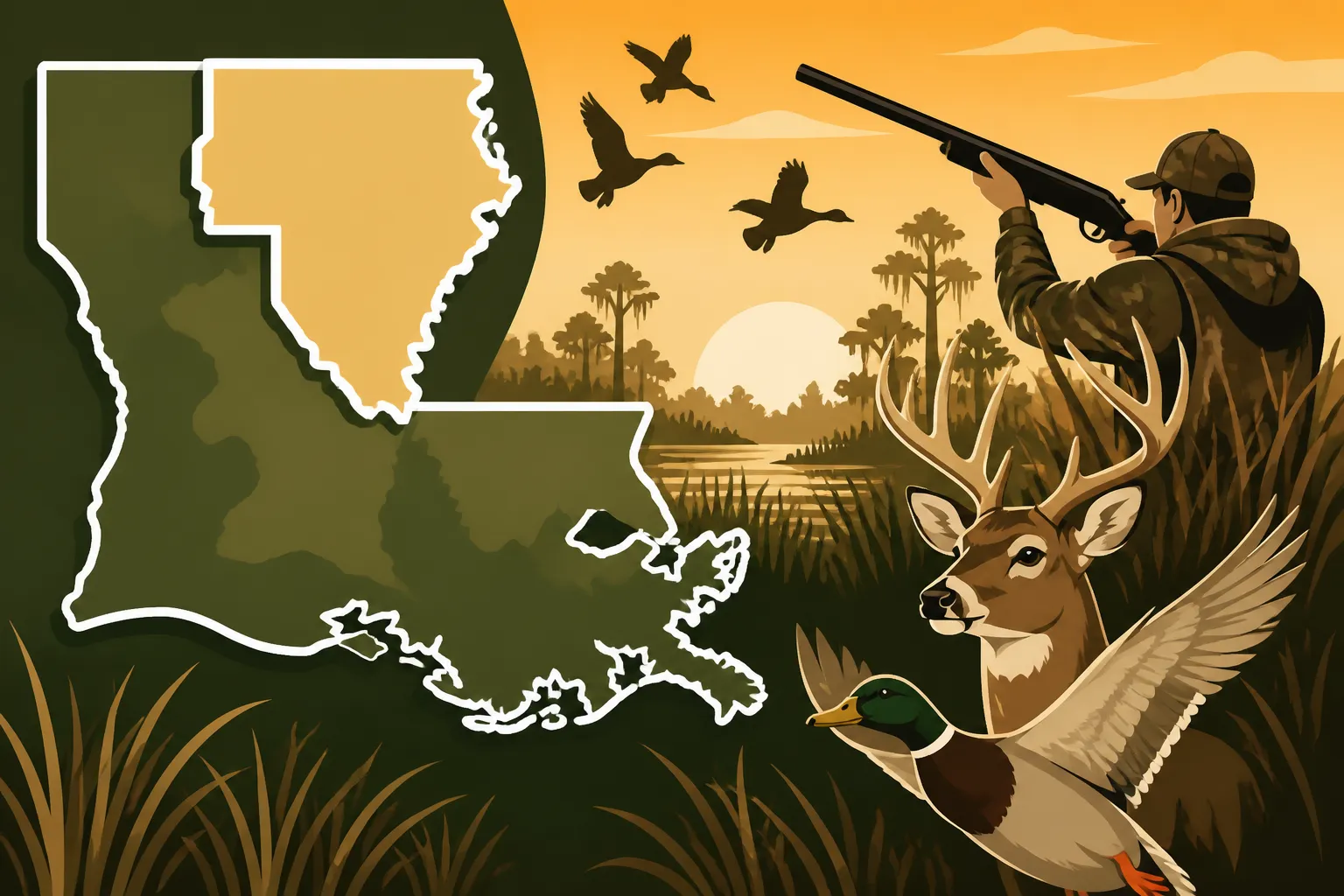
Area A is a significant chunk of Louisiana, encompassing much of the southeastern and central parts of the state. If you hunt in parishes like East and West Feliciana, St. Helena, Tangipahoa, Washington, St. Tammany, or even parts of Livingston and Ascension, you're likely in Area A. This broad sweep means varied habitats, from rolling pine hills to bottomland hardwoods, all contributing to a diverse and challenging turkey hunt. The key takeaway, of course, is that glorious five-week season. While specific dates can shift slightly year to year, Area A consistently provides the earliest opening and the longest duration for private land turkey hunting, allowing for a much more relaxed and strategic approach than the compressed windows found elsewhere.
It's absolutely crucial to double-check the current year's Louisiana Department of Wildlife and Fisheries (LDWF) regulations for precise dates, bag limits, and any specific WMA rules if you plan to hunt public ground. Generally, the statewide bag limit for turkeys applies, but local variations can occur. Understanding these nuances is part of being a responsible hunter and making the most of this extended opportunity. You can find detailed information on the official Louisiana Spring Turkey Season Rules to plan your trips effectively.
Why Area A Offers an Extended Season
The generosity of Area A's five-week season isn't just a happy accident; it's rooted in the science and history of turkey management in Louisiana. Historically, turkeys were extirpated from much of Louisiana due to habitat loss and unregulated hunting. Through decades of dedicated restoration efforts by the LDWF, including trap-and-transfer programs, the wild turkey population has made a remarkable comeback across the state. In some areas, particularly those with prime habitat and successful restoration, populations have flourished to a degree that allows for more liberal hunting seasons.
Area A is often characterized by a healthy turkey population, stable poult-to-hen ratios, and ample habitat that supports a strong breeding cycle. This allows wildlife managers to provide a longer harvest window without negatively impacting the long-term health of the turkey population. When you compare this to, say, Louisiana Turkey Area A, B and C Rules for Area C which has a notably shorter season, you can see how population dynamics and habitat quality directly influence hunting opportunities. The extended season in Area A essentially spreads out the hunting pressure, gives hunters more chances to encounter birds, and acknowledges the biological reality of a thriving turkey population in those regions. It's a testament to successful conservation.
Adapting Your Tactics Across the Five-Week Span
Hunting turkeys for five weeks straight isn't just about repetition; it's about evolution. A gobbler on opening day is a very different animal than one you're chasing in the final week of April. The birds' behavior, their interaction with hens, and their response to calling all shift dramatically. To truly make the most of Area A's extended season, you need to be a chameleon, ready to change your colors and tactics as the spring progresses.
Early Season Aggression and Peak Gobbling
When that first morning of turkey season dawns in Area A, there's an undeniable buzz in the air. The woods come alive with the sounds of gobblers, eager and vocal, looking for hens. This early season period, typically the first week or two, is often characterized by high gobbling activity, especially from the roost. Toms are fresh, relatively unpressured, and actively seeking to establish their dominance and attract mates.
During this phase, an aggressive calling strategy can be incredibly effective. Don't be shy with your yelps and cutts. Mimicking a demanding hen can often pull a hot gobbler right off the roost or across a field. Focus on locating birds before dawn and setting up close to their roost trees. As daylight breaks, listen intently, and be ready to move quickly to get into position once you hear a gobble. Many hunters find success with a "run-and-gun" approach, covering ground and calling until they get a response. Often, these early birds are more willing to commit. For tips on how to effectively get a bird to respond and come to your calls, check out Calling a Louisiana Gobbler Off the Roost. Remember, other hunters will also be out with the same enthusiasm, so positive identification before taking a shot is paramount.
Mid-Season Adjustments for Hung-Up Toms
Ah, mid-season. This is where many hunters hit a wall, and where the extended season in Area A really tests your adaptability. By the second and third weeks, the dynamics in the turkey woods begin to shift. Many hens are now bred and have begun nesting, meaning fewer receptive hens are running around with gobblers. This can lead to what we call "henned-up" gobblers – birds that are content to strut and gobble with a few real hens, completely ignoring your best efforts. Other gobblers, having been pressured for a couple of weeks, might become more wary, gobbling less frequently or hanging up just out of range.
This is the time to tone down the aggression and get subtle. Your goal shifts from "pulling them in fast" to "coaxing them closer." Instead of loud, demanding yelps, focus on soft clucks, purrs, and quiet tree yelps. Use longer periods of silence between calls, letting the gobbler wonder where that "hen" went. Consider silent setups in known travel corridors or food sources, ambushing birds as they move between strutting grounds and feeding areas. If you're consistently hearing birds gobble on the roost but they fly down and go silent, they're likely going straight to hens. This is when patience becomes your greatest virtue. You might even find that birds go quiet in the late mornings or afternoons; learning When Louisiana Gobblers Go Quiet in Late April can help you adjust your hunting hours.
Late-Season Patience and Pressure Tactics
The final two weeks of Area A's season can be some of the most challenging, but also the most rewarding. By this point, most hens are on the nest, meaning many gobblers are now lonely and actively searching for companionship. However, these birds have also survived weeks of hunting pressure, making them exceptionally cunning. They've heard every call, seen every decoy, and likely dodged a few close calls.
Your strategy for late season needs to be a blend of extreme patience and carefully calculated aggression. Focus on finding that one lonely gobbler. He might not gobble much, or only respond to soft calls. Scouting becomes even more critical now. Look for fresh tracks, droppings, and dusting bowls in areas that haven't seen heavy pressure. Consider using locator calls more frequently – an owl hoot, crow call, or coyote howl can often elicit a shock gobble from a tight-lipped tom without revealing your position. Once you get a response, be prepared for a long waiting game. A gobbler that takes an hour to cover 100 yards might be your best chance. Don't be afraid to move and reposition if a bird hangs up, trying different angles or subtly changing your call location. Sometimes, a well-executed Run-and-Gun Turkey Tactics on Public Land strategy can break through the late-season doldrums, allowing you to quickly get in front of a traveling bird.
Strategic Scouting and Habitat Identification
Success in turkey hunting, especially over an extended season like Area A's, hinges heavily on what you do before you ever pull the trigger. Scouting is not just an optional extra; it's the foundation upon which all successful hunts are built. Understanding the landscape, the turkey's habits, and the current conditions will give you a significant edge.
Pre-Season Reconnaissance and Digital Tools
Before the season even opens, your boots (or your mouse clicks) should be on the ground, so to speak. Pre-season reconnaissance allows you to locate key areas without the pressure of having a shotgun in hand. Drive around the public roads near your hunting grounds, listen for gobbling at dawn, and look for physical signs of turkey activity. This is also where modern technology becomes an invaluable asset.
Mapping applications like GoHunt are game-changers for turkey hunters in Louisiana. You can use them to pour over aerial photographs, identifying potential roosting sites along creek bottoms or on high ridges, strut zones in open timber, and likely travel corridors. By studying contour lines, you can predict where turkeys will move through the terrain, especially in hillier parts of Area A like the Florida Parishes. These apps often provide property boundaries, helping you identify public land access points and avoid trespassing on private tracts. You can mark potential spots, plan your entry and exit routes, and even get an idea of the vegetation types in different areas. This digital scouting can save you countless hours of walking once the season opens and help you develop a comprehensive game plan. A good resource for maximizing these efforts is Scouting Louisiana Public Land Before Season.
Reading the Landscape for Turkey Sign
Once you're physically in the woods, whether pre-season or during the hunt, you need to become a master at reading the subtle clues turkeys leave behind. They paint a picture of their daily routines, and understanding that picture is crucial for intercepting them.
Look for tracks in soft dirt, especially along logging roads, field edges, and creek beds. Turkey tracks are distinctive, typically three toes forward with a rear toe, and can tell you about the size of the bird and the direction of travel. Fresh tracks are crisp and clear. Droppings are another key indicator; gobbler droppings are typically J-shaped, while hen droppings are more coiled or blob-like. Fresh droppings, still moist and dark, indicate very recent activity. Feathers, particularly large primary wing feathers, can point to a roosting area, while small body feathers might suggest a dusting bowl. Speaking of dusting bowls, these are shallow depressions in soft dirt or sand where turkeys ruffle their feathers to clean themselves of parasites. Look for multiple bowls in sunny, open areas. Finally, look for scratch marks on the forest floor where turkeys have raked leaves aside to forage for insects, seeds, and acorns. Large, deep scratch marks often indicate a gobbler. Paying attention to these signs helps confirm turkey presence and reveal their preferred areas, allowing you to set up intelligently, perhaps Setting Up Against a Big Oak near active sign.
Essential Gear and Setup Considerations
While scouting and strategy are paramount, having the right gear and knowing how to use it effectively is equally vital for a successful five-week turkey season in Area A. From your shotgun to your calls, every piece of equipment plays a role in putting that gobbler on the ground.
Shotgun, Ammunition, and Patterning
Your shotgun is the most critical tool for turkey hunting. While 12-gauge shotguns are common, 20-gauge and even .410s have become incredibly effective with modern ammunition. The key is to choose a shotgun that fits you well and that you can shoot accurately under pressure. Most turkey hunters opt for a tight choke, such as a full or extra-full, to achieve a dense pattern capable of delivering enough pellets to the turkey's head and neck for a clean kill.
Modern turkey ammunition, especially loads featuring Tungsten Super Shot (TSS), has revolutionized the game. TSS pellets are denser than lead, allowing for smaller shot sizes to carry more energy and create incredibly tight, lethal patterns at longer ranges. Regardless of your gauge or preferred ammunition, the single most important thing you can do is pattern your shotgun before the season. Shoot at various distances (20, 30, 40 yards, and even 50 yards if your setup allows) at a turkey head target. This will show you exactly where your gun shoots and what its effective range is. Knowing your pattern intimately prevents missed birds and ensures ethical shots. Never assume your gun shoots straight; patterning will reveal its true capabilities.
Decoy Strategies and Calling Arsenal
Decoys can be incredibly effective, especially in the early and mid-season when gobblers are actively seeking hens or looking for other gobblers to challenge. For Area A's varied conditions, it's wise to have a few options. A single hen decoy is a safe bet, mimicking a lone hen ready to breed. Adding a jake or full-strut gobbler decoy can provoke an aggressive response from dominant gobblers, but use these with caution on public land to avoid drawing in other hunters. Positioning your decoy correctly is crucial; consider where the gobbler will approach from and how the decoy faces him. To learn more about optimal decoy use, consider reading Decoy Placement for Pressured Louisiana Birds.
Your calling arsenal should be diverse enough to mimic a full range of turkey vocalizations. This means having a good pot call (slate or glass), a box call, and a variety of diaphragm calls. Each call has its strengths: pot calls offer versatility, box calls provide volume, and diaphragm calls allow for hands-free calling.
Practice making various sounds:
- Yelps: The primary call, indicating a hen looking for a gobbler. Vary the pitch and cadence.
- Clucks and Purrs: Soft, contented sounds that can reassure a hesitant gobbler.
- Cutts: Sharp, abrupt sounds that convey excitement or challenge, often used to draw a shock gobble.
- Tree Yelps: Soft, sleepy yelps used just before fly down.
- Locator Calls: Owl hoots, crow calls, or coyote howls are used to make a gobbler shock gobble without alerting him to a "hen" nearby.
By having a variety of calls and mastering different vocalizations, you can adapt to the mood of the birds throughout Area A's long season.
Public Land Access and Ethical Hunting Practices in Area A
While many hunters in Louisiana have access to private land, public hunting opportunities are vital, especially for those who don't. Area A has several excellent public hunting grounds, but navigating them successfully requires understanding specific rules and adhering to strong ethical principles.
Navigating Wildlife Management Areas WMAs
Area A is home to several Wildlife Management Areas (WMAs) managed by the LDWF, offering fantastic opportunities to pursue turkeys. Popular options might include Pearl River WMA near Slidell, Sandy Hollow WMA in Tangipahoa Parish, and Tunica Hills WMA in West Feliciana Parish, among others. These WMAs provide diverse habitats suitable for turkeys, from dense bottomland swamps to upland hardwood forests.
Hunting on WMAs comes with specific regulations that can differ from private land rules. These often include mandatory check-in/check-out procedures, specific hunting days or hours, and limitations on vehicle access or methods of take. Before heading out, it's non-negotiable to visit the LDWF website or use a reliable mapping application like GoHunt to download the latest WMA regulations pamphlet for your chosen area. GoHunt is excellent for overlaying WMA boundaries and identifying access points, helping you plan your route and avoid any unintentional rule violations. Using tools like Using the LDWF Map Tool is also a fantastic way to ensure you're compliant and informed. Be prepared for other hunters, especially during the early season. Finding less-pressured areas often means walking further from access points or exploring areas with more challenging terrain.
The Importance of Ethics and Safety
Regardless of whether you're on private or public land, ethical hunting practices and safety are paramount. In Louisiana's dense cover and with the potential for multiple hunters in the woods, positive identification of your target before you shoot is not just a rule, it's a life-saving principle. Never shoot at sound or movement. Always clearly identify the head and beard of a legal gobbler before pulling the trigger.
Respect for the land and other hunters is also critical. When hunting adjacent to private land, be hyper-aware of property lines. This is another area where GoHunt's property line feature is invaluable, providing real-time boundary information on your phone. Avoid trespassing at all costs, and if you accidentally cross a line, back out immediately. In public areas, especially, avoid "reaping" or "fanning" (stalking behind a gobbler decoy) as this can lead to extremely dangerous situations if another hunter mistakes you for a turkey. Keep your calls realistic and your movements minimal when working a bird. Leave no trace, pack out what you pack in, and represent the hunting community with the highest standards of respect and responsibility. The future of hunting depends on it.
Tactical Adjustments for Area A's Five-Week Turkey Season
To summarize the ever-changing game of turkey hunting in Area A, here's a quick reference for adapting your approach through the season.
| Season Phase | Gobbling Activity | Hen Availability | Calling Strategy | Decoy Strategy | Hunter Focus |
|---|---|---|---|---|---|
| Early Season | High, Consistent | Low, Still Grouped | Aggressive, High Volume | Single Hen, Strutter | Roosting, Fast Action |
| Mid-Season | Moderate, Sporadic | Increasing | Moderate, Subtle, Varied | Hen & Jake, Lone Hen | Travel Corridors, Ambush |
| Late Season | Low, Infrequent | High, Scattered | Soft, Locator Calls, Patience | Lone Hen, Breeding Pair | Food Sources, Lone Toms |
Disclaimer
Hunting is an inherently dangerous activity. Always prioritize safety, adhere to all local and state regulations, and ensure you have proper training and licensing before heading into the field. The information provided in this guide is for informational purposes only and should not be considered a substitute for official regulations or professional guidance.