Hunting Atchafalaya Basin Swamp Deer
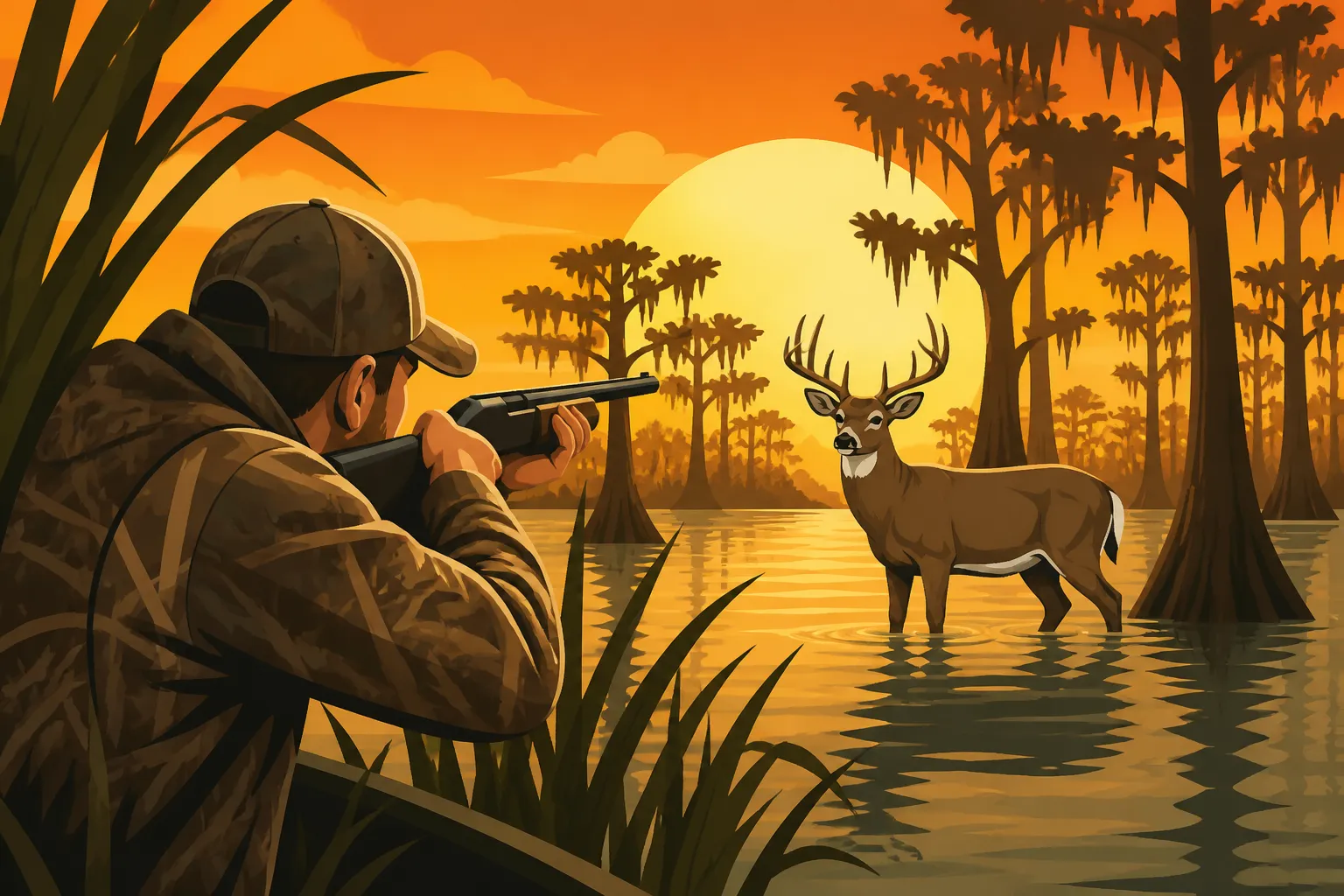
Hunting the Atchafalaya Basin for deer is a beast all its own. It's not your typical pine forest or agricultural field hunt. This sprawling, mystical swamp system throws unique challenges at even the most seasoned hunters: shifting water levels, impenetrable thickets, and a labyrinthine landscape that can swallow you whole. For many, the sheer scale and complexity of the Basin can feel overwhelming, leading to frustration and fewer successful hunts. But don't let that deter you! This comprehensive guide is here to unravel the mysteries of hunting these elusive swamp deer, helping you understand the terrain, master key strategies, and equip yourself for a rewarding, albeit challenging, experience in one of Louisiana's most iconic wild places.
Understanding the Atchafalaya Basin Environment
The Atchafalaya Basin is a natural wonder, a massive wetland and swamp ecosystem that truly defines a unique hunting experience in Louisiana. It’s a place where the water dictates everything, from deer movement to hunter access, and understanding its ebb and flow is the first step to success.
The Unique Hydrology and Terrain
Imagine a landscape that is constantly changing. That’s the Atchafalaya. It’s not just a swamp; it’s a dynamic system of bayous, sloughs, and canals interspersed with stretches of dry land, hardwood ridges, and cypress-tupelo forests. The hydrology—the way water moves through the system—is paramount. River stages, influenced by rainfall both locally and far upstream on the Mississippi River, dictate water levels within the Basin. What might be a dry, accessible area in September could be under several feet of water by December, completely altering deer behavior and hunter strategy.
This constant fluctuation means that deer in the Basin are incredibly adaptable. They are accustomed to swimming and navigating flooded timber, but they will always gravitate towards the highest ground available, especially when water levels rise. These "islands" or natural levees become critical refuges and travel corridors. The terrain itself is incredibly dense. Palmetto thickets, tangled briars, and towering cypress trees draped in Spanish moss create an environment where visibility is often limited to mere yards, forcing hunters to rely on keen senses and intimate knowledge of the land.
Deer Movement Patterns in the Basin
Deer in the Atchafalaya Basin live by the water calendar. Their movement patterns are intrinsically linked to the current water levels. When the water is low, and more dry land is exposed, deer disperse, browsing on a wider variety of forage. They might still use the edges of sloughs and bayous as travel routes, but their range expands significantly. Finding them in these conditions can be like finding a needle in a haystack, as they have ample bedding and feeding options.
However, when water levels begin to rise, everything changes. Deer become concentrated on the shrinking islands of high ground. These higher elevations, often just slight rises in the landscape that are only noticeable on a detailed topographic map, become prime bedding areas. Deer will use these elevated ridges and natural levees as superhighways to move between feeding areas and escape routes. Understanding where these deer migrate to when the water is up is the secret to consistent success. Observing Reading Louisiana Mud for Fresh Deer Movement becomes crucial, as fresh tracks along these elevated pathways can tell you exactly where deer are concentrating their efforts.
Scouting and Pre-Season Preparation
You can't just show up to the Atchafalaya Basin and expect to stumble into a deer. This unique environment demands a serious commitment to pre-season scouting. What you do before opening day, often from the comfort of your home, will lay the groundwork for any success you hope to have in this challenging landscape.
Reading Water Levels and Satellite Imagery
Long before you ever put a boot in the mud or a boat in the water, your scouting should begin with a detailed analysis of water levels. Websites and apps that provide real-time river gauge data, particularly for locations like Butte La Rose on the Atchafalaya River, are your best friends. These readings will give you a crucial understanding of how high the water is and, more importantly, predict how it might change. This isn't just a casual check; it's about understanding the seasonal trends and how they impact the deer.
Once you have a handle on the water, dive into satellite imagery. Modern mapping applications, like GoHunt, offer an incredible advantage, allowing you to visually scout vast areas of the Basin. Look for subtle changes in elevation – those slightly greener, denser patches of trees often indicate higher ground. Identify old logging roads, pipeline cuts, and natural levees that stand out from the surrounding flooded timber. These are the potential deer highways and bedding areas you’ll want to investigate further. By cross-referencing satellite views with topo maps, you can identify hidden slough crossings and pinch points that will funnel deer movement when the water is high.
Finding Deer Sign in Thick Cover
Actual boots-on-the-ground scouting in the Atchafalaya Basin is hard work, but it's invaluable. Unlike more open woodlands, deer sign isn't spread out everywhere; it's concentrated in specific areas. You'll need to focus your efforts on the transition zones between water and dry land, along the edges of islands, and on any elevated ground you identified via satellite. Look for tracks, rubs, and scrapes, but understand that fresh sign might be sparse or covered by water if you're not on the highest ground.
The thick cover means you won't be seeing sign from a distance. You'll often be walking right into it, so move slowly and deliberately. Pay attention to browse lines where deer have been feeding, particularly on young saplings or palmetto fronds. In areas where the water has recently receded, look for tracks in the soft mud that indicate recent movement. This kind of intense, up-close scouting helps you build a mental map of deer activity and identify potential stand locations. For a deeper dive, consider techniques outlined in Scouting Louisiana Public Land Before Season to maximize your pre-hunt reconnaissance.
Effective Hunting Strategies for Swamp Deer
Hunting the Atchafalaya Basin isn't about traditional deer drives or sitting over a large food plot. It's a game of patience, stealth, and adapting to the swamp's ever-changing moods. Success here comes from understanding how deer navigate their watery world and intercepting them on their terms.
Still-Hunting the Ridges and Islands
Still-hunting is one of the most effective strategies for Basin deer, especially when water levels are moderate to high and deer are concentrated on higher ground. This involves moving incredibly slowly and deliberately, taking a few steps, then pausing for several minutes to observe, listen, and scan for any sign of movement. The dense cover often means your effective visibility is limited, so you're hunting by sound and small movements as much as by sight.
Focus your still-hunting efforts on the elevated ridges, natural levees, and small islands you identified during your scouting. These act as natural travel corridors and bedding areas. Always hunt into the wind, or at least with a quartering wind, to prevent your scent from spooking deer ahead of you. Listen for the subtle sounds of deer moving through palmettos or splashing through shallow water. Because of the thick cover, shots are often close-range and quick, so be ready. Mastering how to identify and Reading a Ridge for Central Louisiana Deer is fundamental, even when those ridges are barely above water.
Setting Up for Success in Flooded Timber
While still-hunting is productive, setting up in a stand can be equally effective, particularly in flooded timber areas where deer are forced to travel predictable routes. Hang-on treestands or climbing stands are popular choices, as they offer flexibility in a dynamic environment. You'll want to position your stand overlooking natural funnels, such as narrow strips of high ground between two sloughs, or a subtle rise in the swamp floor that deer will use to traverse deeper water.
The challenge in flooded timber is finding suitable trees that won't become inundated or too isolated when water levels change. Always scout your stand locations carefully, considering various water scenarios. Accessing these spots often requires a boat or wading through considerable water, so plan your entry and exit routes meticulously to avoid disturbing the area. A well-placed stand in a strategic pinch point, like a Hunting a Funnel Between Two Sloughs, can yield incredible results as deer are forced through a narrow corridor.
Using Boats for Access and Retrieval
In the Atchafalaya Basin, a boat isn't just a means of transportation; it's an integral part of your hunting strategy. It allows you to access remote areas that are otherwise unreachable, giving you an edge over hunters confined to land-based access points. For the final approach to your hunting area, consider switching to an electric trolling motor or paddling a pirogue to minimize noise. Silence is golden in the swamp, where sounds carry surprisingly far over water.
Beyond access, your boat becomes absolutely indispensable for game retrieval. A mature swamp buck is a heavy animal, and trying to drag one through deep mud, over cypress knees, and through dense palmettos is a monumental task, if not impossible. Having a sturdy jon boat or mud boat means you can often get close to your downed game, making the recovery process significantly easier and safer. Don't underestimate the challenge of Recovering a Deer From a Basin Slough, and always ensure your boat is ready for the task.
Gear and Equipment Essentials
Hunting the Atchafalaya Basin demands specialized gear. This isn't a place for shortcuts or second-rate equipment. The harsh, wet environment will test everything you bring, so investing in reliable, functional items is crucial for both comfort and success.
Boats and Motors for Navigating the Swamp
Your choice of boat is perhaps the most critical piece of equipment for Basin hunting. A sturdy aluminum jon boat, typically 14 to 16 feet long with a reliable outboard motor, is a common sight. For shallower water and traversing thick vegetation, many hunters opt for a mud boat equipped with a surface-drive or longtail motor, which can navigate inches of water and power through dense marsh grass. Some prefer a lightweight pirogue for silent, deep-swamp penetration, often paddling or using a small electric motor.
Regardless of your choice, reliability is key. The last thing you want is a breakdown miles deep in the swamp. Always carry extra fuel, basic tools, a spare prop, and a charged trolling motor battery for emergencies. Safety gear is non-negotiable: personal flotation devices (PFDs), navigation lights for early morning or late evening runs, and a waterproof GPS are absolute must-haves. When using mapping applications like GoHunt, ensure your phone or device has a full charge and a reliable backup power source.
Waders, Rain Gear, and Bug Protection
You're going to get wet, and you're going to deal with bugs. Accept it and prepare for it. Chest waders are non-negotiable. Choose a durable, comfortable pair, preferably insulated for colder months, but breathable if you're hunting early season. You'll be wading through water, mud, and who knows what else, so good quality waders will save you a lot of misery.
Louisiana weather is famously unpredictable, so excellent rain gear is essential year-round. A waterproof and breathable jacket and pants are a wise investment, allowing you to stay dry during sudden downpours without overheating. As for insects, particularly mosquitoes and gnats, they are a constant companion in the swamp. Carry strong insect repellent, consider a Thermacell or similar device, and don't shy away from head nets during peak bug activity. They can make an unbearable hunt tolerable.
Firearms and Ammunition Considerations
Given the dense cover and often close-range encounters in the Basin, your firearm choice should prioritize reliability and punch. Shotguns loaded with slugs are popular, especially in areas with specific WMA regulations. Lever-action rifles in calibers like .30-30 or .45-70 are also excellent choices, offering quick follow-up shots in compact packages. Modern sporting rifles (AR-style) in appropriate calibers like .300 Blackout or .450 Bushmaster are increasingly common for their accuracy and versatility.
Whatever firearm you choose, ensure it's weather-resistant, as it will inevitably be exposed to moisture. Optics should be rugged and waterproof, preferably with lower magnification for quick target acquisition in thick woods. When it comes to ammunition, consider heavier, slower bullets designed for deep penetration in dense cover, minimizing deflection if you encounter brush. If you're planning to hunt during the primitive firearms season, make sure you understand Choosing Legal Primitive Firearms Gear to ensure compliance with regulations.
Overcoming Common Basin Hunting Challenges
The Atchafalaya Basin is a challenging place, but every challenge has a solution if you're prepared and persistent. Hunters who embrace these difficulties often find the most rewarding experiences.
Navigating the Maze and Staying Found
The Atchafalaya Basin is a true labyrinth of waterways and dense forest, and getting lost is a legitimate concern, even for experienced hunters. This is where modern technology truly shines. A reliable GPS unit, or a smartphone with a robust mapping app like GoHunt, is not just a convenience; it's a safety essential. Before you even launch your boat, spend time marking your launch point, your intended travel route, and potential stand locations. Mark key intersections of bayous or sloughs as waypoints.
Beyond technology, develop a keen sense of your surroundings. Look for unique cypress trees, leaning snags, or distinctive bends in a bayou that can serve as mental landmarks. If allowed, some hunters use reflective tape or flagging to mark their entry routes, making it easier to find their way back in low light or fog. The anxiety of being disoriented in the vast, featureless swamp is real, so proactive navigation planning is critical for your safety and peace of mind.
Dealing with Warm Weather and Insects
Louisiana’s hunting seasons often kick off with sweltering heat and oppressive humidity, especially during the early archery periods. This warm weather presents multiple challenges. First and foremost is hydration: carry plenty of water and electrolyte drinks, and consume them regularly. Heat exhaustion and heatstroke are real dangers in the swamp. Dress in lightweight, breathable clothing, even if it means layering with waders. For strategies, exploring Warm-Weather Sitting Strategy in Louisiana can offer valuable insights specific to these conditions.
Scent control becomes particularly difficult in warm, humid conditions. While eliminating scent entirely is impossible, using scent-reducing sprays and washing clothes in scent-free detergents can help. The omnipresent mosquitoes, gnats, and horseflies are relentless. In addition to repellents and Thermacells, consider wearing bug-proof clothing or a head net, especially if you're sitting still for long periods. These small measures can make a huge difference in your comfort and ability to focus on the hunt.
Retrieving Game from Deep Water
You've done everything right: scouted, planned, and made a perfect shot on a Basin buck. Now comes one of the most significant challenges: retrieval. A deer downed in deep water or thick, mucky swamp bottom can be incredibly difficult to move. This is where your boat truly earns its keep. Try to maneuver your boat as close as possible to the downed animal. If the water is too shallow for your boat, you’ll have to wade, which is where those chest waders are indispensable.
Always bring a sturdy rope or drag. Getting a deer into a jon boat from deep water or thick mud requires effort and technique. Some hunters use a "deer cart" modified for the swamp or simply a heavy-duty sled if they can get it close enough. Having a hunting partner is immensely helpful, as two people can usually manage a retrieval that would be impossible for one. The act of Dragging a Deer Out of a Swamp is a rite of passage for many Basin hunters, but planning for it beforehand can prevent a lot of headaches and potential loss of game.
| Boat Type | Primary Use Case | Pros | Cons |
|---|---|---|---|
| Jon Boat | General access, moderate water depths | Stable, versatile, good capacity | Can get stuck in very shallow water/muck |
| Mud Boat | Very shallow water, thick vegetation | Can go where other boats can't, powerful | Louder, often heavier, can be costly |
| Pirogue | Silent, deep swamp penetration, hand-paddled | Extremely quiet, lightweight, maneuverable | Limited capacity, slower, less stable |
Disclaimer
Hunting is an inherently dangerous activity. This guide provides general information and recommendations. Always prioritize safety, adhere to all Louisiana Department of Wildlife and Fisheries (LDWF) regulations, and consider local conditions before embarking on any hunt. The author and publisher are not responsible for any accidents, injuries, or legal infractions that may occur.