Louisiana Suburban Deer Management Permits
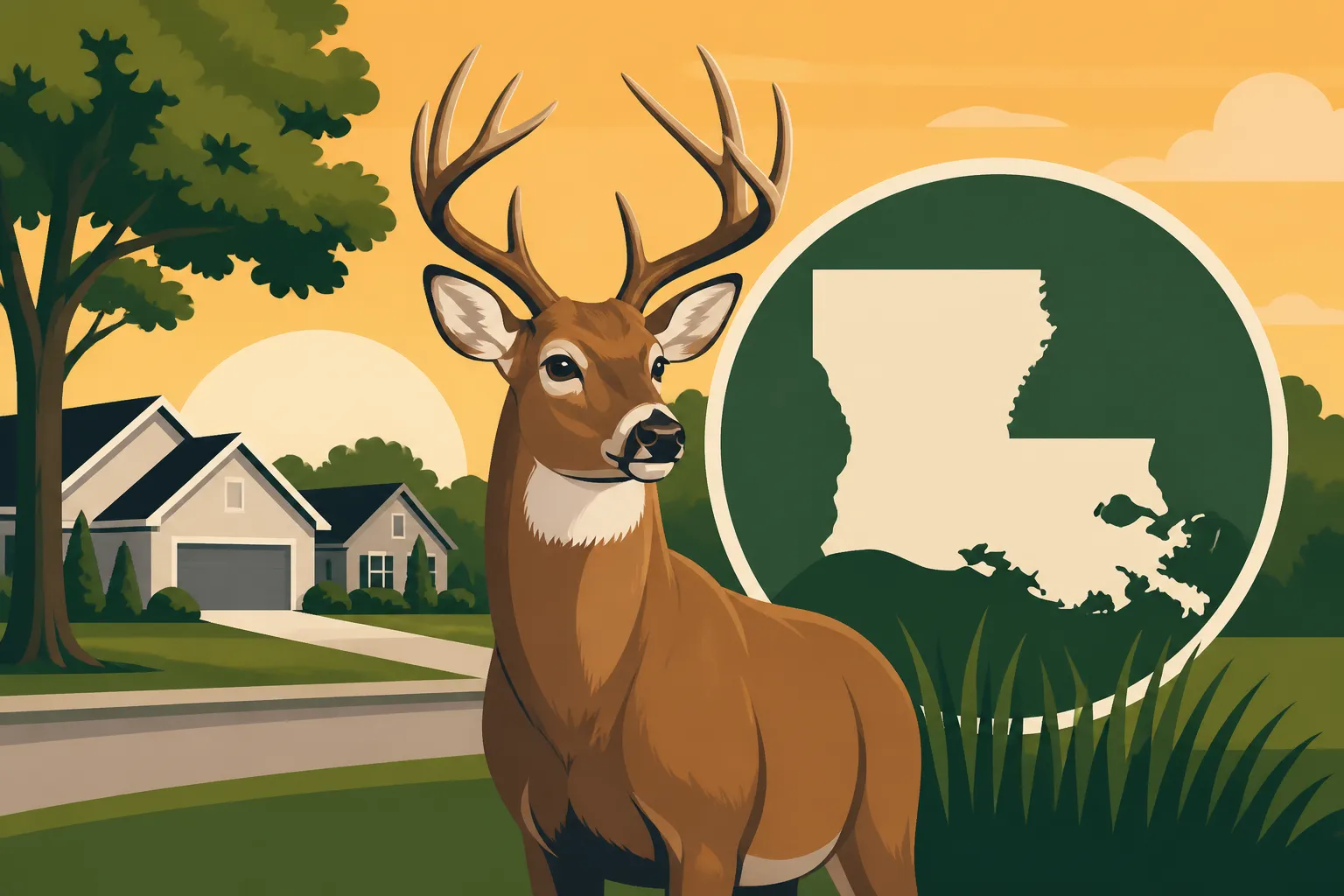
Living in Louisiana offers a unique blend of natural beauty and vibrant communities, but for many folks in our growing suburban areas, that natural beauty sometimes comes with a challenge: deer. If you've ever had your prize-winning azaleas mowed down overnight, or worse, experienced the jarring stress of a deer darting in front of your car on a quiet neighborhood street, you know the frustration. This guide is here to walk you through Louisiana's Suburban Deer Management Permit program, offering a real solution to those pesky deer problems right in your own backyard.
Understanding the Need for Suburban Deer Management
The picture of a tranquil deer grazing in a green field often gives way to a more complicated reality when those fields are replaced by subdivisions and the deer start treating your meticulously cultivated flowerbeds like an all-you-can-eat buffet. It's a growing issue that many homeowners and communities across Louisiana are grappling with, and it's far more than just a nuisance.
The Challenges of Deer Overpopulation in Residential Areas
When deer populations boom in areas where their natural predators are absent and food sources (like our ornamental plants and gardens) are abundant, it creates a cascade of problems. First and foremost is the extensive property damage. Deer aren't picky; they'll browse on everything from expensive landscaping shrubs to vegetable gardens, causing hundreds, if not thousands, of dollars in damage. Beyond your yard, deer become a significant road hazard. Anyone who drives regularly in the early morning or late evening knows the constant vigilance required to avoid a deer collision. These accidents don't just damage vehicles; they can lead to serious injuries, and even fatalities, for drivers and passengers.
Then there's the concern of disease. While Chronic Wasting Disease (CWD) is a major concern in some parts of the state, especially in areas like Tensas Parish, deer can also carry ticks that transmit Lyme disease and other illnesses to humans and pets. A higher density of deer in close proximity to human habitation means a higher potential for these disease vectors to spread, making the management of these populations a public health issue, not just a wildlife one. The balance is tricky because we love seeing wildlife, but there's a point where it becomes too much of a good thing.
Why Traditional Hunting Methods Fall Short in Suburbia
For most of Louisiana, traditional deer hunting seasons, whether it's Bowhunting Louisiana's Long Archery Season or primitive firearms, are the primary tools for managing deer populations. However, these methods often don't translate well to suburban environments. The very nature of a suburban neighborhood—dense housing, children playing, pets roaming, and busy streets—creates inherent safety concerns. Discharging a firearm, or even an archery arrow, carries risks that simply aren't acceptable in a residential setting. Local ordinances and homeowner association rules typically prohibit hunting of any kind for these very reasons.
This leaves suburban residents in a bind. They're experiencing the negative impacts of an overabundant deer herd, but the most effective management tools are off-limits. You can put up fences, spray repellents, or try scare tactics, but these are often temporary fixes at best, and expensive, frustrating propositions at worst. This is precisely where the Louisiana Department of Wildlife and Fisheries (LDWF) recognized a need for a specialized approach, leading to the creation of the Suburban Deer Management Permit program. It's a tailored solution designed to address a very specific problem in a very specific type of environment.
Louisiana's Suburban Deer Management Permit Program
The LDWF didn't just throw up their hands when faced with suburban deer issues; they developed a specific framework to empower communities and landowners to address these challenges responsibly. This program is a testament to adaptive wildlife management, acknowledging that one size doesn't fit all when it comes to balancing human interests with healthy deer populations.
Who Can Apply and Where These Permits Apply
The Suburban Deer Management Permit program is designed for municipalities, homeowner associations, or individual landowners in areas experiencing significant deer-related problems where traditional hunting methods are impractical or prohibited. While there isn't a hard-and-fast list of "suburban" parishes, it generally applies to incorporated towns, cities, and densely populated unincorporated areas where housing developments are common. Think areas around Baton Rouge, Shreveport, Lafayette, or even smaller towns that are experiencing residential growth. The core idea is that these are places where typical hunting isn't feasible due to safety concerns and local ordinances.
To apply, you're generally looking at either a local government entity (like a city or parish council) or a large landowner/homeowner association making the request. An individual landowner might apply if their property is sufficiently large and isolated, but often the permit is granted to a collective body to manage deer across a wider suburban landscape. The application process will require demonstrating a legitimate need for the permit, usually through evidence of property damage, increased deer-vehicle collisions, or other impacts. Coordination with local law enforcement is also a critical component to ensure public safety and awareness. If you're looking for specifics on current regulations or areas where these permits are active, platforms like GoHunt can sometimes offer valuable localized insights, though direct consultation with the LDWF is always your best bet.
The Application and Approval Process
Navigating the application process for a Suburban Deer Management Permit requires attention to detail and a clear understanding of the LDWF's requirements. It's not as simple as filling out a form; it's about presenting a comprehensive plan. Typically, you'll need to contact the LDWF's Wildlife Division to express your interest and request an application packet. This packet will outline all the necessary documentation and steps.
Key information you'll need to provide includes:
- Detailed Property Maps: These maps should clearly delineate the proposed management area, highlighting property lines, sensitive areas (like schools or parks), and potential safe shooting lanes.
- Documentation of Damage: This is crucial. Photos of damaged landscaping, repair bills, records of deer-vehicle collisions, and even a log of deer sightings can bolster your case.
- Safety Plan: This is paramount. You'll need to outline precisely how deer removal will be conducted to ensure public safety. This includes designated shooting zones, proposed hours of operation (often at night or very early morning), and notification protocols for nearby residents.
- Proposed Methods: While the permit is designed for areas unsuitable for traditional hunting, it's still about defining the specific methods you plan to use. Often, this involves archery equipment, or in some highly controlled scenarios, possibly even suppressed firearms under strict supervision, if local ordinances allow.
- Designated Participants: Who will be doing the actual deer removal? These individuals will likely need to be licensed hunters, often with additional training or certifications, and they will need to adhere to all Louisiana Hunter Education Requirements.
Once submitted, the LDWF will review your application. This often involves site visits by wildlife biologists to assess the situation firsthand and ensure the proposed plan is viable and safe. The approval timeline can vary depending on the complexity of the situation and the volume of applications, so it's wise to apply well in advance of when you hope to begin management activities. While this process might seem extensive, it ensures that deer management in sensitive suburban areas is conducted responsibly and effectively, balancing the needs of the community with the welfare of the wildlife. Farmers dealing with similar issues on agricultural land might find some overlap in the application requirements for Louisiana Deer Damage Permits for Farmers, though the specific regulations will differ due to the environments.
Rules and Regulations for Permit Holders
Once you've successfully navigated the application and approval process for a Suburban Deer Management Permit, the real work begins. Holding one of these permits comes with a significant responsibility to adhere strictly to all stipulated rules and regulations. These aren't suggestions; they are mandates designed to ensure public safety, ethical harvesting, and effective deer population control.
Permitted Methods and Safety Protocols
The methods allowed under a Suburban Deer Management Permit are typically far more restricted than those used in general deer seasons. The overriding concern is public safety in densely populated areas. As such, archery equipment is almost always the primary, if not sole, permitted method. This includes traditional bows, compound bows, and crossbows. Speaking of crossbows, if you're planning to use one, it's essential to be fully aware of the Crossbow Rules During Louisiana Archery Season, as these general rules still apply, alongside any specific conditions laid out in your permit. In very rare, highly controlled circumstances, and only with explicit LDWF approval and local law enforcement coordination, might suppressed firearms be allowed, but this is the exception, not the rule.
Safety protocols are non-negotiable and must be meticulously followed:
- Designated Zones: All harvesting must occur within pre-approved, designated zones on the property, far from public areas, roads, and neighboring homes.
- Backstops and Angles: Hunters must ensure a safe backstop for every shot. This means knowing precisely what's beyond your target and taking shots that angle into the ground or a natural barrier to prevent errant projectiles.
- Time Restrictions: Harvesting is often limited to specific hours, typically during periods of low human activity, such as pre-dawn or after dusk, to minimize public interaction and maximize safety.
- Notification: Local law enforcement and, in some cases, nearby residents, must be notified of planned harvesting activities. This transparency helps maintain community trust and prevents unnecessary alarms.
- Hunter Expertise: Individuals performing the harvest must be experienced, proficient archers, often holding valid Louisiana hunting licenses and having completed hunter education. Some permits may even require additional certifications or specific training in urban deer management techniques.
Remember, the goal is to safely and discreetly remove deer without causing any disturbance or risk to the community. GoHunt can be a handy resource for staying current on general hunting regulations, but for the specific, granular rules tied to your permit, always defer to the official LDWF documentation.
Harvest Reporting and Carcass Management
Another critical aspect of holding a Suburban Deer Management Permit is the strict requirement for harvest reporting. This isn't just about good record-keeping; it's vital data for LDWF biologists to monitor the effectiveness of the program and assess deer population trends in these unique environments. Every deer taken under the permit must be reported according to the LDWF's established procedures. This often means using the Louisiana Deer Reporting Requirements system, which typically involves reporting online or through the LDWF app, usually within 72 hours of harvest. The specific permit may also require additional direct reporting to the overseeing biologist.
Carcass management is equally important, especially with the ongoing concerns about Louisiana's Chronic Wasting Disease Zones. Permit holders must have a clear plan for how deer carcasses will be handled:
- Field Dressing: While field dressing is common in traditional hunting, in suburban settings, it might need to be done discreetly or at an approved location to avoid public dismay or sanitation issues.
- Disposal: Carcasses cannot simply be left or disposed of in ways that attract scavengers or create a public nuisance. Approved methods might include transport to a permitted rendering facility, burial on private land if allowed by local ordinance, or other methods specified by the LDWF.
- CWD Considerations: If the management area falls within or near a CWD Management Zone, there will be strict Louisiana Carcass Movement Restrictions. This means certain parts of the deer, particularly the brain, spinal cord, and lymphoid tissue, may not be allowed to leave the zone, and mandatory testing could be required. Always check the latest CWD regulations before moving any part of a harvested deer.
Proper adherence to these reporting and carcass management rules ensures the integrity of the program and contributes to broader wildlife health monitoring efforts. It's a testament to the fact that even in a controlled suburban environment, ethical and responsible hunting practices remain paramount.
Here's a quick overview of key permit regulations:
| Aspect | General Rule | Specific Considerations for Suburban Permits |
|---|---|---|
| Permit Holder | Licensed hunters | Municipalities, HOAs, large landowners; designated, experienced hunters perform actual harvest. |
| Allowed Methods | Firearms, Archery, Primitive Weapons (General Season) | Primarily Archery (bows, crossbows); suppressed firearms in very limited, approved cases only. |
| Safety Zones | Typically based on property lines, road setbacks | Highly emphasized: strict adherence to clear shooting lanes, safe backstops, local ordinances. |
| Reporting | Mandatory through LDWF system (app/online) | Mandatory, often with additional direct reporting to LDWF biologist. |
| Carcass Mgt. | General field dressing, transport | Discreet handling, approved disposal methods, strict CWD zone restrictions. |
| Timeframe | Defined hunting seasons (e.g., Louisiana Archery Opening Day by Area) | Specific hours/days permitted, often outside peak community activity. |
| Location | WMAs, private land, Kisatchie National Forest, etc. | Densely populated residential areas where traditional hunting is prohibited. |
Benefits and Responsibilities of the Program
The Suburban Deer Management Permit program isn't just about mitigating problems; it's a proactive approach that offers tangible benefits to both human communities and, in the long run, the deer population itself. However, with these benefits come significant responsibilities for all involved.
Managing Deer Populations and Mitigating Damage
The most immediate and apparent benefit of a well-executed suburban deer management program is the effective reduction of localized deer populations. By carefully removing deer, especially does, the overall herd size can be brought down to a level that the suburban environment can better sustain without causing undue harm. This reduction directly translates to a decrease in the issues that plague residents.
Imagine the relief of seeing your newly planted flower beds thrive without being stripped bare, or driving home in the evening with a reduced risk of hitting a deer. Studies from other states with similar programs show significant drops in both landscape damage and deer-vehicle collisions. For example, a successful program can mean fewer emergency calls for injured deer, lower insurance claims related to vehicle impacts, and happier residents who can enjoy their properties again. It's about restoring a balance, recognizing that while deer are beautiful, an overabundance in certain areas can be detrimental to everyone involved. This controlled approach is a stark contrast to the challenges faced with Hunting Pressure on Louisiana Public Land, where population management relies on a much broader hunter base.
Ethical Considerations and Community Engagement
While the practical benefits are clear, the ethical considerations and the need for robust community engagement are equally paramount. Harvesting deer, even in a management context, is a serious undertaking that must be done ethically and humanely. This means ensuring quick, clean kills and respecting the animals throughout the process. Hunters involved in these programs are often held to an even higher standard of conduct and professionalism.
Community perception is another vital component of success. Not everyone in a suburban area will understand or agree with deer removal, and negative public sentiment can quickly derail a program. This is why transparency and active communication are so critical:
- Education: Informing residents about the ecological reasons for the program – the unsustainability of unchecked deer growth, the damage, the disease risks – can help build understanding and support.
- Outreach: Holding public meetings, distributing informational flyers, and maintaining an open dialogue can address concerns and correct misconceptions. Organizations like GoHunt often advocate for ethical hunting and can provide resources that help explain the broader conservation context.
- Respectful Conduct: Hunters and permit administrators must operate with the utmost respect for private property, local quiet hours, and public sensitivities. Discretion is key to minimizing disruption and maintaining a positive image.
Ultimately, the Suburban Deer Management Permit program is a complex dance between human needs, wildlife conservation, and community values. When handled responsibly, with a strong emphasis on safety, ethics, and open communication, it provides a crucial tool for maintaining a healthy coexistence between people and Louisiana's abundant white-tailed deer population. For those looking to learn more about the statewide Louisiana Deer Herd Size or general hunting regulations, a deep dive into LDWF resources is always a good next step, but remember that suburban permits address a very localized, specific challenge.
Disclaimer
Please note that the information provided in this guide is for general informational purposes only and does not constitute legal or professional advice. Hunting regulations, permit requirements, and CWD zones are subject to change. Always consult the most current Louisiana Department of Wildlife and Fisheries (LDWF) regulations and local ordinances before engaging in any hunting or wildlife management activities.