Louisiana Turkey Area A, B and C Rules
The thrill of chasing a longbeard through Louisiana's diverse landscapes is truly something special, but if you've ever tried to make sense of our state's turkey season dates, you know it can feel like trying to untangle a ball of fishing line after a big bite. It’s a common frustration, jumping between different regulations depending on where you plan to hunt. This guide is here to clear up that confusion, diving deep into the specific rules and characteristics of Louisiana's Turkey Areas A, B, and C, so you can plan your hunts with confidence.
Understanding Louisiana's Turkey Management Areas
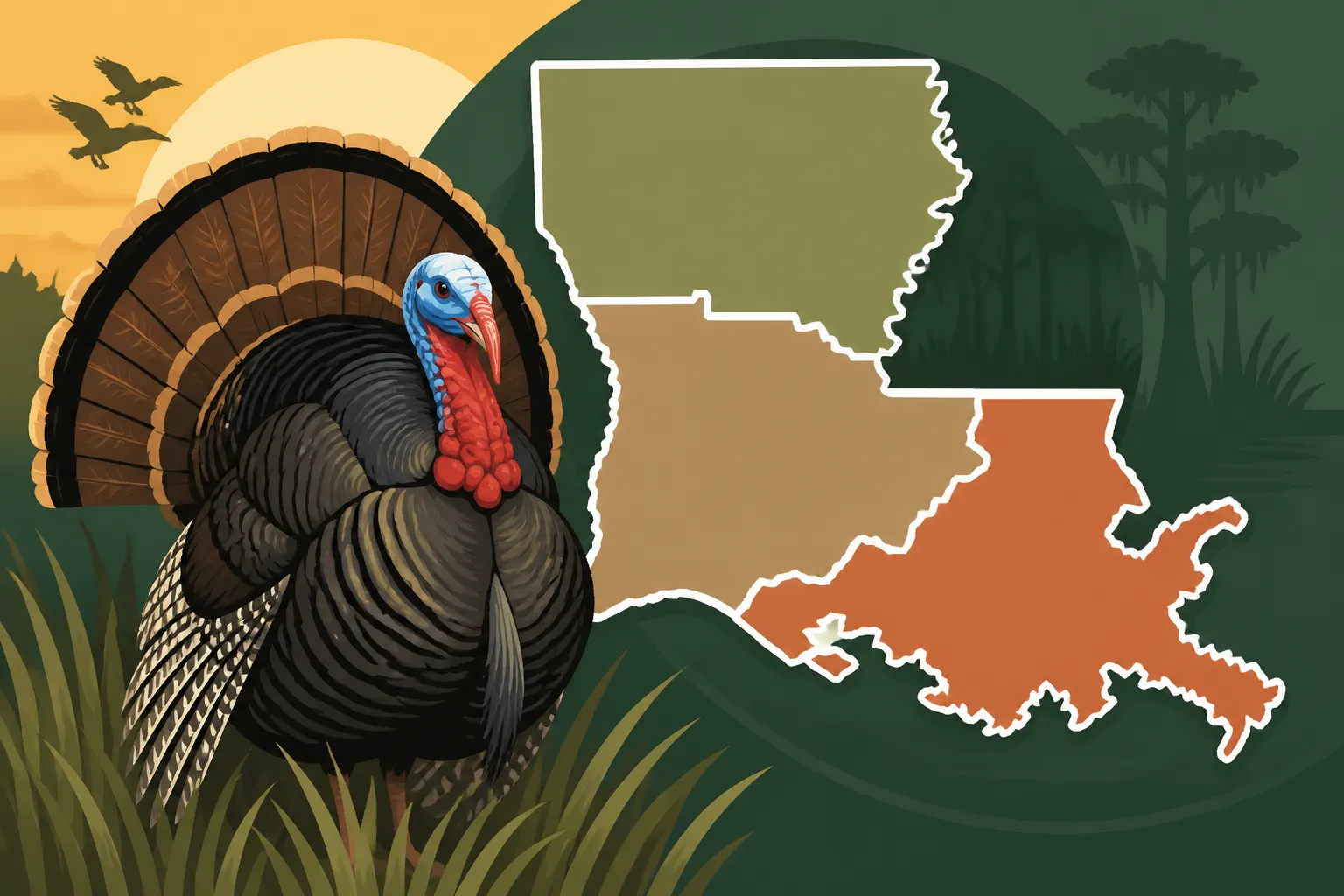
Louisiana's approach to turkey hunting isn't a one-size-fits-all deal, and for good reason. The state is carved into distinct turkey management areas – A, B, and C – each with its own specific season dates and regulations. This isn't just about making things complicated; it's a carefully considered strategy by the Louisiana Department of Wildlife and Fisheries (LDWF) to best manage our wild turkey populations, taking into account ecological differences and regional hunting pressure.
Why We Have Different Zones
The primary reason for having different zones boils down to biology and habitat. Louisiana is incredibly diverse, from the piney woods of the north to the river bottoms, agricultural lands, and even deep swamps in the south. Turkeys in these different environments behave differently, breed at different times, and face varying pressures. For instance, turkeys in the cooler, pine-dominated northern parishes might begin their breeding cycle, or "gobbling phase," earlier than those further south in warmer, swampier habitats. LDWF biologists use data from hunter harvest reports, poult-to-hen ratios, and habitat assessments to tailor season dates to ensure sustainable hunting opportunities while supporting healthy turkey populations. This localized management helps account for variations in habitat quality, predator populations, and the overall health of the flocks across the state. Without these zones, a blanket season might open too early for some areas, disrupting critical nesting, or too late for others, missing peak gobbling activity.
How LDWF Defines the Zones
Defining these zones isn't arbitrary. The LDWF meticulously draws boundary lines, often using parish lines, major highways, or prominent waterways to delineate where one area ends and another begins. For a hunter, this means knowing precisely which parish or even which side of a road your hunting property or desired public land falls into is absolutely crucial. These definitions can be a bit of a maze, especially if you're hunting near a boundary. It's not always intuitive, which is why relying solely on a memory from last year isn't enough. Many hunters find themselves double-checking their maps or pulling up the official LDWF regulations PDF just to be certain. Tools like the LDWF app or robust mapping platforms like GoHunt can be incredibly helpful here, allowing you to layer boundary information over detailed satellite imagery, so there's no question about which area you're standing in. They provide a precise overlay that can save you a lot of headache and potential legal trouble.
The Importance of Knowing Your Area
Mistaking your turkey hunting area can have significant consequences. First and foremost, you could be hunting out of season, which carries stiff penalties including fines, license revocation, and the seizure of your game and equipment. Beyond the legal ramifications, it's an ethical consideration. Hunting outside the established season dates can disrupt breeding patterns or exert undue pressure on local turkey populations, undermining the very conservation efforts designed to ensure future hunting opportunities. Planning your hunt properly requires a solid understanding of these zones. Knowing which zone you're in allows you to accurately check season dates, bag limits, and any specific regulations that might apply, such as those for Louisiana WMA Quota Hunt Sign-In Process or special youth hunts. It also dictates when you need to scout and when you can even legally be in the woods with a firearm or bow during turkey season. For many hunters, being off by even a few days can mean missing the peak gobbling phase entirely or, worse, running afoul of the law.
Decoding Area A: The Earliest Start, Longest Season
Area A represents a significant portion of Louisiana's turkey hunting landscape, generally encompassing the northern and central parts of the state. For many hunters, this is the coveted zone with its early start and extended season, offering more opportunities to chase those elusive gobblers.
Season Dates and Length
Typically, Louisiana Turkey Area A opens earliest, often in late March, and runs for a generous period, sometimes extending into late April or early May. This longer window, which can span five to six weeks, is a major draw for hunters who want to maximize their time in the woods. The exact dates can shift slightly year to year, so always confirm with the most recent LDWF regulations, but the general pattern holds true. This early start means hunters in Area A often get a crack at birds that are still in larger winter flocks, or just beginning to break up as breeding activity ramps up. The longer season also allows for flexibility, letting hunters adjust their plans around work schedules, family commitments, or unpredictable weather patterns that can make or break a turkey hunt. For example, if an early cold front rolls through and shuts down gobbling for a few days, hunters in Area A have the luxury of waiting it out for better conditions later in the season. Compare this to Louisiana Turkey Area C's Shorter Turkey Window, and you really see the difference in opportunity.
Bag Limits and Legal Shooting Hours
When hunting in Area A, the daily bag limit for wild turkeys is one gobbler, with a seasonal limit of two gobblers. This means you can harvest one bird per day, but once you've tagged two gobblers for the entire season within Area A, you're done. These limits are consistent across all areas (A, B, and C) for private land hunting. For those hunting on Wildlife Management Areas (WMAs), the bag limits can sometimes be more restrictive, so it's always critical to consult specific WMA regulations. Legal shooting hours are generally from one-half hour before sunrise to one-half hour after sunset. This generous window provides ample time for hunters to get into position before the birds fly down from the roost and to stay out until they've gone back up for the evening. Understanding these precise hours is vital for both safety and legal compliance, ensuring you don't spook birds or violate regulations by being in the field too early or too late.
Key Characteristics of Area A Terrain and Turkey Behavior
Area A is predominantly characterized by piney hills, mixed pine-hardwood forests, and rolling terrain, particularly in areas like Kisatchie National Forest. This type of habitat provides excellent cover, roosting trees, and food sources for wild turkeys, making it prime hunting ground. Turkeys in Area A often respond well to calling, especially early in the season, as they're transitioning from winter flocking to breeding behaviors. You might encounter birds still grouped up, which can present unique challenges and opportunities. For hunters focusing on public lands, places like the Kisatchie National Forest offer vast tracts where you can really stretch your legs and employ tactics like Run-and-Gun Turkey Tactics on Public Land. The terrain here means you'll be doing a lot of walking, often up and down hills, so being in good physical shape is a definite plus. Early season hunts in Area A can see turkeys more vocal as they establish territories, and less wary than later in the season when they've been pressured. However, it can also mean navigating dense undergrowth before the leaves fully flush out, which provides less natural concealment compared to late-season hunts. Understanding Louisiana Turkey Population Trends can also give you insight into the general health of the birds in these regions.
Navigating Area B: The Mid-Season Window
Sandwiched between the early bird opportunities of Area A and the late-season challenges of Area C, Area B offers a distinct set of hunting conditions, typically with a mid-April to early May season. This zone often includes a mix of river bottomlands and agricultural fields, presenting a different set of tactical considerations for turkey hunters.
Season Dates and Length
Area B's turkey season usually kicks off in early to mid-April, running for a period of about three to four weeks. While not as extensive as Area A's window, it provides a solid opportunity for hunters who might have missed the initial rush or prefer hunting when the spring foliage is more developed. The precise opening and closing dates for Louisiana Turkey Area B Closing Date will vary annually, so always consult the latest LDWF regulations. This mid-season timing often places hunters squarely in the peak of the gobbling and breeding activity in these specific regions. The turkeys are fully committed to the spring ritual, making for some incredibly exciting and vocal hunts. It’s a fantastic window for hunters who enjoy the classic cat-and-mouse game of calling in a hot gobbler.
Bag Limits and Legal Shooting Hours
Just like in Area A, hunters in Area B are allowed a daily bag limit of one gobbler, with a seasonal limit of two gobblers. This applies to private land. As always, if you're venturing onto a WMA within Area B, be sure to check those specific regulations, as they can sometimes impose more restrictive limits or even require special permits. The legal shooting hours remain consistent across all areas: one-half hour before sunrise to one-half hour after sunset. This consistency helps simplify things a bit, so you don't have to worry about different time frames depending on which zone you're in, allowing you to focus on the turkeys themselves. The key is to be in your chosen setup well before the legal shooting time, listening for those first tell-tale gobblers sounding off from the roost.
Terrain and Turkey Dynamics in Area B
Area B generally covers regions like the central and western river bottomlands, as well as areas influenced by agricultural production. Think fertile soils, large hardwoods, and often dense undergrowth along creek drainages and field edges. Turkeys in these areas are often accustomed to slightly different pressures and food sources compared to the piney woods of Area A. During Area B's season, which aligns with much of the state's peak breeding, gobblers are usually highly responsive and vocal. This is when patience and strategic calling truly pay off. You might find birds strutting in open fields in the mornings, or responding aggressively to calls from the timber. Learning to read the subtle nuances of Louisiana Turkey Gobbling Activity Timing is particularly important here, as understanding when they're most active can greatly improve your success. This habitat often requires a bit more stealth, as the terrain can be flatter and visibility can sometimes be limited by the dense growth. Public lands in these areas can offer excellent hunting, but it's vital to Scouting Louisiana Public Land Before Season to understand the lay of the land, potential access points, and where turkeys are likely to be found. The mix of open fields and heavy timber means you need to be prepared for various setups, from field edge blinds to deep woods calling.
Exploring Area C: The Latest Start, Shorter Window
Area C presents perhaps the most unique challenge and opportunity for Louisiana turkey hunters. Situated primarily in the southeastern and deeper swamp regions, this zone typically has the latest opening date and the shortest season window. This often means hunting pressured birds in full spring foliage, requiring adaptable tactics and keen woodsmanship.
Season Dates and Length
The turkey season in Area C usually kicks off later than the other zones, sometimes not until mid-April, and often runs for a significantly shorter duration, typically around two to three weeks. For hunters, this means the window of opportunity is tighter, and planning needs to be precise. Always double-check the Louisiana Turkey Area C Closing Date with the official LDWF regulations, as these dates are crucial. This later start often coincides with turkeys being deep into their breeding cycle, with hens already nesting. Gobblers can sometimes be harder to call in, as they might be "henned up" – spending their mornings with receptive hens, making them less inclined to respond to a lone hen call. However, it also means you're hunting in a lush, green landscape, which offers fantastic natural camouflage if you're adept at using the environment to your advantage. It truly is a testament to Making the Most of a Short Turkey Window.
Bag Limits and Legal Shooting Hours
Consistent with Areas A and B, the private land bag limit for Area C is one gobbler per day, with a seasonal limit of two gobblers. Again, don't forget to verify specific rules for any WMAs you plan to hunt within Area C, as these can vary. The legal shooting hours remain unchanged: one-half hour before sunrise to one-half hour after sunset. The uniform shooting hours across the state are a small blessing in the complex world of turkey regulations, allowing hunters to focus their energy on locating and working birds. Getting out early is especially important in Area C, as the birds might be less vocal during the day once they've paired off. You really want to be in a position to hear them gobble off the roost and try to intercept them before they link up with hens.
Area C Habitat and Late-Season Turkey Challenges
Area C is characterized by its distinct habitats, including coastal plain, large tracts of cypress-tupelo swamps, mixed hardwoods, and areas influenced by coastal agriculture. Hunting here can be quite different from the pine hills of Area A or the river bottoms of Area B. Navigating the dense swamps and bottomlands often requires chest waders or even a small boat, depending on water levels. The challenges of Wind and Thermals in Swamp Bottomland can also play a significant role in how and where turkeys move and how your calls carry. By the time Area C opens, the woods are typically fully green, providing excellent cover but also making it harder to spot birds from a distance. Turkeys in these late-season conditions can be more cautious and less willing to break from a flock of hens. Hunters might need to be more patient, relying on silent approaches, subtle calling, and careful scouting to locate isolated gobblers or those that have been "left over" by the main hen groups. Using an app like GoHunt to identify high ground in swampy areas or property boundaries near agricultural fields can be a game-changer for navigating this challenging terrain. Additionally, understanding specific Louisiana Turkey Roost Tree Preferences in these unique habitats can give you a significant advantage in locating birds the evening before a hunt.
Comparing the Turkey Areas: A Strategic Overview
Understanding the nuances of each turkey area in Louisiana is key to a successful and compliant hunting season. While the bag limits and shooting hours are largely consistent on private land, the season dates and the general hunting experience can vary wildly. Let's break down these differences to help you strategize your next hunt.
Side-by-Side Comparison Table
To make things a little clearer, here's a quick overview of the typical season characteristics for Louisiana's turkey areas. Remember, these are general guidelines; always check the current year's official LDWF regulations for exact dates.
| Feature | Area A | Area B | Area C |
|---|---|---|---|
| Typical Start Date | Late March | Early to Mid-April | Mid to Late April |
| Typical End Date | Late April / Early May | Early to Mid-May | Early May |
| Season Length | Longest (5-6 weeks) | Medium (3-4 weeks) | Shortest (2-3 weeks) |
| Daily Bag Limit | 1 Gobbler | 1 Gobbler | 1 Gobbler |
| Seasonal Bag Limit | 2 Gobblers | 2 Gobblers | 2 Gobblers |
| Primary Habitat | Piney Hills, Mixed Forests | River Bottoms, Ag-Adjacent | Swamps, Coastal Plain |
| Turkey Behavior | Post-flock, early breeding | Peak breeding, vocal | Hen-up, pressured, late breed |
| Hunting Pressure | Can be high early | Moderate to high | Can be lower due to difficulty |
| Foliage Density | Less dense early | Moderate | Dense, full green-up |
This table highlights that while the outcome (two gobblers) might be the same, the journey to get there is quite different depending on the area. The varying season lengths and timing directly influence bird behavior and hunting conditions.
Strategic Considerations for Hunters
Choosing which area to hunt, or even planning hunts across multiple areas, requires a strategic mindset. Your personal schedule is a big factor; if you have limited time, the longer season of Area A might give you more flexibility, or you might target Area B for what's often considered prime gobbling. If you're looking for a late-season challenge, Area C definitely delivers.
Consider your hunting style:
- Early Season (Area A): This is often when birds are still in winter flocks, or just breaking up. They might be less responsive to calls at first, but once they start, they can be aggressive. This can be great for Calling a Louisiana Gobbler Off the Roost if you're adept at getting close to their roost sites before fly down.
- Mid-Season (Area B): Often considered the sweet spot for peak gobbling and breeding activity. Birds are vocal, actively seeking hens, and might respond more consistently to calls. This is prime time for traditional calling and setting up on strut zones.
- Late Season (Area C): Birds here can be "henned up," making them harder to call away. Patience is paramount, and often focusing on evening roost hunts or trying to intercept solitary gobblers that have been bred out is a good strategy. The dense foliage means stealth and close-quarters calling are crucial.
Weather is another massive factor. Louisiana's spring weather can be unpredictable. An early cold front can shut down gobbling, while heavy rains can flood bottomlands, making access difficult in Areas B and C. Having the flexibility to hunt across areas, if possible, can allow you to adapt to these changes. For instance, if Area C is experiencing unseasonably wet conditions, shifting focus to higher ground in Area A might be a viable alternative.
Impact of Public vs. Private Land Rules
While the general Area A, B, and C rules apply to private land, it's absolutely critical to understand that Why WMA Turkey Dates Differ From Private Land is a very real thing. Wildlife Management Areas often have their own specific turkey season dates, bag limits, and additional regulations. These can include:
- Shorter Seasons: WMA seasons are frequently shorter than private land seasons within the same area to help manage hunting pressure and ensure sustained populations.
- Quota Hunts: Some WMAs might require you to apply for a limited permit or participate in a quota hunt, especially for prime turkey areas.
- Check-In/Check-Out Procedures: Many WMAs require hunters to check in and out, and some have mandatory turkey check stations.
- Restricted Access: Certain areas within WMAs might be closed or have restricted access for vehicles or ATVs.
Before heading to any public land, always consult the specific WMA regulations pamphlet or the LDWF website for that particular WMA. A simple oversight can turn a great hunt into a legal headache. For instance, you might be planning to hunt the long season in Area A, but if your chosen WMA in that area has a season half as long, you could be out of luck or, worse, in violation.
Essential Tools and Tips for Louisiana Turkey Hunters
Navigating Louisiana's varied turkey seasons and terrains successfully requires more than just knowing the regulations. It demands preparation, the right tools, and an understanding of how to adapt your strategies to local conditions and turkey behavior.
Using Digital Resources Effectively
In today's hunting world, digital resources are invaluable, and Louisiana hunters have access to some excellent ones. The LDWF website is your first and most authoritative stop for the most up-to-date hunting regulations, including precise season dates for Areas A, B, and C, as well as specific WMA rules. Don't rely on last year's pamphlet; regulations can and do change. The LDWF app is also a fantastic tool, allowing you to access regulations on your phone, report harvests, and even view WMA maps.
Beyond official channels, third-party mapping applications can be a game-changer. Platforms like GoHunt provide detailed satellite imagery, property line overlays, and public/private land distinctions that can help you:
- Pinpoint Boundaries: Instantly see which turkey area your hunting spot falls into, especially crucial if you're near a zone boundary.
- Identify Access Points: Locate roads, trails, and waterways for reaching your hunting destination.
- Scout from Afar: Identify potential roosting areas, strut zones, and travel corridors before you even step foot in the woods. This is especially useful for Scouting Louisiana Public Land Before Season.
- Navigate Confidently: With GPS capabilities, you can mark your stand locations, track your movement, and avoid trespassing, even in unfamiliar territory.
These tools are not just conveniences; they are essential for staying legal and maximizing your efficiency in the field. Imagine trying to identify a small patch of public land wedged between private tracts without a reliable mapping app – it would be a guessing game.
Scouting and Adaptation Across Zones
Regardless of which area you're hunting, effective scouting is paramount. Pre-season scouting allows you to identify roosting trees, strut zones, travel corridors, and feeding areas. This means looking for tracks, droppings, feather dustings, and listening for distant gobbles.
- Area A (Early Season): Focus on identifying winter flock breakup points and areas where gobblers might establish territories. They might be more willing to move across open ground. Calling should start with softer, inquisitive sounds, gauging their interest before ramping up.
- Area B (Mid-Season): This is often peak breeding. Listen for heavy gobbling on the roost and throughout the morning. Look for strut marks in open areas and focus on calling sequences that mimic an eager hen. This is a great time to practice your Rattling and Grunting in Louisiana skills, as gobblers are more aggressive.
- Area C (Late Season): With hens often nesting, gobblers can be "henned up" and less responsive to calling. Focus on finding isolated gobblers or those that have finished breeding. Patience is key. Try to use subtle calling or simply locate birds and ambush them as they move. Understanding Louisiana Turkey Gobbling Activity Timing is critical here, as often the earliest and latest parts of the day are your best bets.
Being adaptable with your calling and setup is also crucial. A run-and-gun approach might work well on less pressured birds in vast tracts of Area A, but a more patient, blind-based strategy might be better for wary birds in Area C's dense foliage.
Gear Considerations for Louisiana's Diverse Terrain
Louisiana's diverse habitats demand versatile gear. Your choices in camouflage, footwear, and calls should reflect the specific area you'll be hunting.
-
Camouflage:
- Area A (Piney Hills): Green and brown patterns that mimic pine needles, bark, and mixed hardwoods work well. A pattern with good depth and contrast is ideal.
- Area B (River Bottoms/Ag): More muted greens and browns, patterns that blend with large hardwood trunks and dense undergrowth.
- Area C (Swamps/Coastal Plain): Heavily green and brown patterns, or even patterns with some gray to blend with cypress trees. A darker, denser pattern will serve you well in thick foliage.
-
Footwear:
- Area A & B: Sturdy, waterproof hiking boots are usually sufficient for the rolling hills and typical river bottoms, but be prepared for mud.
- Area C: Chest waders or knee boots are almost a necessity if you're hunting in true swamp or marsh areas, especially during wet springs. Even in higher ground, water crossings are common.
-
Calls: Carry a variety. A good box call, slate call, and diaphragm calls give you versatility. A soft purr might work for a wary bird in Area C, while loud yelps and cutts might be needed to get a far-off gobbler's attention in Area A. Having options allows you to adapt to the bird's mood and the weather conditions (e.g., diaphragm calls work better in the rain than a box call). Don't forget to practice your calls before the season, matching the cadence and tone of local hens if possible.
Disclaimer
Please remember that hunting regulations can change. While this guide provides comprehensive and current information, it is always your responsibility as a hunter to consult the official Louisiana Department of Wildlife and Fisheries (LDWF) regulations for the current season before heading afield. This guide is for informational purposes only and does not substitute for the official rules and laws. Stay safe, hunt ethically, and enjoy your time in Louisiana's beautiful outdoors!