The CWD Buffer Zone Baiting Rules
The recent emergence of Chronic Wasting Disease (CWD) in Louisiana has brought a whole new layer of complexity to hunting regulations, and frankly, it's left many of us scratching our heads. Trying to understand which parish falls into what zone, and more importantly, what you can and can't do, especially concerning baiting, can be incredibly frustrating. This isn't just about following the rules; it's about protecting our deer herd and ensuring hunting remains a vibrant tradition for generations to come. This guide is here to untangle the specifics of CWD buffer zone baiting rules, helping you navigate these new regulations with clarity and confidence.
The Looming Threat of Chronic Wasting Disease in Louisiana
CWD isn't just another buzzword in the hunting community; it's a very real and significant threat to our cherished white-tailed deer population. Understanding what it is and how it operates is the first step in comprehending why these new regulations are so crucial.
What Exactly Is CWD?
Imagine a neurological disease that slowly but surely wastes away the brain of a deer, elk, or moose. That's CWD in a nutshell. It's caused by abnormal proteins called prions, which aren't bacteria or viruses, making them incredibly difficult to destroy. Once a deer contracts CWD, it's always fatal, leading to a host of debilitating symptoms like extreme weight loss, drooling, stumbling, and an overall blank stare—hence the "zombie deer" nickname you might hear. There's currently no cure, no vaccine, and no practical way to test live, wild animals for the disease without a biopsy. For hunters, this means the health of our deer herd relies heavily on our collective efforts to prevent its spread.
How CWD Spreads Among Deer
The insidious nature of CWD lies in how easily it can spread. It primarily transmits through direct contact between infected and healthy deer, often through saliva, urine, and feces. But here's where it gets particularly tricky: the prions can also persist in the environment for years, even decades. This means if an infected deer sheds prions onto the soil, plants, or even a water source, those prions can remain infectious and potentially infect another deer that comes into contact with the contaminated area. This environmental persistence is a major reason why congregation points, like bait sites, are such a concern. When deer gather in large numbers at a bait pile, they increase the likelihood of direct contact, and they also deposit more contaminated bodily fluids onto a concentrated area, effectively creating a "hot spot" for the disease.
Louisiana's Encounter with CWD: A Brief History
For years, Louisiana was one of the few states in the southeast without a confirmed CWD case. We all hoped it would stay that way, but unfortunately, in January 2022, the Louisiana Department of Wildlife and Fisheries (LDWF) announced the state's first confirmed case in a white-tailed deer harvested in Tensas Parish. It was a sobering moment for the hunting community. Since then, additional cases have been detected, mainly concentrated in the same region. This initial detection immediately triggered a rapid response from the LDWF, leading to the establishment of CWD Management Zones designed to contain and monitor the disease. Understanding How CWD Reached Tensas Parish is important context for appreciating the state's proactive measures. The focus shifted from prevention to mitigation and containment, and that's where the new hunting regulations, including baiting rules, come into play.
Deciphering Louisiana's CWD Zone Classifications
To effectively manage CWD, the LDWF has implemented a tiered system of management zones. It's not a one-size-fits-all approach across the entire state, and knowing which zone you're hunting in is paramount.
The Enhanced Mitigation Zone EMZ: Strict Regulations
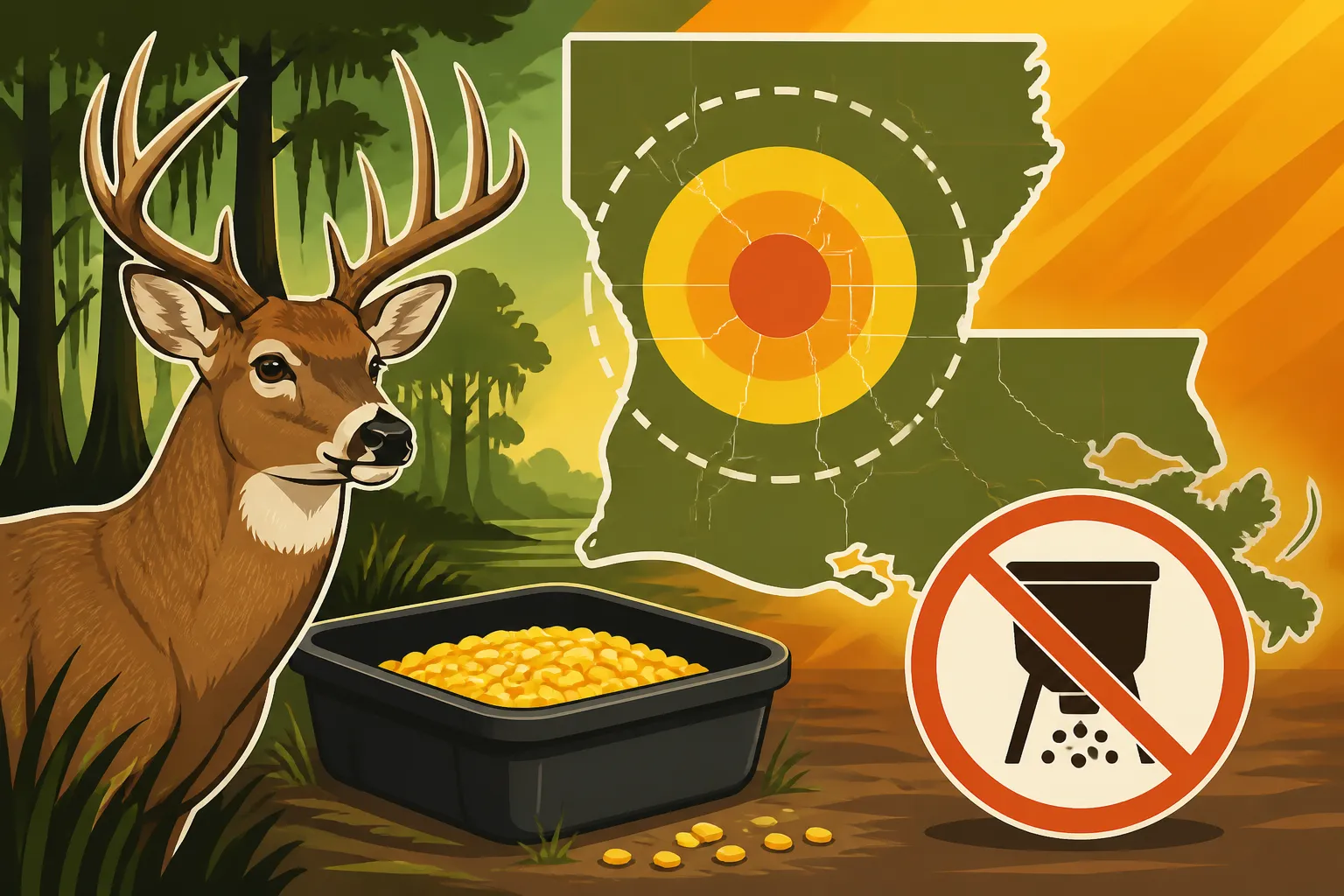
The Enhanced Mitigation Zone (EMZ) is the core area where CWD has been detected. Think of it as ground zero. Because of the direct threat in these areas, regulations are incredibly strict. Within the EMZ, there's a complete prohibition on the feeding or baiting of wild cervids. This means no corn piles, no sweet feed, no protein pellets, nothing that directly congregates deer by providing an artificial food source on the ground. Beyond baiting, there are also mandatory CWD testing requirements for deer harvested in this zone and strict Louisiana Carcass Movement Restrictions to prevent the physical transport of infected material outside the zone. The idea here is to minimize deer-to-deer contact and environmental contamination as much as possible to slow or stop the spread of the disease. You can learn more about these specific rules in The Enhanced Mitigation Zone Baiting Ban.
The Buffer Zone: A Layer of Protection
Surrounding the EMZ is what the LDWF calls the Buffer Zone (BZ). This zone acts as a protective perimeter, designed to create a larger area of reduced risk around the known CWD positive areas. While the regulations in the BZ are not as stringent as the EMZ, they are still significant and differ from areas outside any CWD zone. The primary goal of the BZ is to prevent the expansion of CWD by limiting activities that could facilitate its spread. This includes specific rules regarding baiting, which we'll dive into in detail, as well as carcass movement advisories. Essentially, the BZ provides an early warning system and a second line of defense, recognizing that even if CWD hasn't been confirmed there yet, the risk is elevated due to its proximity to infected areas. The buffer zone usually extends a certain radius, often around 15 miles, from the edge of the EMZ, highlighting How the Fifteen-Mile CWD Zone Radius Works.
Key Parishes Impacted by CWD Zones
Currently, the CWD Management Zones predominantly affect parishes in Northeast Louisiana. This includes, but isn't limited to, parts of Tensas, Concordia, Franklin, and Madison parishes. It's vital to remember that these zones are dynamic and can change as new CWD detections occur. What might be a non-CWD zone today could become a buffer zone tomorrow, or a buffer zone could be upgraded to an EMZ. That's why every hunter needs to actively check the latest LDWF regulations and maps before heading afield. A great resource for this is the official LDWF website, which provides up-to-date information on Louisiana's Chronic Wasting Disease Zones.
Navigating Baiting Rules in the CWD Buffer Zone
This is often where the most confusion arises for hunters. The rules in the Buffer Zone are designed to be a middle ground, allowing some practices while prohibiting others that carry a higher risk of disease transmission. It's crucial to understand the nuances.
General Baiting vs. Legal Attractants in Buffer Zones
In the CWD Buffer Zone, the direct feeding or baiting of wild cervids remains largely prohibited, similar to the EMZ in spirit, but with some key distinctions in practice. This means you absolutely cannot pour out a pile of corn, rice bran, or any other grain-based feed directly onto the ground to attract deer. The reasoning, as mentioned, is to prevent deer from congregating cheek-by-jowl over a contaminated food source, which drastically increases the chances of prion transmission.
However, the LDWF does permit certain attractants and activities that are considered less likely to foster disease spread. This is where it gets interesting for hunters who want to legally draw deer to their stand. The core distinction lies in whether the attractant causes deer to linger and directly contact a concentrated food source versus offering a more dispersed or indirect appeal.
Permitted Attractants and Activities
So, what can you use in a CWD Buffer Zone? You have more options than you might think, designed to work with natural deer behavior rather than against it:
- Food Plots: These are absolutely allowed and encouraged! Planting a food plot of clover, wheat, oats, or chicory is a fantastic way to enhance natural forage and draw deer to your property. Food plots provide a larger, more dispersed food source compared to a concentrated bait pile, reducing nose-to-nose contact and preventing the deep contamination of a small area. They also contribute to overall deer nutrition. Learning about natural food availability, especially Hunting After a Poor Acorn Year, becomes even more important when relying on food plots.
- Mineral Licks: Properly placed mineral licks are generally permitted. These can be granular mineral supplements or solid blocks, provided they are placed in a way that minimizes direct ground contact or are designed to be consumed slowly. The goal is to provide essential nutrients, not a high-volume food source. Some hunters use elevated mineral dispensers to achieve this.
- Scent Attractants: Deer urine, synthetic estrus scents, buck lures, and other glandular scents are typically allowed. These are meant to appeal to a deer's sense of smell and curiosity, rather than its hunger, and do not involve direct ingestion. They are used to draw deer within range, not to feed them.
- Artificial Feeders (with caveats): This is where it gets a little nuanced. If you're using a feeder, the feed must not be placed directly on the ground, in feeders designed to dispense feed on the ground, or in a manner that causes the feed to be distributed on the ground. This means feeders that dispense pellets or corn onto the ground are still a no-go. However, elevated feeders that allow deer to access mineral or supplemental feed without significant ground contamination might be permissible. Always double-check the latest LDWF guidelines for specific wording on this, as interpretations can vary.
Defining "Bait" and Illegal Feeding
To be crystal clear, "bait" in the context of these CWD rules refers to any substance that is intentionally placed to attract deer for the purpose of hunting, particularly those that result in the concentration of deer over a food source on the ground. This includes, but is not limited to, corn, rice bran, sweet potatoes, protein pellets, apples, or any manufactured grain-based deer feed. The critical element is the concentration and direct ground contact. The intention of the rule is to break up these high-traffic, high-contact feeding zones where prions can easily be exchanged and linger in the environment.
Violating these baiting rules, even in a Buffer Zone, can lead to significant penalties, including fines and potential loss of hunting privileges. Ignorance of the law is generally not considered an excuse, so staying informed is your best defense against inadvertently breaking the rules.
| CWD Zone Type | Direct Baiting (e.g., corn piles) | Legal Mineral/Supplemental Feeds (e.g., elevated feeders, blocks) | Food Plots (Planted for forage) | Scent Attractants (e.g., urine) |
|---|---|---|---|---|
| Enhanced Mitigation Zone (EMZ) | PROHIBITED | ALLOWED (if not dispensed on ground) | ALLOWED | ALLOWED |
| Buffer Zone (BZ) | PROHIBITED | ALLOWED (if not dispensed on ground) | ALLOWED | ALLOWED |
| Non-CWD Zone | ALLOWED (check WMA/local rules) | ALLOWED | ALLOWED | ALLOWED |
The Scientific Rationale Behind Buffer Zone Regulations
It's easy to feel frustrated by new rules, especially when they change long-standing hunting practices like baiting. However, these regulations aren't arbitrary; they are rooted in scientific understanding of CWD transmission and disease ecology.
Preventing the Spread of Prions
The primary scientific reason for baiting bans and restrictions in CWD zones is to mitigate the spread of those persistent prions. When deer gather at a bait site, they aren't just eating; they're also salivating, urinating, and defecating in the same small area. If even one deer is infected, it can shed prions into that environment. These prions then remain viable in the soil, potentially infecting other deer that forage there, even long after the initial infected animal has left or died. By prohibiting baiting, the LDWF aims to reduce these congregation points, thereby limiting the opportunities for direct and indirect transmission of prions between deer and minimizing the environmental contamination that acts as a reservoir for the disease.
Maintaining a Healthy Deer Population
Beyond direct prion spread, concentrated feeding sites can also contribute to the overall stress and disease susceptibility of a deer herd. When deer are unnaturally concentrated, it's not just CWD that poses a threat; other diseases, parasites, and even simple stress from competition can take a toll on their health. By encouraging more natural foraging patterns and less crowded environments, these regulations help maintain a healthier, more resilient deer population. A herd that is spread out and foraging naturally is generally more robust and better equipped to handle disease challenges. This long-term health is critical for maintaining Louisiana's Louisiana Deer Population Estimate.
Protecting Louisiana's Hunting Future
Ultimately, the regulations in the CWD Buffer Zone, and throughout all CWD zones, are about safeguarding the future of deer hunting in Louisiana. CWD is a devastating disease that has severely impacted deer populations and hunting opportunities in other states. By taking proactive measures now, even if they're inconvenient, the LDWF is working to minimize the long-term impact of CWD on our deer herd. This isn't just a government mandate; it's a shared responsibility for all hunters. Our compliance and cooperation are vital to ensure that future generations can enjoy the rich hunting traditions that Louisiana offers. Protecting our Louisiana Deer Harvest Records means protecting the herd itself.
Practical Hunting Strategies in Buffer Zones
Okay, so baiting is out (or heavily restricted) in the buffer zone. Now what? This is where your skills as a hunter truly shine. Adapting your approach means a return to some fundamental, highly effective hunting techniques.
Embracing Natural Scouting Methods
Without bait, you'll need to double down on scouting for natural attractants and deer movement patterns. This means dedicating more time before the season, and even during it, to understand your hunting area. Look for natural food sources like mast crops (acorns, pecans, persimmons), preferred browse (tender shoots, leaves, and twigs), and agricultural fields that provide forage. Identify water sources, which are critical, especially during warmer periods. Pinpoint bedding areas—thick cover where deer feel safe resting—and then identify the travel corridors (trails, pinch points, funnels) that connect bedding to food and water. Learn to read fresh deer sign: tracks, rubs, scrapes along logging roads or field edges, and droppings. This deep understanding of deer behavior and habitat use, rather than relying on a pile of corn, will make you a more versatile and successful hunter. Start early with Scouting Louisiana Public Land Before Season to get a head start.
Utilizing Technology for Intelligent Hunting
While you can't use bait, you can absolutely leverage modern technology to outsmart deer in CWD buffer zones. Mapping applications are your best friend here. Platforms like GoHunt provide invaluable tools for identifying terrain features, property lines, and potential pinch points without needing physical bait. Its high-resolution satellite imagery and topographic maps help you pinpoint natural funnels, secluded bedding areas, and subtle changes in elevation that might influence deer movement. Imagine being able to virtually scout an entire area, identifying oak groves for acorns or thick creek bottoms that provide cover, all from your couch.
Beyond just finding spots, GoHunt also offers layers that can show habitat types, recent timber cuts, or even historical aerial photos, helping hunters predict deer movement more accurately in areas where traditional baiting is restricted. For example, you can use GoHunt to analyze how deer might travel along a ridge or through a cypress swamp to get from a bedding area to a food plot you’ve legally established. These advanced mapping tools empower hunters to analyze deer travel routes between feeding and bedding areas, making educated decisions about stand placement. Even without bait, understanding deer behavior becomes easier with data-driven insights that platforms like GoHunt can provide, transforming how you approach a new hunting spot.
Trail cameras, used responsibly and legally (i.e., not over a bait pile), can still be incredibly effective for monitoring deer movement patterns, identifying individual bucks, and determining peak activity times. Combine this with weather apps to understand wind direction and thermals, crucial for setting up your stand properly, especially in swampy or hilly terrain.
Adapting Your Stand Placement
Once you've done your natural scouting and leveraged technology, it's time to adapt your stand placement. Forget the bait barrel; now you're hunting natural funnels—places where topography or vegetation naturally constrict deer movement, forcing them into predictable pathways. Look for saddles on ridges, narrow strips of timber between open fields, creek crossings, or areas where two different habitat types meet.
Set up on trails that show heavy use between bedding and feeding areas, paying close attention to the wind direction for both morning and evening hunts. You'll want to be downwind of where you expect deer to approach. Utilize terrain features to your advantage, such as setting your stand on the back side of a rise to break up your silhouette, or using natural cover to obscure your approach and exit. Understanding how to use Reading Aerial Photos for Central Louisiana Deer can drastically improve your stand choices. These more strategic setups will often yield more satisfying hunts, even if they require a bit more effort.
Playing Your Part: Responsibility and Compliance
The battle against CWD is a collective effort, and every hunter in Louisiana has a crucial role to play in protecting our deer herd.
Staying Current with LDWF Regulations
The CWD situation is evolving, and so are the regulations. What's true today might be updated tomorrow, especially as more testing results come in. It is your personal responsibility to stay informed. Regularly check the official LDWF website, review the annual hunting guide, and pay attention to press releases or local advisories. Don't rely solely on what you hear at the camp or on social media. Directly consulting the source ensures you have the most accurate and up-to-date information regarding zone boundaries, baiting rules, and other critical regulations. The LDWF has worked hard to make information accessible, and utilizing those resources is key.
Importance of Harvest Reporting and Testing
Mandatory deer harvest reporting through the LDWF's online system or mobile app is more important than ever. This data helps biologists track deer populations, understand harvest trends, and identify potential areas of concern. Beyond reporting, participation in voluntary (and mandatory in EMZs) CWD testing is critical. When you harvest a deer in a CWD zone, having it tested provides vital surveillance data that helps the LDWF map the disease's spread and make informed management decisions. It's a small extra step that provides immeasurable value to the health of the entire herd. Familiarize yourself with Louisiana CWD Testing for Hunters to know your obligations and options.
Community Vigilance and Ethical Hunting
Finally, ethical hunting extends beyond just following the law; it means being a responsible steward of the resource. If you observe a deer exhibiting CWD symptoms—emaciation, abnormal behavior, drooling—report it immediately to the LDWF. Educate your fellow hunters about the regulations and the importance of compliance. This isn't about shaming, but about ensuring everyone understands the gravity of the situation and how their actions impact the broader hunting community. Our shared traditions depend on a healthy deer population, and by working together, we can give Louisiana's deer the best possible chance against CWD.
Disclaimer
Please note that hunting regulations, particularly those concerning Chronic Wasting Disease, are subject to change. Always consult the most current Louisiana Department of Wildlife and Fisheries (LDWF) official regulations and advisories before planning or engaging in any hunting activities. This guide is for informational purposes only and should not be considered legal advice.