Glassing a Powerline Cut at Last Light
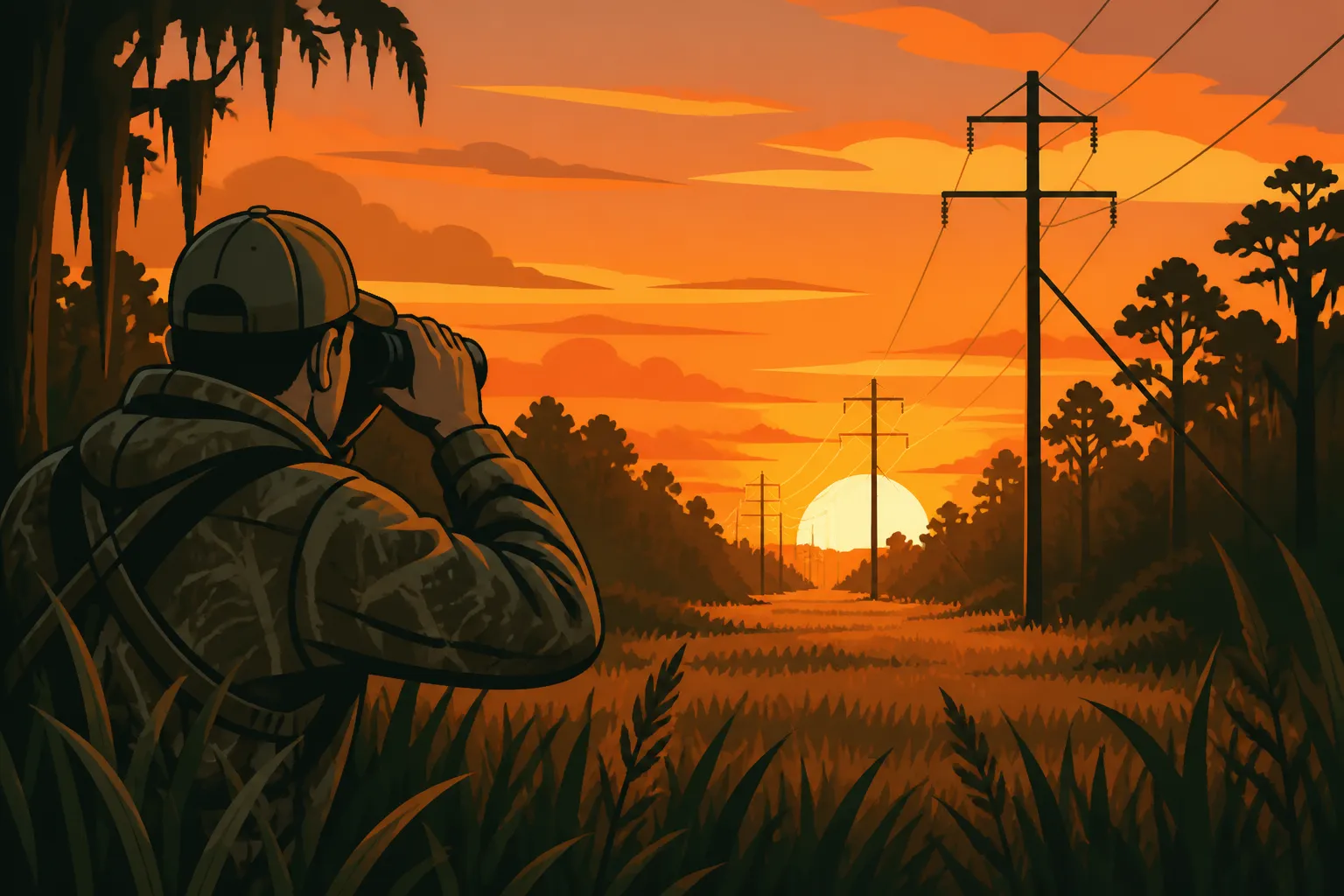
It's happened to all of us: you've been sitting for hours, the woods are quieting down, and just as you start to pack up, a phantom flick of a tail or a ghostly silhouette catches your eye in the fading light. That moment of frustration, knowing a deer was there but you just couldn't quite see it clearly, is precisely why mastering the art of glassing a powerline cut at last light can utterly transform your deer hunting success in Louisiana. This guide will walk you through turning those fleeting glimpses into solid opportunities.
Why Powerline Cuts Are Deer Magnets at Last Light
Powerline cuts, those long, open swaths carved through our Louisiana timberlands, aren't just for utility access; they're often overlooked goldmines for deer hunters, especially during those critical final hours of daylight. Deer instinctively use these linear features for a variety of reasons, making them prime real estate for observation and interception.
The Edge Effect and Available Forage
Think about it: a powerline cut is essentially a massive, man-made edge. Wherever you have an edge, you have a transition zone where different types of habitat meet. This "edge effect" is a biological principle that increases biodiversity, and deer absolutely thrive on it. The open canopy of a powerline allows more sunlight to reach the forest floor, promoting the growth of various grasses, forbs, and browse that might not flourish in the dense shade of mature timber. Deer are constantly seeking out these highly palatable plants. They'll often stage just inside the thicker cover along the edges, nibbling on tender shoots before venturing further into the open cut.
This isn't just about food, though. The varying vegetation provides bedding cover closer to food sources than they might otherwise find. You might see low-lying thickets of briars or regenerating saplings right on the edge of the cut, providing just enough security for a deer to feel comfortable hanging out until the last golden rays of the sun begin to dim. It's a perfect blend of food and security, drawing them in like a magnet.
Natural Travel Corridors and Funnels
Beyond food, powerline cuts act as natural travel corridors. Deer are creatures of efficiency, and a relatively clear path through otherwise dense woods is an invitation they often can't resist. They'll use these cuts to move from bedding areas deep in the swamp or pine thickets to more open feeding areas like agricultural fields or newly regenerating clear-cuts. As hunters, we can capitalize on this predictable movement.
Imagine a deer bedded down in a dense palmetto thicket adjacent to a powerline. As evening approaches, its internal clock signals feeding time. Instead of busting through thick undergrowth, it can slip out onto the edge of the powerline and use it as a highway, conserving energy and minimizing noise. These cuts also act as funnels. If a powerline runs between two blocks of timber, or intersects a ridge line, it effectively channels deer movement. When you're scouting, pay close attention to where these cuts intersect other natural travel routes, like old logging roads, creek bottoms, or even subtle changes in elevation, which can create micro-funnels. Learning to identify these patterns can be hugely beneficial, and scouting tools, even ones like GoHunt, can help you pick them out from an aerial view. This concept is similar to understanding Hunting a Funnel Between Two Sloughs or predicting movement along Reading a Ridge for Central Louisiana Deer.
Unparalleled Visibility for Observation
This might seem obvious, but it's worth stating: the primary advantage of a powerline cut at last light is the sheer visibility it offers. In dense Louisiana woods, spotting a deer beyond 50 yards can be a challenge, let alone accurately identifying if it's a legal buck or a doe. Powerlines open up the landscape, giving you long sightlines, sometimes stretching for hundreds of yards. This extended field of view is critical during those low-light periods when deer are most active and harder to detect.
Instead of just catching a glimpse, you get an opportunity to observe. You can watch how deer enter the cut, where they feed, their direction of travel, and even their body language. This allows you to differentiate between a lone doe, a yearling buck, or that mature deer you've been after. It also gives you precious time to range the animal, assess the shot, and get steady, which is a luxury often denied in thick timber. The ability to see further and clearer means you can be more selective and make more informed decisions, which ultimately leads to more ethical and successful hunting.
Optimal Glassing Techniques for Low Light
Effective glassing at last light isn't just about pointing your binoculars down a powerline; it's a deliberate and patient process that combines the right gear with strategic positioning and a methodical approach. When the sun dips below the horizon and shadows deepen, your eyes alone often aren't enough.
Choosing the Right Optics for Fading Light
Your choice of optics is paramount when hunting those twilight hours. You need binoculars or a spotting scope that excels in low-light conditions, which typically means a larger objective lens. While 8x or 10x magnification binoculars are common, consider a 10×42 or even 12×50 pair for better light gathering. The larger the second number (objective lens diameter in millimeters), the more light it can gather, resulting in a brighter, clearer image in dim conditions.
Higher-quality glass and coatings also make a significant difference. Don't skimp on your binoculars; they are your most important scouting tool in these situations. Brands like Zeiss, Swarovski, or Vortex offer excellent low-light performance, but even more budget-friendly options have come a long way. If you're going to be glassing very long distances, a spotting scope can extend your reach, but it often sacrifices portability and a wider field of view. For most powerline glassing, good binoculars are king. A stable tripod for your binoculars can also reduce shake and fatigue, making those long, slow scans much more effective.
Here’s a quick comparison of common binocular types suitable for low-light situations:
| Feature | 8×42 Binoculars | 10×42 Binoculars | 12×50 Binoculars |
|---|---|---|---|
| Magnification | 8x | 10x | 12x |
| Objective Lens | 42mm | 42mm | 50mm |
| Field of View | Wider, easier to track moving objects | Good balance, slightly narrower FOV | Narrower FOV, can be harder to hold steady |
| Light Gathering | Good | Very Good | Excellent |
| Stability | Easiest to hold steady by hand | Good for hand-held use | Benefits greatly from a tripod |
| Ideal Use | Closer range, dense cover | Versatile, general hunting | Long-range observation, open areas |
Strategic Positioning and Wind Awareness
Where you set up to glass is almost as important as the optics you're using. You need a vantage point that offers a clear, unobstructed view of the powerline cut, ideally covering as much length as possible. This might mean finding a slight rise, using a small hill, or even setting up at a bend in the cut that allows you to see both directions. Always position yourself so that the last remnants of sunlight are behind you, illuminating the cut, rather than shining directly into your optics. This reduces glare and helps highlight deer moving into the shadows.
Wind direction is, of course, critical. Even though you're glassing from a distance, deer have an incredible sense of smell. You don't want your scent blowing down the powerline into the very area you're trying to observe. Always try to position yourself downwind or crosswind of where you expect deer to appear. Understanding Wind and Thermals in Swamp Bottomland is especially important here, as even subtle terrain features can create unpredictable air currents. This often means scouting the area beforehand, perhaps using a mapping application like GoHunt to analyze terrain and potential wind corridors, and even visiting the spot on a windy day to see how the air truly flows. Your goal is to be a silent, invisible observer, allowing the deer to move naturally into view without ever knowing you're there.
Slow and Steady Scanning for Elusive Movement
Once you're set up, the real work begins: slow, methodical scanning. Don't just sweep your binoculars back and forth quickly. This is where many hunters make a mistake. Instead, use a grid pattern. Start at one end of the powerline, slowly scanning a small section, then move your binoculars a fraction of an inch and scan again. Look for anything that seems out of place – a horizontal line in a vertical world, a slight shift in color, or an unusual texture.
Deer are masters of camouflage, especially in low light. You're rarely going to see a whole deer at first. Instead, you're looking for an ear flick, a leg, the shine of an eye, or the dark patch of a body against lighter vegetation. Pay extra attention to the edges where deer are likely to enter the cut, and any areas with heavier cover within the cut itself. Be patient. Take your time. This isn't a race. The longer you glass, the more your eyes and brain adjust to the dim light, and the more likely you are to pick up subtle movements. Rest your eyes every few minutes, then start again. It's often that fourth or fifth pass over the same section that finally reveals the deer you've been waiting for.
Reading Deer Movement in Powerline Cuts
Spotting a deer is one thing; understanding why it's there and what it's doing is another. By carefully observing their patterns and behavior within a powerline cut, you can gain invaluable insights that will help you anticipate their movements and increase your chances of success, not just for that evening, but for future hunts as well.
Anticipating Entry and Exit Points
Deer don't just magically appear in the middle of a powerline cut; they enter from specific points, typically from areas of dense cover. Learning to anticipate these entry and exit points is key. Look for natural draws, thickets, finger ridges, or even subtle changes in vegetation density that offer a protected path from bedding areas to the open cut. Often, deer will use the same trails repeatedly, especially if they lead to preferred food sources.
When you're glassing, focus heavily on these potential entrance corridors along the edges. A deer might linger in the thick cover just inside the tree line, sniffing the air, checking for danger, before stepping out. Sometimes, these will be established trails that you can spot even before the deer shows up, appearing as faint lines through the underbrush or worn paths. Pay attention to how deer move in and out. Do they favor a certain patch of woods? Do they always cross the cut at a specific point? Over time, these observations will build a mental map of their likely movements. This kind of detailed scouting, even using a simple app, helps you predict where deer will be, much like understanding Reading Louisiana Mud for Fresh Deer Movement can.
Identifying Behavior Patterns and Intent
Once a deer steps into the powerline, observe its behavior. Is it casually feeding, head down, slowly moving along? This indicates it feels relatively secure and is focused on foraging. Is it moving quickly with its head up, constantly scanning, or stomping? This suggests it's either alert to danger or on a mission to get somewhere specific. Understanding these subtle cues can tell you if you have time to adjust your position, if a shot might present itself, or if you should simply stay put and observe.
Bucks, especially during the pre-rut and rut, might move with more purpose, often checking for does or leaving their own sign. You might see them pause to rub a small sapling on the edge of the cut or paw at the ground to create a scrape. This behavior is crucial information, telling you not just that a buck is in the area, but what he's doing and where he's doing it. You can even identify areas where deer are consistently performing these actions, giving you an idea of where to focus your efforts on subsequent days. This observation can be as effective as Rattling and Grunting in Louisiana for understanding buck behavior.
Pinpointing Buck Sign and Rutting Activity
Powerline cuts, particularly along their edges, are fantastic places to find deer sign. The semi-open nature provides visibility to spot rubs, scrapes, and tracks that might be hidden in thicker timber. As bucks move along these corridors, they often leave their mark. Look for fresh rubs on small trees and bushes right at the treeline, where bucks have polished their antlers. These indicate a buck has recently passed through and is establishing his territory.
More importantly, keep an eye out for scrapes. These are areas where bucks paw away leaves and debris, then urinate and rub their scent glands on an overhanging branch. They are essentially calling cards for does and other bucks, announcing their presence and readiness to breed. Powerline edges, with their transition from open to cover, are prime locations for scrape lines. If you identify an active scrape line within a powerline cut or leading into it, you've found a high-traffic area for bucks during the rut. This information is invaluable for planning future hunts, especially if you're targeting specific bucks or trying to hunt during the peak of the rut, whether you're in an Hunting the Rut in the Early-Start Areas or later-peaking zones. The consistent presence of fresh sign tells you that the deer are not just passing through, but actively using the area.
Overcoming Challenges and Maximizing Success
Hunting powerline cuts at last light isn't without its challenges, especially in Louisiana. However, by understanding these hurdles and implementing smart strategies, you can greatly increase your chances of success and ensure a more rewarding, ethical hunt.
Navigating Hunting Pressure in Popular Areas
Powerline cuts are often highly accessible and, because of their visibility, can become popular spots for hunters. This means you might encounter significant hunting pressure, especially on public lands or during opening weekend. Deer are smart, and heavy pressure can quickly push them into more secluded areas or make them exclusively nocturnal. So, how do you deal with this?
First, don't just hunt the obvious spots. While the main powerline might be busy, look for smaller, less noticeable cuts, gas line rights-of-way, or even older, grown-up powerlines that offer cover within the cut. These less obvious spots often see less pressure. Second, be willing to walk. Many hunters stick close to roads and easy access points. By hiking a little further down the powerline, away from parking areas, you can often find unpressured pockets of deer. Using mapping apps like GoHunt to identify remote sections or areas where the powerline intersects with thicker, harder-to-access swamp or woods can give you an edge. And remember, sometimes the best strategy is to be patient and let other hunters inadvertently push deer your way. Understanding Hunting Pressure on Louisiana Public Land is key to success here.
Understanding Wind and Thermals in Open Cuts
We've touched on wind, but in an open powerline cut, thermals play an equally critical role, especially at dawn and dusk. As the sun sets, the ground cools, causing air to descend (downdraft). This means your scent, which might have been rising during the day, will now sink and carry further downslope. If the powerline cut runs along a slight incline or through rolling hills, this can be a major factor.
You need to know how the wind and thermals will behave in your specific setup. Use a wind indicator (powder, milkweed, or even just a piece of string) constantly. As the day transitions to evening, expect air currents to shift. If you're on a ridge overlooking a powerline, your scent will likely fall into the low-lying areas. If you're at the bottom looking up, your scent might rise during the last vestiges of daylight but then switch as the air cools. Always try to set up so that your scent is blowing away from where you anticipate deer will be entering or moving through the cut. This is a crucial element for all hunting but becomes acutely important when you're relying on distant observation.
Ethical Shot Opportunities and Recovery Challenges
Glassing at last light can reveal deer at extended ranges, but it also presents an ethical dilemma: how far is too far? Just because you can see a deer through your optics doesn't mean you should shoot it. Low light conditions significantly reduce your ability to make a clean, ethical shot, and tracking a wounded deer in the dark in Louisiana's dense swamps and thickets is a nightmare scenario that we all want to avoid.
Before you even raise your rifle, make sure you have a solid rest, a clear shooting lane, and are absolutely confident in your ability to make a precise shot at that distance under those lighting conditions. Always err on the side of caution. If there's any doubt about shot placement or recovery, pass. It's better to live to hunt another day than to wound an animal and risk losing it. If you do take a shot and the deer doesn't drop immediately, mark the spot exactly where it was standing, and where you last saw it. Wait at least 30 minutes, or even longer if it's a gut shot, before beginning to track. Having a good flashlight, and perhaps even a tracking dog, is essential for Blood Trailing After Dark in Louisiana. Remember, our responsibility as hunters extends beyond the shot – it's about a clean harvest and respectful recovery.
Disclaimer
Always consult the most current Louisiana Department of Wildlife and Fisheries (LDWF) regulations before heading afield. Hunting laws and season dates are subject to change, and it is every hunter's responsibility to be aware of and comply with all applicable rules and regulations.