Hunting Louisiana’s Year-Round Feral Hogs
Louisiana's wild hog population can feel like a relentless force of nature, destroying crops, rooting up pristine land, and even impacting our native wildlife. It's a real headache for landowners, farmers, and even folks who just want to enjoy the outdoors. If you're tired of watching these destructive critters wreak havoc, this guide is for you. We're going to dive deep into everything you need to know about effectively hunting feral hogs year-round in the Pelican State.
Understanding the Relentless Feral Hog Problem in Louisiana
Before we talk about hunting them, it’s crucial to understand why feral hogs are such a massive, ongoing issue in Louisiana. They're not just a nuisance; they're an ecological and economic disaster, and their numbers seem to grow exponentially. This isn't an exaggeration—it's a frustration almost every rural resident can relate to.
Why Hogs are Such a Challenge to Control
The primary reason feral hogs are so challenging to control comes down to their incredible reproductive rate. A sow can become sexually mature as early as six months old, and she can have two litters a year, sometimes even three, with litters averaging four to eight piglets. Do the math, and you quickly see how a small group of hogs can explode into hundreds in just a few years. It's almost impossible to keep up. They’re also incredibly adaptable, able to thrive in diverse habitats from dense swamps to open agricultural fields, and they learn quickly, making them notoriously difficult to trap or hunt consistently.
Beyond their breeding prowess, their intelligence and elusive nature add to the frustration. Hogs quickly become wary of hunting pressure. If you hunt a group hard, they might go nocturnal, move to thicker cover, or completely leave an area for a while, only to return when the pressure subsides. This constant cat-and-mouse game makes sustained control a monumental effort.
Their Devastating Impact on Agriculture and Wildlife
The damage these animals inflict on Louisiana's landscape and economy is truly staggering. For our farmers, it's a constant battle. Feral hogs root up millions of dollars worth of crops annually, from corn and soybeans to sugarcane and rice. They tear through irrigation systems, damage fences, and contaminate water sources. A field that looked perfectly fine one evening can be completely destroyed by morning after a sounder of hogs has moved through. It's heartbreaking for those who rely on the land for their livelihood. You can learn more about the specific financial and environmental toll in resources detailing Crop Damage Hogs Cause in Louisiana.
But it’s not just agriculture. These destructive omnivores are also a serious threat to Louisiana's native wildlife and ecosystems. They compete with deer, turkey, and other species for food sources like acorns and mast crops. Even more concerning, they prey on fawns, turkey poults, ground-nesting bird eggs, and even small reptiles and amphibians. Their rooting behavior destroys delicate wetland habitats and disrupts natural plant communities, accelerating erosion and altering water flow. They also carry diseases like swine brucellosis and pseudorabies, which can be transmitted to livestock, pets, and even humans, creating public health concerns.
Where Hogs Are Most Prevalent Across Louisiana
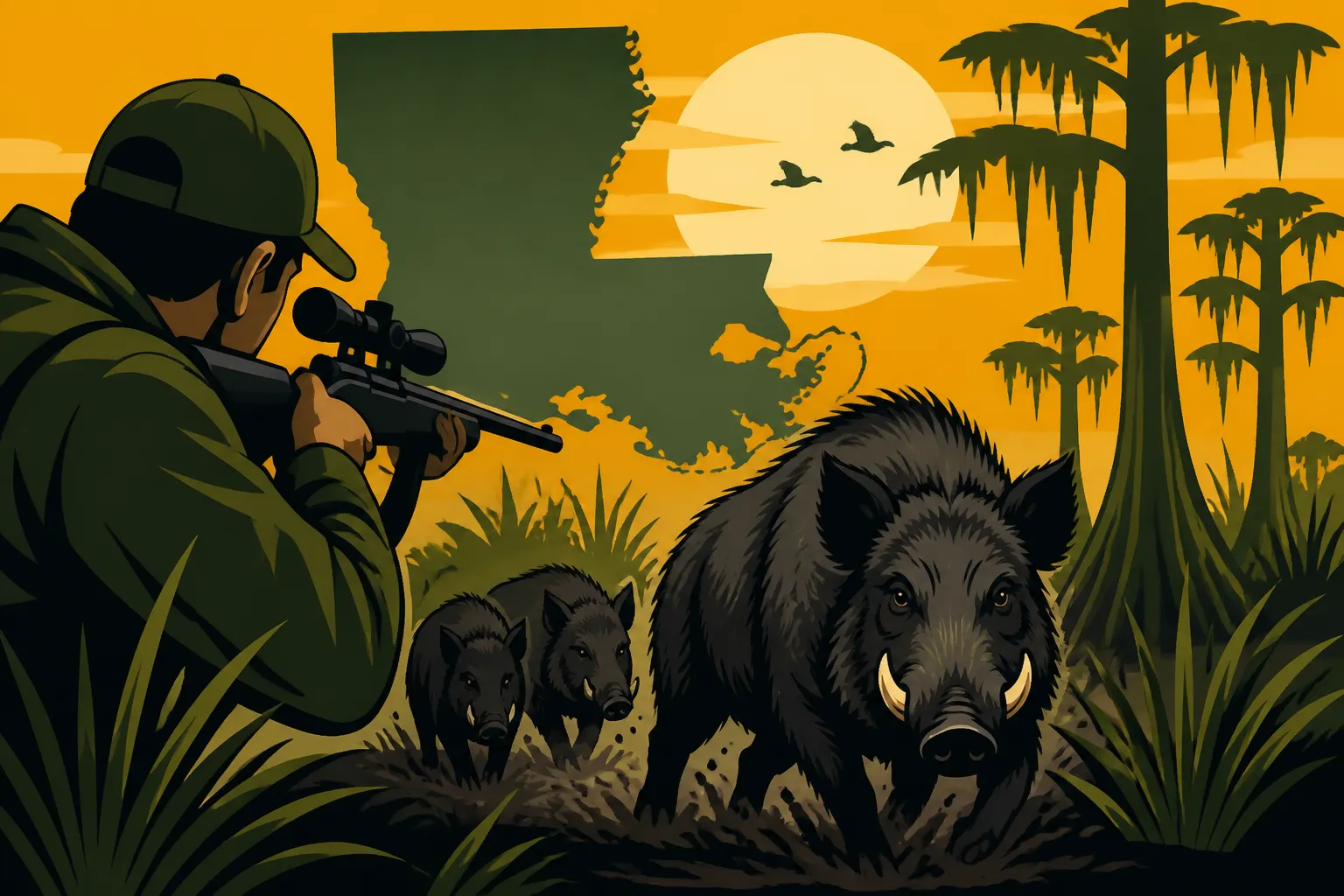
While feral hogs can be found in all 64 parishes, some areas certainly experience more intense populations and damage. Generally, wherever there's abundant food, water, and cover, you'll find hogs. This often means river bottoms, swampy areas, and agricultural regions. The Atchafalaya Basin, with its vast wilderness and fertile grounds, supports a huge number of hogs. The piney woods and agricultural areas of North and Central Louisiana also face severe infestations. Parishes like Tensas, Concordia, and Madison, with their rich farmland adjacent to river bottoms, are constantly battling hog populations.
Even areas previously thought to have lower numbers are seeing an increase. Their ability to adapt means that once they establish a foothold, they quickly spread. It's a testament to their resilience and why comprehensive, consistent hunting pressure is one of the few ways to mitigate their impact. Understanding where they thrive helps hunters focus their efforts on high-impact zones, making their time afield more productive. You might be surprised at How Many Feral Hogs Louisiana Has and where their numbers are highest.
Louisiana's Year-Round Approach to Hog Hunting
One of the few upsides to the massive feral hog problem is that Louisiana wildlife regulations reflect the urgency of control. Unlike almost every other game animal, hogs don't have a closed season or bag limit on private land, which gives hunters unparalleled flexibility. This isn't just a recreational opportunity; it's a vital part of managing an invasive species.
Legal Status and Regulations on Private Land
On private land in Louisiana, feral hogs are classified as an outlaw quadrupeds, meaning there is no closed season and no bag limit. This is fantastic news for landowners and hunters alike, as it means you can pursue them 365 days a year, day or night, with almost any legal weapon. This year-round access is crucial for making any kind of dent in their populations. You can also use bait, traps, and even artificial lights at night, which are typically prohibited for deer and other game animals. This flexibility allows for incredibly effective and diverse hunting strategies tailored to specific property needs and hog behaviors.
However, it's important to remember that while the regulations are liberal for hogs themselves, standard hunting safety rules, landowner permission laws, and local ordinances still apply. Always confirm you have explicit permission from the landowner before hunting on private property, and be aware of any local discharge ordinances, especially if you're near residential areas. The freedom to hunt hogs year-round is a privilege, and responsible hunting practices ensure it remains that way. For a deeper dive into the specifics, check out the comprehensive Louisiana Feral Hog Regulations.
Public Land Opportunities and Restrictions
Hunting hogs on public land, such as Wildlife Management Areas (WMAs) and Kisatchie National Forest, is a different ballgame compared to private land. While hogs are still fair game, the specific regulations are much tighter and vary significantly depending on the WMA or National Forest district. Generally, hog hunting on public land is restricted to the same seasons and legal methods allowed for deer or small game. This means you can't typically use bait, hunt at night, or use dogs specifically for hogs outside of designated dog hunting seasons.
Always consult the Louisiana Department of Wildlife and Fisheries (LDWF) hunting regulations pamphlet for the specific WMA or National Forest area you plan to hunt. These regulations are updated annually and are crucial for staying legal. Some WMAs might have specific hog seasons or special rules, but often, you'll be limited to hunting them during deer archery, primitive firearms, or gun seasons, using the equipment legal for those seasons. This makes public land hog hunting more challenging but not impossible. Hunters often find success pursuing hogs during deer season, treating them as opportunistic targets while still-hunting for deer. If you're exploring Public Hunting Land in Louisiana, make sure to cross-reference the WMA rules carefully.
Securing Private Land Access and Building Relationships
Given the more liberal rules and often higher hog densities, securing access to private land is often the most effective way to consistently hunt feral hogs. This can be easier said than done, but building relationships with landowners is key. Farmers are often desperate for help with hog control, making them more amenable to granting access. Start by knocking on doors in rural areas, politely introducing yourself, and offering to help manage their hog problem. Emphasize your commitment to safety, respect for their property, and ethical hunting practices.
Be prepared to offer references and perhaps even help with small tasks around the property. Landowners want reliable, trustworthy hunters who won't cause problems. Once you gain access, be diligent, communicate regularly, and always follow through on your promises. If you say you'll check traps every other day, do it. If you harvest hogs, offer to share the meat or help with disposal. Being a good steward of their land and a consistent presence in controlling hogs can lead to long-term hunting opportunities. Many hunters have built lifelong friendships and gained invaluable access through this approach.
Popular Hunting Methods for Feral Hogs
Hunting feral hogs can be incredibly exciting and challenging, partly because they're so unpredictable. There's no single "best" method; instead, successful hunters often employ a variety of tactics depending on the terrain, season, and hog behavior. Let's explore some of the most popular and effective approaches.
Still-Hunting and Stalking: Reading the Sign
Still-hunting and stalking involve moving slowly and deliberately through hog habitat, looking for fresh sign and then attempting to get within shooting range. This method is incredibly rewarding but requires patience, keen observational skills, and a good understanding of hog behavior. Hogs leave a lot of sign: fresh tracks, muddy wallows, rooted-up areas, rubs on trees, and even scat. Learning to differentiate fresh sign from old is critical. Fresh tracks in soft mud, wet rubs, or still-wet rooting indicate hogs are active in the area.
When still-hunting, always pay attention to the wind direction. Hogs have an incredible sense of smell, far superior to their eyesight. If they smell you, they're gone. Move slowly, pause frequently to look and listen, and use binoculars to scan ahead. Focus on areas with dense cover near food and water sources. River bottoms, thickets of palmettos, and swamps are prime locations. When you spot hogs, use terrain and cover to close the distance quietly. This often means crawling, taking circuitous routes, and moving when their heads are down feeding. It’s a true test of a hunter’s skill.
Ambush Hunting Over Bait or Natural Food Sources
One of the most effective and popular ways to hunt hogs, especially on private land, is to ambush them over bait or concentrated natural food sources. Hogs are creatures of habit and will readily visit reliable food sources. Setting up a feeder or bait pile (corn is a common choice, sometimes soured) can draw hogs to a specific location consistently. Placement is key: choose a spot with good cover for your stand or blind, ensuring the wind is generally in your favor for your intended shot approach.
Beyond artificial bait, identifying natural food sources is equally productive. Hogs absolutely love acorns, muscadines, and other mast crops. During the fall, finding a productive oak flat or a creek bottom loaded with natural edibles can be a goldmine. Set up a stand downwind, overlooking the feeding area, and be prepared for hogs to show up at any time of day, though often they'll be most active during low-light periods. Patience is paramount with this method; sometimes you'll sit for hours without seeing anything, but when they do show up, it's usually in numbers.
Running Dogs on Hogs: A Traditional Louisiana Method
For many in Louisiana, hunting hogs with dogs isn't just a method; it's a tradition. This exhilarating and intense method involves using trained cur dogs or catch dogs to locate, bay, and sometimes hold hogs at bay for hunters. The dogs are typically equipped with GPS collars, allowing handlers to track their every move through thick Louisiana brush. When the dogs "strike" a hog trail, the chase is on, often leading to an adrenaline-pumping pursuit through swamps and dense timber.
Once the dogs have a hog cornered and "bayed up" (barking at it to keep it from running), the hunter moves in quickly for the shot, or if using catch dogs, they might move in to physically restrain the hog for a knife kill, particularly with smaller animals or for specific management purposes. This method is incredibly effective for clearing out large numbers of hogs from dense cover that would be almost impossible to penetrate otherwise. However, it requires a significant investment in trained dogs, specialized gear, and a deep understanding of dog behavior and safety. It's also critical to be aware of regulations regarding Running Dogs on Louisiana Feral Hogs on both public and private lands, as rules can vary.
Specialized Gear and Equipment for Hog Hunting
Just like with any serious pursuit, having the right tools for the job can make all the difference in hog hunting. While you can certainly harvest a hog with basic gear, investing in specialized equipment can significantly increase your success and safety, especially when dealing with tough, smart animals like wild hogs.
Firearms and Archery Choices for Effectiveness
When it comes to firearms, hogs are tough animals, so reliable stopping power is essential. For rifle hunters, calibers like .308 Winchester, .30-06 Springfield, 6.5 Creedmoor, and even .223/5.56 (with appropriate bullet selection) are popular. The key is bullet construction; you want a stout, bonded, or monolithic bullet that will penetrate deeply and hold together through thick hide, muscle, and bone. Soft-point or ballistic tip bullets designed for deer might fragment too quickly on a large boar. Shotguns loaded with slugs are also highly effective at close range in thick cover. When hunting with primitive firearms, choosing a larger caliber is wise, such as a .44 or .50 caliber muzzleloader, to ensure adequate penetration.
For archery hunters, the same principle of deep penetration applies. A compound bow with a draw weight of 60 pounds or more, paired with heavy arrows and strong, sharp broadheads (fixed-blade or robust mechanicals designed for heavy bone), is recommended. Don't skimp on your broadheads; a poor broadhead can lead to a lost animal and a frustrating experience. Always practice with your hunting setup to ensure consistent accuracy. Hogs have a smaller vital area compared to deer when viewed broadside, so precise shot placement is crucial.
Optics and Sighting Systems for Precision
Good optics are invaluable for hog hunting. For daytime hunting, a quality rifle scope with variable magnification (e.g., 3-9x or 2-10x) is excellent for both scanning and precise shot placement. Red dot sights or low-magnification LPVOs (low power variable optics) are superb for close-quarters engagements in dense cover, offering fast target acquisition.
However, where optics truly shine for hogs is during low light or night hunting. This is where thermal imaging and night vision devices become game-changers. Thermal scopes and handheld monoculars allow you to detect the heat signature of hogs, even in complete darkness or thick brush where traditional optics would fail. Night vision, while different (amplifying ambient light), also extends your hunting hours. These technologies are a significant investment but can drastically increase your success rates, especially when hogs become largely nocturnal due to pressure. Remember, rules for night hunting vary, so always confirm legality for your specific location and method.
Clothing, Scent Control, and Comfort Afield
Hogs have an incredible sense of smell, so scent control is vital, especially when still-hunting or ambushing over bait. Wear clean hunting clothes, use scent-eliminating sprays, and store your hunting gear in scent-free containers. While full-on scent suits might be overkill for hogs compared to deer, minimizing your human odor is always beneficial.
Beyond scent, comfort and durability are key. Louisiana hog hunting often involves slogging through muddy swamps, crawling through thorny thickets, and enduring humid conditions. Invest in tough, briar-proof pants or chaps, waterproof boots, and moisture-wicking clothing. A good pair of snake boots is also highly recommended, as you'll often be pushing through areas where venomous snakes reside. Carrying a comfortable pack with water, snacks, a first-aid kit, and a strong headlamp is also smart. When you're spending long hours in the field, especially in challenging terrain, being prepared and comfortable makes a huge difference. Hunting apps like GoHunt can be incredibly useful here, allowing you to mark water sources, potential hog crossings, and even safe routes through dense cover right on your phone, giving you a comprehensive overview of your hunting area.
Strategic Baiting and Trapping Techniques for Maximum Impact
While hunting hogs is exciting, baiting and trapping are often the most effective methods for reducing large hog populations, especially on private land. These strategies allow for continuous pressure and can remove multiple animals at once, making a significant impact on herd numbers.
Establishing and Maintaining Effective Bait Sites
Setting up a consistent bait site is crucial for drawing hogs into a predictable location. While corn is the classic choice, experimenting with different attractants can sometimes yield better results, especially if hogs in your area are wary of plain corn. Some hunters like to "sour" corn by soaking it in water for several days, letting it ferment, which creates a stronger smell. Others mix in sweet feeds, molasses, or even commercially available hog attractants with strong odors like cherry or vanilla. The key is consistency. Once you start baiting, keep the bait fresh and replenished regularly. Hogs will quickly learn a reliable food source.
Choose a bait site location that offers easy access for you but is secluded enough to make hogs feel secure. Look for areas near thick cover, water, and known hog travel routes. Consider using a gravity feeder or a timed feeder to dispense bait regularly, which reduces your disturbance at the site and maintains a consistent food supply. Always monitor the site for activity using trail cameras. This will tell you when the hogs are visiting, how many there are, and what their patterns are, allowing you to plan your ambush or trapping efforts more effectively.
Types of Traps and Their Effectiveness
Trapping is hands down the most efficient way to remove large numbers of hogs, especially large sounders (groups of hogs). There are several types of traps, each with its advantages.
Box Traps: These are typically smaller, single-catch traps made of heavy-gauge wire or wood. They are effective for catching individual hogs or smaller animals but quickly become less useful for larger sounders. They're often used for catching piglets or scouting a new area for hog presence.
Corral Traps: These are the workhorses of serious hog management. Corral traps are large, circular or square enclosures made of heavy-duty hog panels, often 16-20 feet in diameter or larger. They feature a gate that can be triggered by a hog entering, by a root-style trigger, or, increasingly, by a remote-controlled system. The beauty of a corral trap is its ability to catch an entire sounder at once. To maximize success, pre-bait the trap for several days or even weeks with the gate propped open, allowing hogs to enter and exit freely, building confidence in the "free meal." Once they are routinely feeding inside, you set the trigger or activate the remote.
Remote-Triggered Traps: These are the most modern and often most effective. They combine a corral trap with a cellular camera that sends real-time photos or video to your phone. You can then remotely trigger the gate when you see the entire sounder inside the trap. This eliminates wasted trips and ensures you catch as many hogs as possible in one go. Companies like Jager Pro offer comprehensive systems that integrate cameras, remote triggers, and durable trap designs. While an investment, the efficiency they offer can quickly pay for themselves in terms of hog removal.
Legal Considerations for Baiting and Trapping
While baiting and trapping hogs are widely accepted and encouraged on private land, there are specific legal considerations to keep in mind, particularly regarding Chronic Wasting Disease (CWD) zones and public lands.
In Louisiana, CWD has been detected in deer in certain parishes, leading to the establishment of CWD Management Zones. Within these zones, specific regulations apply regarding baiting and carcass movement to prevent the spread of the disease. While these rules primarily target deer hunting, they can impact your hog baiting strategies if deer are also attracted to your bait. Always check the current LDWF regulations for any CWD zones that might overlap with your hunting or trapping area. You can find up-to-date information on Louisiana's Chronic Wasting Disease Zones to understand the specific rules for enhanced mitigation and buffer zones, which often prohibit or restrict baiting.
On public lands, as mentioned earlier, baiting is generally prohibited, and trapping hogs is typically not allowed without specific permits or in special programs managed by the LDWF. Always confirm the exact rules for the specific WMA or National Forest property you plan to use. Ignoring these regulations can lead to significant fines and penalties. When establishing a bait site or trap on private land, remember that even though you're targeting hogs, deer will almost certainly be attracted. If you're in a CWD zone, this becomes a critical consideration.
Night Hunting and Thermal Optics for Hogs
As hogs become increasingly pressured, they often shift their activity to the cover of darkness. This makes night hunting an incredibly effective strategy, but it requires specialized equipment and an understanding of specific regulations.
Legality and Equipment for Hunting at Night
Night hunting feral hogs is legal on private land in Louisiana, offering a significant advantage to hunters. This means you can extend your hunting hours and target those elusive, nocturnal sounders that rarely show themselves during daylight. However, there are crucial legalities to understand. While you can use artificial lights, including spotlights and weapon-mounted lights, and advanced optics like thermal imaging and night vision, you must be on private property and have the landowner's permission. Hunting on public land at night, even for hogs, is generally prohibited.
When considering equipment, weapon-mounted lights provide illumination for positive target identification and shooting, especially if you're using traditional daytime optics. However, thermal imaging and night vision devices are truly transformative for night hunting. Thermal optics detect heat signatures, allowing you to "see" hogs in absolute darkness, through fog, smoke, and even light cover that would hide them from conventional vision. Night vision amplifies ambient light (starlight, moonlight), offering a green-hued view of the world. Both have their pros and cons, but either will dramatically increase your effectiveness at night. Remember to check local ordinances, as some parishes or municipalities might have specific rules regarding discharging firearms at night.
Benefits of Thermal and Night Vision for Hog Control
The advantages of thermal and night vision for hog hunting are manifold. Primarily, they allow you to hunt during the hours when hogs are most active. After experiencing hunting pressure, many sounders become almost exclusively nocturnal, bedding down during the day and only emerging after dark to feed. With thermal optics, you can effectively locate these animals, even if they're hidden in thick brush or tall grass, simply by their heat signature. This eliminates the frustrating guesswork of trying to find hogs during the day when they're hidden.
Beyond simply seeing them, these optics significantly improve target identification and shot placement in low light. A thermal scope or monocular can distinguish a hog from other animals, and its reticle (crosshairs) remains visible against the thermal image, allowing for precise aiming. This is crucial for ethical hunting and minimizing wounded animals. Furthermore, the ability to scan vast areas quickly for heat signatures with a handheld thermal monocular before even setting up your shot means you can cover more ground and locate more hogs efficiently. For serious hog control, particularly large-scale removal efforts, thermal and night vision are indispensable tools. Imagine using GoHunt to scout a property during the day, marking potential hog crossings and feeding areas, and then returning at night with your thermal setup, confident you're targeting the most productive spots.
Effective Tactics for Successful Night Hunts
Successful night hunting with thermal or night vision requires a slightly different approach than daytime hunting. First, scouting is still paramount. Use daytime scouting to identify key feeding areas, travel corridors, and bedding cover. Knowing the terrain helps you navigate safely in the dark. Set up your hunting position with the wind in your favor, just as you would during the day, remembering that hogs' noses are still their best defense.
When a sounder is detected with a thermal scanner, plan your approach carefully. Move slowly and quietly, using terrain and natural cover to get within shooting distance. Be aware of your background and what lies beyond your target. With thermal, every object that generates heat will show up, so identifying your target precisely and ensuring a safe shot is crucial. Often, hogs will be relaxed and feeding at night, offering better shot opportunities than during the day when they are often on high alert. Take your time, get a stable shooting position, and make a clean shot. After the shot, use your thermal or night vision to track the hog if it runs. The blood trail might be invisible, but the heat signature will often be easy to follow, making recovery much more efficient. Check out Night Hunting Hogs With Lights on Private Land for more specific tactics.
Safety Considerations When Hunting Feral Hogs
Hunting feral hogs, especially large boars, can be an unpredictable and sometimes dangerous endeavor. These animals are powerful, resilient, and can become aggressive when wounded or cornered. Prioritizing safety is paramount, not just for yourself but for anyone hunting with you.
Handling Aggressive Hogs and Wounded Animals
One of the most important safety rules to remember is that a wounded hog can be extremely dangerous. Unlike deer, which tend to flee when hit, a wounded hog, particularly a large boar, may choose to charge its perceived threat. They possess thick hides, sharp tusks (in boars), and incredible speed, making them formidable opponents. If you shoot a hog and it doesn't drop immediately, give it time if possible, but be prepared for a follow-up shot or a quick escape if it charges. Never approach a downed hog without extreme caution; use a stick or your boot to poke it from a safe distance to ensure it's truly expired.
When running dogs, the risk of a hog charge is even higher. Hunters often carry sidearms or large knives to quickly dispatch bayed hogs or protect their dogs (or themselves) from an aggressive animal. Always have a clear escape route in mind and communicate with your hunting partners. The adrenaline of the moment can sometimes cloud judgment, but remaining calm and focusing on safety should always be your top priority.
Group Hunt Safety and Communication
Whether still-hunting in a group, conducting a drive, or running dogs, clear communication and adherence to safety protocols are non-negotiable. Before any group hunt, establish clear rules, designate roles (e.g., drivers, standers), and discuss potential shot zones and no-shoot zones. Everyone in the group should know where every other member is located, especially during a drive where animals are pushed through an area. Using two-way radios can be invaluable for maintaining communication in dense cover.
When running dogs, communication between dog handlers and shooters is critical. The dogs often move fast, and the hogs can break bay quickly. Everyone needs to be aware of the dogs' location, the hog's movement, and where other hunters are to prevent accidents. Never shoot towards another hunter or a dog. Always identify your target positively and be certain of your background before taking a shot. Wearing blaze orange or blaze pink, even when not legally required for hog hunting, is a smart safety measure, especially in areas where deer or other game hunters might also be present.
Understanding Disease Risks and Proper Carcass Handling
Feral hogs can carry a host of diseases, some of which are transmissible to humans, livestock, and pets. The most commonly discussed are swine brucellosis and pseudorabies. While generally not fatal to humans, brucellosis can cause flu-like symptoms and chronic health issues. Pseudorabies, while not affecting humans, can be deadly to dogs and livestock. Less common but still present are diseases like leptospirosis, E. coli, and trichinosis.
To minimize risk, always wear gloves when field dressing a hog. Avoid direct contact with blood, urine, or organs, especially if you have cuts or open wounds. Thoroughly wash your hands, knives, and any tools used with hot, soapy water after processing. Cook hog meat thoroughly to an internal temperature of at least 160°F (71°C) to kill any potential pathogens. While reporting individual hog kills isn't required by LDWF, being aware of disease symptoms in hogs and reporting any unusually sick animals to wildlife authorities is good practice. Understanding Shot Placement on a Feral Hog accurately not only ensures a quick kill but also reduces the risk of prolonged contact with a potentially diseased or aggressive animal.
Processing and Utilizing Your Harvest
So, you've successfully harvested a feral hog! Now comes the important task of processing your animal. Hogs provide a fantastic source of lean, wild meat, and knowing how to properly field dress and butcher them ensures you get the most out of your hard work.
Field Dressing in Warm Louisiana Weather
Louisiana's warm climate means quick action is essential when field dressing any harvested animal, especially hogs. Heat is the enemy of wild game meat, and hogs can spoil rapidly if not handled correctly. As soon as the hog is down and confirmed expired, begin field dressing immediately. Remove the entrails as quickly as possible to allow the carcass to cool down internally. Prop the body cavity open with sticks or use a gambrel to hang it, promoting airflow.
If you're far from your vehicle or cooler, consider quartering the animal in the field. This allows you to get the meat off the bone and into coolers packed with ice much faster. Even if you plan to transport the whole hog, getting it out of direct sunlight and into a shaded, breezy area is crucial. Place bags of ice inside the body cavity if transportation will take a while. The goal is to reduce the core temperature of the meat as quickly as possible to prevent bacterial growth and ensure delicious table fare. Dragging a deer out of a swamp provides similar challenges, and the same principles for heat management apply.
Butchering and Preparing the Meat
Once you've got the hog back to camp or your processing area, it's time for butchering. Feral hog meat is surprisingly versatile and lean. Many hunters compare it to lean pork or even venison, but with its own unique flavor profile. For smaller, younger hogs, the meat tends to be very mild and tender. Larger boars, especially mature ones, can have a strong "boar taint" due to hormones, which can give the meat a musky flavor. Some hunters find this undesirable, while others don't mind it as much. If you suspect boar taint, the tenderloins and backstraps are usually the least affected, and the rest can be ground into sausage with plenty of seasoning.
Common cuts from a hog include backstraps, tenderloins, hams (hindquarters), shoulders (front quarters), and ribs. Many people also grind the trimmings for sausage, which is an excellent way to utilize all the meat. When butchering, separate the muscle groups carefully, trim away any silver skin, excess fat, and especially any glands. Wrap the cuts tightly in freezer paper or vacuum seal them to prevent freezer burn. If you're new to butchering, there are many online tutorials, or you might consider taking your hog to a local processor.
Reporting and Ethical Disposal Considerations
Unlike deer or turkeys, there are generally no reporting requirements for feral hogs harvested in Louisiana. This highlights their status as an invasive pest rather than a regulated game animal. You're free to harvest as many as you can legally and ethically.
However, ethical disposal is still important. If you choose not to keep the meat, or if you only keep select cuts, you still have a responsibility for proper carcass disposal. Always dispose of carcasses legally and respectfully. Burying them deeply, transporting them to a designated disposal site (if available), or leaving them in remote areas for scavengers are common practices. Never dump carcasses near roads, residences, or water bodies. The goal is to minimize disease spread and maintain a positive image for hunters. Donating venison or other game meat to local food banks or programs is a great way to ensure your harvest goes to good use, and while specific hog donation programs may vary, it's always worth checking with local organizations about accepting wild game.
Comparative Table of Louisiana Hog Hunting Methods
To help you decide which method might be best for your situation, here's a quick comparison of the common hog hunting techniques in Louisiana:
| Method | Best For | Primary Advantage | Primary Disadvantage | Ideal Conditions | Key Gear Required |
|---|---|---|---|---|---|
| Still-Hunting/Stalking | Individual hogs, smaller groups | Highly engaging, rewarding | Requires extreme patience, physical effort | Dense cover, river bottoms, good sign | Good boots, scent control, binoculars, rifle/bow |
| Ambush/Baiting | Consistent removal, multiple hogs | Predictable, less physical effort | Hogs can become bait-shy, time investment | Private land, known hog routes, near cover | Stand/blind, bait/feeder, trail camera, rifle/bow |
| Running Dogs | Clearing thick cover, large sounders | Highly effective, exhilarating | High investment (dogs), dangerous for dogs/hunters | Dense swamps, large private tracts, experienced handlers | Trained dogs, GPS collars, durable clothing, protective vest for dogs, rifle/pistol/knife |
| Night Hunting (Thermal) | Nocturnal hogs, high pressure areas | Most effective for wary hogs, year-round access | High equipment cost, specialized knowledge | Any private land with hog activity, low light | Thermal/NV optics, weapon-mounted light, rifle/bow |
| Trapping | Large-scale removal, entire sounders | Most efficient for population reduction | Significant setup cost/effort, daily checks | Private land, consistent hog activity | Corral trap, bait, remote trigger (optional), heavy-duty vehicle |
Disclaimer
The information provided in this guide is for general informational purposes only and is not intended as legal advice. Hunting regulations, seasons, and licensing requirements in Louisiana can change. It is the hunter's responsibility to consult the most current Louisiana Department of Wildlife and Fisheries (LDWF) regulations and ensure full compliance with all applicable laws before engaging in any hunting activities. Always prioritize safety, respect wildlife, and obtain proper permissions for private land access.