Louisiana Firearms Discharge Setback Rules
It's easy to feel a bit lost in the weeds when it comes to understanding all the specific hunting regulations here in Louisiana. One area that often causes a lot of head-scratching, and frankly, a good bit of anxiety for hunters, revolves around exactly where you can legally and safely discharge a firearm. Nobody wants to be on the wrong side of the law, especially when it comes to something as serious as firearm safety and property rights. This guide aims to pull back the curtain on Louisiana's firearms discharge setback rules, helping you navigate the specifics so you can hunt with confidence and peace of mind.
The Specifics of Louisiana's Firearms Discharge Setback Rules
When you're out in the woods, whether on public land or a private lease, knowing your surroundings isn't just good etiquette; it's a legal necessity. Louisiana has clear laws about how close you can be to certain structures and areas when you pull the trigger. Ignoring these rules, even unintentionally, can lead to serious consequences, from hefty fines to the loss of your hunting privileges. It’s all about ensuring public safety and respecting private property.
Proximity to Occupied Dwellings and Structures
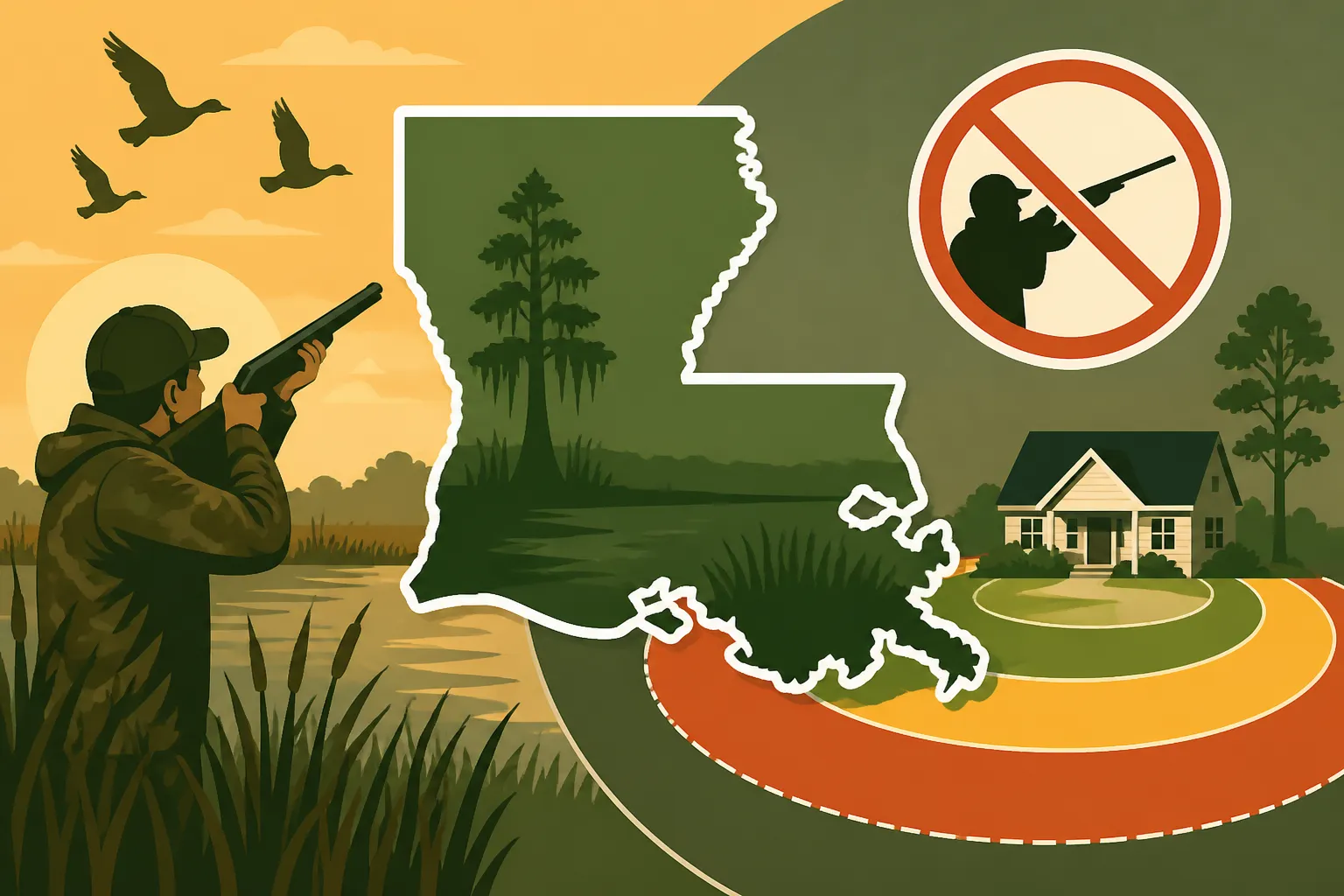
This is perhaps the most critical setback rule to understand, and it's the one that causes the most confusion. In Louisiana, it is generally unlawful to discharge a firearm within 150 yards of any occupied dwelling, house, or building without the express permission of the owner or lessee of that structure. That's a good football field and a half, roughly. Think about it: a stray bullet travels a long way, and nobody wants to be responsible for endangering someone's home or the people within it.
The important term here is "occupied." It doesn't mean someone has to be physically present at the exact moment your bullet leaves the barrel. If the structure is designed for human habitation and is typically used as such, it's considered "occupied." This means a hunting camp that's only used on weekends, a seasonal cabin, or even a trailer that serves as a residence, all fall under this protection. You can't just assume a place is empty because you don't see lights on or a car in the driveway. Always err on the side of caution. If you're hunting private land adjacent to another private landowner, make absolutely certain you know where their structures are and get permission if you're going to be anywhere near that 150-yard buffer. This also applies to hunting areas that border small towns or rural subdivisions, which are becoming more common as development expands.
Roads, Highways, and Public Areas
Beyond private dwellings, you also need to be acutely aware of public infrastructure and common gathering spots. While the 150-yard rule primarily applies to occupied dwellings, general safety principles and other specific regulations dictate that you should never discharge a firearm across a public road or highway, or within the right-of-way of such a road. This isn't just a Louisiana rule; it's a fundamental aspect of firearm safety across the country. A bullet traveling down a road can easily strike a vehicle or pedestrian, and the risk is simply too high.
Furthermore, you need to think about other public areas where people might congregate. This includes designated campgrounds on public lands, picnic areas, or even well-used walking trails within a wildlife management area (WMA). Even if there isn't a specific setback distance codified for every single one of these, the principle of safe and responsible firearm discharge means you should maintain a significant, safe distance and always have a clear backdrop. Common sense, combined with your hunter education training, should guide your decisions here. Always be sure of your target and what's beyond it.
What "Discharge" Means and Identifying "Occupied" Structures
Understanding the precise definitions in hunting regulations is paramount. The language used isn't arbitrary; it's there for a reason, often to prevent ambiguity that could lead to dangerous situations or legal loopholes. When we talk about "discharge" and "occupied dwelling," we're talking about very specific concepts under Louisiana law.
What Constitutes a "Discharge"
For many hunters, "discharging a firearm" immediately conjures images of taking a shot at a deer or a duck. And while that's certainly a discharge, the legal definition is much broader. In Louisiana, and in most places, any intentional firing of a gun counts as a discharge. This includes sighting in your rifle, target practice, or even simply firing a warning shot if you felt it necessary (though warning shots are generally discouraged and can create more problems than they solve).
The key takeaway here is that these setback rules apply whenever you intentionally fire your weapon, not just when you're aiming at game. This means that even if you're just plinking cans on your buddy's private land, you still need to be mindful of that 150-yard distance from any neighbor's occupied dwelling. It's not about the target; it's about the act of firing itself and the potential trajectory of the bullet. This is why when scouting Louisiana Public Land Before Season, it's crucial to identify not only game sign but also any nearby structures or roads.
Defining an "Occupied Dwelling"
As mentioned earlier, the term "occupied dwelling" is a bit more nuanced than you might initially think. It doesn't require someone to be home sipping coffee at the moment you fire. The legal interpretation focuses on the nature and purpose of the structure. If it's a building, house, camp, or even a mobile home intended for human habitation, and it's regularly or periodically used as such, it's considered "occupied" under the law.
Think of it this way: a deer camp might sit empty for months, but during hunting season, it's teeming with hunters. If you were hunting adjacent to that camp during the off-season, even when it was empty, discharging a firearm within 150 yards without permission would still be a violation because it's a dwelling designed to be occupied. This definition is critical because it removes the burden of proving actual occupancy at the exact moment of a shot, preventing arguments like "well, nobody was home." Always assume a dwelling is "occupied" if it looks like someone could be living or staying there, and get permission if you need to be within that 150-yard buffer. Tools like the LDWF Map Tool or onX Layers for Louisiana Land Status can be incredibly helpful in identifying property lines and potential structures.
| Structure Type | Setback Rule (General Louisiana Law) | Key Consideration |
|---|---|---|
| Occupied Dwelling/House | 150 yards (approx. 450 feet) | Must have owner/lessee permission within this distance. |
| Building (occupied) | 150 yards (approx. 450 feet) | Applies to camps, cabins, etc., even if temporarily empty. |
| Public Road/Highway | Never across or within right-of-way | Applies to all public roads; extreme danger. |
| Designated Public Area | Safe, common-sense distance | Campgrounds, picnic areas, trails. Use extreme caution. |
Practical Implications and Avoiding Violations
Navigating these rules in the real world means being proactive, aware, and responsible. It's not just about memorizing distances; it's about integrating these safety standards into your entire hunting strategy, from scouting to the shot itself.
Public vs. Private Land Differences
The core 150-yard rule for occupied dwellings generally applies across all land types in Louisiana. However, when you step onto public land, you'll often encounter additional regulations specific to that Wildlife Management Area (WMA) or National Forest. For instance, some WMAs might have areas designated as "safety zones" around parking lots, check stations, or primitive camping areas where firearms discharge is prohibited regardless of distance to a dwelling. Others might have specific rules regarding shooting from or across certain internal roads or trails.
It's your responsibility to check the specific regulations for every public land area you plan to hunt. The LDWF website is your best friend here. Always download or print the regulations for the specific WMA, National Wildlife Refuge, or National Forest you're visiting. Don't assume that what applies on Sherburne Wildlife Management Area automatically applies on Kisatchie National Forest. Different parcels of public land can have distinct rules designed for their unique layout and usage. For example, when considering Treestand Setups in Kisatchie National Forest, you'll need to know not only where the deer travel but also any adjacent private properties or public use areas.
Avoiding Accidental Violations Through Scouting and Tools
One of the best ways to ensure you're always in compliance is through diligent scouting and the smart use of modern mapping tools. Before you even step into the woods with your firearm, spend time researching the area.
- Map Study: Utilize aerial photography and topographical maps. Look for tell-tale signs of structures, power lines, roads, and trails. Pay close attention to property boundaries, especially when hunting land adjacent to private parcels. Tools like GoHunt or other popular mapping apps can be invaluable here. They allow you to overlay property ownership data, measure distances, and mark potential hazard zones. You can drop a pin on a neighbor's house and instantly see if your proposed stand location is outside that 150-yard buffer.
- On-the-Ground Scouting: Nothing beats boots on the ground. Walk the boundaries, identify potential shooting lanes, and physically locate any structures or roads that could be an issue. Use a rangefinder to verify distances if you're unsure. This also gives you a better feel for Wind and Thermals in Swamp Bottomland or any terrain features that might affect your shot.
- Communication: If you're hunting private land that borders other private property, a friendly conversation with your neighbors can go a long way. Let them know where you plan to hunt and discuss any concerns. Permission can often be obtained for close shots if mutual respect is established.
- Know Your Target and Beyond: This fundamental safety rule directly ties into setback regulations. Every time you shoulder your rifle or draw your bow, you must be 100% certain of your target and what lies beyond it. Is there a ridge to act as a natural backstop? Or is there an open field that leads directly to someone's home, or even a Hunting a Funnel Between Two Sloughs that could lead to unexpected traffic? Always have a safe backdrop for your shot.
Consequences of Violating Setback Rules
The Louisiana Department of Wildlife and Fisheries (LDWF) takes these rules seriously, and for good reason. Violating firearm discharge setback rules isn't just a minor infraction; it can be treated as a serious offense, especially if it leads to property damage or, tragically, injury to a person.
- Fines and Penalties: Expect substantial fines, which can quickly add up. These aren't just small tickets; they can be hundreds or even thousands of dollars, depending on the severity of the violation and whether any damage or injury occurred.
- Seizure of Equipment: Game wardens have the authority to seize firearms and other hunting equipment used in the commission of a violation. Imagine losing your favorite hunting rifle or bow!
- Loss of Hunting Privileges: This is often the most painful consequence for a dedicated hunter. You could face a suspension of your hunting license, meaning you'd be barred from hunting in Louisiana for a set period, potentially even for life in egregious cases. This extends beyond just deer hunting; it affects all types of Squirrel and Small Game Hunting in Louisiana to Waterfowl Hunting the Louisiana Coastal Marsh.
- Criminal Charges: In the most severe cases, particularly if injury or significant property damage occurs, you could face criminal charges, including reckless endangerment or negligent discharge of a firearm. These can carry jail time and a permanent criminal record, which has far-reaching implications beyond just hunting.
- Civil Liability: Even if you avoid criminal charges, you could still be held civilly liable for any damages caused. This means a lawsuit could be filed against you for medical expenses, property repairs, or other financial losses incurred by the affected parties.
The bottom line is, these rules are in place for safety, and the penalties reflect the seriousness of potential harm. A moment of carelessness or ignorance is simply not worth the risk. It's a small effort to understand and adhere to these rules compared to the immense cost of violating them. Familiarize yourself with all the Louisiana Wildlife Violation Penalties to truly grasp the potential ramifications.
Disclaimer
The information provided in this guide is for general informational purposes only and does not constitute legal advice. Hunting regulations can change, and interpretations may vary. It is always the responsibility of the individual hunter to consult the most current Louisiana Department of Wildlife and Fisheries regulations and any relevant local ordinances before engaging in any hunting activities. Always prioritize safety and legal compliance.