Shot Placement on a Feral Hog
Effective feral hog shot placement in Louisiana prevents tracking lost animals by explaining heart, lung, and brain target locations.
Close the distance.
Archery, muzzleloader, and firearm techniques — calling, stand placement, still-hunting, spot-and-stalk, and the weapon rules that change at the state line.
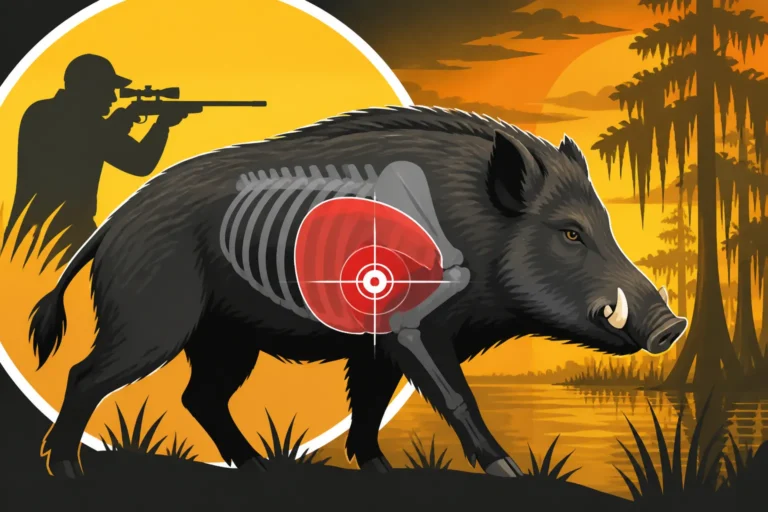
Effective feral hog shot placement in Louisiana prevents tracking lost animals by explaining heart, lung, and brain target locations.
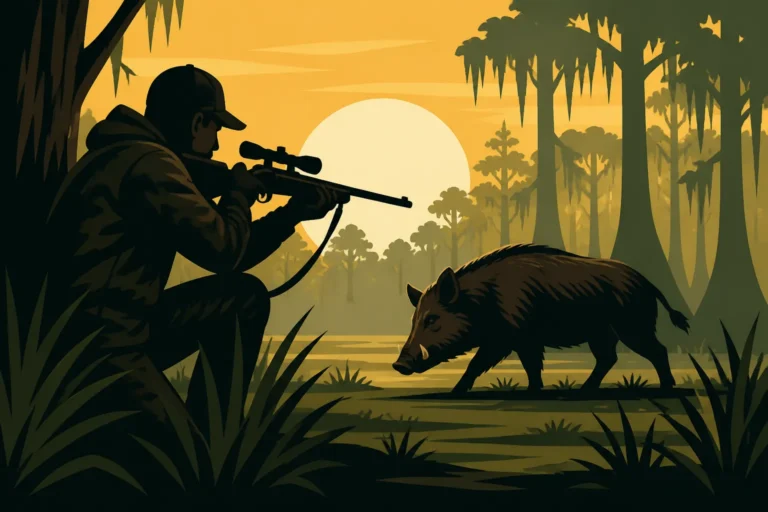
Louisiana feral hog hunting strategies without bait or dogs require scent control, woodsmanship, and knowledge of animal behavior.
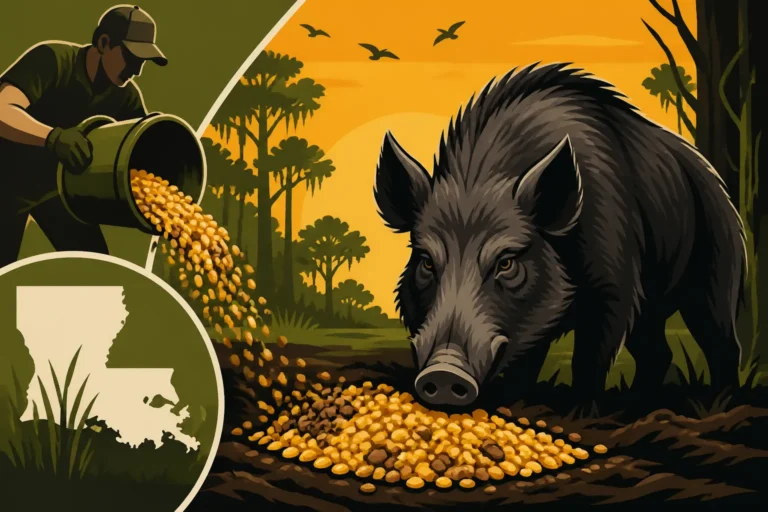
Building a feral hog bait site and freshening it with fermented corn helps manage destructive pests across Louisiana agricultural lands.
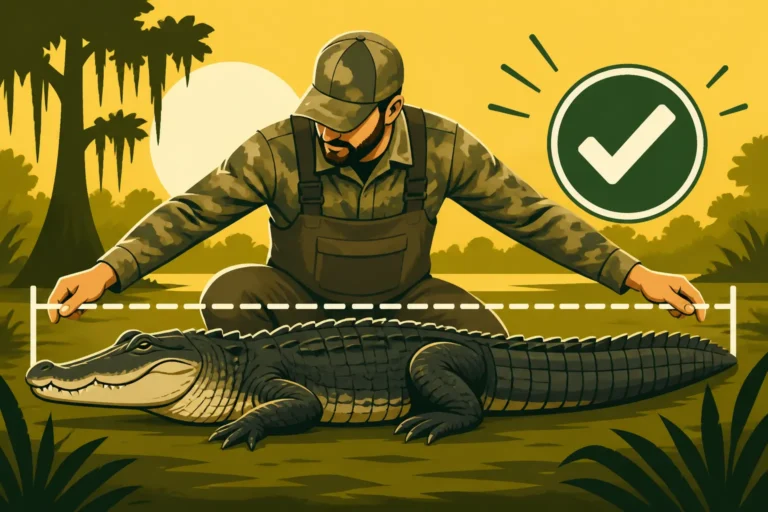
Louisiana alligator hunting rules require a forty-eight-inch minimum length, explained through visual cues and estimation methods.
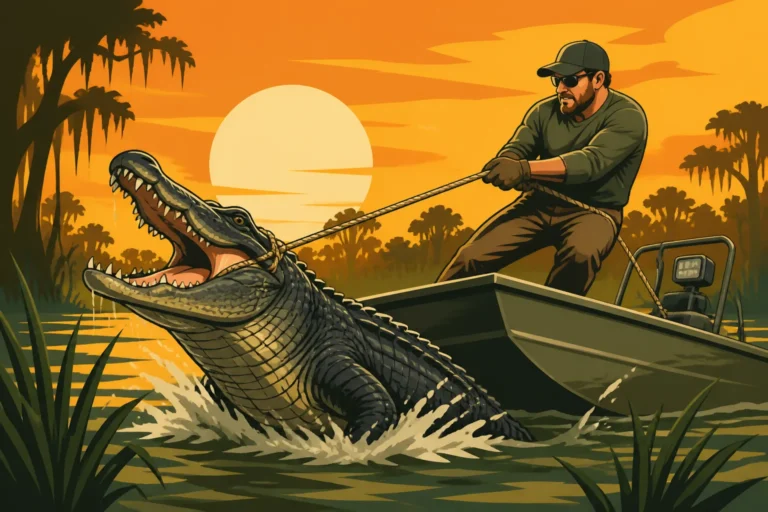
Landing an alligator from a small boat requires specific safety gear, boat checks, and techniques for managing a hooked gator.
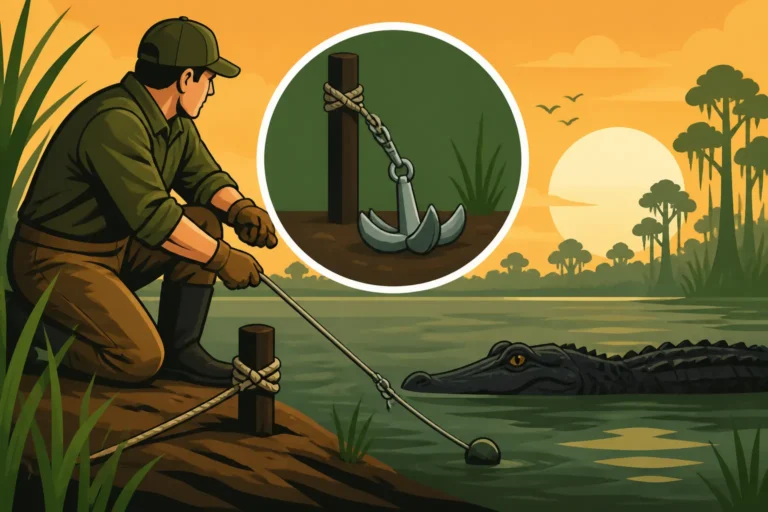
Properly anchoring alligator lines in Louisiana requires following state regulations to protect public safety and private property.
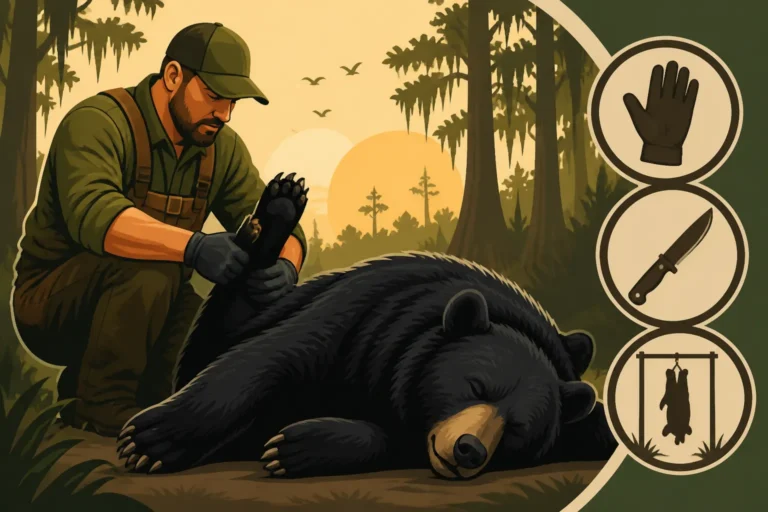
Proper field dressing and reporting procedures for a Louisiana black bear harvest ensure meat preservation and legal compliance.
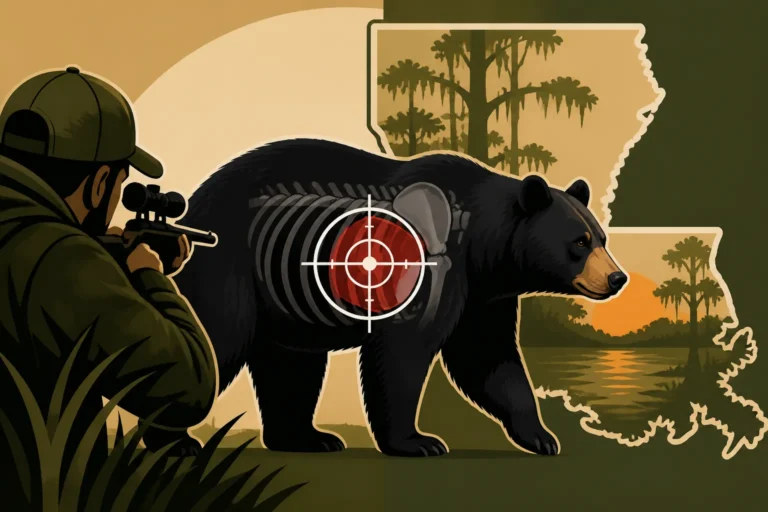
Louisiana black bear shot placement advice explains how to target the heart and lungs behind the shoulder for a humane harvest.
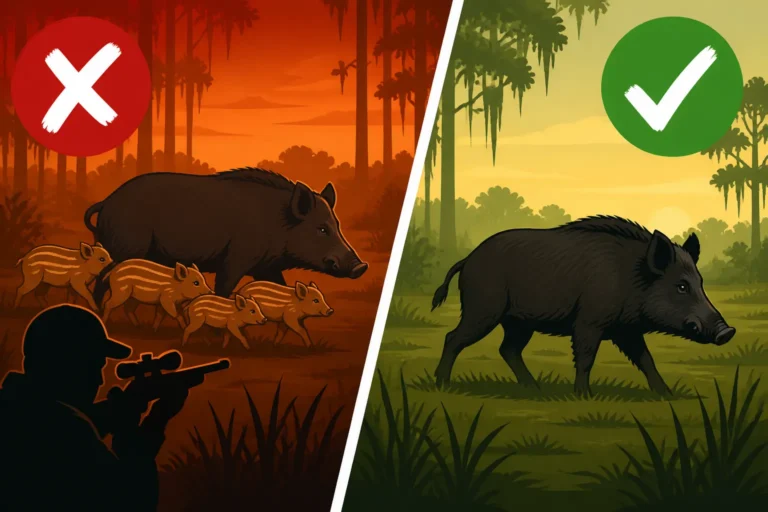
Louisiana bear hunting regulations prohibit harvesting cubs under seventy-five pounds or sows accompanied by dependent young.
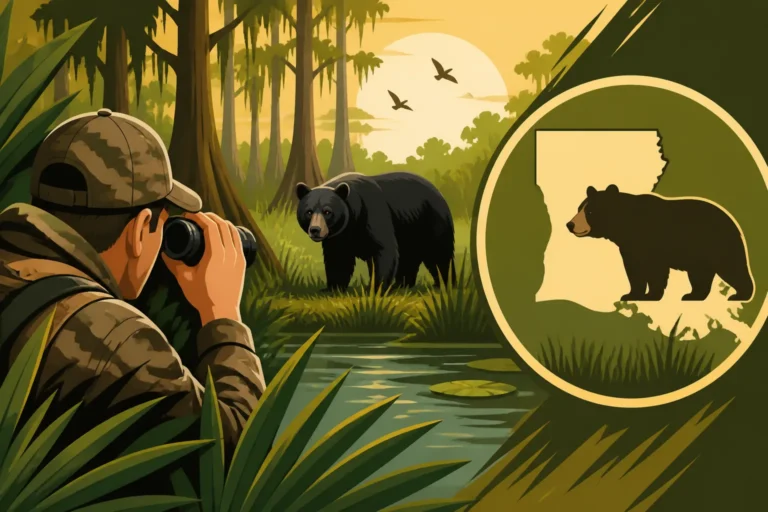
Louisiana black bear spot-and-stalk tactics explain how to hunt elusive bears in bottomland swamps and the Tensas River Basin.