Hunting Deer After a Cold Front
Louisiana deer hunting strategies explaining how cold fronts increase daytime energy, feeding patterns, and rutting activity.
Close the distance.
Archery, muzzleloader, and firearm techniques — calling, stand placement, still-hunting, spot-and-stalk, and the weapon rules that change at the state line.
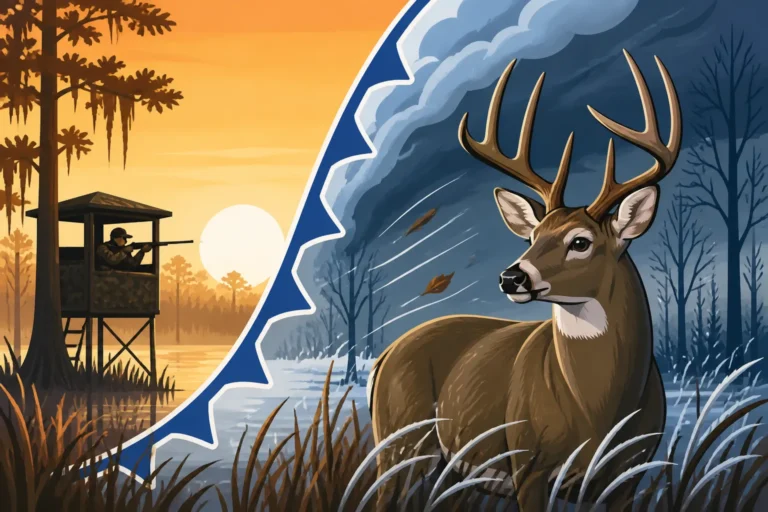
Louisiana deer hunting strategies explaining how cold fronts increase daytime energy, feeding patterns, and rutting activity.
Louisiana deer hunters learn strategies for managing oppressive heat and humidity while locating bedding areas and water sources.
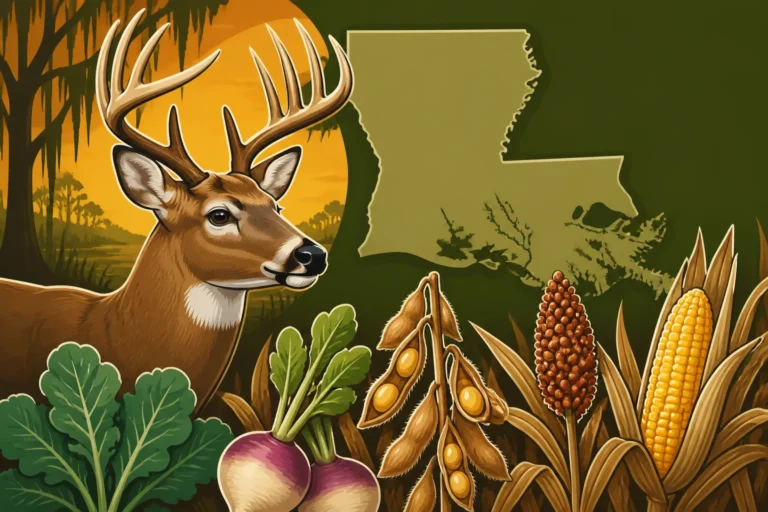
Late-season Louisiana whitetails seek high-calorie food sources and survive winter weather after the exhausting post-rut recovery period.
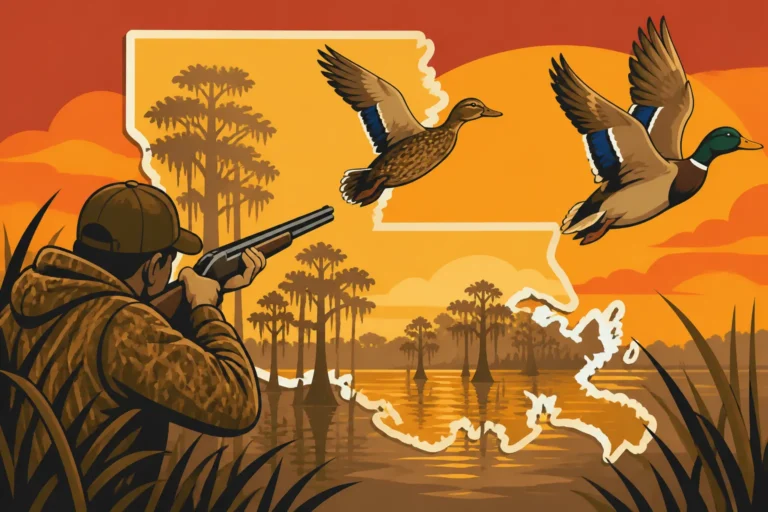
Louisiana deer areas five, six, and nine provide extended either-sex hunting windows for continuous seasonal harvest opportunities.
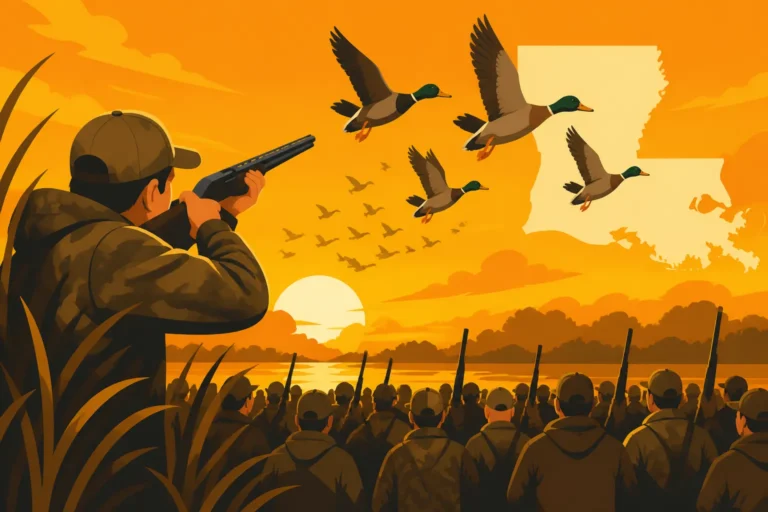
Louisiana deer gun season draws massive crowds because firearms offer broader accessibility and lower barriers than archery.
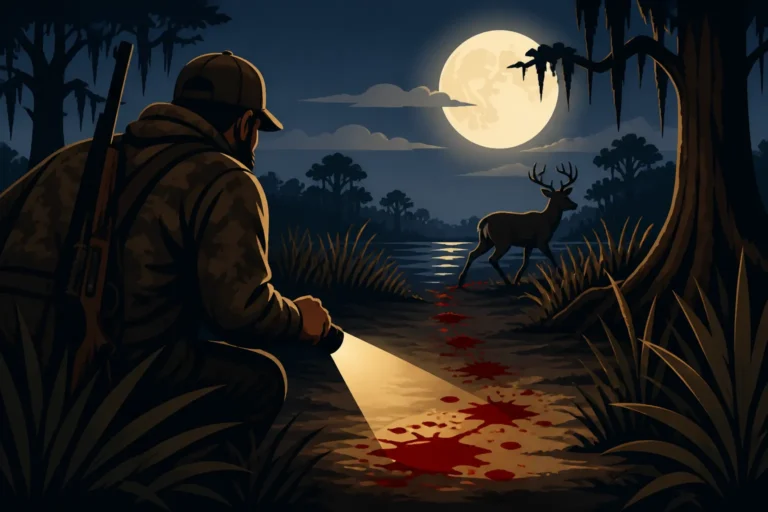
Night blood trailing in Louisiana swamps requires powerful headlamps, bright handheld spotlights, and specific tracking techniques.
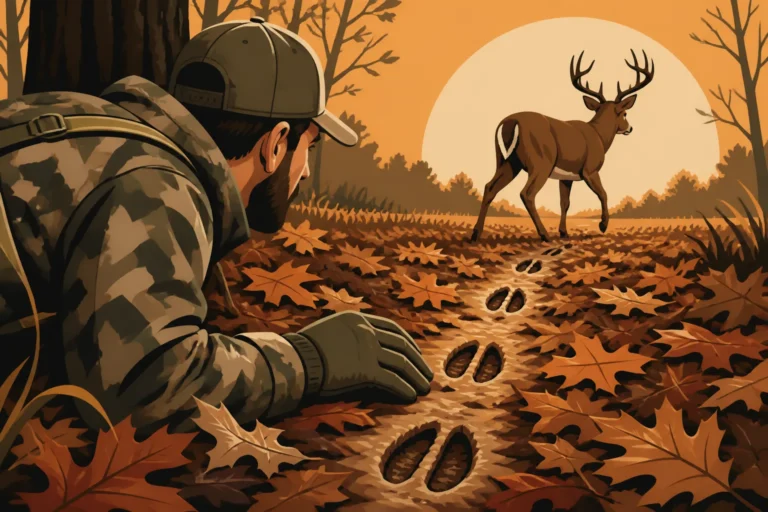
Tracking a wounded deer through Louisiana leaf litter requires recognizing subtle forest floor disturbances and avoiding rushed tracking errors.
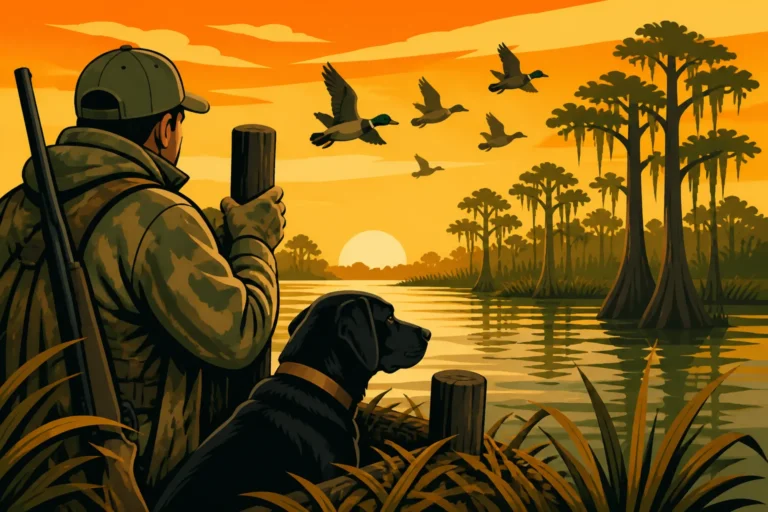
Louisiana swamp slough deer drives explain how bucks navigate shallow waterways and use muddy banks for escape routes.
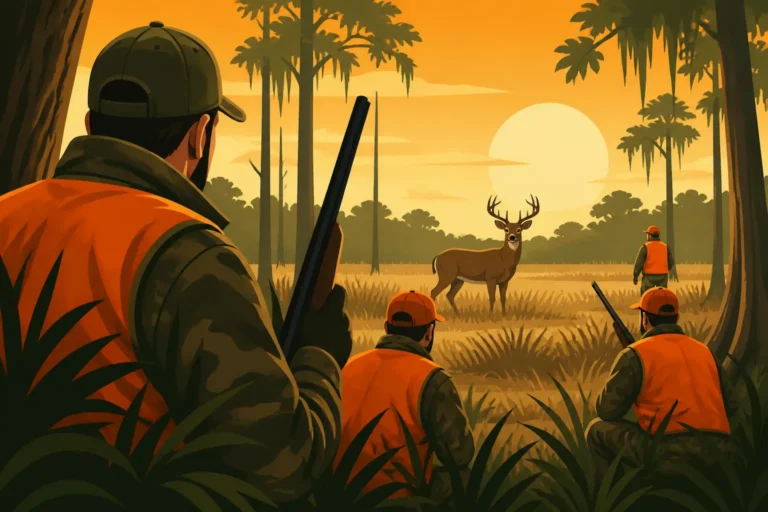
Small deer drives with three or four hunters require strategic planning, precise scouting, and wind management to intercept whitetails.
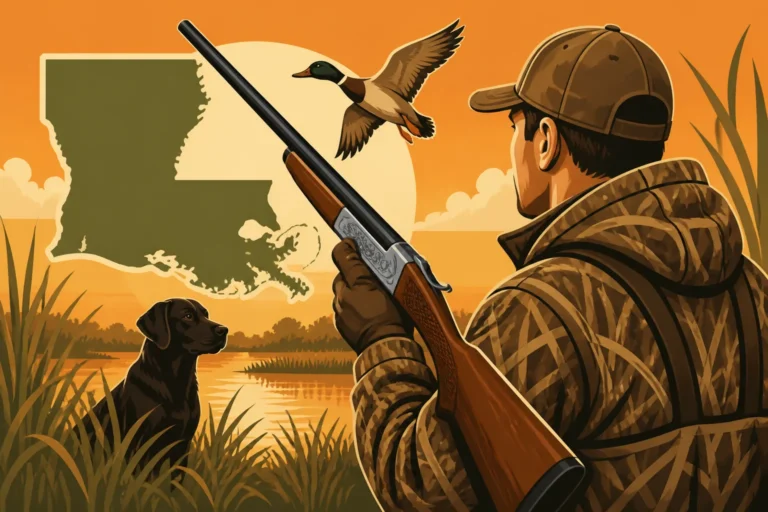
Hunting with single-shot breechloaders requires strict patience, precise shot placement, and careful preparation during primitive firearms seasons.