How Close a Louisiana Mentor Must Stay
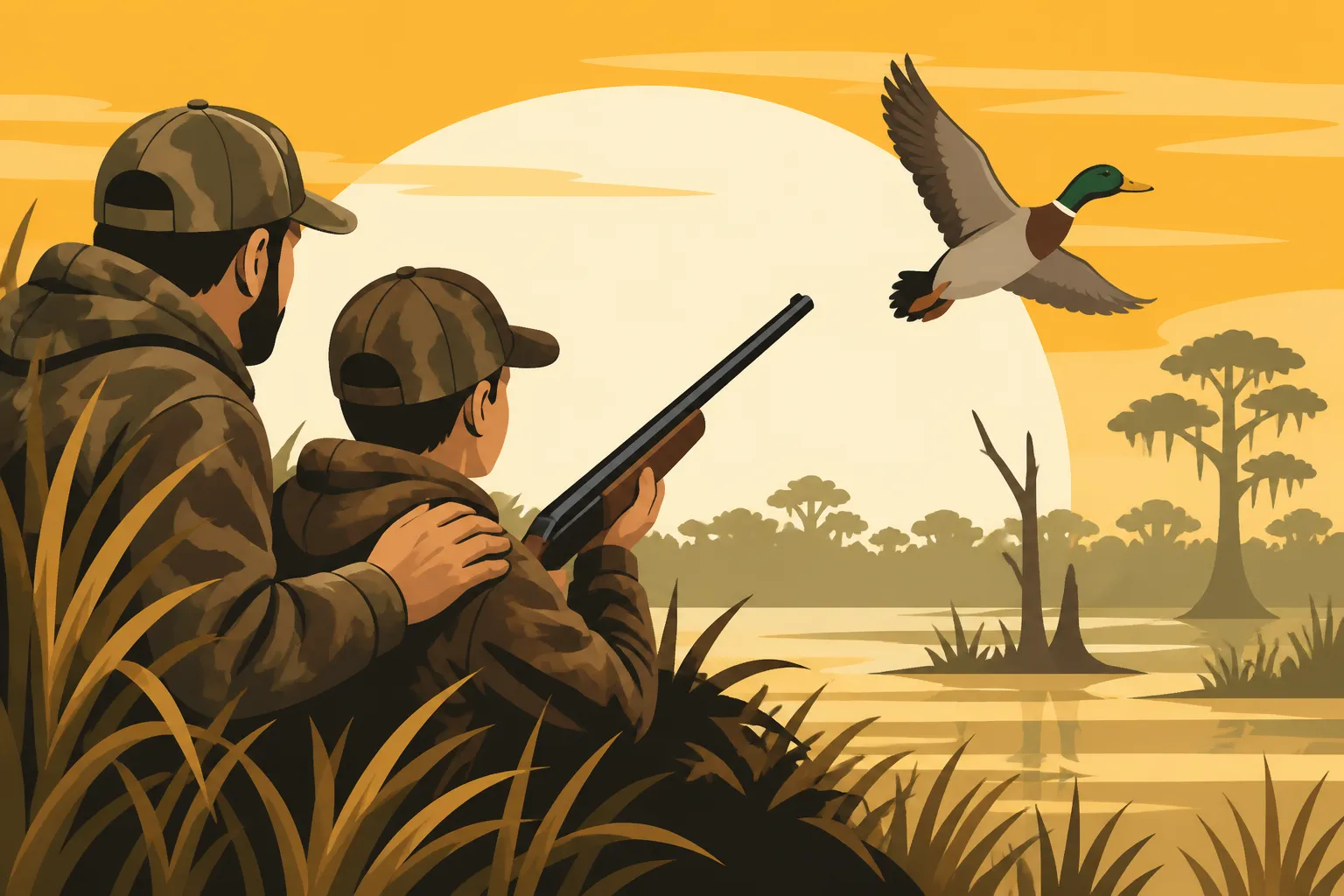
One of the most rewarding experiences in Louisiana hunting is passing on the tradition to the next generation. There’s nothing quite like seeing the excitement in a young hunter's eyes, or watching them learn the rhythms of our beautiful swamps and piney woods. But for those of us bringing a new, often young, hunter into the fold through the apprentice hunter program, one question always looms large: "How close do I really need to be?" It's a common point of confusion, and frankly, a bit of anxiety for mentors who want to do everything by the book while still giving their apprentice a meaningful experience. This guide will help you understand the precise requirements and practical implications of mentoring an apprentice hunter in Louisiana, ensuring both safety and compliance.
Understanding Louisiana's Apprentice Hunter Program
Louisiana's Apprentice Hunter Program is a fantastic pathway designed to introduce new hunters, regardless of age, to the sport before they complete a full hunter education course. It allows individuals to hunt under the direct supervision of a licensed mentor, essentially acting as an on-the-job training program. This is a crucial first step for many, bridging the gap between interest and full certification. For anyone considering taking this route, it's worth reviewing the full details of the Louisiana Hunter Education Requirements to understand the eventual path to an unsupervised license, and also the specific Louisiana Apprentice Hunter License Rules to make sure all initial paperwork is in order.
The "Direct Supervision" Mandate
The Louisiana Department of Wildlife and Fisheries (LDWF) is very clear: an apprentice hunter must be under the "direct supervision" of a licensed hunter. This isn't just a suggestion; it's a legal requirement designed to ensure safety and ethical hunting practices. But what does "direct supervision" actually mean when you're out in the cypress brakes or stalking a food plot?
Legally speaking, direct supervision means the licensed hunter must be within normal voice communication and in immediate proximity to the apprentice. Think of it this way: if your apprentice runs into a situation where they need immediate guidance – whether it's identifying a legal deer, making a safe shot, or handling a firearm malfunction – you need to be right there. You can’t be a quarter-mile away, hoping a shout carries through the thick woods or waiting for a text message. It means being able to see them, hear them, and physically get to them without delay to offer assistance or intervention. This proximity requirement is about more than just checking a box; it's about active, moment-to-moment mentorship.
Age and Licensing Nuances for Mentors and Apprentices
While the apprentice program is flexible, there are still some age requirements for both the mentor and the apprentice that are important to remember. To be a mentor in Louisiana, you generally need to be at least 18 years old and possess a valid Louisiana hunting license for the game being hunted. This ensures the mentor has the legal standing and presumed experience to guide another hunter. For those wanting to get their own full license, it's beneficial to understand all the Louisiana Resident Hunting License Options available.
For the apprentice, there's no minimum age to participate in the apprentice program, but there are age considerations for when they can hunt unsupervised. If an apprentice hunter is under 16 years of age, they must be accompanied by a licensed hunter who is 18 years of age or older, regardless of whether they have an apprentice license or have completed hunter education. This means a young hunter who has completed hunter education still needs an adult with them until they hit 16. Once a hunter is 16 years old and has successfully completed a hunter education course, they are then eligible to hunt without direct supervision. Understanding the Minimum Age for Unsupervised Louisiana Hunting is key for planning that transition from apprentice to independent hunter. The apprentice license itself can be utilized by any person, regardless of age, who has not yet completed a hunter education course.
Why "How Close" Matters: Safety and Responsibility
The proximity requirement for mentors isn't just about adhering to a rule; it's fundamentally about safety and instilling responsible hunting habits from day one. Hunting, especially with firearms, carries inherent risks, and teaching proper technique and ethical decision-making is paramount.
Visual and Audible Contact in the Field
Maintaining visual and audible contact means you need to be able to see your apprentice clearly and speak to them in a normal voice without yelling, even if they're a little hard of hearing. In the dense bottomland hardwoods of the Atchafalaya Basin, or the thick palmetto patches of the Florida Parishes, this can be more challenging than it sounds. Heavy cover, changes in elevation, or even the rustle of leaves can quickly break that audible link.
For instance, if you're hunting in a thick patch of young pine regrowth, you might only be able to see 20-30 yards. In such a scenario, "immediate proximity" might mean being within 10-15 yards. You're essentially mirroring their movements, providing real-time feedback. While two-way radios or walkie-talkies can be helpful communication tools, they are supplemental; they don't replace the visual and immediate physical presence required for direct supervision. Your goal is to be close enough to physically react and intervene if an unsafe situation arises or if a critical decision needs to be made.
Immediate Intervention and Instruction
The true test of "how close" is your ability to intervene instantly. Imagine your apprentice is about to take a shot at what they believe is a legal deer, but you spot another hunter behind it, or realize it’s a button buck they've mistaken for a doe. You need to be able to say, "Hold on!" and guide them through the situation without delay. This goes beyond just safety; it's about active teaching.
You’re there to point out proper Shot Placement on a Louisiana Black Bear, for instance, even if you’re deer hunting, the principles of shot anatomy are the same. Or, if they're struggling to identify a target, you might be helping them quickly learn to differentiate between a legal animal and one that isn't, like when you're teaching them Judging a Legal Bear Versus a Cub if you're in an area where bears might be present. This immediate instruction builds their knowledge, reinforces safe practices, and helps them develop the critical thinking skills needed for ethical hunting. The mentor is an active participant in every moment of the hunt, not just an observer.
Practical Scenarios: Applying the Proximity Rule
Understanding the theory is one thing, but applying it in the unpredictable environment of a Louisiana hunt can be another. Let's look at some common hunting scenarios and how to ensure you're maintaining that crucial proximity. The key is to always be thinking about how quickly you could physically intervene.
Hunting from a Ground Blind or Treestand
This is often one of the easiest scenarios for maintaining direct supervision. When you're both sitting in a two-person ground blind or a spacious two-man ladder stand, you're naturally within arm's reach. You can whisper instructions, point out game, and physically guide the apprentice's movements or even help steady their firearm. If you're Using a Ground Blind on Louisiana Public Land, make sure it's large enough to comfortably accommodate both of you and your gear without feeling cramped or compromising safety.
The challenge comes if the blind is too small or if you’re in separate stands. If you’re in two separate treestands, even if they're relatively close, you need to ensure you can still maintain that critical visual and audible contact and be able to get to them immediately. This typically means stands should be no more than 10-20 yards apart, and ideally, you should be able to see your apprentice's hands and face clearly. A lot of hunters use a "buddy system" style treestand, like those often seen in Treestand Setups in Kisatchie National Forest, which is perfect for this. The goal isn't just to see them, but to be able to quickly grab a barrel if needed, or point out a safe shooting lane.
Still-Hunting and Stalking with an Apprentice
Still-hunting or stalking through the woods requires a different approach to proximity. You're moving, so your "bubble" of proximity moves with you. This means the apprentice should be right next to you, perhaps a step or two behind, mimicking your movements. You're communicating silently through gestures, whispers, and shared observation.
When Still-Hunting Kisatchie Hills Wilderness, for example, where the terrain can be uneven and the cover thick, you might want the apprentice literally right at your elbow. This allows you to stop them instantly if they make a sudden movement, step on a noisy branch, or misidentify a sound. You're pointing out tracks, rubs, and scrapes, teaching them to read the woods in real-time. This close proximity ensures that if a deer pops up unexpectedly, you can immediately coach them on the shot, confirm the target, and ensure a safe backdrop. The goal is a seamless, shared hunting experience where the mentor is an active part of every decision.
Common Misconceptions and What to Avoid
Despite the clear guidelines, many mentors, often with the best intentions, can fall into traps that put them out of compliance with Louisiana's direct supervision rule. Avoiding these common misconceptions is vital for the safety of your apprentice and to ensure you’re hunting legally.
The "I Can See Them" Trap
This is perhaps the most frequent misinterpretation of the direct supervision rule. Many mentors believe that as long as they can physically see their apprentice, they are in compliance. While visual contact is certainly part of it, it's not the entirety of the requirement. For instance, if you're sitting on one side of a large clear-cut or food plot, and your apprentice is 100 yards away on the other side, you might be able to see them. But could you physically sprint across that field and intervene immediately if they suddenly swung their rifle at an unsafe target, or struggled to identify a legal animal? Probably not.
The distance at which "seeing them" becomes insufficient varies greatly with terrain. In an open field, 50 yards might be too far. In dense swamp, 20 yards might be too far. The rule is not about the line of sight, but about the line of immediate intervention. That's the critical difference. This is where planning your hunting spots and understanding your chosen area, perhaps using mapping tools like GoHunt, becomes really important. A mentor using such tools can visualize terrain features and plan stand placements or stalking routes to ensure they can maintain that required proximity and rapid response capability, rather than just relying on a long-distance view.
Leaving an Apprentice Unattended (Even Briefly)
Another critical mistake is leaving an apprentice unattended, even for a short period. "I just ran to the truck to grab a snack" or "I was only 5 minutes away checking tracks" might seem innocuous, but it's a direct violation of the direct supervision rule. If your apprentice is alone in a stand, blind, or anywhere else in the field with a loaded weapon, they are not under direct supervision.
This extends to moments like walking to and from the hunting location. The mentor needs to be with the apprentice from the moment the hunting activity begins until it concludes. This isn't just a legal formality; it's a safety measure. An unattended apprentice, no matter how well-trained, can encounter unexpected situations, and without a mentor immediately present, the risk of an accident or an unethical decision increases dramatically. The purpose of the apprentice program is constant, active guidance.
Here's a quick summary table for clarity:
| Aspect | Mentor's Responsibility | Apprentice's Status | Proximity Guideline | Why It Matters |
|---|---|---|---|---|
| Legal Status | Must be 18+ and possess valid LA hunting license for species. | No minimum age (license type), but under 16 always needs 18+ mentor. | Mentor must be within immediate physical intervention distance. | Ensures compliance with LDWF regulations. |
| Supervision Type | Direct supervision: Visual + Audible contact. | Actively learning, cannot hunt independently. | Close enough to whisper, physically assist, or intervene instantly. | Prioritizes safety and real-time instruction. |
| Communication | Constant, active guidance (verbal and non-verbal). | Responds to mentor, observes, asks questions. | Normal voice communication, no yelling required. | Facilitates teaching and crisis management. |
| Intervention Ability | Must be able to physically stop or correct apprentice immediately. | Relies on mentor for safety and ethical decisions. | Within arm's reach in dense cover, or few steps in open. | Prevents accidents, enforces ethical conduct. |
| Unattended Time | Never leave apprentice alone with a loaded firearm/bow. | Not permitted to hunt or be left alone with weapon. | Mentor must be present at all times during hunting activity. | Avoids dangerous situations and legal violations. |
| Learning Environment | Teaches safe handling, shot placement, species ID, ethics. | Absorbs knowledge, develops skills under guidance. | Proximity enhances active teaching and immediate feedback. | Fosters responsible, knowledgeable hunters. |
Disclaimer
Please remember that hunting regulations can change, and interpretations may vary. This guide provides general information based on current Louisiana Department of Wildlife and Fisheries (LDWF) rules. Always consult the official LDWF hunting regulations pamphlet or their website for the most up-to-date and specific legal requirements before heading into the field. Your responsibility as a hunter and mentor is to know and follow all applicable laws.