Legal Primitive Firearms Under Louisiana Rules
Trying to figure out exactly what kind of firearm counts as "primitive" during Louisiana's special deer seasons can feel like navigating a cypress swamp at night without a flashlight. The rules aren't always crystal clear, and misinterpreting them could easily land you in a bind. This guide is here to untangle the confusion, helping you understand precisely which firearms are legally allowed so you can hunt with confidence and stay on the right side of the law.
Understanding Louisiana's Primitive Firearms Season
Louisiana offers hunters a unique opportunity with its primitive firearms season, a period designed to extend deer hunting opportunities beyond the traditional archery and modern firearm seasons. But what exactly does "primitive" mean in the eyes of the Louisiana Department of Wildlife and Fisheries (LDWF)? It's a question many hunters grapple with, especially as modern technology blurs the lines of what we traditionally consider a "primitive" weapon.
The Philosophy of Primitive Seasons
The core idea behind a primitive firearms season is often rooted in extending hunting opportunities, providing a longer window for sportsmen to pursue deer. These seasons can offer a different kind of challenge, pushing hunters to reconnect with more traditional methods. For some, it’s a chance to use a unique firearm they might not otherwise hunt with, like a classic muzzleloader or a large-bore, single-shot rifle. It creates a space for a slower, perhaps more deliberate, hunting experience. Many hunters appreciate the chance to be out in the woods during times when other seasons might be closed, extending their time afield. It's a nod to history and a practical tool for game management.
When and Where You Can Use Primitive Firearms
The primitive firearms season dates vary by Louisiana's specific deer areas. You'll often find these seasons kicking off after the archery opener but before the full modern firearms season, or sometimes during a period when modern firearms might be restricted. For example, some areas might have a lengthy Primitive Firearms Deer Hunting in Louisiana period, allowing for weeks of additional hunting. It's crucial to consult the latest LDWF hunting regulations pamphlet or their website for the exact dates pertaining to your chosen Louisiana's Ten Deer Hunting Areas Explained. Beyond the dedicated primitive season, some primitive firearms may also be legal during the general firearms season, but always double-check the specifics. Wildlife Management Areas (WMAs) often have their own specific rules, which can sometimes be more restrictive than statewide regulations. For instance, a particular WMA might only allow muzzleloaders and prohibit modern single-shot breech-loaders even if they are considered "primitive" statewide.
Why the Rules Can Feel Confusing
Let's be honest, the terminology itself can be a bit of a head-scratcher. When you hear "primitive," your mind might jump straight to black powder, patched round balls, and flintlocks. And while those certainly fit the bill, Louisiana's definition also includes certain modern firearms, provided they meet specific criteria. This blend of historical and contemporary can lead to a lot of confusion. Is a modern single-shot .45-70 rifle "primitive" just because it's a single shot and fires a historic cartridge? What about optics? Are scopes allowed? These are common questions that stem from a definition that, while clear once you break it down, doesn't always align with a hunter's initial expectations of what "primitive" truly means. It's why relying on clear, official guidance is so important, rather than just assumptions.
Defining Legal Primitive Firearms for Deer Hunting
Louisiana's definition of legal primitive firearms for deer hunting is quite specific and often more inclusive than hunters from other states might expect. It’s not just about black powder anymore; it includes a variety of firearm types, each with its own set of parameters. Understanding these nuances is key to selecting the right gear for the season.
Muzzleloading Rifles: The .44 Caliber and Up Rule
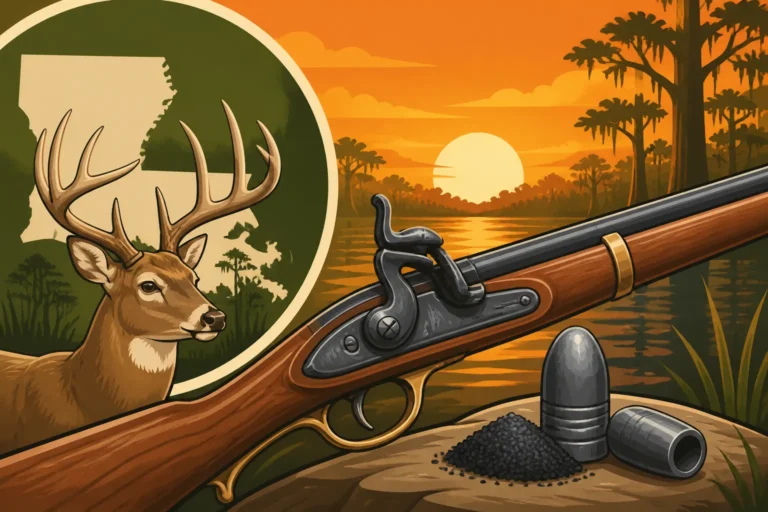
When the LDWF regulations state ".44 caliber or larger muzzleloading rifles," it's fairly straightforward. This category embraces the traditional black powder firearms that many associate with primitive hunting. This includes classic cap-and-ball rifles, flintlock rifles, and even many modern inline muzzleloaders, as long as they are .44 caliber or larger.
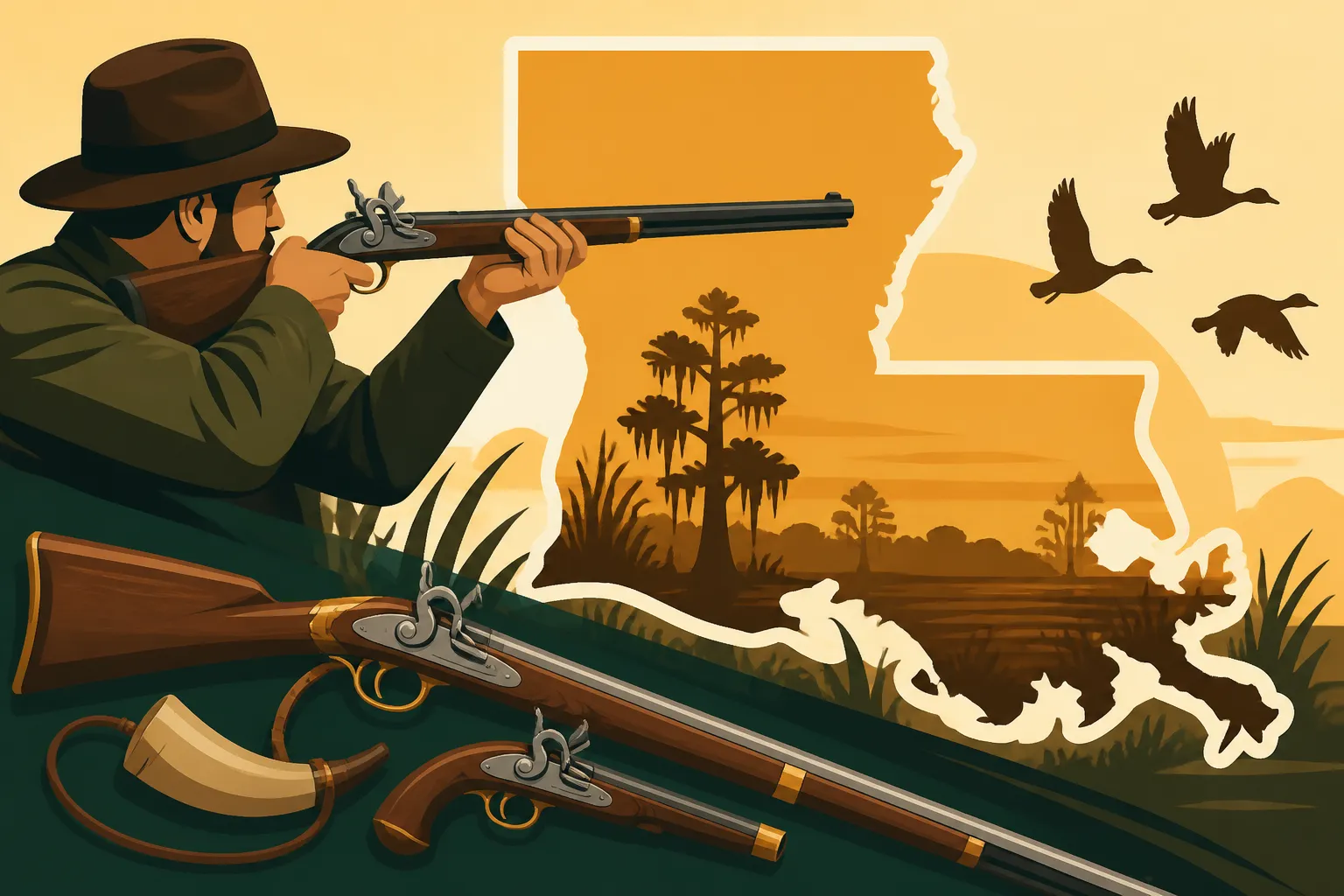
- Traditional Muzzleloaders: Think of the classic long rifles, loaded from the muzzle with black powder, a patch, and a round ball or conical bullet. These are the epitome of primitive hunting, requiring careful loading and cleaning, and offering a deeply satisfying hunting experience. Whether it's a replica Hawken or a classic Kentucky rifle, as long as it’s .44 caliber or larger, it's good to go. The challenge with these can be shot placement and follow-up shots, truly testing a hunter's skill and patience.
- Modern Inline Muzzleloaders: Many hunters gravitate towards modern inline muzzleloaders because they offer improved accuracy, reliability, and ease of cleaning compared to their traditional counterparts. As long as your inline is .44 caliber or larger, it qualifies. These often use 209 primers for ignition and can propel bullets at impressive velocities, extending ethical hunting ranges. While they are a far cry from a flintlock, the LDWF includes them in this category, recognizing their muzzleloading nature. You might be able to put a modern scope on it, too, which we'll discuss later.
- Powder Considerations: For all muzzleloaders, whether traditional or inline, you'll be using black powder or one of its modern substitutes like Pyrodex or Triple Seven. These powders create the characteristic "smoke pole" experience and are central to the muzzleloading tradition. Always ensure you are using the correct type and amount of powder for your specific firearm and projectile.
Breech-Loading Rifles: Pre-1900 & Replicas
This is where the Louisiana definition really opens up beyond strict "primitive" interpretation. The regulations permit "single-shot, breech-loading rifles, .38 caliber or larger, that are manufactured prior to 1900 or are a replica of a firearm manufactured prior to 1900." This specific wording allows for some iconic firearms from the late 19th century or faithful reproductions of them.
- Historic Firepower: Imagine hunting with a rifle similar to what frontiersmen or buffalo hunters might have carried. This category includes firearms like the famous Trapdoor Springfield in .45-70 Government, or Sharps rifles chambered in cartridges like .45-70, .45-90, or .50-90 Sharps. These were powerful, single-shot workhorses of their era. Owning an original rifle from that period is a piece of history, but often comes with collector value and specific care requirements.
- Modern Replicas: Thankfully, if you don't have a family heirloom from the 1800s, many companies produce high-quality replicas of these historical firearms. Brands like Davide Pedersoli & Co. (Pedersoli), Cimarron Firearms, and Uberti manufacture beautiful and functional reproductions of classic single-shot rifles. These replicas allow hunters to experience the authentic feel and performance of these historic designs without the prohibitive cost or fragility of an original. The Minimum Caliber for a Primitive Firearms Rifle in this category is .38, so cartridges like .38-55 Winchester also fit the bill, offering a robust option for deer.
- The Single-Shot Requirement: The key here is "single-shot, breech-loading." This means you load one cartridge at a time directly into the chamber. You won't find lever-action or bolt-action rifles (unless they are specifically single-shot and meet the pre-1900 criteria, which is exceedingly rare for non-replicas) fitting this category.
Modern Breech-Loaders with Exposed Hammers
Perhaps the most surprising, and often misunderstood, inclusion in Louisiana's primitive firearms definition is the "single-shot, breech-loading rifles, .35 caliber or larger, with an exposed hammer." This rule is a game-changer for many hunters, as it allows a wide array of modern, readily available firearms into the primitive season.
- The Exposed Hammer: This specific feature is what differentiates many modern single-shot rifles. Think of break-action rifles from manufacturers like CVA (Connecticut Valley Arms) or Traditions. Many of these have an external hammer that you manually cock before firing. While a Ruger No. 1 is a single-shot, it typically features an internal hammer, not an exposed one, meaning it wouldn't qualify under this specific part of the rule. However, many contemporary single-shot models are designed with exposed hammers specifically to meet such regulations.
- Diverse Caliber Options: This category opens the door to a host of popular and effective deer cartridges. Anything from .35 Remington, .35 Whelen, .350 Legend, to the ever-popular .45-70 Government, .444 Marlin, or even pistol cartridges like .45 Colt (in a rifle) or .44 Magnum (in a rifle) can be used, provided the rifle is single-shot and has an exposed hammer. This gives hunters immense flexibility in choosing a powerful, accurate, and often more affordable firearm for the primitive season. For example, a hunter using a CVA Hunter in .45-70 is fully legal and well-equipped for any deer in Louisiana.
- Ease of Use: These modern single-shot, exposed-hammer rifles combine the simplicity of a single-shot action with the convenience and accuracy of modern cartridges and construction. They are often lighter, more compact, and easier to clean than muzzleloaders or even replica black powder cartridge rifles, making them a popular choice for many hunters. When preparing for your hunt, an app like GoHunt can be incredibly useful for quickly checking if your specific WMA or deer area has any additional restrictions on these types of firearms, ensuring you're always compliant.
Shotguns and Their Role in Primitive Season
While rifles often dominate the discussion around primitive firearms season, shotguns also have a specific, albeit limited, role. Louisiana's regulations clearly define which shotguns qualify, emphasizing power and appropriate ammunition for deer hunting.
The 10 Gauge or Larger Requirement
For a shotgun to be considered a primitive firearm in Louisiana, it must be a "shotgun, 10 gauge or larger." This stipulation is quite precise: anything smaller than a 10 gauge, such as the ubiquitous 12 gauge, does not qualify as a primitive firearm under this specific rule. This means your standard 12-gauge slug gun, even a single-shot one, won't cut it for the primitive firearms season if it's not also a muzzleloader or a pre-1900 breechloader.
- Why 10 Gauge? The focus on 10 gauge and larger hints at a historical context of using powerful, large-bore shotguns for big game, often from a time when rifled slug barrels were less common or effective. These larger gauges deliver a substantial punch, capable of ethically taking deer at appropriate ranges. While less common today, 10-gauge shotguns still have a dedicated following, particularly for waterfowl hunting where their payload capacity shines. For Waterfowl Hunting the Louisiana Coastal Marsh, a 10 gauge is a different beast entirely, but for deer, it’s about that raw stopping power.
- Availability: Finding a 10-gauge shotgun designed for slug hunting can be a bit more challenging than finding a 12-gauge. They are not as widely produced or sold, and ammunition can be less diverse and more expensive. However, manufacturers like Browning, Ithaca, and Remington have made 10-gauge shotguns over the years, and they can sometimes be found on the used market.
Ammunition for Primitive Shotguns
Crucially, any 10-gauge or larger shotgun used during the primitive firearms season must be "loaded with slugs or buckshot." This is a critical safety and ethical consideration, ensuring that hunters are using ammunition appropriate for deer.
- Slugs: Shotgun slugs are single, heavy projectiles designed for large game. When fired from a 10-gauge, they deliver significant energy, making them effective for deer hunting in dense cover where rifle ranges are limited. Hunters should practice extensively with their chosen slug and shotgun combination to ensure accuracy.
- Buckshot: Buckshot consists of multiple large lead pellets. While effective at closer ranges, its utility for deer hunting is often debated compared to slugs, especially in areas where precision shots are needed. However, it is explicitly permitted under Louisiana's primitive firearms rules for shotguns meeting the gauge requirement.
- No Birdshot: It goes without saying, but birdshot or any other small-pellet shot types are strictly prohibited for deer hunting, whether in primitive season or general season. Using inappropriate ammunition is not only illegal but also highly unethical, as it can wound rather than harvest an animal cleanly. The Maximum Gauge for a Primitive Firearms Shotgun is really about the minimum gauge allowed, which is the 10 gauge.
Why the Large Gauge Restriction?
The specific restriction to 10 gauge or larger for shotguns in primitive season might seem arbitrary in an age of highly effective 12-gauge slug guns. However, it likely stems from a blend of historical context and a desire to differentiate the primitive season from the general firearms season.
- Historical Precedent: Historically, larger gauge shotguns were often considered "heavy artillery" before the widespread availability of accurate rifle cartridges. Limiting primitive season shotguns to 10 gauge or larger could be a nod to this older era of hunting.
- Distinction from General Season: By requiring a less common, larger gauge, the LDWF creates a clearer distinction from the common 12-gauge shotguns used extensively during general season. This helps maintain the "primitive" character of the hunt and ensures a slightly different equipment set.
- Power and Range: A 10 gauge generally offers more power and potentially greater effective range with slugs than a 12 gauge, contributing to ethical harvesting of deer, especially in more open terrain where longer shots might present themselves.
Optics, Ammunition, and Other Considerations
Understanding the primary firearm types is just one piece of the puzzle. How you accessorize your primitive firearm, what ammunition you load into it, and what's explicitly not allowed are equally important for a legal and successful hunt.
Optics and Sights on Primitive Firearms
Here's some good news that often surprises hunters new to Louisiana's primitive firearms season: "All of the above primitive firearms may be fitted with an optic." This is a significant allowance that simplifies hunting for many.
- No Magnification Limits: Unlike some states that impose magnification limits or prohibit scopes altogether during primitive seasons, Louisiana allows you to use virtually any type of optic on your legal primitive firearm. This means you can mount your favorite variable-power rifle scope on your .45-70 single-shot, or your inline muzzleloader, without fear of violating regulations. This greatly enhances accuracy, especially at longer ranges or in low-light conditions, promoting more ethical shot placement.
- Red Dot Sights: For hunters who prefer fast target acquisition and wide fields of view, particularly in thick cover, red dot sights are also perfectly legal and an excellent choice. They offer a simple, clear aiming point without the clutter of a traditional reticle.
- Open Sights and Peep Sights: Of course, if you prefer a more traditional challenge, open iron sights or peep sights are always an option. Many traditional muzzleloaders and replica breech-loaders come standard with these types of sights, offering a truly "primitive" aiming experience. Tools like GoHunt can help you scout potential hunting locations, allowing you to choose an area where your preferred sighting system will be most effective, whether it's long-range optics or close-quarters iron sights.
Ammunition Requirements for Rifles
Beyond the caliber requirements for the rifles themselves, the ammunition used must also meet general hunting standards.
- Single Projectile: For deer hunting with rifles (including muzzleloaders and single-shot breech-loaders), you must use a single projectile. This means no shotgun shells loaded with birdshot or buckshot from a rifle, even if the rifle is chambered for a shotgun shell (which is highly unusual for a rifle, but worth mentioning for clarity).
- Bullet Construction: Louisiana regulations generally do not specify particular bullet construction types (e.g., solid copper vs. lead core, expanding vs. non-expanding) for primitive season, beyond ethical considerations. Hunters should always choose a bullet that is designed for big game and will perform reliably to ensure a clean, humane kill. Modern jacketed soft points, bonded bullets, or monolithic copper bullets are all excellent choices, provided they are of the correct caliber and weight for your firearm and target species.
- Smokeless Powder in Breech-Loaders: For the single-shot, breech-loading rifles (both pre-1900 replicas and modern exposed-hammer types), you will be using modern smokeless powder cartridges. This is a key distinction from muzzleloaders, which use black powder or its substitutes. Do not attempt to use smokeless powder in a firearm designed for black powder. Always use the correct ammunition as specified by your firearm manufacturer.
Prohibited Firearms and General Rules
Just as important as knowing what's allowed is knowing what is definitely not permitted during Louisiana's primitive firearms season.
- No Revolvers (Generally): While some large-caliber revolvers might feel "primitive," they are generally not included in the LDWF's definition for statewide primitive firearms season. The rule specifically lists "rifles" and "shotguns." If you're considering a handgun for primitive season, you would need to check specific WMA regulations, but for statewide deer hunting with primitive firearms, they are typically out. Choosing a .44 Caliber Primitive Pistol might be relevant for general season or specific WMA hunts, but not for the statewide primitive season.
- No Semi-Automatics, Pump-Actions, or Lever-Actions (Typically): The "single-shot" requirement for breech-loading rifles explicitly excludes firearms that can hold multiple rounds or cycle automatically or manually. This means your semi-automatic AR-style rifle, your favorite pump-action deer rifle, or even a classic lever-action
.30-30would not be legal for primitive season, unless that specific lever-action rifle was manufactured prior to 1900 and had an exposed hammer, which is an extremely rare combination. The intent is clearly for a single-shot, deliberate action. - Magazine Capacity: Because the definition focuses on single-shot rifles, magazine capacity is inherently limited to one round in the chamber for these firearms. Even if you have a tubular magazine in a historic lever-action (which wouldn't qualify due to not being single-shot and typically lacking an exposed hammer), the spirit of the primitive season rules emphasizes limited capacity.
- No Suppressors: Sound suppressors are generally illegal for hunting in Louisiana, regardless of the season or firearm type.
- Blaze Orange/Pink Requirements: Don't forget the standard safety rules. During any primitive firearms season that overlaps with gun seasons, or even in areas where visibility is crucial, Louisiana Blaze Requirements will apply. Always wear sufficient blaze orange or pink to be visible to other hunters.
Navigating Louisiana's Hunting Regulations
Understanding the rules around primitive firearms is just one part of the broader regulatory landscape in Louisiana. The state's hunting regulations are comprehensive, and staying compliant requires diligent effort.
Always Consult the Official LDWF Regulations
This cannot be stressed enough: the Louisiana Department of Wildlife and Fisheries (LDWF) is the ultimate authority on hunting regulations. While this guide provides a thorough overview, regulations can and do change. The information in the annual LDWF hunting regulations pamphlet and on their official website (wlf.louisiana.gov) is your definitive source.
- Annual Changes: Season dates, bag limits, and even firearm definitions can be adjusted year to year. What was legal last season might have a subtle change this season. Always pick up the latest pamphlet or download the digital version before heading afield.
- Specific Details: The pamphlet also contains vital information about Louisiana Hunting Licenses and What They Cost, specific zones, WMA rules, and important contact numbers. Don't rely solely on word-of-mouth or online forums. Take the time to read the official text.
- LDWF App: The LDWF also offers a mobile app that can be invaluable. It often includes digital copies of the regulations, WMA maps, and even allows you to check your deer harvest directly from the field. It's a great tool to have in your pocket when you're out there.
Understanding Deer Areas and WMA Specifics
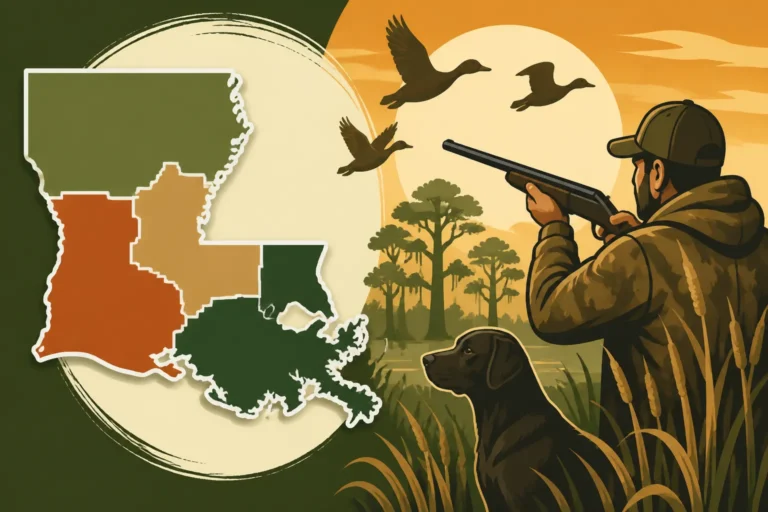
Louisiana is divided into multiple deer hunting areas, and each area can have its own specific season dates and regulations. Furthermore, Wildlife Management Areas (WMAs) often have additional, sometimes more restrictive, rules that supersede statewide regulations.
- Area-Specific Dates: The primitive firearms season doesn't run uniformly across the entire state. For example, Hunting the Rut in the Early-Start Areas with a primitive firearm will have different dates than in other areas. Your specific parish will fall into one of these deer areas, so it's essential to know which one.
- WMA Brochures: Every WMA has a detailed brochure (available online and sometimes at the WMA itself) outlining its specific rules. These brochures will specify if certain firearm types, like particular primitive firearms, are prohibited or if there are special quota hunt requirements. For instance, some WMAs might only allow muzzleloaders and disallow the modern exposed-hammer breech-loaders that are legal statewide.
- Mapping Tools: This is where modern tools shine. Using a hunting app like GoHunt can be incredibly beneficial. Its mapping layers often include WMA boundaries and can display regulation overlays, helping you understand what's allowed in your exact location. This level of detail helps prevent accidental violations and optimizes your scouting efforts, allowing you to focus on Scouting Louisiana Public Land Before Season for the best spots that align with primitive weapon hunting.
Ethical Considerations and Safety First
Beyond the legal aspects, ethical hunting practices and firearm safety are paramount. Primitive firearms, whether traditional muzzleloaders or modern single-shot rifles, demand respect and careful handling.
- Safety Always: Treat every firearm as if it's loaded. Be aware of your muzzle, keep your finger off the trigger until ready to shoot, and be absolutely certain of your target and what's beyond it. Muzzleloaders, in particular, require careful attention to loading procedures to prevent dangerous double-charges or squib loads.
- Practice, Practice, Practice: Become proficient with your primitive firearm. Understand its effective range and practice shooting from various field positions. A well-placed shot is the most ethical shot, regardless of the weapon used. Don't let your first shot of the season be your first shot of the year.
- Shot Placement: The goal is always a quick, humane kill. Know the anatomy of a deer and aim for the vital organs. The power of a 10-gauge slug or a .45-70 round is immense, but only if delivered accurately. Consider taking a Louisiana Hunter Education Requirements course, even if not strictly required, to refresh your knowledge of safety and ethics.
Summary Table of Legal Primitive Firearms
To help clarify the often-confusing details, here’s a quick reference table outlining Louisiana’s legal primitive firearms:
| Firearm Type | Key Requirements | Notes |
|---|---|---|
| Muzzleloading Rifles | Must be .44 caliber or larger. | Includes traditional flintlocks, cap-and-ball rifles, and modern inline muzzleloaders. Uses black powder or approved substitutes. |
| Breech-Loading Rifles | Must be single-shot, .38 caliber or larger, AND manufactured prior to 1900 or a replica of a firearm manufactured prior to 1900. | Examples include Trapdoor Springfields, Sharps replicas. Uses modern smokeless powder cartridges. |
| Breech-Loading Rifles | Must be single-shot, .35 caliber or larger, AND have an exposed hammer. | This includes many modern break-action rifles (e.g., CVA, Traditions) in calibers like .45-70, .35 Whelen, .444 Marlin, .350 Legend. Uses modern smokeless powder cartridges. |
| Shotguns | Must be 10 gauge or larger, AND loaded with slugs or buckshot. | Standard 12-gauge shotguns are NOT included in this primitive category. No birdshot allowed for deer. |
| Optics/Accessories | All of the above primitive firearms may be fitted with an optic (scopes, red dots). | No magnification restrictions mentioned. Bipods and slings are generally fine. Suppressors are illegal for hunting. |
| Prohibited Firearms | Generally, revolvers, semi-automatic rifles, pump-action rifles, and lever-action rifles (unless they specifically meet the single-shot, pre-1900/replica or exposed hammer criteria, which is rare for multi-shot firearms) are NOT allowed during primitive season for deer in Louisiana. No handguns for statewide season. | Always check WMA-specific rules, as these can add further restrictions. |
Disclaimer
The information provided in this article is for general guidance only and is based on the latest available Louisiana Department of Wildlife and Fisheries (LDWF) regulations at the time of writing. Hunting regulations can change frequently. It is the hunter's sole responsibility to consult the most current official LDWF hunting regulations pamphlet or website (wlf.louisiana.gov) for specific dates, rules, and any area or WMA-specific restrictions before engaging in any hunting activity.