Hunting a Green Field Planted for Deer
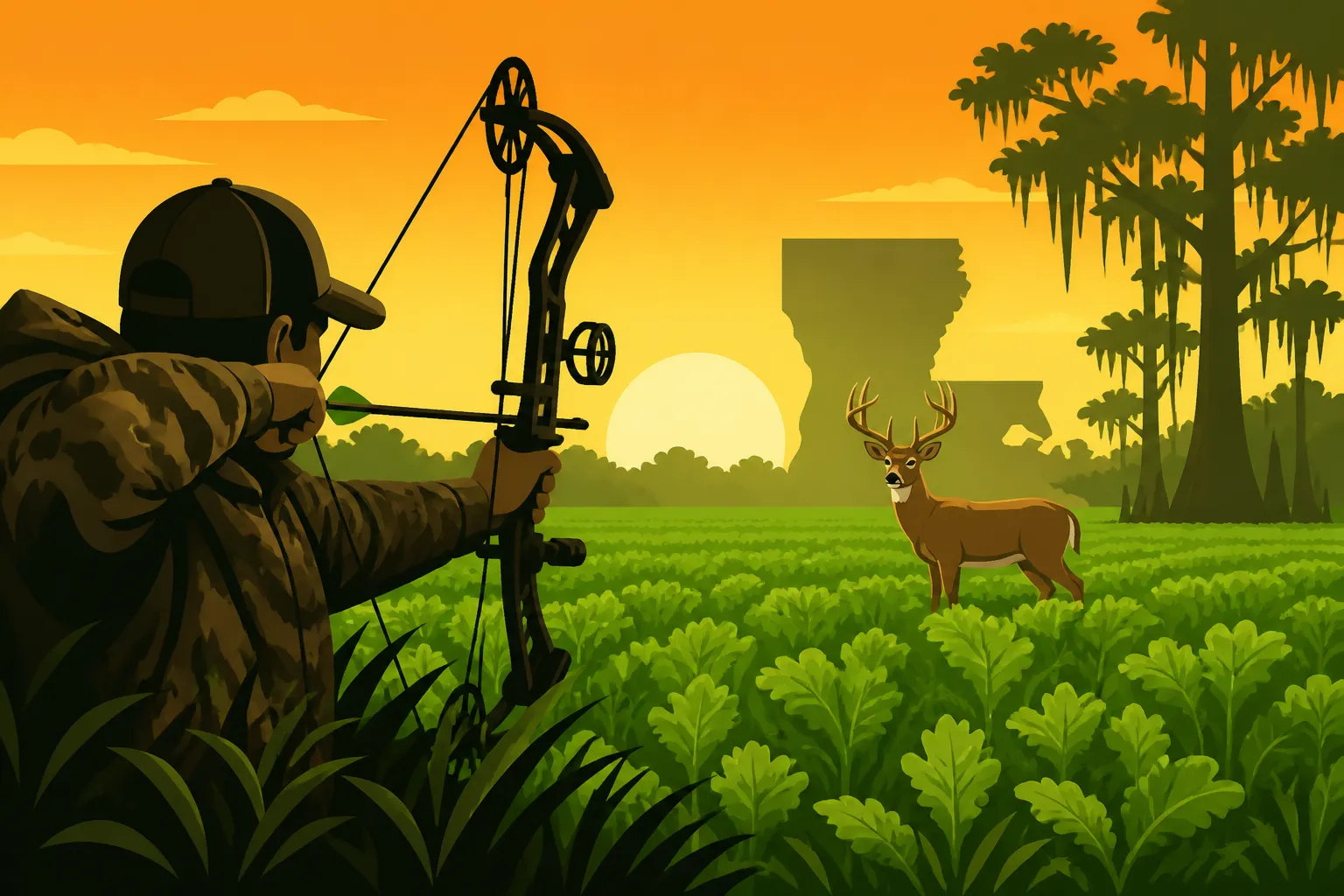
There’s nothing quite as frustrating as seeing a perfectly planted green field, imagining all the deer it’s drawing in, only to sit your stand day after day and rarely see a mature buck step out in daylight. You know the food is there, but getting those elusive whitetails to show themselves when you’re actually in the stand feels like a puzzle with missing pieces. This guide is all about helping you decode that puzzle, giving you practical strategies to hunt green fields effectively in Louisiana, maximizing your chances of encountering that deer you’ve been chasing.
Understanding Deer Movement on Green Fields
Green fields, often planted with clover, winter wheat, oats, or brassicas, are designed to be magnets for deer. They provide crucial nutrition, especially as native forage declines, and can be absolute hotspots. But simply planting one isn't enough; understanding why deer use them and when they prefer to do so is key to successful hunting.
Why Deer Use Green Fields
Deer are drawn to green fields for a multitude of reasons, primarily revolving around nutrition and security. As the seasons progress, especially heading into fall and winter, natural food sources become scarcer or less palatable. That lush patch of clover or nutrient-rich brassicas stands out like a beacon. It’s a concentrated cafeteria that offers consistent, high-quality forage when other options are dwindling. This consistent food source helps deer maintain their body condition, recover from the rut, and prepare for the stresses of colder weather. Bucks, in particular, need good nutrition to rebuild their strength after the rigors of the breeding season, while does need it to support pregnancy and lactation. This makes green fields incredibly attractive for all deer.
Beyond just food, green fields often offer a sense of security, depending on their placement and surrounding cover. A green field nestled close to a thick bedding area, or with dense timber bordering its edges, provides an immediate escape route and a feeling of safety. Deer, especially mature bucks, are inherently cautious. They won't just waltz into an open field without evaluating the risk. If they can access the field directly from cover, feed quickly, and melt back into the timber without feeling exposed for too long, they're much more likely to use it during daylight hours. Conversely, a wide-open field far from substantial cover might only see nocturnal activity from older deer.
Timing is Everything
When it comes to hunting green fields, timing is paramount. Just like humans prefer to eat at certain times, deer have their own feeding schedules, heavily influenced by light conditions and perceived safety. The classic prime times for deer activity are dawn and dusk – those magical low-light periods when they transition from bedding to feeding, and vice-versa. At first light, deer are often finishing their nighttime feeding spree, lingering in green fields before heading back to bed. In the late afternoon, they begin to emerge from their bedding areas, slowly making their way towards these food plots as the sun starts to dip below the horizon. These transition zones between bedding and feeding are critical areas to focus your efforts.
However, it's not always just about dawn and dusk. Various factors can influence midday movement, turning a typically nocturnal buck into a daylight feeder. Cold fronts, for instance, can significantly increase deer activity. When a sharp drop in temperature occurs, especially after a period of warmth, deer often feel the urge to feed more intensely to fuel their bodies. This can lead to increased movement during the middle of the day. You might find some of our tactics for Hunting Deer After a Cold Front helpful in these situations. Overcast days, light rain, or even a sustained drizzle can also encourage deer to feed longer into the morning or emerge earlier in the afternoon, as the low light and damp conditions offer a sense of security and make movement less strenuous. Conversely, bright, sunny, high-pressure days often push mature deer to feed primarily under the cover of darkness.
Strategic Setup for Green Field Success
Your setup near a green field is arguably more important than the field itself. A poorly placed stand or a noisy entry can ruin an otherwise perfect hunting opportunity. You need to think like a deer, anticipating their approach and ensuring your presence remains undetected.
Choosing the Right Stand Location
Selecting the perfect stand location around a green field is a delicate balance of factors, primarily centered on wind direction, available cover, and your entry and exit routes. The wind, especially in Louisiana, is your number one enemy. Deer have an incredible sense of smell, and even the slightest whiff of human scent can send them packing. Always position your stand so that the prevailing wind carries your scent away from where you expect deer to approach or cross the field. This often means hunting specific stands only on certain wind directions, which can be frustrating, but it’s non-negotiable for consistent success. On a larger property, it’s beneficial to have multiple stand setups for different wind conditions.
Cover is another critical element. While you want to see the field, you don't want to be silhouetted or easily spotted. Look for a dense tree line, a cluster of brush, or even a large individual tree that offers excellent concealment. Consider both horizontal and vertical cover. Horizontal cover breaks up your outline from a deer's eye level, while vertical cover (like tree branches) hides you from above. A good example might be an oak tree with a thick canopy on the edge of the field, or even a strategic ground blind brushed into a fencerow, as discussed in Using a Ground Blind on Louisiana Public Land. Your entry and exit routes are just as important. You need a path to and from your stand that minimizes noise and avoids alerting deer already in or near the field. Ideally, this means walking along a creek bed, a ditch, or through dense timber that masks your approach. Avoid walking across the field itself or through areas where deer might be bedding. Tools like GoHunt can be incredibly useful for analyzing terrain and planning these routes from a satellite perspective.
Utilizing Terrain Features and Edges
Deer rarely just pop out into the middle of a green field from nowhere. They use terrain features, natural edges, and established travel corridors to move with confidence and security. Recognizing and exploiting these features can turn a good stand into a great one. Look for natural funnels – narrow strips of timber between two open areas, or a bottleneck created by a swampy slough and a dense thicket. These force deer into predictable travel patterns, making them ideal ambush points. A ditch, a fencerow, a subtle ridge, or even a change in vegetation density can act as a natural deer highway leading directly to or from the green field.
The edges of a green field are also crucial. Deer often skirt the edge of a field for a while, browsing on adjacent cover or scent-checking the area before committing to the open plot. Placing your stand slightly back in the timber, overlooking these edges, can be far more productive than being right on the field's edge. This allows you to catch deer that are hesitant to fully commit or those that are simply using the field as a transition point. Think about how deer might use a subtle rise or fall in elevation; for instance, understanding how deer navigate Reading a Ridge for Central Louisiana Deer can directly apply to how they approach a field from higher ground, using the contour for cover. These subtle nuances in terrain can be the difference between seeing a deer pass by at 100 yards versus 20 yards.
Advanced Green Field Tactics
Once you have a solid understanding of deer movement and a well-placed stand, you can start employing more advanced tactics to increase your odds. This involves careful observation, adapting to pressure, and meticulous attention to detail.
Reading Deer Sign Around the Field
Deer sign around a green field isn't just a confirmation that deer are present; it's a dynamic map telling you how and when they're using the area. Look for fresh tracks at the field edges, especially those entering and exiting. Are they mostly single tracks, indicating cautious movement, or wider paths suggesting more frequent use? Pay attention to the size of the tracks; larger tracks can indicate mature bucks. More importantly, observe where these tracks lead. Do they follow a specific trail into a dense bedding area, or do they cut across a corner of the field towards another food source?
Beyond tracks, keep an eye out for rubs and scrapes, particularly during the pre-rut and rut phases. Rubs, where bucks strip bark from saplings, signal their presence and territorial marking. Scrapes, patches of bare earth where bucks paw the ground and deposit scent, are critical communication hubs. Finding an active scrape line along a logging road or near a field edge, as detailed in Scrape Lines Along a Logging Road, tells you that a buck is actively patrolling that area and likely checking it frequently. The freshest scrapes, with moist earth and strong scent, are the most valuable indicators of recent buck activity. If you find multiple fresh signs, it’s a strong signal that a particular entry point or edge is being used consistently.
Dealing with Hunting Pressure
Public land green fields, or even heavily hunted private land plots, present a unique challenge: hunting pressure. Deer, especially mature ones, quickly learn to avoid areas where they feel threatened. If a green field is getting hammered every weekend, those daylight appearances will dwindle fast. This is where you need to get creative and think about hunting smarter, not just harder. Instead of setting up directly on the field, consider backing off into the adjacent timber, perhaps 75-150 yards, and focusing on the travel corridors leading to the field. This allows you to catch deer before they enter the high-pressure zone, or as they cautiously approach it.
Another strategy is to identify overlooked pockets. Deer on pressured land often seek refuge in areas that other hunters avoid due to difficulty of access or dense cover. This might mean wading through a slough, navigating a nasty briar patch, or walking significantly farther than the average hunter. Exploring tactics like Hunting Pressure on Louisiana Public Land can help you understand these dynamics. Sometimes, the key isn't to hunt the field itself, but the thick cover adjacent to it that offers sanctuary. Deer will stage in these thickets, waiting for the last vestiges of daylight before slipping into the open. The GoHunt app can be a fantastic tool for finding these overlooked pockets by highlighting remote areas or challenging terrain that other hunters might bypass. Look for subtle changes in topography or vegetation that create a natural hiding spot near the food source, but just out of sight of typical stand locations.
Effective Scent Control and Concealment
Scent control and concealment are non-negotiable when hunting green fields. Deer have an incredible olfactory sense, and a single gust of wind carrying your scent can bust your hunt before it even begins. Treat every hunt as if a trophy buck is downwind of you. This means showering with scent-free soaps, washing your hunting clothes in scent-free detergent, and storing them in airtight containers. Dressing at the hunting location, rather than at home, can also help minimize contamination. Using scent-eliminating sprays on your clothes, boots, and gear is another layer of protection.
Visual concealment is equally vital. You want to blend into your surroundings completely. Wear camouflage that matches the local vegetation and season. Pay close attention to your silhouette against the skyline; position your stand so that the trunk of the tree breaks up your outline. Use natural foliage to add extra cover to your stand, whether it's a climbing stand or a ladder stand. For ground blinds, thorough brushing in is essential, making it look like a natural part of the landscape. Remember that deer have a wider field of vision than humans, and they are masters at detecting movement. Minimize fidgeting, draw your bow slowly, and remain as still as possible. Every detail, from the dark clothing you wear under your camo to the way you approach your stand, contributes to your success or failure.
Seasonal Considerations for Green Field Hunting
Deer behavior isn't static; it changes dramatically throughout the hunting season based on food availability, breeding cycles, and weather. Adapting your green field tactics to these seasonal shifts is crucial for consistent success.
Early Season vs. Late Season
The early season in Louisiana, typically late September through October for archery, sees deer patterns largely dictated by food and comfort. Bucks are still often in bachelor groups, and all deer are focused on high-quality forage to finish antler growth and build fat reserves. Green fields, especially those planted with lush, palatable cool-season annuals, are prime feeding spots. During this time, hunting the field edges at dawn and dusk can be incredibly effective, as deer are often predictable in their feeding patterns. However, warm weather can make deer movement sporadic, pushing their activity mostly into the cooler hours of deep night. Considering strategies for Warm-Weather Sitting Strategy in Louisiana can be particularly useful during this phase.
As the season progresses into the late fall and early winter, particularly during the rut and post-rut, deer behavior around green fields shifts. During the peak of the rut, bucks will cruise green fields not just to eat, but to find receptive does. They might make quick passes, scent-checking for estrus, rather than settling down to feed. Your focus might pivot from purely food-related ambush points to travel corridors that funnel bucks to and from these plots where does are feeding. After the rut, in the late season, green fields become critical again. Bucks are exhausted and have lost significant body mass, making the high-energy forage of a green field irresistible. Does and fawns will also be heavily reliant on these food sources. Concentrating on Late-Season Food Sources for Louisiana Whitetails is essential, and often the best time to catch weary bucks feeding heavily to recover.
Weather Impacts on Green Field Activity
Weather is a huge, often unpredictable, factor in Louisiana hunting, and it significantly influences how deer use green fields. As mentioned earlier, cold fronts are your best friend. A sharp drop in temperature, especially one that follows a period of warm, stable weather, often triggers a surge in deer activity. They need to feed more to generate body heat and recover from the cold shock. These are prime times to be in your stand overlooking a green field, as deer might move all day, not just at dawn and dusk. For more specific insights, read up on Hunting Deer After a Cold Front.
Conversely, exceptionally warm or hot weather, common in Louisiana even into late fall, can severely limit daylight movement to green fields. Deer become more nocturnal, conserving energy during the heat of the day. During these periods, focus on the absolute last and first minutes of legal shooting light, or look for fields nestled deep in shaded, cool bottomland. Rain, if it's a light, steady drizzle, can sometimes encourage deer movement by muffling sounds and cooling the air, making them feel more secure. Heavy downpours, however, will typically send deer seeking shelter in dense cover. Always keep an eye on the forecast, and adjust your hunting plans accordingly. It’s not about fighting the weather, but adapting your strategy to it, understanding how each shift influences the deer’s decision to step into that inviting green field.
Green Field Hunting Conditions at a Glance
Here's a quick overview of how different conditions might impact your green field hunting strategy:
| Condition | Deer Activity | Recommended Tactic |
|---|---|---|
| Early Season (Warm) | Low to moderate daylight | Hunt first/last hour of light, focus on shaded entries. |
| Late Season (Cold) | High daylight activity | All-day sits possible, bucks rebuilding post-rut. |
| Cold Front | Significantly increased | Prime time! Be in stand all day, especially after temperature drops. |
| Warm Spell | Reduced daylight activity | Focus on very early morning/late evening, near heavy cover. |
| Overcast/Light Rain | Moderate to increased | Good conditions, deer feel secure and move more. |
| High Wind | Deer seek sheltered areas | Hunt leeward side of cover near field, or protected interior plots. |
| Rut Peak | Bucks cruising/checking | Focus on travel corridors leading to fields, less on direct feeding. |
| Post-Rut | Intense feeding | Bucks exhausted, seeking maximum nutrition; fields are key. |
| Heavy Pressure | Nocturnal; avoid open | Back off into cover, hunt funnels and staging areas well before field. |
Disclaimer
Hunting is an activity with inherent risks. Always prioritize safety, adhere to all local, state, and federal hunting regulations, and respect private property. The information provided here is for educational and informational purposes only and should not be taken as a guarantee of success or a substitute for personal judgment and experience. Ensure you have proper licenses and follow all Louisiana Department of Wildlife and Fisheries guidelines.