Hunting a Ridge-Top Saddle for Rutting Bucks
There's nothing quite as frustrating as knowing the rut is on in Louisiana, yet feeling completely lost on where to intercept a cruising buck. We've all been there, wandering through thick timber or endless flatland, hoping for a glimpse, only to come up empty. But what if there was a consistent, high-percentage natural funnel that rutting bucks instinctively use? This guide is going to zero in on one of the most overlooked and incredibly effective ambush points for mature deer during the breeding season: the ridge-top saddle. We’ll dive deep into identifying these prime locations, understanding why deer love them, and the best strategies to capitalize on their predictable movement.
The Irresistible Pull of Ridge-Top Saddles for Rutting Bucks
When you think of hunting deer during the rut in Louisiana, often our minds go straight to food plots, thick creek bottoms, or perhaps a busy scrape line. While these spots certainly hold their own, many hunters overlook the subtle but significant power of a ridge-top saddle. These aren't just random dips in the land; they are strategic geographical features that act as natural highways for deer, especially during the frenetic energy of the breeding season.
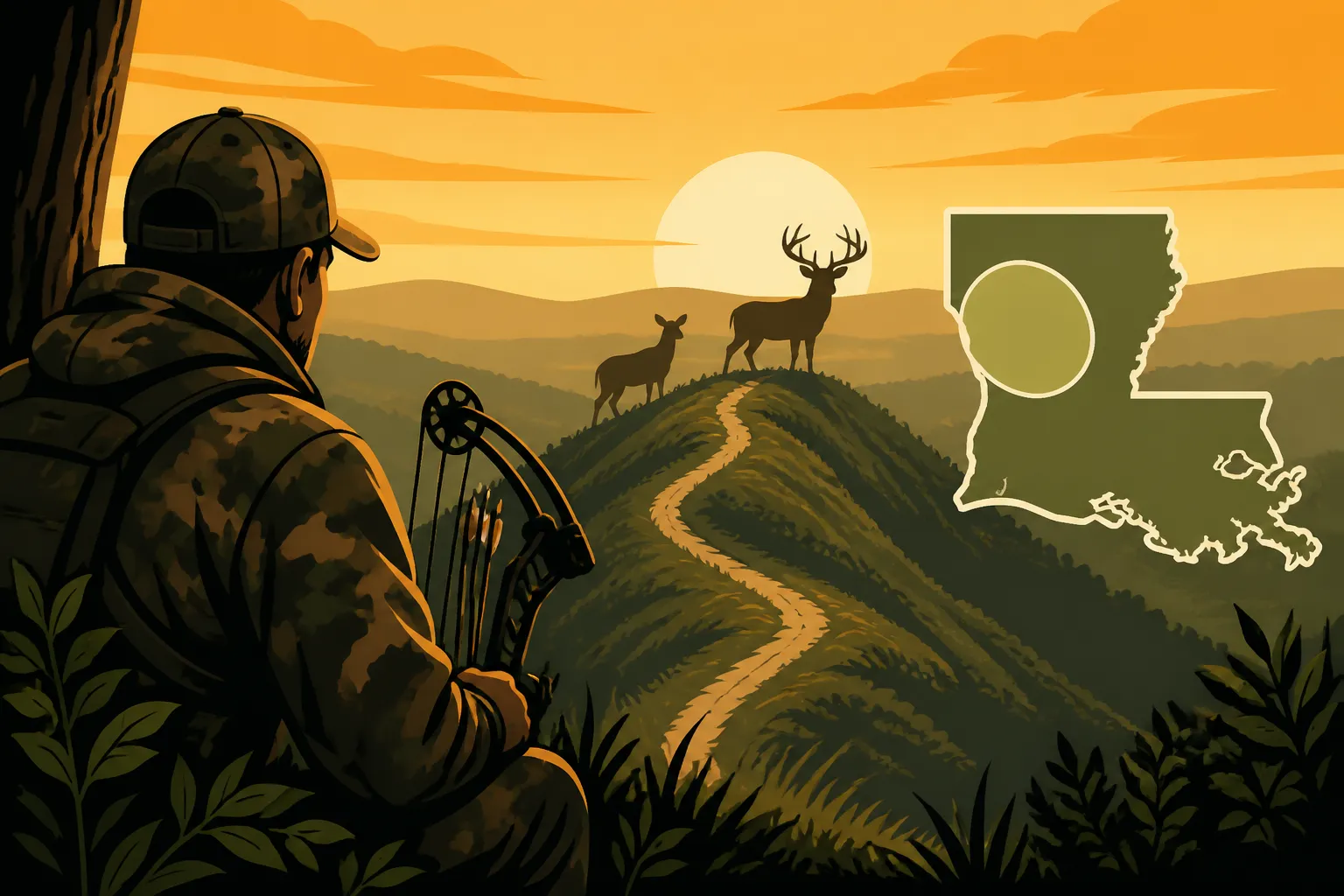
Imagine a mature buck, nose to the ground, cruising for does. He's not just running aimlessly; he's moving with purpose, often taking the path of least resistance while still maintaining an advantage over his surroundings. A ridge-top saddle offers exactly this: a lower elevation point along a ridge that allows deer to cross from one side to another with less effort than climbing over a peak. It’s like a natural bridge or a low pass through mountains. For a rutting buck, this means he can cover ground more efficiently, spending less energy climbing and more energy searching for receptive does. It also provides a great vantage point for scent checking, as air currents often swirl through these depressions, carrying the scent of any does bedded or feeding on either side of the ridge. The frustration many hunters feel comes from trying to predict random buck movement; saddles offer a degree of predictability.
During the rut, bucks are constantly on the move, expanding their core areas significantly. They are seeking, chasing, and tending does, and this requires efficient travel. A saddle becomes a preferred travel corridor not only for bucks but also for does moving between bedding and feeding areas. When a buck is in full rut, driven by hormones, he's going to utilize these easy travel routes to maximize his chances of finding a hot doe. He'll scent-check both sides of the ridge as he passes through, often pausing at the lowest point, making it a high-traffic intersection for deer activity. If you want to understand how this fits into the broader picture, you might find more helpful information on how deer react during "Hunting the Rut by Area" in Louisiana.
How to Pinpoint Productive Saddle Locations on Louisiana Terrain
Finding these prime ridge-top saddles isn't always about stumbling upon them in the woods; it often starts long before the season even opens, right from your computer or phone. Digital mapping tools have revolutionized how we scout, and they are invaluable for identifying these subtle elevation changes.
Utilizing Topographical Maps and Aerial Imagery
Your first step should be to pull up topographical maps and aerial imagery of your hunting area. Whether you're using a dedicated hunting app like GoHunt or other mapping software, you're looking for subtle dips or "draws" along the top of a ridge line. On a topo map, these will appear as contour lines that dip down, forming a distinct "hourglass" or "V" shape where they cross the ridge. Aerial imagery complements this by showing you the vegetation density and potential travel corridors. A saddle might not always be bare ground; it could be a dip in the canopy or a slight clearing. Look for areas where two drainages or small creek beds originate on opposite sides of a ridge and are separated by a low spot on the ridge line. This often indicates a natural saddle. Remember, understanding how to read these nuances on a map is critical, just like learning how to effectively utilize "Reading a Ridge for Central Louisiana Deer".
Once you've identified potential saddles on a map, the real work begins with boots on the ground. "Scouting Louisiana Public Land Before Season" is crucial for verifying these digital observations. Walk the ridge line and descend into the saddle. You'll want to look for physical evidence that deer are using it. What you're searching for is a convergence of deer trails. Often, multiple trails from both sides of the ridge will funnel into and out of the saddle. Look for fresh rubs and scrapes, especially along the edges of the saddle or immediately leading into it. These are clear indicators that bucks are actively using this corridor. Pay close attention to the wind direction as you scout; a good saddle will often have swirling winds that make it difficult for deer to detect predators, but also challenging for hunters if not played correctly.
Strategic Hunting: Tactics for Ridge-Top Saddles
Once you've identified a promising ridge-top saddle, the next step is to strategize your hunt. This isn't just about throwing up a stand; it's about meticulous planning to maximize your chances of encountering a rutting buck.
Optimizing Stand Placement and Wind Advantage
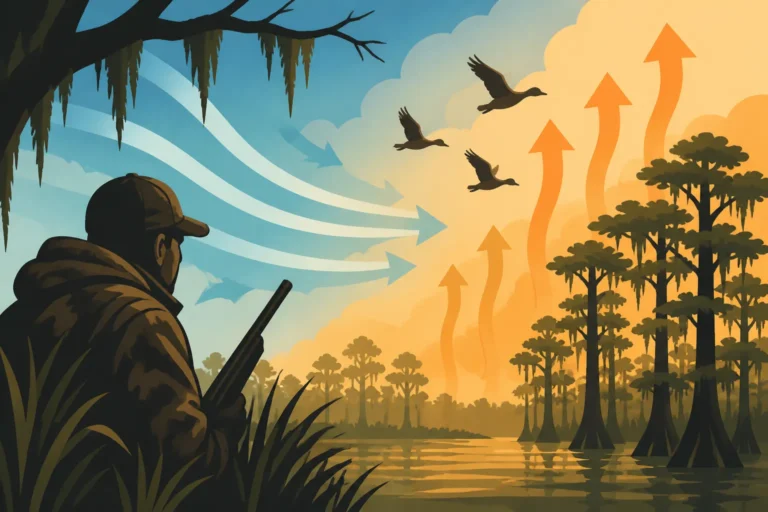
The success of hunting a ridge-top saddle hinges on your stand placement and your understanding of wind and thermals. During the rut, bucks are moving constantly, often during midday when many hunters have packed up. This means you need to be in a position that allows you to cover the most likely travel lanes through the saddle without giving away your presence. A common mistake is to place your stand directly in the saddle. While this might seem logical, the swirling winds in these depressions can betray your scent from any direction. Instead, consider positioning your stand on a downwind ridge point or slightly off to the side, overlooking the saddle. This allows your scent to blow away from the primary travel corridor. Pay particular attention to how "Wind and Thermals in Swamp Bottomland" affect deer movement, as these principles apply universally across Louisiana's varied terrain.
If you’re setting up a treestand, look for a mature tree that offers good concealment and shooting lanes into and out of the saddle, as well as across the primary travel path. Think about where a buck would naturally pause or hesitate. Often, this is at the lowest point of the saddle or where trails converge. Consider the sun's position throughout the day to avoid being silhouetted, especially during peak morning and evening movement. For specific examples, check out resources on "Treestand Setups in Kisatchie National Forest", which often involves similar ridge characteristics. If a treestand isn't an option, a well-brushed-in ground blind can be incredibly effective, especially if you can get into position silently. Information on "Using a Ground Blind on Louisiana Public Land" can help with this strategy.
Timing Your Hunt and Calling Strategies
During the rut, bucks are highly active all day, but especially during morning and late afternoon. However, the midday lull can be surprisingly productive in saddles, as bucks often use this time to discreetly cruise for does while other deer might be bedded down. Plan for all-day sits if possible, or at least extended sits during the peak of the rut.
Calling can be incredibly effective in saddles. When a buck hears a grunt or rattle, he's naturally drawn to investigate, assuming it's a rival buck or a receptive doe. The acoustics of a saddle can work in your favor, funneling sound down the ridge line. Start with soft grunts and gradually increase the volume if there's no response. During the peak rut, aggressive rattling sequences can sometimes bring a curious buck charging in. It's important to understand the nuances of "Rattling and Grunting in Louisiana" to use these calls effectively. Combine calling with proper scent control and wind direction, and you significantly increase your odds.
| Saddle Characteristic | Hunting Implication | Optimal Strategy |
|---|---|---|
| Low Elevation Dip | Natural travel corridor, energy efficient for deer. | Place stand slightly off-center, overlooking main trails. |
| Converging Trails | High deer traffic, pinch point. | Focus shooting lanes on trail intersections and pauses. |
| Swirling Winds | Can be unpredictable, easily exposes hunter scent. | Hunt crosswind or downwind of main approach, use scent control heavily. |
| Good Visibility | Allows buck to scent-check and survey. | Prioritize concealment and break up your silhouette. |
| Located Between Bedding & Feeding | Connects crucial deer activity zones. | Hunt all day, especially during midday cruising. |
Common Pitfalls and Maximizing Your Chances
Even with the best saddle selected, there are common mistakes that can ruin your hunt. Being aware of these and taking proactive steps can significantly boost your success rate.
Managing Scent, Entry, and Exit Routes
Scent control is paramount when hunting saddles. Deer are constantly scent-checking in these areas, and any foreign odor will immediately put them on high alert. Use scent-eliminating sprays, wash your hunting clothes in unscented detergent, and store them in airtight containers. Avoid walking through areas where deer are likely to travel on your way in or out. Your entry and exit routes should be carefully planned to minimize disturbance and keep your scent away from the saddle. This often means taking a longer, more circuitous route that utilizes natural topography or dense cover. Consider approaching from the side of the ridge that has less activity or where the wind consistently blows away from the saddle. This kind of strategic planning is as vital as understanding "Entry Routes Through Standing Soybeans" or any other specific habitat.
One of the biggest temptations when you find a promising saddle is to over-hunt it. While it might be a prime location, consistent pressure will quickly turn it into a ghost town. Mature bucks are incredibly sensitive to hunting pressure. If you hunt a saddle too frequently, deer will simply find alternative routes. Plan to hunt it sporadically, perhaps only during optimal wind conditions and when you know the rut is peaking in your specific "Louisiana Deer Hunting Area by Area". Sometimes, leaving a spot untouched for a few days, or even a week, can allow deer to settle back into their natural patterns. This patience is key, especially when dealing with "Hunting Pressure on Louisiana Public Land". You might have found a honey hole, but you need to treat it with respect if you want it to remain productive throughout the season.
Finally, always be prepared for the shot. Rutting bucks can appear suddenly and often won't linger. Practice shooting from your stand in various positions to ensure you're comfortable and capable of making an ethical shot when the moment arrives. Have your gear organized, your bow or rifle ready, and your shooting lanes clear. A missed opportunity at a rutting buck in a saddle can be heartbreaking, so be mentally and physically prepared to capitalize on these high-odds encounters.
Disclaimer
Always consult the latest Louisiana Department of Wildlife and Fisheries (LDWF) regulations before heading into the field. Hunting laws and season dates can change, and it is every hunter's responsibility to be informed and compliant.