Tracking a Deer Through Louisiana Leaf Litter
There's almost nothing more disheartening than making what you think is a perfect shot, only to watch that deer disappear into the thick Louisiana woods, leaving behind a barely discernible trail. The dense, often damp leaf litter here can swallow up blood sign faster than a gator eats a marshmallow, turning a routine recovery into a gut-wrenching scavenger hunt. But don't throw in the towel just yet; with the right approach and a healthy dose of patience, you can absolutely increase your odds of finding that animal. This guide is all about equipping you with the knowledge and practical strategies to effectively track a deer through even the most challenging Louisiana leaf litter, turning despair into success.
The Unique Challenges of Louisiana Leaf Litter
Louisiana's diverse ecosystems, from the piney hills to the dense bottomland hardwoods and vast coastal marshes, all share a common characteristic: an abundance of organic material on the forest floor. This ever-present layer of fallen leaves, twigs, and detritus creates a unique set of obstacles for any hunter attempting to track a wounded deer. What might be a relatively clear blood trail in a sparse northern forest becomes a vanishing act down here.
Why Leaf Litter is Your Worst Enemy (and Best Friend)
At first glance, leaf litter seems like the absolute worst thing to deal with when you're trying to follow a blood trail. It acts like a giant, natural sponge, soaking up precious drops of blood before they can even register visually. Imagine a prime shot at a mature buck, only for a light drizzle to start minutes later, seemingly washing away any hope of a clear path. The blood just disappears into the damp, decaying leaves, camouflaged by the myriad shades of brown, red, and gold. Every step you take adds to the disturbance, making it harder to distinguish the deer's movements from your own.
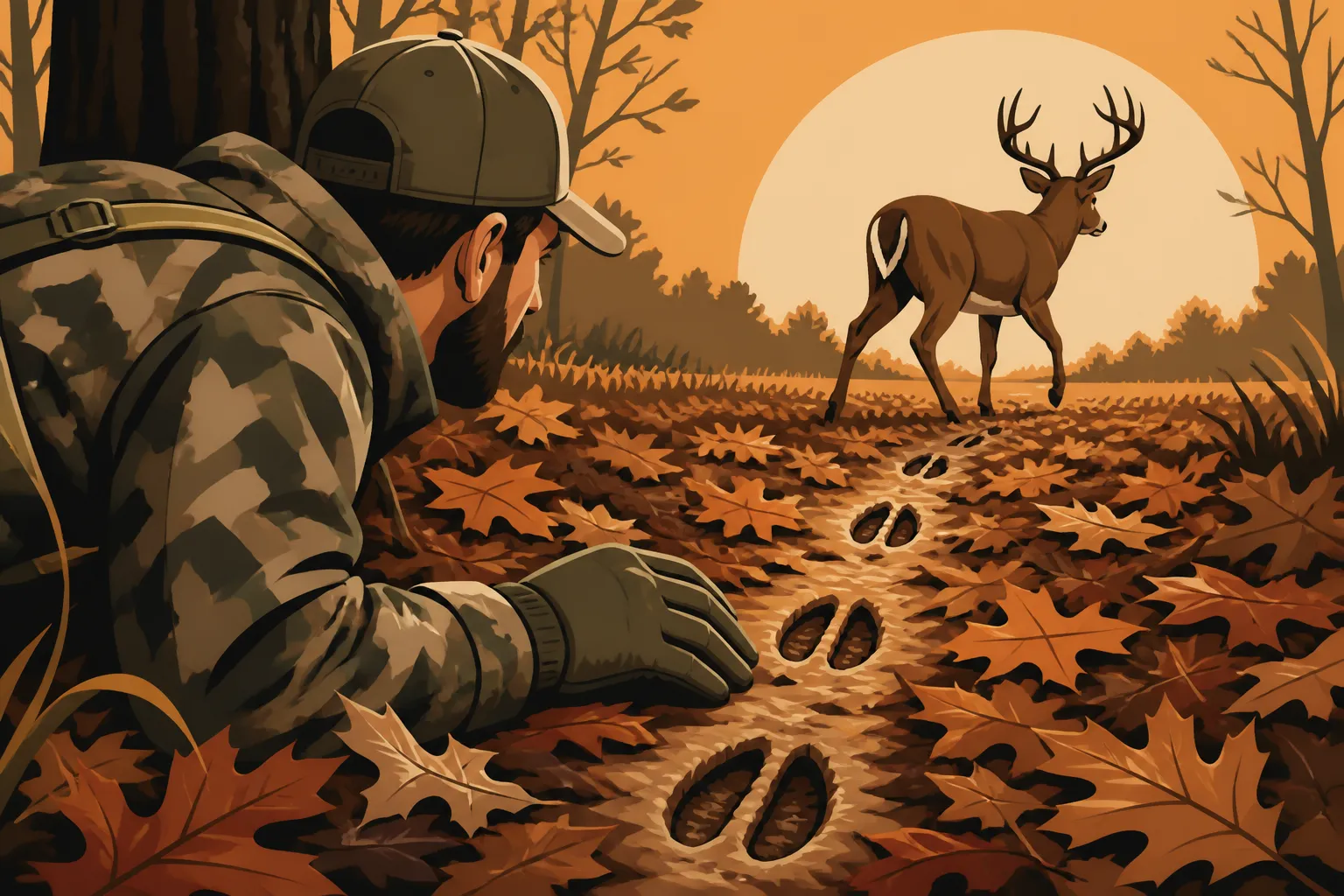
However, this same leaf litter can also be your silent partner if you know what to look for. While it absorbs blood, it also records other subtle disturbances. A deer moving quickly through this layer will displace leaves, kick up dirt, and often break small twigs. These subtle changes in the forest floor, a slight scuff mark in the otherwise smooth blanket of leaves, or a recently overturned leaf showing its darker, damp underside, can be just as important as a blood drop. Understanding the terrain in different parts of the state, from the deep hardwoods of the Tensas Basin to the sprawling forests of Kisatchie National Forest, can give you an edge. Think of it as a low-resolution map of movement, rather than a clear, painted line. The humidity that often accompanies our Louisiana weather, while sometimes diluting blood, can also keep scent trails lingering longer, offering another avenue for recovery, especially for those employing a tracking dog.
Common Mistakes That Cost Hunters Deer
In the heat of the moment, with adrenaline coursing through your veins, it's incredibly easy to make errors that can jeopardize a successful recovery. The first, and arguably most common, mistake is rushing the track too soon. You just made a shot, you're excited, maybe a little anxious, and you want to see your trophy. But immediately jumping on the trail, especially if you suspect anything less than a perfect heart or lung shot, is a recipe for disaster. A wounded deer, if pushed, will often run much farther, sometimes for miles, making an already tough track nearly impossible. Knowing the shot placement is critical; a gut-shot deer needs hours, sometimes overnight, to bed down and expire.
Another costly error is failing to mark the last known blood or sign. When the trail gets sparse, hunters often get overwhelmed and try to "eyeball" the path, only to lose the precise spot where they last saw evidence. This leads to aimless wandering and compounding the problem. Similarly, many hunters focus exclusively on blood, completely overlooking other crucial signs like overturned leaves, broken twigs, or scuff marks. Reading Louisiana Mud for Fresh Deer Movement can teach you to look for signs beyond just blood, as they might be your only clue. Finally, involving too many people in the initial tracking effort can confuse the trail. Too many feet on the ground mean too many disturbed leaves and too many potential misinterpretations of the deer's path. While extra eyes can be helpful, having a coordinated, methodical approach is far more effective.
Proven Strategies for Picking Up a Lost Trail
When that initial, clear trail vanishes into the Louisiana leaf litter, it's time to shift gears from simple trailing to a systematic search. This isn't just about walking in circles; it's about intelligent, methodical effort.
The Grid Search Method
Once you've marked the last confirmed sign—and I mean physically marked it with flagging tape, not just mentally noted it—and you've waited a sufficient amount of time, it's time to expand your search. The grid search method is a highly effective way to systematically cover an area where you suspect the deer has gone. Start by taking your marked spot as the center point. You and your tracking partners (ideally one or two others, to avoid over-complicating things) should spread out in a line, perhaps 5-10 yards apart, depending on visibility and cover. Walk slowly and methodically in a straight line, parallel to each other, covering the ground meticulously. Once you've gone a reasonable distance (say, 50-75 yards without sign), pivot and move back, maintaining your spacing, slightly overlapping your previous search path.
Repeat this process, essentially creating a "grid" over the area. Communication is paramount here. Shout out "Sign!" when something is found, and everyone converges to examine it. If a new sign is found, that becomes the new focal point, and the grid search can restart from there, or be directed outwards from that new point. Tools like the GoHunt app can be invaluable during this process. You can use its mapping features to mark your starting point, draw out your search grid, and drop waypoints every time you find a new piece of sign. This helps you visualize the deer's general direction and ensures you're not missing crucial areas. It's tedious, yes, but it dramatically increases your chances of finding that next overturned leaf or faint blood speck.
Utilizing Natural Breaks and Terrain Features
Deer, even when wounded, are creatures of habit and efficiency. They often gravitate towards the path of least resistance or familiar cover. This means that while they might initially bolt in a straight line, they will frequently use natural breaks in the terrain to their advantage. Think about logging roads, old ATV trails, creek beds, or even faint deer trails that crisscross the woods. A deer might struggle through thick underbrush for a short distance, but if it encounters a more open path, it will often follow it. This is why knowing the lay of the land, as described in Louisiana Deer Hunting Area by Area, is so crucial before you even pull the trigger.
Consider how terrain changes can impact a deer's movement and, consequently, your tracking efforts. If you're tracking through a relatively flat section of hardwoods and the sign vanishes, think about what might be ahead. Is there a small slough or creek? Deer often leave much clearer prints in the soft mud of a creek bed, even if there's no visible blood. Is there a ridge line? A wounded deer might follow the crest of a ridge or drop into a hollow for cover. Thick pine plantations or dense palmetto thickets offer excellent cover, and a deer might seek refuge there. However, navigating these dense areas requires extreme patience and a keen eye. Sometimes, a deer will circle back into thick cover, which is where understanding Wind and Thermals in Swamp Bottomland becomes vital, as they often use these to their advantage to detect predators. Look for the path they would most likely take to escape or find refuge, not necessarily the path of least resistance for you.
Looking Beyond the Blood
When the blood trail dries up or vanishes into the leaf litter, your tracking mission is far from over. This is where you become a detective, piecing together a story from the most subtle clues. Overturned leaves are gold. A healthy deer might step lightly, but a wounded animal, especially one that's hurting, will often scuff its feet, leaving behind darker, damp undersides of leaves exposed. Look for broken twigs that don't seem naturally broken, especially if they're a bit higher off the ground, indicating a stumbling deer rather than one walking deliberately. Hair, particularly around obstacles the deer might have bumped into, like low branches or briar patches, is another key indicator.
Consider the deer's body language as it ran off. If it hunched or stumbled, it might leave wider, more erratic tracks or signs of dragging. If it was hit low in the leg, you might see small blood spatters in a rhythm. If it's a gut shot, you might smell a distinctive, musky odor from the deer or even its intestines, and sometimes discover stomach contents on the ground. Visualizing the deer's path means imagining yourself as the deer. Where would you go if you were hurt and trying to escape quickly or find a safe place to lie down? Often, deer will go downhill or seek the thickest cover available. During the rut, a buck might even try to find a secluded spot near where he was previously active. Hunting the Rut in the Early-Start Areas reminds us that deer behavior can be unpredictable, but also offers clues to their movements. This holistic approach to tracking, looking at the entire picture of disturbance rather than just blood, is what separates a successful recovery from a lost animal.
Essential Tools and Mindset for Successful Tracking
Successful deer tracking, particularly in challenging environments like Louisiana's leaf litter, requires more than just sharp eyes. It demands the right gear and, perhaps even more importantly, the right mental approach.
Gear That Makes a Difference
When you're facing a tough tracking job, having the right tools can feel like bringing a superpower to the woods. First and foremost, a good quality tracking light is indispensable. While many swear by UV blood-tracking lights, a powerful LED flashlight or headlamp can be just as effective at highlighting subtle disturbances in the leaf litter, especially if you're Blood Trailing After Dark in Louisiana. The strong, focused beam will cast shadows that make overturned leaves, scuff marks, and even faint blood droplets pop against the uneven terrain.
Next, a roll of bright, biodegradable flagging tape is non-negotiable. Every single piece of sign you find—no matter how small—should be marked. This provides a clear breadcrumb trail, preventing you from losing your spot if you lift your head to look ahead, and gives you a reference point if the trail vanishes again. Binoculars, surprisingly, can be useful even in dense woods. Sometimes, by stepping back and glassing an area you suspect the deer went, you can spot a patch of disturbed leaves, a patch of hair on a bush, or even the deer itself, especially if it's bedded down.
And of course, in this modern age, don't underestimate the power of a good mapping application like GoHunt on your smartphone. Not only can you use it to mark your vehicle, your stand, and the spot of the shot, but you can also drop pins for every piece of sign you find, creating a visual record of the deer's path. This is especially helpful if you need to call in a tracking dog or another person; you can share your exact progress and the last known location. Don't forget the basics either: a small first aid kit, plenty of water, and some high-energy snacks. Tracking a deer can turn into an all-day, or even multi-day, affair, and you need to be prepared physically and mentally. Also, consider the specific challenges of the environment; if you're in an area like the Atchafalaya Basin, having a small, lightweight means of Recovering a Deer From a Basin Slough might save you a lot of grief.
Patience, Persistence, and Knowing When to Back Out
More deer are lost due to impatient tracking than to poor shots. This is a tough pill to swallow for many hunters, but it's the absolute truth. The most crucial "tool" you possess is your mindset. Patience is paramount. After the shot, unless it's an obvious heart or double-lung hit, you must wait. How long? That depends on the shot placement. A solid muscle hit usually warrants at least 4-6 hours. A gut shot? You're looking at 8-12 hours, sometimes even overnight, to give the deer time to bed down and expire. Pushing a gut-shot deer too early will often result in a lost animal that simply runs farther and farther. Trust me, I've seen it happen countless times.
Persistence goes hand-in-hand with patience. You will hit dead ends. The trail will vanish. You will get frustrated. But giving up too soon means failing your ethical responsibility as a hunter. This is where Louisiana Hunter Education Requirements really hammer home the importance of ethical recovery. If you've exhausted your own efforts, and you're confident the deer is mortally wounded but simply can't find it, consider calling in reinforcements. An experienced tracking dog, with its incredible sense of smell, can often pick up a cold trail that human eyes and noses simply cannot. Many services are available in Louisiana specifically for deer recovery. Or, if a friend or family member has more experience, bring them in. A fresh set of eyes, especially if they're calm and methodical, can often spot a clue you've overlooked. Knowing when to call it a night, regroup, and come back in the morning is also a sign of wisdom, not weakness. Sometimes, the woods look completely different in the light of day. This blend of calm patience, relentless persistence, and knowing when to seek help is the recipe for a successful recovery in our challenging Louisiana terrain.
Disclaimer
Please remember that hunting regulations and best practices can change. Always consult the latest Louisiana Department of Wildlife and Fisheries (LDWF) regulations before heading afield. This guide offers advice based on general experience and widely accepted tracking methods but is not a substitute for official guidelines or landowner rules. Stay safe and hunt ethically.