Setting Up on a Coastal Prairie Field Edge
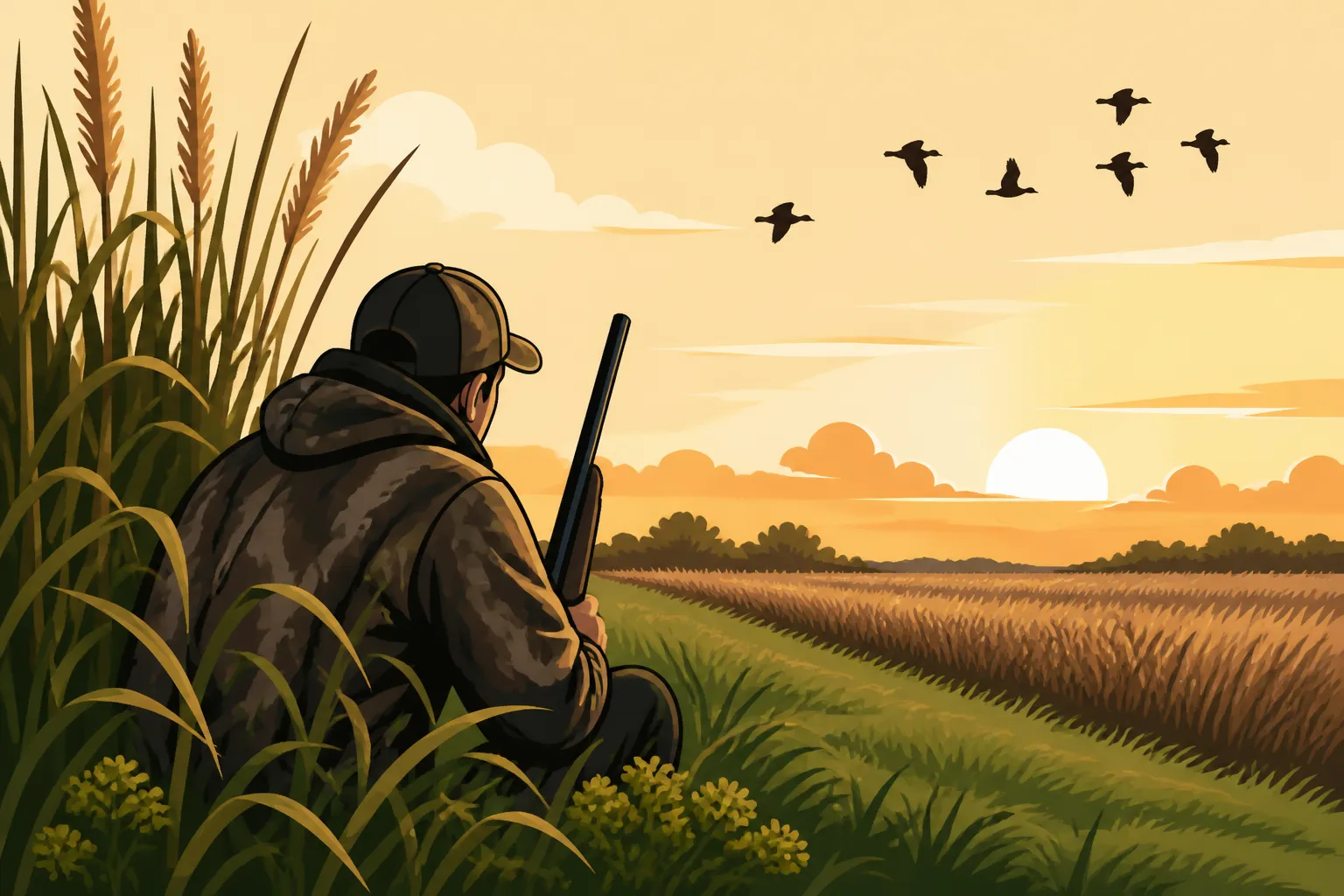
Hunting the vast, open coastal prairies of Louisiana can feel like an entirely different world compared to the dense woods and swamps most hunters are familiar with. The wide-open spaces, the constant winds, and the often-minimal cover make simply "setting up" a real challenge, leaving many hunters scratching their heads about how to effectively approach deer in these unique environments. This guide is here to break down the art and science of establishing effective setups on a coastal prairie field edge, helping you understand deer movement and maximize your chances in this often-overlooked habitat.
Understanding the Coastal Prairie Deer Landscape
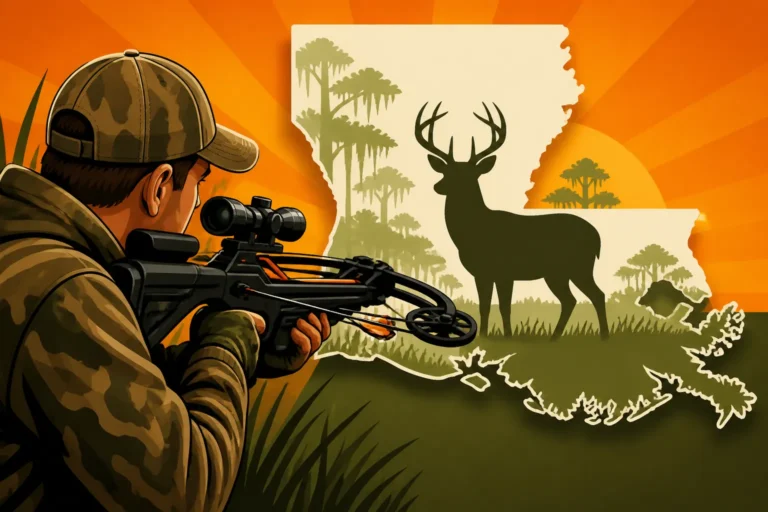
The coastal prairie regions of Louisiana, especially in parishes like Cameron and Vermilion, present a unique set of challenges and opportunities for deer hunters. Unlike the thick pine forests or bottomland hardwoods, here you're dealing with expansive fields, scattered marshy pockets, and tree lines that are often sparse. Deer are still present, and often thrive, but their movements and patterns are heavily influenced by the open environment and the ever-present wind.
Unique Challenges of Prairie Hunting
One of the biggest frustrations hunters face in the coastal prairie is the lack of traditional cover. You can't just pick a big oak and hang a stand. The visibility is often immense, which is great for spotting deer from a distance, but terrible for getting close without being seen. Deer in these areas tend to be incredibly wary, as they're exposed to potential threats from all angles. This means they rely heavily on their senses of smell and sight, making your approach and scent control absolutely critical.
Another challenge is the wind. It's almost always blowing, and often quite strong, which can make things like scent control even harder. However, a consistent wind can also be your ally, allowing you to predict deer travel routes or mask your sounds. Understanding Wind and Thermals in Swamp Bottomland can give you a foundational appreciation for how air currents affect deer movement, even if the terrain is different, as the principles of scent dispersal remain. The flat topography also means thermal currents, while still present, don't behave with the same predictability as in hillier terrain, emphasizing the wind's role.
Identifying Key Deer Movement Patterns
Even in open country, deer still follow patterns. They seek out edges where they feel safer, places that offer a bit of cover, access to food, and travel corridors. On a coastal prairie, these "edges" might be the tree line along an old fence row, a ditch bank, the fringe of a cane thicket, or even subtle changes in vegetation height. Deer will use these features to move between feeding areas in open fields and bedding cover, which could be anything from a dense patch of wax myrtle to a low-lying marsh island.
Scouting here often involves covering a lot of ground, sometimes with binoculars or even through satellite imagery tools like GoHunt, looking for those subtle transitions. You're trying to identify pinch points, funnels, and natural barriers that concentrate deer movement. Look for tracks along field edges, rub lines on isolated trees or shrubs, and scrape lines along ditch banks. Understanding Scouting Louisiana Public Land Before Season is paramount, as visual clues in the prairie might be less obvious than in denser woods. The deer here aren't entirely different from their forest-dwelling cousins; they just adapt their behavior to the available cover and resources.
Strategic Considerations for Field Edge Setups
When you decide to set up on a coastal prairie field edge, it's not enough to just pick a spot. You need a multi-faceted strategy that considers every angle, especially given the deer's heightened awareness in these open environments.
Wind Direction and Scent Control
This is arguably the most critical factor in prairie hunting. With little natural cover to break up your scent, any mistake here will quickly send deer packing. Always, and I mean always, hunt with the wind in your favor. This means understanding the prevailing winds for your hunt day and knowing how they might swirl or change throughout the morning or evening. You want your scent to blow away from where you expect deer to approach or pass.
Consider using multiple stand or blind locations for different wind directions. For instance, if you have a prominent east-west running field edge, you might need one setup for a north wind and another for a south wind. Every detail matters: shower with scent-free soap, wash your hunting clothes in scent-free detergent, and store them in airtight containers. Even your breath can give you away, so chewing gum or using scent-neutralizing sprays on your face is a good idea. In the often-warm Louisiana climate, minimizing perspiration is also key. A strategy for Warm-Weather Sitting Strategy in Louisiana should always incorporate rigorous scent control measures.
Cover and Concealment for Your Setup
Since natural cover can be sparse, you might need to get creative. If you're using a ground blind, brush it in thoroughly with local vegetation. Don't just set it out; actively weave grass, cane, and brush into the loops and mesh to break up its outline. Think about how the sun will hit it at different times of the day – a blind that looks perfectly concealed in the morning might cast a long shadow that alerts deer in the evening.
For elevated stands, look for the densest patches of trees or even a utility pole line if no other trees are available. If you're on private land, consider planting screening cover like Egyptian wheat or fast-growing evergreens along key edges a year or two in advance. Even a small rise or a cluster of large bushes can offer enough backdrop to break up your silhouette. Remember, deer are constantly scanning, and any unnatural shape or movement will stick out like a sore thumb in open country. This is where the choice between a natural blind and Using a Ground Blind on Louisiana Public Land becomes a critical strategic decision.
Access and Exit Routes to Minimize Disturbance
Your approach to and departure from your hunting location are just as important as the setup itself. In open country, you can't just walk straight across a field. Plan your routes to use existing ditches, high vegetation, or the cover of darkness. The goal is to get to your setup without alerting any deer in the area, and to leave without bumping any that might be feeding nearby.
If possible, access your spot before first light or after dark when deer are less active or visibility is low. Use routes that put the wind in your face or crosswind to your setup, especially on your way out. Disturbing deer on your entry or exit can ruin a hunt for days, pushing them further into dense cover or making them nocturnal. Sometimes, a long, winding route that keeps you concealed is far better than a direct, short one that exposes you. Consider parking your vehicle well away from your chosen field edge and walking in, even if it means a longer hike.
Choosing Your Stand or Blind Placement
The type of setup you choose will heavily depend on the specific features of the field edge you're hunting, as well as personal preference and local regulations.
Elevated Stands for Optimal Visibility
Climbing stands, ladder stands, or even permanent box blinds can be excellent choices for prairie edges where a few mature trees exist. The elevated position gives you a huge advantage in seeing deer over tall grass or low brush, and it also helps your scent blow over their heads. When positioning an elevated stand, think about prevailing winds, but also consider the sun's position. You don't want to be staring directly into a rising or setting sun, and you definitely don't want the sun to backlight you, making your silhouette highly visible.
Look for a vantage point that overlooks a large portion of the field, but still offers a clean shot to the most likely travel routes along the edge. If the field edge is bordered by a small patch of woods or a line of trees, setting your stand just inside that treeline can offer excellent concealment while still providing visibility into the field. Ensure your shooting lanes are clear, especially for archery hunting, as even a small twig can deflect an arrow.
Ground Blinds for Close-Quarter Encounters
Ground blinds are incredibly popular in open country, and for good reason. They offer excellent concealment, shelter from the elements, and allow for more movement than an open stand. The key, as mentioned, is proper brushing. A portable blind, properly camouflaged, can disappear into the background if done right. Think about setting it up well in advance of the season, allowing local wildlife to get used to its presence.
When placing a ground blind, look for a slight depression, a cluster of high weeds, or the intersection of a fence row and a ditch. You want something that naturally breaks up its outline. Place it where you expect deer to enter or travel along the field edge, ensuring you have clear shooting lanes downwind. Ground blinds are particularly effective when Brushing In a Blind on a Field Edge with native vegetation, mimicking the natural environment as closely as possible. If you use a pop-up blind, set it up for a few weeks before your hunt to let the deer acclimate.
Table: Stand vs. Ground Blind Considerations for Prairie Edges
| Feature | Elevated Stand (e.g., ladder, climbing) | Ground Blind (e.g., pop-up, homemade) |
|---|---|---|
| Visibility | Excellent over tall grass; wider field of view. | Good for close range; limited over tall vegetation. |
| Concealment | Relies on tree cover or height; silhouette can be an issue. | Excellent if properly brushed in; blends with terrain. |
| Scent Control | Higher elevation helps scent disperse above deer. | Critical management; scent rises from ground level. |
| Mobility | Fixed or requires suitable trees; climbing stands are portable. | Highly portable; can be moved easily with proper pre-planning. |
| Comfort | Exposed to elements; less room to move. | Protected from wind/rain; more room, good for cold weather. |
| Setup Time | Can be quick (climbing) or involve significant work (ladder/permanent). | Quick to deploy; brushing in takes extra time. |
| Cost | Varies greatly from inexpensive climbers to costly box blinds. | Generally more affordable than quality elevated stands. |
| Shot Angle | Downward angle, good for vital shots. | Flat angle, requires careful shot placement and background awareness. |
Advanced Tactics and Gear for Prairie Edges
Beyond the basic setup, a few advanced tactics and specialized gear can give you a significant edge when hunting coastal prairie field edges.
Utilizing Decoys and Calls Effectively
Decoys can be a game-changer in open country. A buck or doe decoy, placed strategically downwind from your position, can draw curious deer into shooting range. In the vastness of a prairie, a visual attractant can be far more effective than in thick timber. However, remember that deer can see for a long way, so a decoy should look as natural as possible. Place it facing your stand to present a quartering-away shot opportunity to an approaching deer. Consider a lightweight, packable decoy like those from Montana Decoy, which are easy to carry across open fields. For early season, a doe decoy might pique curiosity, while during the peak of the rut, a small buck decoy could challenge a dominant buck. Understanding Rattling Volume in Thick Cover provides a contrast to the open-country calling strategy, where subtle calls can carry much further and be more effective.
Calls can also work, but use them sparingly. A soft grunt, a doe bleat, or even rattling antlers (if it's the rut) can draw attention. The key is subtlety. Don't overcall, especially if deer are already visible. Let them come to you. If a deer hangs up at a distance, a soft call might be just enough to tip them over the edge into range. During the rut, knowing Hunting the Rut in the Long-Window Areas will help inform when to be more aggressive with calling.
Leveraging Technology for Scouting and Planning
Technology has revolutionized hunting, and it's particularly useful in open country. GPS mapping apps like GoHunt can help you mark specific field edges, identify subtle topographical features, and pinpoint bedding areas or travel corridors that might not be obvious from the ground. You can mark scrapes, rubs, and tracks, building a comprehensive picture of deer movement over time. The aerial and topographical views offered by such apps are invaluable for planning those critical access and exit routes, too.
Trail cameras, while potentially less useful for real-time intel in such vast expanses, can still provide crucial information about the timing of deer movement along specific field edges. Set them up on isolated trees or sturdy posts along natural funnels or pinch points. The goal isn't necessarily to catch a picture of every deer in the area, but to understand when and how deer are using certain edges, which can inform your stand times. Checking a Scrape Lines Along a Logging Road with a trail camera can provide similar intel to setting one up on a field edge, giving you insights into when bucks are most active.
Finally, weather apps that provide detailed wind forecasts, including wind direction and speed at different times of the day, are essential for planning your hunts. Don't rely on general forecasts; look for hyper-local data to ensure you're setting up for the best possible wind conditions.
Hunting the coastal prairie field edges in Louisiana offers a challenging but incredibly rewarding experience. By deeply understanding the unique landscape, meticulously planning your setups for wind and concealment, and leveraging both traditional and modern tactics, you can turn those wide-open spaces into successful hunting opportunities. It takes patience, attention to detail, and a willingness to adapt, but the rewards are well worth the effort.
Disclaimer
Hunting is an inherently dangerous activity. Always follow all Louisiana Department of Wildlife and Fisheries (LDWF) regulations, obtain the necessary licenses and permits, and prioritize safety above all else. This guide is for informational purposes only and does not substitute for hands-on experience or professional instruction. The information provided is based on general hunting practices and may not apply to all specific situations or locations. Be aware of local land use rules, private land boundaries, and always get permission before hunting on private property.