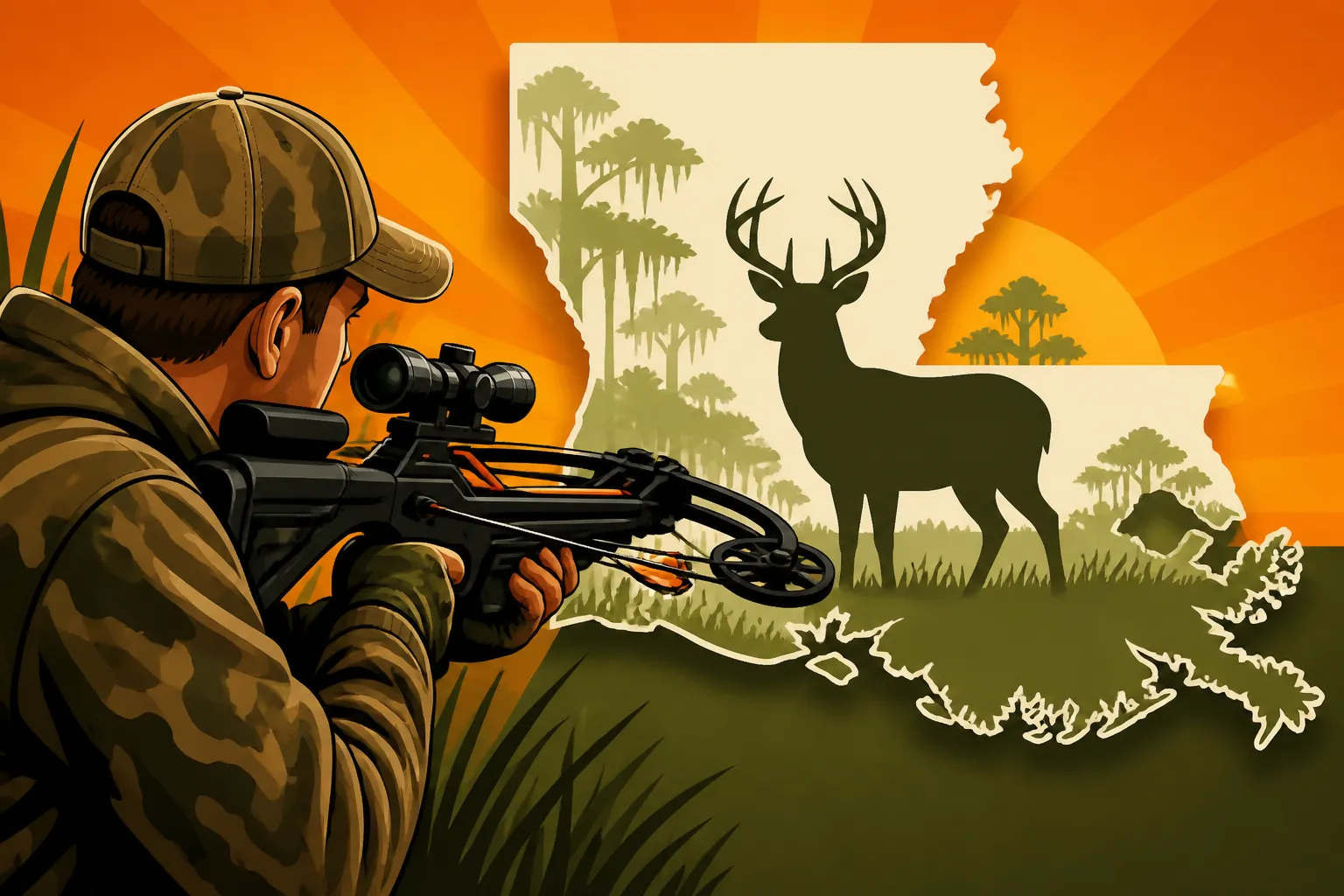
Crossbow Rules During Louisiana Archery Season
It's easy to feel lost in the maze of hunting regulations, especially when you're trying to figure out what weapons are allowed and when. Louisiana's rules for crossbows during archery season have seen some changes over the years, leading to a lot of head-scratching among both seasoned hunters and newcomers. This guide aims to clear up all that confusion, giving you a crystal-clear understanding of exactly when and how you can legally use a crossbow to pursue deer and bear in the Pelican State's archery season.
Understanding Louisiana's Archery Framework
Before we dive specifically into crossbows, it’s important to understand the broader context of Louisiana's archery season. This isn't just a brief window; it's a significant portion of the deer and bear hunting calendar, often stretching for several months, depending on which of Louisiana's ten deer areas you're hunting in. The Louisiana Department of Wildlife and Fisheries (LDWF) sets these seasons to provide ample opportunity for hunters while managing game populations effectively.
General Archery Season Details
Louisiana's archery season is typically the earliest opening and longest-running segment of the deer season, providing hunters with a fantastic chance to get into the woods before the rush of primitive firearms and gun seasons. The exact dates can vary slightly year to year, and critically, they differ from one deer area to another. For instance, some areas might open in early October and run through late January, offering an incredibly long period to hunt. Hunters need to stay vigilant and check the current year's hunting regulations booklet, often found on the LDWF website or through popular hunting apps. Knowing these specific dates for your chosen area is the first step to a successful hunt, and it’s why understanding the nuances of how Louisiana's Ten Deer Hunting Areas Differ is so crucial.
During this season, hunters are generally permitted to harvest antlered or antlerless deer, though specific daily bag limits apply, and antlerless harvest can sometimes be restricted on certain days or within particular management zones. The beauty of archery season lies in its quiet challenge—it demands stealth, patience, and a deep understanding of deer behavior. It's a time when you can really immerse yourself in nature, relying on your scouting skills and woodsmanship.
Legal Archery Equipment Overview
Louisiana law defines various types of bows that are legal for archery season. This includes traditional longbows, recurve bows, and compound bows. For many years, crossbows had specific restrictions, often limited to youth, physically challenged hunters, or specific shorter seasons. This created a lot of back-and-forth and made it difficult for hunters to know if their equipment was universally legal. The good news is that those days of complex restrictions for crossbows during the general archery season are largely behind us. However, all bows must meet certain minimum draw weight requirements for safety and humane harvest, and broadheads must be fixed-blade or mechanical with a minimum cutting diameter to ensure a quick, ethical kill. No poison-tipped or explosive broadheads are ever allowed.
Crossbows: Fully Integrated into Archery Season
This is where we cut through the old myths and clarify the current reality. If you've been wondering about crossbow rules, get ready for some straightforward news.
Who Can Use a Crossbow During Archery Season
Here's the most important update: Any licensed hunter can now use a crossbow during the entirety of Louisiana's official archery season for deer and bear. That's right, the days of needing a special permit, a doctor's note, or being limited to specific "crossbow-only" windows are, for the most part, a thing of the past for archery season. This change has significantly simplified hunting access and opened up archery hunting to a wider demographic, including those who might have physical limitations preventing them from drawing a traditional vertical bow, or simply those who prefer the accuracy and handling characteristics of a crossbow. It means you no longer have to worry about whether you fit into a specific category; if you're a legal hunter, your crossbow is a legal archery weapon. This uniformity is a huge relief for hunters who felt excluded or confused by previous, more restrictive regulations.
Crossbow Specifications and Requirements
While crossbows are now broadly legal, they still need to meet certain basic equipment standards to ensure humane hunting and fair chase. The LDWF regulations stipulate that crossbows must have a minimum draw weight, typically around 100 pounds, though it's always wise to consult the latest regulations for the precise number. This ensures sufficient power to effectively dispatch game.
Furthermore, crossbows must have a working safety mechanism. This is paramount for hunter safety, preventing accidental discharges in the field. When it comes to projectiles, bolts or arrows used with crossbows must be equipped with broadheads that meet the standard requirements for all archery equipment: a minimum cutting diameter (usually 7/8 inch for fixed blade broadheads, or capable of expanding to that size for mechanical broadheads). As mentioned before, broadheads cannot be poisoned, drugged, or explosive. These rules are in place to promote ethical hunting practices and ensure that when a shot is taken, it results in a swift, humane harvest. This approach means that while the accessibility of crossbows has expanded, the commitment to responsible hunting remains at the forefront.
Key Equipment and Ethical Considerations for Crossbow Hunters
Just like with any hunting method, there’s more to it than just having the right equipment. Ethical considerations and proper preparation are paramount for crossbow hunters in Louisiana. You’re embarking on a fantastic journey into the woods, and doing so responsibly ensures a positive experience for both you and the wildlife.
Choosing and Setting Up Your Crossbow
The market for crossbows has exploded, offering a fantastic array of choices from entry-level models to high-performance machines. When selecting a crossbow for Louisiana hunting, consider the terrain and typical shot distances you anticipate. For the dense bottomlands and thickets found across much of the state, a compact crossbow might be easier to maneuver than a bulky model. Pay attention to the draw weight and velocity – while the legal minimum is important, a crossbow with higher velocity can offer a flatter trajectory, which can be advantageous.
Once you have your crossbow, proper setup is critical. This includes mounting and sighting in your scope (if using one) or aiming device. Unlike traditional bows, most crossbows are fired from a prone or rested position, often utilizing a scope, which can significantly improve accuracy. However, remember that range estimation is still vital, especially when hunting deer in varying conditions. Practice at different distances and from various positions you might encounter in the field, such as from a treestand or a ground blind. Understanding your crossbow's trajectory and point of impact at 20, 30, and 40 yards will make all the difference when that trophy buck steps out. Using a robust mapping app like GoHunt can be invaluable in scouting potential shooting lanes and understanding the topography where you plan to hunt, helping you anticipate those shot opportunities.
Shot Placement and Tracking Ethics
The ethical responsibility of every hunter is to ensure a quick, clean kill. For crossbow hunters, this means mastering shot placement. While a crossbow can feel more like shooting a rifle than a traditional bow, the principles of shot placement are the same as with any archery equipment. Aim for the "kill zone" – typically the lung-heart area – which offers the largest margin for error and the highest probability of a humane harvest. Avoid "quartering-to" or "quartering-away" shots unless you are absolutely confident in your ability to hit vitals without undue risk of wounding the animal.
After the shot, patience is a virtue. Even with a well-placed shot, a deer or bear might not drop immediately. Giving the animal time (often 30 minutes to an hour, or even longer for marginal hits) to expire before beginning to track is crucial. This allows the animal to lay down and stiffen, making recovery far more likely. Tracking through Louisiana's varied terrain, from the thick undergrowth of Kisatchie National Forest to the swampy bottoms of the Atchafalaya Basin, can be challenging. Always carry reliable tracking gear: a good flashlight, flagging tape, and a keen eye for blood trails and disturbed vegetation. Remember, ethical recovery is as much a part of the hunt as the shot itself. If you're hunting in areas known for thick cover, understanding how to effectively execute Blood Trailing After Dark in Louisiana can significantly improve your chances of recovery.
Dispelling Myths and Navigating Specific Scenarios
The evolution of crossbow regulations has led to lingering misconceptions among hunters. Clarifying these and understanding how special scenarios, like hunting on Wildlife Management Areas (WMAs), might differ from private land rules is crucial for a smooth and legal hunting experience.
Common Misconceptions About Crossbow Legality
One of the biggest myths that still floats around is that crossbows are only for "handicapped" or "disabled" hunters in Louisiana. This simply isn't true for the general archery season anymore. The LDWF has moved to a more inclusive approach, making crossbows a legal archery option for everyone during the standard archery season. This change was implemented to remove barriers and encourage participation in hunting, recognizing that not everyone has the physical capacity or preference for drawing a traditional bow. Another misconception is that crossbows are only allowed during specific, short "primitive weapons" seasons. While crossbows can be used during some primitive firearms seasons if they meet certain criteria (like not having a magnified scope during some specific primitive firearms windows), their legality during the full archery season is entirely separate and much less restrictive regarding optics. It's a common confusion point, so always distinguish between "archery season" rules and "primitive firearms season" rules when it comes to crossbows.
Crossbow Hunting on Wildlife Management Areas (WMAs)
While the general statewide rules for crossbows in archery season are quite clear, things can sometimes get a little more nuanced on Louisiana's extensive network of Wildlife Management Areas (WMAs). WMAs are managed public lands, and they often have specific, stricter regulations that can differ from general statewide rules or private land. Before planning a crossbow hunt on any WMA, it is absolutely imperative to consult the specific WMA regulations for that particular area. These regulations can outline unique dates, bag limits, and sometimes even specific weapon restrictions that might override the statewide general rules.
For example, a WMA might have an "archery-only" season that aligns with statewide dates but could potentially have a different approach to certain equipment, or require specific permits or check-ins. Always carry a copy of the WMA's specific rules (available online or at WMA kiosks) when you hunt there. Tools like the official LDWF app or mapping platforms like GoHunt can often provide WMA boundary overlays and links to regulations, which can be a lifesaver. Being prepared means not just having your gear ready, but also your knowledge of the rules. Many hunters find themselves confused trying to navigate these specific rules, and understanding things like Scouting Louisiana Public Land Before Season is crucial not just for finding deer, but for understanding the access and rules for different WMAs.
Here's a quick reference table for general crossbow legality in Louisiana:
| Season Type | Crossbow Legal for All Hunters? | Special Permits/Waivers Needed? | Common Equipment Notes |
|---|---|---|---|
| Archery Season (Deer/Bear) | Yes | No | Standard broadhead rules apply; scopes allowed |
| Primitive Firearms Season (Deer/Bear) | Yes (if specified) | No | May have specific rules (e.g., no magnified optics, specific draw weights); consult regulations |
| Youth/Veterans Weekend | Yes | No | Follows general rules for the specified weapon type (e.g., archery rules apply if hunting archery) |
| General Gun Season | No (not considered a firearm) | N/A | Only legal firearms permitted |
Note: This table summarizes general statewide rules. Always consult the current LDWF hunting regulations and specific WMA rules for the most up-to-date and localized information.
When you're out in the field, whether it's setting up your stand or navigating the expansive public lands, using reliable resources to stay informed is key. Consider leveraging technology, such as the detailed satellite imagery and property line overlays found in applications like GoHunt, to identify promising ambush locations or potential bedding areas while also staying within legal boundaries. It’s also important to remember that during the longer Bowhunting Louisiana's Long Archery Season, deer patterns can change dramatically, making consistent scouting and knowledge of regulations even more critical.
Preparing for Your Louisiana Crossbow Hunt
Now that the rules are clear, let's talk about getting ready for your hunt. Preparation is key to a successful and enjoyable experience in the Louisiana outdoors. From ensuring you have the right licenses to understanding the best times to be in the woods, a little foresight goes a long way.
Licensing and Hunter Education
First things first, you need the proper licensing. Regardless of whether you're using a traditional bow or a crossbow, you'll need a valid Louisiana hunting license. Depending on what you're hunting (deer, bear, etc.), you might also need species-specific tags or stamps. For instance, deer hunters will need deer tags, and if you plan to hunt bear (which is lottery-only and very specific), that involves its own process. Remember that Louisiana Hunting Licenses and What They Cost can vary for residents and non-residents, and there are different options available. You can typically purchase these online through the LDWF website, or through authorized vendors. Always carry proof of your license while hunting, whether it's a physical copy or stored digitally on your phone via the LDWF app.
If you're a new hunter, or if you were born after September 1, 1969, you'll need to complete a certified hunter education course before you can purchase a basic hunting license. There are exemptions for those holding an "Apprentice Hunter" license, which allows you to hunt under the direct supervision of a licensed adult. This ensures all hunters have a foundational understanding of safety, ethics, and regulations.
Scouting and Season Timing
Louisiana offers some fantastic hunting opportunities, but success often hinges on good scouting. The diverse habitats, from the piney hills of North Louisiana to the coastal marshes and vast bottomland hardwoods, mean deer behavior can vary widely. Even with the long archery season, certain periods offer better chances than others. The early season can be hot, and deer patterns revolve heavily around food and water sources. As the season progresses and the weather cools, deer often become more active, and the rut begins. Understanding Hunting the Louisiana Rut by Area is paramount, as the timing of the rut varies significantly across the state's different deer management areas.
Utilize resources like aerial maps, satellite imagery (often found in popular hunting apps), and on-the-ground reconnaissance to identify potential bedding areas, travel corridors, and feeding locations. Look for fresh tracks, droppings, rubs, and scrapes. When setting up your stand or blind, consider wind direction, sun position, and entry/exit routes that won't spook game. Remember that on public lands, other hunters might be doing the same, so finding less-pressured areas or hunting during weekdays can sometimes pay off. Whether you're focused on Hunting Atchafalaya Basin Swamp Deer or chasing deer in the hill country, a well-scouted area is a cornerstone of any successful crossbow hunt.
Final Thoughts on Crossbow Hunting in Louisiana
The expansion of crossbow legality in Louisiana's archery season is a welcome change for many hunters, simplifying regulations and opening up more opportunities. It's a testament to the LDWF's commitment to making hunting accessible while still upholding ethical standards.
Remember, the responsibility of understanding and adhering to all regulations falls squarely on the hunter. Always double-check the current year's LDWF hunting guide for any last-minute changes or clarifications, especially before you head out. Enjoy the challenge and reward of crossbow hunting, and make sure every outing is safe, ethical, and memorable in Louisiana's beautiful outdoors.
Disclaimer
This article provides general information regarding crossbow rules during Louisiana's archery season based on current public knowledge and regulations. Hunting regulations can change annually or be subject to emergency declarations. Hunters are solely responsible for verifying all current rules, seasons, and licensing requirements with the Louisiana Department of Wildlife and Fisheries (LDWF) before engaging in any hunting activities. Always refer to the official LDWF hunting regulations booklet for the most accurate and up-to-date information.