What to Pack for a Guided Louisiana Hunt
You’ve booked your guided hunt in Louisiana, the excitement is building, but then you stare at your duffel bag, a sinking feeling in your gut: what exactly am I supposed to pack for this? Louisiana hunting isn't your average wilderness experience; it comes with its own unique set of challenges from the oppressive humidity and biting insects to the ever-present mud and sudden, torrential downpours. This guide will walk you through everything you need to bring to ensure your trip is comfortable, safe, and successful, no matter if you're chasing deer in the swamp, ducks in the marsh, or hogs through dense cover.
Essential Clothing and Footwear for Louisiana's Climate
Louisiana’s weather can be notoriously fickle, often swinging from mild mornings to sweltering afternoons, sometimes with a pop-up thunderstorm thrown in for good measure. Layering is king, and moisture management is paramount. You need clothes that can handle sweat, mud, and water, and keep you comfortable through it all.
Layering for Fluctuating Temperatures and Humidity
Forget the heavy wool layers you might use up north unless it’s the dead of winter and a rare cold front has truly settled in. Our "cold fronts" often mean a morning chill that quickly burns off by mid-morning. What you do need are good base layers that wick moisture away from your skin. Think synthetic materials or lightweight merino wool. These materials will help regulate your body temperature, keeping you drier when you’re slogging through the woods and warmer if a sudden chill sets in.
Over your base layer, light to medium-weight insulating layers are perfect. A fleece jacket or vest can be easily shed and stowed in a backpack. When it comes to your outer layer, durability and quietness are key, especially for deer hunting. You’ll be pushing through thick brush and climbing into stands, so snag-resistant fabric is a must. For camouflage, consider patterns that break up your outline in dense foliage, reflecting the specific environment you'll be hunting in, be it the flooded timber or the piney hills. And never forget that during gun seasons, Louisiana law requires wearing Louisiana Blaze Requirement During Gun Season, so a blaze orange vest or hat is non-negotiable for safety.
Waterproof Outerwear and Footwear
This cannot be stressed enough: good rain gear is not optional in Louisiana; it's absolutely essential. A cheap poncho will fail you miserably when a real thunderstorm rolls through, leaving you soaked, cold, and miserable. Invest in a quality, breathable waterproof jacket and pants. Look for features like sealed seams, adjustable cuffs, and a hood that fits well over a hat. You want something that will keep you dry through hours of drizzle or a sudden deluge, without making you sweat profusely underneath. This is particularly true if you are on a Physical Demands of a Basin Deer Hunt or a long sit in a stand where getting wet can quickly lead to hypothermia even in warmer temperatures.
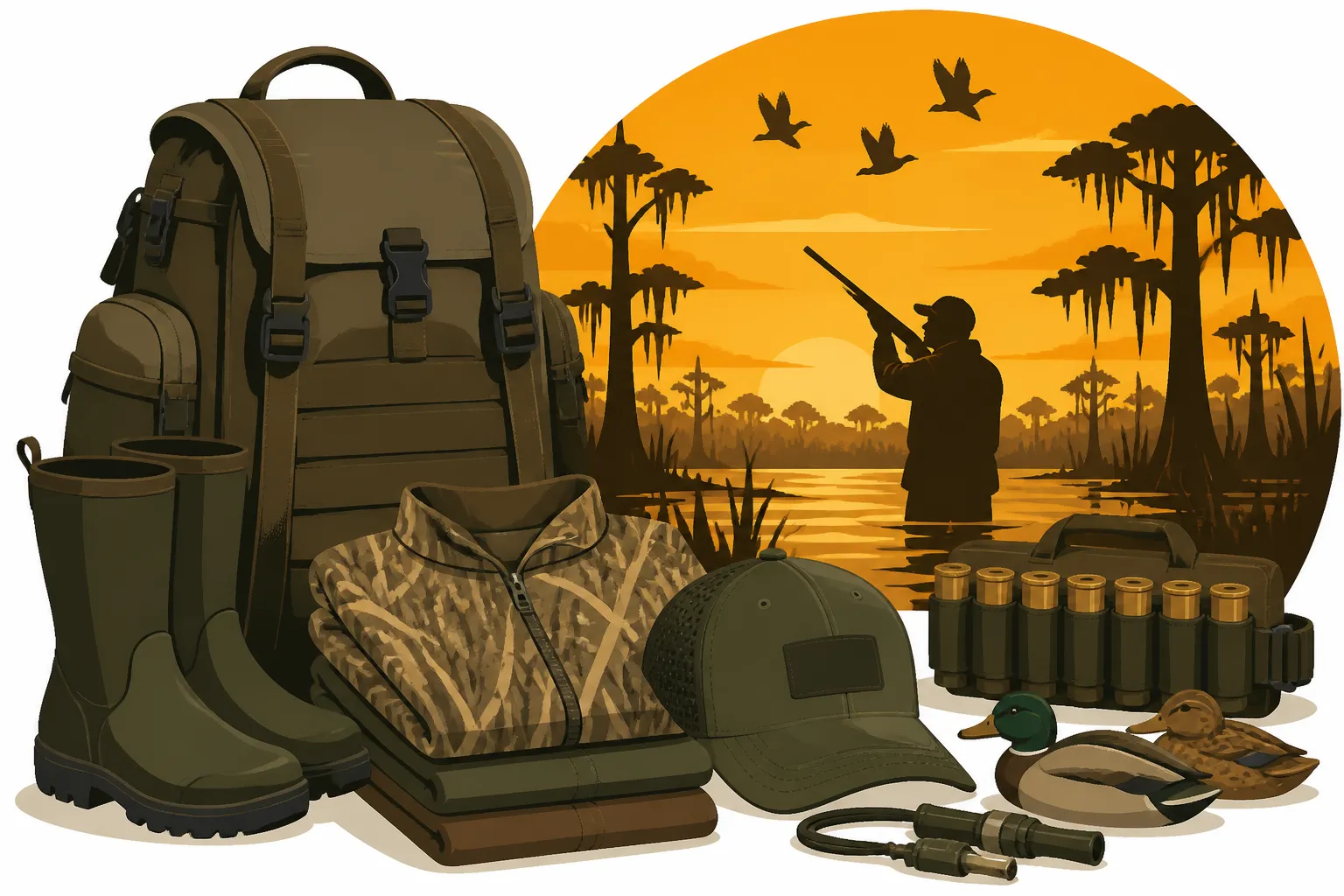
Footwear is another critical component. For many Louisiana hunts, especially those in swampy or marshy areas, waterproof rubber boots are your best friend. Choose a pair that comes up high enough to handle mud, shallow water, and even snake encounters. Snake boots can offer an extra layer of peace of mind in areas known for venomous snakes, particularly in the warmer months. If you're duck hunting, chest waders are non-negotiable. Make sure they fit well and are comfortable for walking and standing in water for extended periods. Even for drier upland hunts, waterproof hiking boots are a smart choice, as morning dew, unexpected puddles, and soft ground are common.
Gear You Can't Forget: From Navigation to Safety
Beyond your clothing, there's a host of specialized gear that can make or break your guided hunt experience. Your guide will have some of these items, of course, but personal preparedness is always a good idea. Having your own essential tools ensures you're ready for anything the Louisiana wilderness throws at you.
Navigation and Communication Tools
Even with a guide leading the way, having your own navigation tools is a smart move. A GPS unit or a smartphone with reliable offline mapping capabilities (like those offered by GoHunt which often include public land boundaries and topographical features) can be invaluable. Signal can be spotty in remote areas like the Hunting the Atchafalaya Basin or deep in the Kisatchie National Forest, so downloaded maps are a must. Carry a portable power bank to keep your devices charged. A good old-fashioned compass and a printed map are also excellent backups, ensuring you can orient yourself even if electronics fail.
Communication is equally vital. A fully charged cell phone is a given, but consider a two-way radio if you're hunting with a group and your guide suggests it. Personal locator beacons (PLBs) or satellite messengers are increasingly popular for solo hunters or those venturing into truly remote areas. While your guide is responsible for your safety, having a way to call for help independently in an emergency is always a good idea. Many guided services found on platforms like BookYourHunt will detail the communication infrastructure in their hunt areas.
Essential Safety and First Aid Items
Safety should always be your top priority. A compact but comprehensive first-aid kit is crucial. It should include basics like bandages, antiseptic wipes, pain relievers, blister treatment, and any personal medications. Consider adding a snakebite kit, though prevention and knowing how to get to medical help are far more important. A sharp knife, a headlamp with extra batteries (red light option for preserving night vision is a bonus), a fire starter, and a whistle are also standard outdoor safety items.
For specific hunts, additional safety gear might be required. If you're in a tree stand, a safety harness is absolutely non-negotiable, and your guide will ensure you use one. When Night Hunting Hogs With Lights on Private Land, proper lighting and communication become even more critical. Think about what specific risks your chosen hunt might present and pack accordingly. Always discuss safety protocols with your guide before the hunt begins.
Hunting Specific Accessories and Comforts
Depending on your quarry, you’ll need specialized accessories. For deer hunting, a good set of binoculars or a rangefinder can make all the difference. A grunt call or rattling antlers might be useful if you're hunting during the rut and your guide approves of using them. For duck hunters, comfortable waders, a good duck call (if you know how to use it), and potentially a small waterproof bag for essentials are key. If you are doing something like Choosing Legal Primitive Firearms Gear, ensure you have all the necessary components for your weapon, including extra powder, caps, or primers, specific to your hunt.
Comfort items can greatly improve your experience. High-quality insect repellent (with DEET or picaridin) is non-negotiable in Louisiana, especially during warmer months. Consider a Thermacell unit to keep mosquitoes at bay in your stand or blind. Sunscreen, sunglasses, and a wide-brimmed hat will protect you from the intense Louisiana sun. Hydration is also paramount; bring a water bottle or hydration pack and stay ahead of thirst. Even if your lodge provides meals, a few favorite snacks can be a lifesaver during a long sit in a stand or blind.
Personal Items and Comforts for Camp Life
A guided hunt often means spending time at a lodge or camp, and while the focus is on the hunt, comfortable camp life contributes significantly to a positive experience. Don't underestimate the small things that can make your downtime more enjoyable.
Lodge or Camp Essentials
Even the most rustic hunting camps usually have basic amenities, but you'll want your personal toiletries: toothbrush, toothpaste, soap, shampoo, and any personal hygiene items you require. A quick-drying towel can be a godsend. Pack comfortable, clean clothes for evenings at the lodge—something to change into after a long day in the woods or marsh. You probably don't want to wear your muddy hunting clothes to dinner!
Many camps have common areas where hunters relax, swap stories, and maybe even watch a little TV. Consider bringing a book, a tablet, or a deck of cards for downtime. Earplugs can be helpful if you're a light sleeper and sharing a bunkhouse. If you're a coffee connoisseur, you might even pack your favorite travel mug for those early mornings. Always check with your outfitter about what amenities are provided—some offer luxurious lodges with everything, while others are more spartan.
Medications and Personal Health
Beyond the first-aid kit, make sure you have an ample supply of any prescription medications you need, stored in their original containers with clear labeling. It's a good idea to bring a copy of your prescriptions or a doctor's note, especially if you're traveling a significant distance. Over-the-counter remedies for common ailments like headaches, allergies, upset stomach, or muscle aches can also be very useful. The physical demands of hunting, such as Physical Demands of a Marsh Duck Hunt or dragging game, can often lead to unexpected soreness.
Don't forget any allergy medications if you have seasonal allergies, as the flora in Louisiana can be different from what you're used to. It’s also wise to bring some motion sickness medication if you're prone to it, especially if your hunt involves boat travel through choppy water or long drives on winding country roads. Staying healthy means staying in the hunt!
Post-Hunt Considerations: Game Care and Travel
The hunt doesn't end when you pull the trigger or release the arrow. Preparing for the post-hunt phase—from game care to traveling home—is crucial for maximizing your harvest and minimizing stress.
Field Dressing and Game Processing Supplies
Most guided hunts include field dressing services, and many outfitters will help with basic processing or have arrangements with local butchers. However, having your own high-quality gutting knife, a bone saw, and some heavy-duty game bags or large plastic trash bags can be incredibly useful. If you plan to Field Dressing a Deer in Warm Weather, quick action and cleanliness are paramount to preserving the meat. Your guide will likely have the necessary tools, but being self-sufficient ensures you're ready if, for instance, you harvest an animal far from the truck.
For transporting your meat home, you’ll need a large cooler. A 100-quart cooler is often a good starting point for deer, but if you're hoping for multiple animals or a larger hog, consider bringing two or coordinating with your guide for options. You'll need plenty of ice, which is usually easy to acquire locally. If you're traveling by air, research airline regulations for transporting game meat well in advance. Some hunters opt to have their meat processed, vacuum-sealed, and shipped directly from the butcher, which is a service some Louisiana outfitters facilitate.
Trophy Care and Transportation
If you're after a trophy, communicate this clearly with your guide beforehand. They can advise on proper cape care in the field. You'll want a sturdy cooler large enough to hold a cape and antlers, or at least the cape. Bringing large garbage bags to keep blood and moisture contained is also a good idea. Some hunters bring rock salt for capes, but check with your taxidermist first on their preferred method of field preservation.
For antlers, especially large ones, consider how you’ll transport them. They might need to be detached from the skull plate (a European mount prep) to fit into a vehicle or checked baggage. Again, airline regulations are key here. Many guides have partnerships with local taxidermists who can handle everything from caping to shipping, making it much easier for out-of-state hunters. Just remember that if you're hunting in a Louisiana's Chronic Wasting Disease Zones, there are specific Louisiana Carcass Movement Restrictions you'll need to adhere to, which could impact how you transport a trophy head.
Important Documents and Finances
Finally, don't forget the essentials for any trip: your driver's license, hunting license, and any required permits. Make sure you've completed your Louisiana Hunter Education Requirements if needed and have proof readily available. Keep your licenses and permits in a waterproof bag or pouch that's easily accessible.
Carry a mix of payment methods: credit cards, debit cards, and some cash for small purchases, tips, and unexpected expenses. Tipping your guide and any camp staff is customary and a great way to show your appreciation for their hard work, so budget for that. Discuss tipping etiquette with your outfitter beforehand if you're unsure. A copy of your booking confirmation and contact information for your guide and emergency contacts are also good to have on hand.
Guided Hunt Packing Checklist
To help you organize your gear, here's a comprehensive checklist to reference as you pack for your Louisiana guided hunt. Remember to customize this based on the specific type of hunt and the season.
| Category | Item | Deer Hunt Specifics | Duck Hunt Specifics | Hog Hunt Specifics |
|---|---|---|---|---|
| Clothing | Moisture-wicking base layers (tops/bottoms) | Quiet camo outer layer | Insulated waterproof outerwear | Durable, thick pants |
| Mid-weight insulating layer | Hunting specific camo pattern | Dark/marsh camo pattern | Darker camo/night vision compatible | |
| Quality waterproof rain jacket & pants | Blaze orange vest/hat (gun season) | – | – | |
| Footwear | Comfortable hiking socks | High rubber boots | Chest waders with appropriate boots | Sturdy hiking boots |
| Waterproof hiking boots | Snake boots (if needed) | Extra waterproof socks | Extra rubber boots | |
| Headwear/Handwear | Warm hat/beanie (cold weather) | Camo cap/beanie | Waterproof gloves/mittens | Gloves (durable, puncture resistant) |
| Sun hat/baseball cap | Lightweight hunting gloves | Face mask/face paint | Headlamp with red light | |
| Navigation/Optics | GPS unit or phone with offline maps | Binoculars | Rangefinder | Thermal/Night Vision Device (if legal/using) |
| Compass and physical map | Rangefinder | Headlamp with red light | Powerful spotlight | |
| Safety/First Aid | Personal first-aid kit | Drag rope/game cart (if permitted) | Emergency signaling device | Heavy-duty knife/hog sticker |
| Whistle | Gutting knife | Small survival kit | Ear protection | |
| Fire starter/lighter | Safety harness (tree stand hunting) | Life vest (boat travel, if not provided) | – | |
| Personal Comfort | Insect repellent (DEET/Picaridin) | Thermacell unit | Lip balm | Water bottle/hydration pack |
| Sunscreen | Hand warmers (cold weather) | Snacks (waterproof container) | Quick-dry towel | |
| Sunglasses | Snacks | – | – | |
| Water bottle/hydration pack | – | – | – | |
| Camp Essentials | Toiletries and personal medications | Comfortable camp clothes | Book/entertainment | Power bank/charging cables |
| Quick-drying towel | – | – | – | |
| Cash for tips/incidentals | – | – | – | |
| Game/Trophy Care | Large cooler with ice | Heavy-duty game bags | Small cooler for birds | Large cooler for hog meat |
| Large heavy-duty trash bags | Trophy tag/zip ties | Game strap | Heavy-duty plastic bags | |
| Documents | Hunting license & tags | Photo ID | Booking confirmation | Emergency contact info |
| Hunter education card | – | – | – |
Disclaimer
This article is for general informational purposes only and does not constitute professional advice. Laws, prices and regulations vary by location and change over time. Consult a qualified professional for guidance on your specific situation.