Red River Wildlife Management Area
Hunting public land in Louisiana can feel like a maze, especially when you're trying to figure out which wildlife management areas offer the best opportunities and how to truly navigate them. The Red River Wildlife Management Area, tucked into the heart of the state, often flies under the radar for many, but it holds some fantastic potential for those willing to put in the scouting and effort. This guide will walk you through everything you need to know to successfully hunt the Red River WMA, from understanding its unique habitat to tackling its most popular game species.
An Overview of Red River Wildlife Management Area
The Red River Wildlife Management Area is a sprawling tract of prime bottomland hardwood forest, located in Concordia Parish, right on the iconic Red River. This area, managed by the Louisiana Department of Wildlife and Fisheries (LDWF), is a testament to the rich ecological diversity of Louisiana's river systems. For hunters, it represents a chance to experience traditional delta hunting, with all its challenges and rewards. It's not a place for the faint of heart, but for those who love the deep woods and the intricacies of river-influenced habitat, it's a gem.
Location and Unique Habitat Features
Nestled near the confluence of the Red and Black Rivers, the WMA benefits from a dynamic landscape shaped by seasonal flooding and nutrient-rich soils. This isn't your typical piney woods hunting experience. Instead, you'll find a mosaic of mature bottomland hardwoods, cypress-tupelo sloughs, and dense cane thickets. The timber is primarily oak, pecan, sweetgum, and elm, providing abundant mast crops for deer and squirrels. Interspersed throughout are oxbow lakes and bayous that serve as critical water sources and travel corridors for wildlife.
The river itself plays a crucial role, influencing everything from deer movement to waterfowl resting areas. Understanding the historical flood patterns and how they dictate habitat conditions is key to success here. When water levels are high, deer will move to higher ground within the WMA, often concentrating in specific ridges or drier sections. Low water exposes more ground, creating new travel lanes and feeding opportunities. This constant flux means that a good scouting trip needs to happen close to your hunt date, as conditions can change rapidly. You'll definitely want to keep an eye on river gauge reports as part of your prep.
Accessibility and Entrance Points
Access to Red River WMA is primarily off Louisiana Highway 15, which runs along the eastern boundary. Several designated entrances and boat launches provide access to different sections of the WMA. For many areas, vehicle access is limited to main roads, with further penetration requiring foot travel, ATVs on designated trails, or a boat. River access via the Red River or its associated oxbows is also a popular way to reach some of the more secluded interior spots, though this requires careful navigation.
Finding your way around once you're inside can be a challenge, especially if you're new to the area. The dense canopy and winding sloughs can make it easy to get disoriented. This is where a robust mapping application like onX Hunt becomes an invaluable tool. Before you even set foot on the WMA, you can use it to identify entrance points, delineate WMA boundaries, mark potential stand sites, and plan your entry and exit routes. Having a reliable GPS signal and downloaded maps for offline use is crucial, as cell service can be spotty in these remote bottomlands. Scouting Louisiana Public Land Before Season is a great resource to help you prepare before your boots hit the dirt.
Deer Hunting at Red River WMA
Deer hunting is arguably the most popular pursuit at Red River WMA, and for good reason. The bottomland habitat provides excellent forage and cover, allowing deer to grow to impressive sizes. However, success here doesn't come easy. It demands careful scouting, strategic stand placement, and a deep understanding of how deer use this dynamic environment. Expect competition, especially on opening weekends, but don't let that deter you. There are always pockets of less-pressured areas for those willing to work a little harder.
Tactics for Bottomland Whitetails
Hunting whitetails in a bottomland WMA like Red River means adapting your tactics to the terrain. Deer here often gravitate towards areas of slight elevation, known as "ridges" or "islands," especially during higher water periods. These can be subtle, sometimes just a foot or two higher than the surrounding swamp, but they become critical travel corridors and bedding areas. Look for old logging roads or natural levee systems that offer elevated dry ground. Deer will often follow these lines of least resistance, especially when moving between feeding and bedding areas.
Another key tactic is focusing on mast crops. When the acorns are dropping, deer will congregate in areas with an abundance of oak trees. Scouting for fresh sign – droppings, rubs, and tracks – under productive mast trees can lead to hot spots. Be prepared for varied conditions; if it's been a poor acorn year, deer might shift to browse or other food sources. This requires flexibility and an ability to quickly adapt your strategy based on what you find on the ground. Understanding Late-Season Food Sources for Louisiana Whitetails can be particularly helpful if you're hunting later in the season.
Hunting Pressure and Strategy
Like many public hunting areas in Louisiana, Red River WMA experiences significant hunting pressure, particularly during the firearms seasons. You'll likely encounter other hunters, especially closer to main roads and easily accessible areas. To increase your chances, you'll often need to venture deeper into the WMA, away from the crowds. This means being prepared for longer walks, potentially dealing with muddy conditions, and being self-sufficient.
Consider using a kayak or pirogue to access areas unreachable by foot or larger boats. Many sloughs and bayous weave deep into the WMA, offering quiet entry to less disturbed pockets. Setting up a stand along a slough bank or at the intersection of several natural drainages can be highly effective, as deer often use these features as cover and travel routes. Don't be afraid to experiment with mobile hunting setups, like climbing stands or saddle hunting, which allow you to quickly adjust to deer movement and pressure. Early season archery offers a quieter experience, giving you a jump on the When Louisiana's Archery Season Opens.
Turkey Hunting Opportunities
While deer hunting gets a lot of attention, Red River WMA also offers promising opportunities for turkey hunters, particularly for the eastern subspecies of wild turkey that thrive in these bottomland environments. The dense woods and riverine habitat provide excellent roosting sites and forage, but like deer, these birds can be challenging to locate and call in.
Spring Turkey Tactics at Red River
Spring turkey hunting at Red River WMA is a thrilling experience, steeped in the challenge of navigating thick cover and deciphering gobbler behavior. Focus your scouting efforts on identifying potential roosting areas – often large, mature trees along sloughs, creek beds, or slight elevations. Listening for gobblers at first light from these vantage points can help you pinpoint their general location. Once you hear a bird, the real work begins.
Run-and-gun tactics, where you move strategically through the woods, stopping to call and listen, can be effective here. Don't sit in one spot for too long if you're not getting a response. Be ready to move quickly and set up defensively once you get a gobbler interested. Decoy placement can be tricky in dense woods, but a single hen decoy can sometimes be enough to draw a wary tom into range. Just remember that patience and persistence are your greatest allies when chasing these wily birds. Learning about Run-and-Gun Turkey Tactics on Public Land can give you an edge.
Navigating Dense Cover and Roosting Areas
The dense undergrowth and thick cane brakes characteristic of Red River WMA can make it tough to get around silently and get a clear shot. When scouting, look for natural openings, old logging trails, or areas with slightly more open understory where you can set up. Knowing the contours of the land, even subtle ones, can help you predict where turkeys might travel or strut.
Roosting a bird the evening before your hunt significantly increases your odds. After the evening fly-up, listen for that characteristic "tree yelp" or the rustle of wings as they settle in. Once you have a general idea, retreat quietly and plan your approach for pre-dawn. The goal is to get as close as possible without disturbing them, so you can be set up and ready to call when they fly down at first light. Sometimes, finding the right setup means pushing past easily accessible areas. Roost Hunting Louisiana Gobblers offers detailed strategies for this.
Waterfowl and Small Game Pursuits
Red River WMA isn't just for big game. Its diverse habitat also supports a healthy population of waterfowl, particularly during migration, and offers excellent opportunities for small game hunting. These pursuits can provide a different kind of challenge and a chance to experience the WMA's ecosystems in varied ways.
Waterfowl Hunting in Bottomland Sloughs
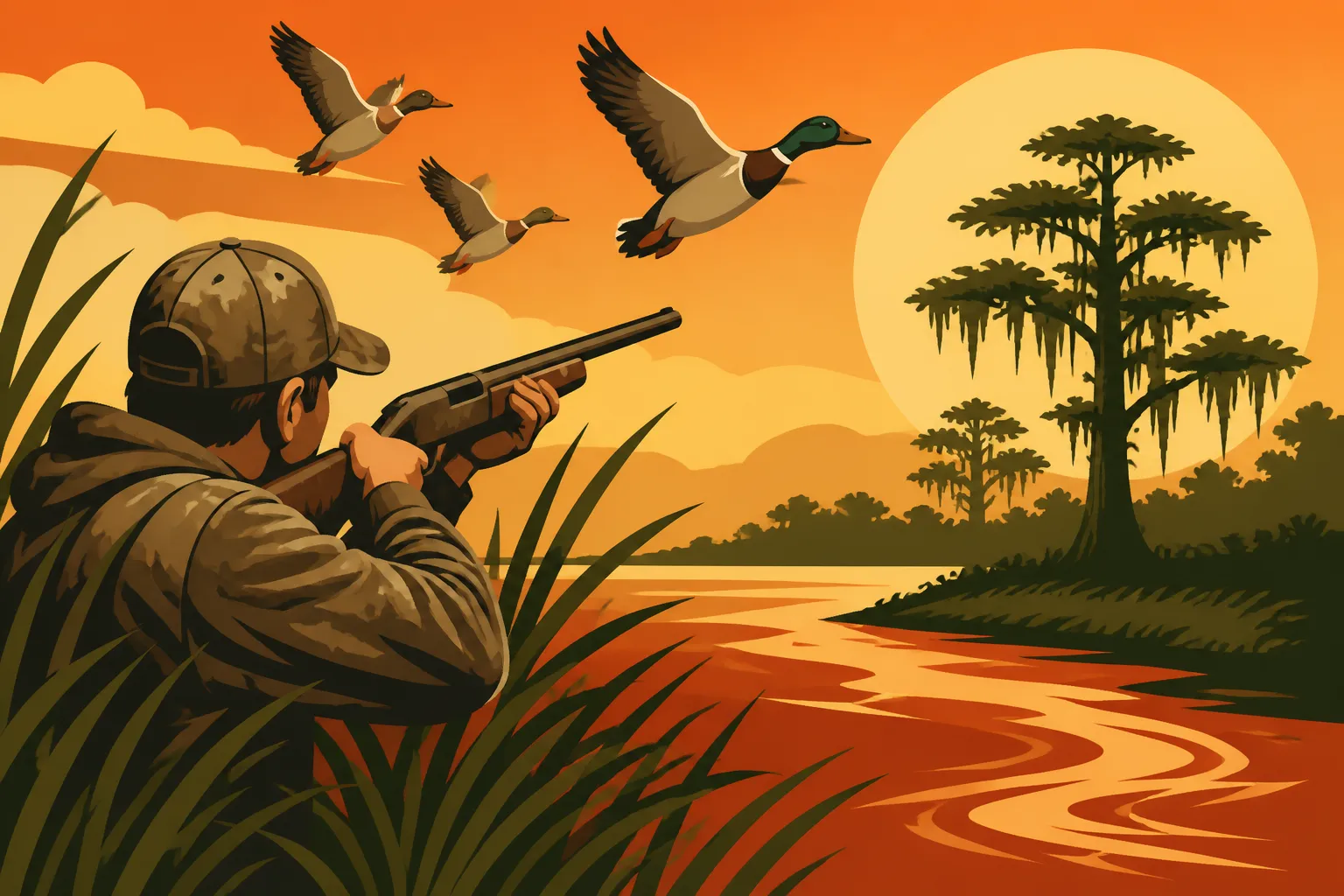
For the waterfowl enthusiast, Red River WMA offers a unique bottomland experience, far removed from the wide-open marsh. Here, you'll be targeting ducks, primarily wood ducks and mallards, in flooded timber, sloughs, and oxbow lakes. The key is to find areas with shallow, flooded woods that hold natural food sources like acorns or smartweed. Wood ducks are particularly fond of the quiet, secluded sloughs and are often the most common duck species encountered.
Setting up requires scouting for areas where ducks are actively feeding or resting. A stealthy approach by pirogue or kayak can get you into secluded pockets. Decoy spreads can be simpler here – often just a half-dozen or a dozen decoys positioned in an opening in the timber. Calling should be soft and realistic, mirroring the natural sounds of ducks dabbling in flooded woods. Be prepared for early morning darkness and navigating by headlamp through timber, which adds to the adventure. Working Flooded Timber for Mallards delves deeper into these specific tactics.
Squirrel and Rabbit Hunting
Small game hunting is a fantastic way to enjoy Red River WMA, especially for those who prefer a more active style of hunting or are looking for a less crowded experience. The abundant hardwood trees make for excellent squirrel habitat, while dense thickets and brushy edges provide cover for rabbits.
Squirrel hunting is often a walking man's game, focusing on areas with nut-bearing trees like oaks, pecans, and hickory. Early season hunts, when leaves are still thick, require keen eyes and slow movements. As the leaves fall, squirrels become easier to spot, but also warier. Listen for their chatter and the sound of falling nuts. For rabbits, focus on the edges of clearings, thick briar patches, and the dense understory along sloughs. A good pair of beagles can make rabbit hunting a truly memorable experience, but still-hunting these areas can also produce results for diligent hunters. Remember to check the Louisiana Squirrel and Rabbit Season Rules before heading out.
Navigating Regulations and Resources
Hunting on any WMA comes with its own set of rules and regulations, and Red River is no exception. Understanding these nuances is crucial for a safe and legal hunt. The LDWF provides extensive resources, but it's up to each hunter to stay informed.
Understanding WMA-Specific Regulations
Red River WMA has specific regulations that often differ from general statewide hunting laws. These can include unique season dates, bag limits, weapon restrictions, and limitations on vehicle or ATV use. For instance, some WMAs might have different primitive firearms regulations or archery-only periods. Always consult the current Louisiana Hunting Regulations pamphlet, specifically the section pertaining to Red River WMA, before your hunt. Don't rely on information from previous years, as regulations can and do change.
Pay close attention to designated areas for specific activities. There might be sections closed to hunting, or areas with specific rules for waterfowl blinds. These regulations are in place to manage wildlife populations, reduce user conflict, and ensure public safety. Failing to understand them can lead to citations and a ruined hunting trip. The LDWF website and their mobile app are excellent resources for checking real-time updates and downloading regulations.
Utilizing Mapping and Information Tools
In today's hunting world, digital mapping tools are indispensable, especially on public land like Red River WMA. As mentioned earlier, onX Hunt can be a game-changer. It allows you to clearly see WMA boundaries, public/private land distinctions, topographical features, and even recent satellite imagery to identify changes in habitat. You can drop pins for potential stand locations, mark rubs or scrapes, and track your movements to avoid getting lost.
Beyond mapping, general hunting information resources like GoHunt can offer insights into game behavior, seasonal patterns, and gear selection, even if their primary focus isn't always Louisiana-specific. Use these tools in conjunction with LDWF's official WMA maps and current regulations. When you combine accurate digital mapping with the official rules, you create a powerful advantage, ensuring you know exactly where you are, where you can go, and what you're allowed to do. Having a solid understanding of Using the LDWF Map Tool is also a great complement to these apps.
Unique Challenges and Considerations
Hunting the Red River WMA offers a rewarding experience, but it also comes with a unique set of challenges that hunters need to be aware of. From dealing with the unpredictable nature of river systems to managing the presence of chronic wasting disease, preparation and adaptability are key.
River Dynamics and Flood Season Impact
The very nature of the Red River WMA is defined by its proximity to the Red River. This means seasonal flooding is a constant factor that can drastically alter hunting conditions. During periods of high water, large sections of the WMA may become inundated, pushing wildlife to higher ground. This can concentrate deer in smaller, drier areas, potentially making them easier to locate but also more vulnerable to pressure. Conversely, it can make access extremely difficult, limiting foot traffic and requiring boat access only.
Hunters need to monitor river levels closely before and during their hunt. Sudden rises can strand hunters or make previously accessible areas impassable. Conversely, falling water levels expose new mudflats and feeding areas, attracting deer and waterfowl. Always have a contingency plan for changing water conditions, especially if you're venturing deep into the WMA by boat or foot. Safety should always be your top priority. Getting to know Wind and Thermals in Swamp Bottomland can help you adapt your approach in these conditions.
Chronic Wasting Disease Zone Status
It's critical for hunters to be aware of the Chronic Wasting Disease (CWD) status of any WMA, and Red River WMA is located in Concordia Parish, which is part of Louisiana's CWD management zone. This designation brings with it additional regulations and responsibilities for hunters. These typically include mandatory CWD testing of harvested deer, restrictions on carcass movement out of the zone, and potential baiting bans.
Before planning your hunt at Red River WMA, always check the latest LDWF CWD regulations. These rules are in place to monitor and prevent the spread of this serious deer disease. Be prepared to submit your deer for testing at designated sampling stations, and understand what parts of the carcass you can and cannot transport. Adhering to these regulations is not just about legal compliance; it's about being a responsible conservationist and helping to protect Louisiana's deer herd. Information on Louisiana's New CWD Management Zone Law is crucial for anyone hunting in this area.
WMA Amenities and Primitive Camping
While Red River WMA is a public hunting area, don't expect extensive amenities. This is a primitive experience, which is part of its charm for many. You'll find designated parking areas, boat launches, and generally marked trails, but typically no developed campgrounds, potable water, or permanent facilities. This means you need to be entirely self-sufficient, bringing in everything you need and packing out everything you bring in.
Primitive camping may be allowed in designated areas or under specific conditions, but always verify this with the current WMA regulations. If camping is permitted, be prepared for rustic conditions. Plan for waste disposal, fire safety, and securing your camp from wildlife. The lack of amenities means fewer distractions and a more immersive hunting experience, but it demands thorough preparation. It's a place where Louisiana Deer Camp Traditions can truly come alive, even if it's just a temporary setup for a few days.
Table: Red River WMA Game Species Overview
Here's a quick look at the primary game species you can pursue at Red River WMA and some general considerations for each:
| Game Species | Primary Habitat | Best Time to Hunt | Key Considerations |
|---|---|---|---|
| White-Tailed Deer | Bottomland Hardwoods, Sloughs, Cane Thickets | Archery (Early), Firearms (Late Nov-Dec) | High pressure, CWD zone, monitor river levels |
| Wild Turkey | Mature Hardwood Forests, Roosting along Sloughs | Spring (March-April) | Requires extensive scouting, good calling skills |
| Waterfowl | Flooded Timber, Oxbow Lakes, Secluded Sloughs | Winter (Nov-Jan) | Focus on wood ducks/mallards, boat access often needed |
| Squirrel | Hardwood Forests (Oak, Pecan, Hickory) | Early Fall (Oct-Nov), Winter (Jan-Feb) | Active pursuit, listen for nut cutting, abundant |
| Rabbit | Dense Thickets, Briar Patches, Field Edges | Fall/Winter (Oct-Feb) | Best with dogs or still-hunting thick cover |
Disclaimer
This article is for general informational purposes only and does not constitute professional advice. Laws, prices and regulations vary by location and change over time. Consult a qualified professional for guidance on your specific situation.