Trapping Louisiana Muskrat and Nutria
The delicate balance of Louisiana's precious wetlands is under constant threat, and for many landowners and conservationists, the sight of a "marsh rat" or, even worse, the tell-tale sign of a nutria's destructive foraging, brings a familiar frustration. These small mammals, though sometimes overlooked, can wreak havoc on our vital coastal ecosystems and even agricultural fields. This guide is here to walk you through the effective and legal methods for trapping Louisiana muskrat and nutria, helping you protect our unique environment and manage these populations responsibly.
Understanding Louisiana's Marsh Ecosystem and the Impact of Muskrats and Nutria
Louisiana's coastal marshes are incredibly dynamic, a complex web of life where every species plays a role. It's a place of incredible beauty and economic importance, but it's also incredibly fragile. Understanding the creatures that inhabit it, especially those that can cause damage, is the first step toward effective management.
The Role of Muskrats in a Healthy Marsh
Muskrats are native residents of Louisiana's wetlands, and in balanced numbers, they're just another part of the ecosystem. They create dens and feeding platforms, which can actually provide microhabitats for other small creatures. They're primarily vegetarians, munching on a variety of aquatic plants. Historically, they've been an important furbearer for many families in south Louisiana, providing a seasonal income from their pelts.
However, like any species, when muskrat populations boom, they can start to impact the marsh negatively. Their burrowing can weaken levees and dikes, and excessive feeding on certain plant species can lead to localized "eat-outs" where vegetation is severely reduced. While not as destructive as nutria, an unchecked muskrat population can still contribute to marsh degradation, particularly in areas already stressed by saltwater intrusion or subsidence. It's all about finding that healthy equilibrium, and sometimes, active management through trapping is necessary to achieve it.
Nutria: The Invasive Marsh Destroyers
Now, let's talk about the real menace: the nutria. These aren't native to Louisiana; they were introduced in the 1930s for fur farming and, predictably, escaped into the wild. Since then, they've exploded in population, becoming one of the most significant threats to our wetlands. If you've ever seen a patch of marsh that looks like it's been rototilled, chances are you've witnessed the devastating work of nutria.
Unlike muskrats, nutria are voracious eaters, capable of consuming huge amounts of marsh vegetation. They don't just eat the above-ground parts; they dig up and consume the roots and rhizomes of marsh grasses, essentially destroying the "glue" that holds the soil together. This leads to what biologists call "nutria eat-outs," vast areas of denuded marsh that quickly convert to open water. This loss of land contributes directly to coastal erosion and makes our communities more vulnerable to storm surge. The sheer scale of damage caused by these rodents is staggering, and it's why programs like the Coastwide Nutria Control Program have been so vital. Learning how Nutria and Louisiana Wetlands are interconnected, and specifically how How Nutria Damage Louisiana Marsh, really highlights the urgency of this issue.
Why Trapping is a Crucial Management Tool
Given the ecological damage and economic impact, especially from nutria, trapping isn't just a recreational activity; it's a critical tool for wetland management and conservation in Louisiana. For muskrats, it helps maintain a healthy population balance, preventing overgrazing in sensitive areas. For nutria, trapping is a direct and effective method of population control, slowing down their destructive march across our coastal zone.
Without active trapping, both populations, particularly nutria, would continue to grow unchecked, leading to even more significant marsh loss. It's a proactive way to protect the future of our state's wetlands, which are essential for everything from commercial fishing to storm protection. Responsible trapping, carried out with knowledge and respect for the regulations, plays a vital role in keeping our Louisiana ecosystem as healthy as possible.
Essential Gear and Setup for Muskrat and Nutria Trapping
Stepping into the world of trapping, especially in the unique environment of Louisiana's marshes and bayous, requires specific gear and a thoughtful approach. You can't just throw any old trap out there and expect success. The right tools, coupled with an understanding of how to use them, will make all the difference.
Choosing the Right Traps
When it comes to muskrats and nutria, there are a few tried-and-true trap types that are effective and, most importantly, legal in Louisiana.
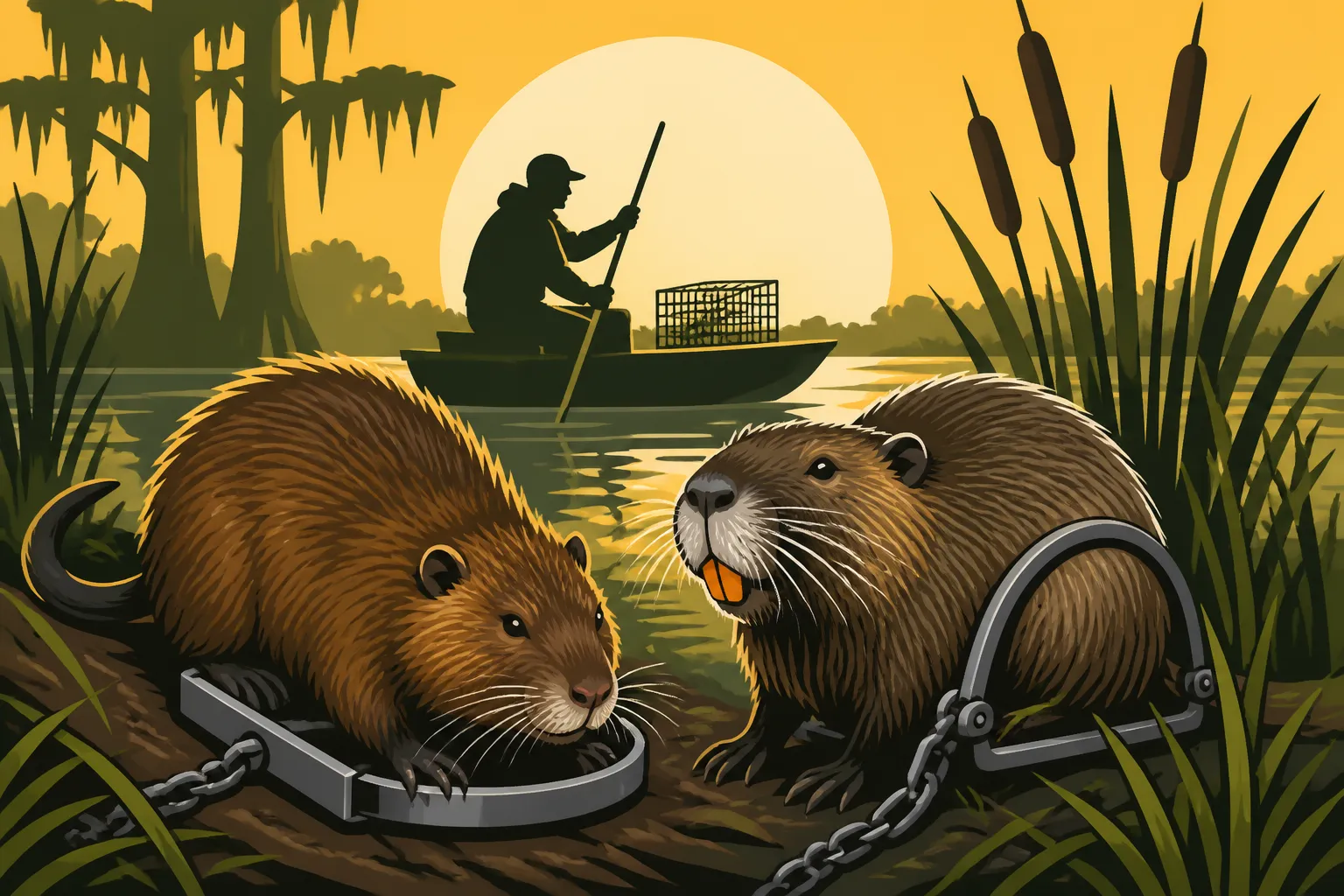
- Conibear Traps (Body-Grip Traps): These are perhaps the most popular for both species, especially in water sets. The most common sizes are the 110 or 120 for muskrats and the 220 or 330 for nutria. They are designed for quick, humane dispatch when placed correctly. For muskrats, a 110 or 120 placed in a run or a den entrance can be very effective. For nutria, you'll want the larger 220 or 330, set in their travel lanes or feeding areas. Always be mindful of non-target species when using larger traps, and ensure they are properly secured and submerged if possible to minimize risk to other wildlife and domestic animals.
- Foothold Traps: These traps, like the #1 or #1.5 coil-spring or longspring for muskrats, and #2 or #3 for nutria, are designed to catch and hold the animal by the foot. They require careful placement to ensure a clean catch and often need to be paired with a drowning wire or deep water to ensure a humane dispatch. These are excellent for sets where you want to attract the animal to a specific spot with bait. When using foothold traps, especially for nutria, make sure your trap chain is anchored securely, as these animals are powerful.
- Cage Traps: While less common for muskrats, cage traps can be effective for nutria, particularly around gardens or in residential areas where you want to avoid harm to other animals. They require regular checking and the nutria must then be humanely dispatched once caught. The key to success with cage traps is good bait placement and ensuring the trap is stable and camouflaged as much as possible.
Remember to check Louisiana's Small Game Season Rules and specific trapping regulations for any updates on trap types or sizes permitted, as these can change.
Baits, Lures, and Scents
Knowing what to put in or around your traps is half the battle. Both muskrats and nutria are primarily vegetarians, but they have their preferences.
- For Muskrats: Their diet consists mainly of aquatic vegetation. Sweet apples, carrots, or even parsnips can be very effective as bait. Many trappers also use commercially available muskrat lures, often based on castor or other musky scents, to attract them to the trap site. Placing a bit of bait on a stick above the trap, or scattering some around, can draw them in.
- For Nutria: These critters aren't too picky when it comes to vegetation. Sweet potatoes, carrots, corn, apples, and even citrus fruits like oranges are all excellent choices. For an added attractant, some trappers use a touch of vanilla extract on their bait. There are also commercial nutria lures designed to pique their curiosity. Remember, nutria are often attracted to fresh disturbance, so a bit of chewed-up vegetation or a fresh track in the mud can be a good indicator of where to set a trap, especially when you're doing some serious scouting, much like you would for deer by Reading Louisiana Mud for Fresh Deer Movement.
The key is fresh bait and a consistent presence. Replenish your bait regularly, especially in warm Louisiana weather.
Setting Up Your Traplines Effectively
A well-placed trapline isn't just about setting a trap; it's about understanding the animals' movements and maximizing your chances of success.
- Scouting: Before you set a single trap, spend time scouting. Look for muskrat runs along marsh edges, pushed-up feeding platforms, or den entrances. For nutria, look for their distinctive "eat-outs," large areas where vegetation is mowed down to the roots, or their trails leading from water to higher ground. You might also find their droppings or tracks in soft mud. Areas near canal banks, ditches, and the edges of agricultural fields are prime locations for nutria.
- Placement: For muskrats, runs and den entrances are ideal. For nutria, focus on their travel lanes, feeding areas, and points where they move between water and land. Conibear traps should be set to intercept their movement, often underwater or just at the water's surface in a run. Footholds can be set on small mudflats, pushed-up banks, or at the entrance to a feed bed, always with a drowning system if possible.
- Anchoring: Louisiana's soft marsh soil and powerful animals mean you need solid anchors. Use sturdy rebar stakes, driven deep, or heavy logs and roots to secure your traps. A nutria can easily pull a poorly anchored trap away.
- Safety: Always prioritize safety. Use a setting tool for conibear traps to avoid accidents. Mark your trap locations, especially on public land, according to regulations. And remember, always be aware of your surroundings, particularly when trapping near residential areas or public access points. GoHunt provides some excellent resources and articles that cover best practices for trapping and scouting, which can be invaluable for refining your approach in the field.
Legalities and Best Practices for Trapping in Louisiana
Navigating the rules and regulations is just as important as knowing how to set a trap. Louisiana has specific guidelines to ensure safe, ethical, and sustainable trapping practices. Ignorance of the law is never an excuse, so let's get you up to speed.
Louisiana Trapping License Requirements
First things first, if you plan to trap anything in Louisiana, you're going to need a license. It's not just a suggestion; it's a legal requirement.
- Who Needs One: Generally, anyone 16 years of age or older who intends to trap furbearers in Louisiana needs a valid trapping license. This includes residents and nonresidents alike.
- Where to Get It: You can typically purchase your Louisiana trapping license online through the Louisiana Department of Wildlife and Fisheries (LDWF) website, at their headquarters in Baton Rouge, or from authorized vendors across the state. It's usually part of the broader hunting and fishing license system.
- What It Covers: A standard trapping license will cover species designated as furbearers, which includes muskrats, nutria, mink, otter, beaver, bobcat, coyote, and others. However, always double-check the current year's regulations booklet for any specific species exclusions or additional tags that might be required. It’s important to familiarize yourself with the full scope of Louisiana Trapping License Requirements before heading out into the marsh.
Failing to have the proper license can result in fines and confiscation of your equipment, so make sure you're squared away before you even think about setting a trap.
Permitted Trapping Methods and Regulations
Louisiana has detailed rules about how you can trap, and these are designed to ensure humane practices and prevent conflicts with other land uses.
- Trap Types and Sizes: As discussed earlier, conibear, foothold, and cage traps are generally permitted. However, there are often specific size restrictions for foothold traps (e.g., maximum jaw spread) and requirements for how they are set (e.g., offset jaws, padded jaws) to minimize injury. The larger conibear traps (220 and 330) are usually restricted to water sets or elevated dry land sets to reduce the chance of catching domestic animals. Always refer to the latest LDWF regulations pamphlet for precise specifications.
- Setback Distances: This is a crucial one, especially if you're trapping anywhere near developed areas or public access. There are often minimum distances traps must be set away from public roads, residences, and other designated areas. These rules are in place to protect pets, livestock, and people who might unknowingly encounter a trap.
- Check Times: Louisiana law generally requires trappers to check their traps at least once every 24 hours. This ensures that any caught animal is either humanely dispatched or released quickly, minimizing suffering. This is a fundamental aspect of ethical trapping.
- Reporting: While there isn't typically mandatory reporting for individual muskrat or nutria catches for recreational trappers, commercial trappers might have different requirements. Always stay informed about any changes to reporting laws.
Remember, the goal is always to practice responsible trapping. This also applies to other species, so if you're interested in the broader picture, you might want to learn more about Louisiana Muskrat and Mink Trapping Trends, or even Louisiana Beaver Population and Damage for other nuisance animals.
Ethical Considerations and Humane Practices
Beyond the letter of the law, there's the spirit of ethical trapping. As responsible stewards of the land and its wildlife, we have a duty to minimize harm and ensure our actions are as humane as possible.
- Humane Dispatch: When an animal is caught, the goal is a quick and humane dispatch. Trappers should be proficient in methods that achieve this efficiently, such as a quick, decisive shot to the head for nutria, or blunt force trauma to the head for muskrats, ensuring instantaneous death. Prolonged suffering is unacceptable.
- Avoiding Non-Target Species: While traps are set with a target animal in mind, accidental catches can happen. Proper trap selection, placement, and baiting techniques can significantly reduce the risk. For example, setting larger conibears in deep water makes it less likely to catch small domestic animals. If you do catch a non-target species that isn't a furbearer or legal to harvest, it must be released unharmed if possible. This is where those setback distances are really important.
- Responsible Land Stewardship: Trapping should be done with respect for the environment. Avoid leaving trash, damaging habitat unnecessarily, or otherwise degrading the land. This includes respecting private property boundaries, always securing permission if you're not on your own land. On public land, understanding the specific rules for Louisiana Wildlife Management Areas is also paramount, as regulations can differ from private property. Being a good steward not only enhances your reputation as a trapper but also helps maintain public acceptance of trapping as a management tool.
Field Tactics for Maximizing Your Muskrat and Nutria Harvest
Getting out there and actually setting traps in the unique and sometimes challenging Louisiana landscape requires a blend of keen observation and specific techniques. It's a bit of an art, really, reading the subtle signs these animals leave behind.
Reading the Marsh for Sign
The marsh tells a story if you know how to read it. Before you even think about placing a trap, you need to understand where the muskrats and nutria are active.
- Identifying Muskrat Runs and Feeding Beds: Muskrats are creatures of habit. Look for narrow, well-worn trails or "runs" through the marsh grass, often leading from water to higher ground or a den. You'll also see their "pushed-up" feeding platforms, small mounds of vegetation where they sit and eat. These are prime locations for setting smaller conibear traps. The edges of canals, ditches, and bayous are particularly good places to scout for these signs.
- Spotting Nutria "Eat-Outs" and Trails: Nutria sign is usually more dramatic. Look for large, denuded areas where the marsh grass has been completely consumed, often with distinct root damage. These are the infamous "nutria eat-outs." They'll also leave wide, matted trails through vegetation, leading to and from these feeding zones, or from water to dry ground where they might rest or burrow. You might even spot their large, bright orange incisors marks on vegetation. Pay close attention to areas where there’s a transition from deeper water to emergent vegetation, or around field edges bordering waterways. GoHunt has some fantastic articles on scouting techniques for various game, and while it might not be specific to nutria, the principles of looking for travel corridors, feeding areas, and fresh sign are universal.
Water Setups for Muskrats
Muskrats are primarily aquatic, so many of your most effective sets will be in the water.
- Run Sets: This is a classic. Identify a well-used muskrat run, usually a narrow channel they travel through. Place a 110 or 120 conibear directly in the run, often supported by stakes on either side to hold it firmly in place. Ensure the trap is mostly submerged, with just the trigger wires exposed. The muskrat will swim through the run and directly into the trap.
- Den Entrance Sets: Muskrats often burrow into banks. If you find an active den entrance underwater, place a conibear directly in front of it. The muskrat will instinctively use its home, making it a high-percentage set.
- Feed Bed Sets: If you locate a regular feeding bed, you can either place a conibear in the water leading to it or use a foothold trap on the bank or shallow water near the bed, baited with apple or carrot. If using a foothold, ensure it's a drowning set, meaning the caught animal can quickly reach deep water and dispatch itself. This is a more humane method and prevents the animal from escaping or suffering.
Land and Water Sets for Nutria
Nutria are more versatile than muskrats, using both land and water extensively, which gives you more options for trap placement.
- Trail Sets (Land-Based): Locate a well-worn nutria trail leading from the water to a feeding area or burrow. Place a 220 or 330 conibear directly in the trail, supported by stakes and camouflaged with surrounding vegetation. For foothold traps, set them in the trail and cover lightly with leaves or mud, ensuring the trap is firmly anchored. Bait can be placed just beyond the trap to entice them.
- Blind Sets (Water-Based): These are sets placed in the water without bait, relying solely on the animal's natural movement. If you find a narrow channel, culvert, or choke point that nutria regularly use, a submerged 220 or 330 conibear can be incredibly effective. Ensure the trap is fully submerged and the triggers are facing the direction of travel.
- Bait Sets (Water or Land): For particularly wary nutria, or in areas where you want to draw them in, a bait set is great. Find a shallow spot along a bank or a small dry patch where nutria frequent. Set a foothold trap (size #2 or #3) with a drowning wire or in deep water, and place tempting bait like sweet potatoes or corn just beyond the trap. Cage traps also excel here, loaded with enticing bait.
- Floating Raft Sets: In areas with extensive open water but little solid ground, some trappers construct small floating rafts with bait. A trap can be set on the raft, or in the water just around it, for nutria that come to feed.
Consistency is key. Check your traplines regularly, preferably every 24 hours, and adjust your sets based on what you're seeing. If a trap isn't catching anything, don't be afraid to move it to a more promising location. This proactive approach will help you maximize your success.
Processing Your Catch and Maximizing Value
Once you've successfully trapped a muskrat or nutria, the next step is processing your catch. For many trappers, especially those who pursue furbearers, this includes preparing the hide for market. However, with nutria, there are also considerations beyond just the fur.
Skinning and Pelting Techniques
Proper skinning and pelting are crucial for maximizing the value of the fur, as a poorly handled hide will fetch a lower price, or none at all.
- Skinning Muskrats: Muskrats are usually skinned "cased," meaning the hide is peeled off like a sock, leaving the fur intact in a tube shape.
- Start by making a cut from one hind foot to the other, circling the anus.
- Work the hide down the legs and around the tail. The tail is often left on the carcass for muskrats.
- Carefully pull the hide down over the body, working around the front legs and neck.
- Cut the hide free from around the ears and eyes, being careful not to cut through the eyelids.
- Once skinned, the hide needs to be fleshed (removing all fat and meat) and stretched on a muskrat board to dry.
- Skinning Nutria: Nutria are also typically cased skinned, but given their size, it's a bit more intensive.
- Begin with a cut from hind foot to hind foot, circling the vent.
- Carefully work the hide down the legs and around the tail. The tail is usually left with the carcass.
- Use a sharp knife to separate the hide from the body, pulling and cutting as you go. Be meticulous around the front legs and neck.
- Take care around the head, cutting free around the ears, eyes, and nose.
- After skinning, the nutria hide will require thorough fleshing to remove all fat, which is often considerable. Then, it's stretched on a larger stretcher board, fur-side in, to dry.
Cleanliness is paramount during skinning. Any dirt, blood, or leftover flesh can degrade the quality of the pelt. The sooner you skin after the catch, the better.
Understanding Fur Market Trends
The fur market is notoriously volatile. Prices for muskrat and nutria pelts fluctuate year to year, influenced by fashion trends, global supply, and economic conditions.
- Historical Context: In past decades, muskrat and nutria fur brought significant income to trappers in Louisiana. The soft, dense underfur was highly prized. This is why species like nutria were initially introduced and why trapping has such a long history in the state, much like the broader topic of Louisiana Muskrat and Mink Trapping Trends illustrates.
- Current Market: In recent years, the market for nutria fur has been low, often making the effort of skinning and processing uneconomical for many trappers, especially without the support of programs like the Coastwide Nutria Control Program which pays a bounty per tail. Muskrat fur also experiences ups and downs.
- Staying Informed: If you're trapping for fur, it's essential to stay informed about current market prices. Organizations like the National Trappers Association or local fur buyers can provide up-to-date information. Don't assume that just because you caught it, it's worth a lot. Sometimes the greatest value comes from the ecological service you provide by removing destructive animals.
Utilizing Nutria Meat
While the fur market for nutria might be unpredictable, the meat itself is another potential resource that often goes overlooked. Nutria meat is lean, mild, and has a flavor often compared to rabbit or dark chicken. It's a healthy, sustainable protein source.
- Preparation: Just like any wild game, proper handling and preparation are key. The meat should be field-dressed quickly, kept clean, and cooled rapidly. Many recipes call for marinating the meat to tenderize it further or to infuse it with flavor.
- Cooking: Nutria meat can be roasted, stewed, fried, or even ground for use in sausages or burgers. Recipes for "Cochon de Lait" (suckling pig) often work wonderfully with a whole roasted nutria. There are various cookbooks and online resources dedicated to cooking wild game, including nutria.
- Local Culture: In some parts of Louisiana, especially among those who regularly harvest nutria, consuming the meat is a long-standing tradition. It's an excellent example of utilizing the entire animal and turning a nuisance into a resource.
By understanding how to properly process the animals you catch, whether for fur, meat, or simply as a management effort, you complete the cycle of responsible trapping.
Disclaimer
Please note that this guide is intended for informational purposes only. Trapping regulations and licensing requirements can change, and it is the individual trapper's responsibility to consult the latest Louisiana Department of Wildlife and Fisheries (LDWF) regulations annually before engaging in any trapping activities. Always prioritize safety, ethical practices, and legal compliance.