Crow Hunting Seasons and Tactics in Louisiana
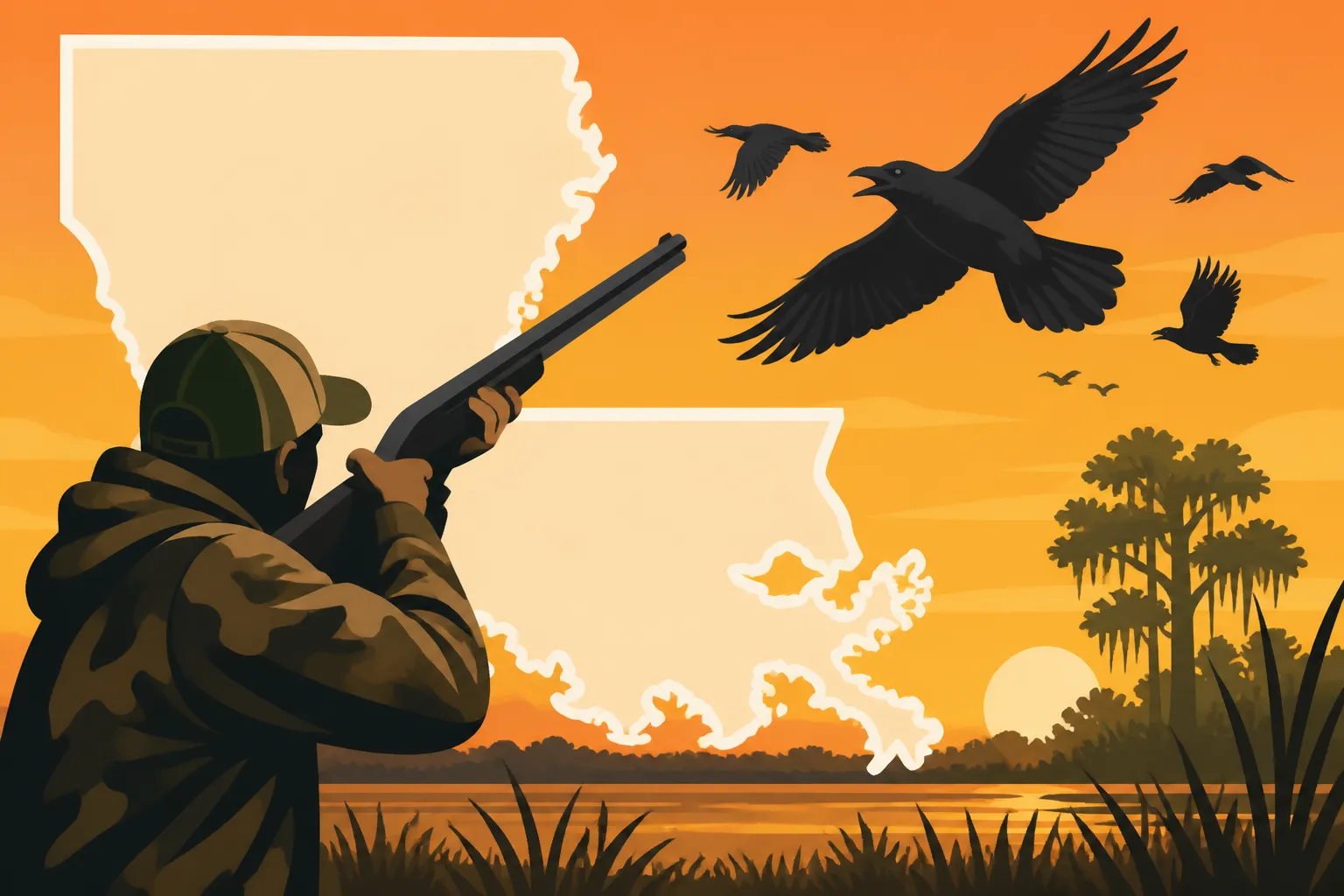
That unmistakable, jarring caw of a crow can be maddening, especially when you're trying to sneak through the woods or you've got them raiding your garden or harassing other wildlife. Many hunters overlook crows as a legitimate game species, seeing them more as a nuisance than a challenging target. But in Louisiana, crow hunting offers an excellent opportunity to hone your shooting skills, practice stealth, and enjoy a unique hunting experience that often runs for an incredibly long season. This comprehensive guide will walk you through everything you need to know about Louisiana's crow hunting seasons and effective tactics to bring those cunning birds within range.
Understanding Louisiana's Crow Hunting Seasons
Crow hunting in Louisiana, much like the bayous themselves, has its own unique flow and set of rules. While many folks think of crows as just pests, the Louisiana Department of Wildlife and Fisheries (LDWF) officially classifies them as migratory game birds. This means they fall under federal regulations, but Louisiana also has some specific provisions that make them particularly accessible targets for hunters. You might be surprised at just how much opportunity there is to pursue these intelligent birds.
General Season Dates and Regulations
Unlike deer or turkey seasons which have very specific, often short windows, Louisiana's crow hunting season is wonderfully long and liberal. Generally, the official "migratory game bird" season for crows runs from early September all the way through the end of February. This provides a massive window, overlapping with many other popular hunting seasons, which is fantastic for those looking to get more trigger time or simply enjoy a day afield when other seasons are closed or slow. During this official season, you're expected to follow typical migratory bird hunting rules, including using a plugged shotgun that can hold no more than three shells (one in the chamber, two in the magazine).
What's really interesting, though, is Louisiana's stance on crows as nuisance animals. Even outside of the official migratory season, crows can often be legally taken when they are causing depredation or damage to crops, livestock, or other property. This isn't a free-for-all, mind you; it's typically tied to a landowner's right to protect their property. Always double-check the latest LDWF regulations to ensure you're in compliance, but this nuisance clause essentially provides a year-round opportunity for those dealing with specific crow problems. It's a pragmatic approach to wildlife management that acknowledges the impact these intelligent birds can have on agricultural operations or even backyard feeders. This extended flexibility makes crow hunting a great way to stay sharp and practice your marksmanship.
Daily Bag Limits and Possession Limits
When you're out hunting crows in Louisiana, you'll be glad to know that the bag limits are usually quite generous, reflecting their abundant population and their status as a potential nuisance. For the most part, there isn't a restrictive daily bag limit for crows during the official season. This means that if you hit a good flock and have your setup dialed in, you could potentially have a very high-volume shoot. The same often applies to possession limits, meaning you can take home as many as you successfully harvest.
However, always remember that regulations can change, and it's your responsibility to be aware of the most current rules. I can't stress this enough: before you head out, grab the latest LDWF hunting digest or check their website. It's a simple step that prevents a lot of headaches later on. This lack of strict limits, compared to species like ducks or doves, is one of the reasons crow hunting can be such a blast – it's less about counting and more about enjoying the challenge and action. It also means you can really experiment with different calling and decoying strategies without worrying about hitting a self-imposed ceiling too quickly.
Permits and Licenses for Crow Hunters
Just like with any other game animal in Louisiana, you're going to need the proper licensure to hunt crows, even if they're considered a nuisance. For residents and non-residents alike, a basic Louisiana hunting license is the fundamental requirement. Beyond that, because crows are classified as migratory game birds, you'll also need a Louisiana Migratory Bird Hunting Endorsement and a Federal Duck Stamp, even though you're not targeting waterfowl. This often surprises new crow hunters, but it's a critical detail to remember.
These additional stamps and endorsements support migratory bird conservation efforts, which benefit a huge range of species, not just ducks and geese. You can purchase all the necessary licenses and endorsements easily online through the LDWF website, or at licensed vendors across the state. It’s always a good idea to check out Louisiana Hunting Licenses and What They Cost to make sure you have everything squared away before heading into the field. Carrying proof of your license, whether a physical copy or on your phone using the GoHunt app or LDWF's digital wallet, is essential. Don't forget, if you're hunting under the nuisance clause outside the official season, you might not need the migratory bird stamps, but you'll still need your basic hunting license and should have explicit permission from the landowner. It's always best to be overly cautious and clear on the rules, especially when it comes to any situation that might be considered an exception to general season rules.
Essential Gear for Successful Crow Hunting
Stepping into the world of crow hunting doesn't require a massive investment in specialized gear, but having the right tools can drastically improve your success rates. Crows are incredibly intelligent and wary creatures, and they have excellent eyesight. You're trying to fool a bird that literally uses tools and remembers human faces. So, thinking through your gear choices is paramount. It’s not just about pulling a trigger; it’s about creating a convincing deception.
Firearms and Ammunition Choices
When it comes to firearms for crow hunting, shotguns are overwhelmingly the weapon of choice. The nature of crow hunting often involves shooting at flying targets, and a scattergun gives you the best chance of connecting. A 12-gauge or 20-gauge shotgun is perfect, and you'll want to ensure it's plugged to only hold three shells if you're hunting during the official migratory season. As for ammunition, smaller shot sizes like 7.5, 8, or even 9 are ideal. Crows aren't big birds, and these smaller shot sizes provide a dense pattern that's effective at typical crow hunting ranges. High-velocity loads can be beneficial for reach and speed.
Some hunters, especially those targeting crows at longer ranges over fields or from a static blind, might even opt for a .22 caliber rifle or a similar small-bore firearm. This is a more challenging approach, requiring precise aim, but it can be incredibly rewarding. If you choose this route, ensure you have a stable rest and understand the range limitations of your chosen caliber. The key is to match your firearm and ammunition to your hunting style and expected shooting distances. Remember that Louisiana Firearms Discharge Setback Rules apply, so be mindful of houses, roads, and property lines, especially when hunting with a rifle in more populated areas.
Decoys and Electronic Calls
This is where the real magic happens in crow hunting. Crows are highly social animals, and they respond incredibly well to both visual and auditory deception.
-
Decoys: Lifelike crow decoys are a must. They don't have to be expensive, but having a dozen or more can make a big difference. Set them up in a realistic manner, often with a few "sentinels" perched higher (on poles or branches) and others feeding on the ground. Motion decoys, such as a flapping crow or an owl decoy (crows famously mob owls), can be incredibly effective at drawing attention and triggering an aggressive response. Think about what a real flock of crows would look like if they were distressed or feeding, and try to replicate that scene. The more convincing your spread, the more confident approaching crows will be, leading to closer shots. You might even find it helpful to position some decoys higher up, mimicking crows guarding an area, much like you'd see when Setting Up a Dove Field Before Opening Day.
-
Electronic Calls: Modern electronic calls are game-changers for crow hunting. They can replicate a huge variety of crow sounds, from distress calls to fighting calls, young crow sounds, and even owl hoots (to incite mobbing behavior). Brands like Foxpro or Primos offer excellent electronic callers with extensive sound libraries. The ability to vary your calling sequence, volume, and type of call based on the crows' reaction is invaluable. Start with a loud, aggressive "assembly" or "distress" call to grab attention, then switch to more subtle caws and feeding sounds as they approach. Using an electronic call allows you to focus on shooting once the crows commit, making it easier to manage the hunt.
Here's a quick comparison of call types:
| Call Type | Pros | Cons |
|---|---|---|
| Electronic Call | Versatile, wide range of sounds, hands-free | Requires batteries, can be expensive, less "personal" |
| Mouth Call | Inexpensive, no batteries, highly portable | Requires skill, limited sound range, harder to vary |
While electronic calls are highly recommended, don't discount the old-school charm and effectiveness of a good mouth call. Many experienced crow hunters keep one handy for subtle finishes or when electronic calls might spook birds.
Concealment and Camouflage
Crows have exceptionally keen eyesight, often compared to that of an eagle. If they see you, your hunt is over before it even begins. This makes concealment absolutely non-negotiable. Full camouflage from head to toe is essential, including gloves and a face mask. Don't forget to break up your outline against the sky.
Hunting from a blind is often the most effective method. A pop-up ground blind offers excellent concealment and allows for some movement, which is critical during fast-paced shooting. For tips on setting up, consider how you might approach Using a Ground Blind on Louisiana Public Land. When choosing your spot, look for areas with natural cover like thick brush, tree lines, or tall weeds. Even better, find a spot with a dark background to help you blend in further. Shadows are your friend. Avoid shiny objects on your gear or clothing. Even a glint of sunlight off a gun barrel can send a wary crow packing. Remember, they're not just looking for you; they're looking for anything out of place in their environment. The better you disappear, the better your chances of success.
Effective Tactics for Calling and Decoying Crows
Once you've got your gear and you understand the seasons, it's time to talk tactics. This is where crow hunting really shines as a challenging and dynamic pursuit. Fooling a crow takes more than just noise; it takes strategy, patience, and a bit of a devious mind.
Setting Up Your Hunting Location
Choosing the right spot is fundamental. Crows typically roost in large numbers at night, often in dense pine or hardwood stands. During the day, they'll fly out to feed in open areas like farm fields, pastures, or even suburban neighborhoods where food sources are plentiful. They are particularly attracted to areas with spilled grain, roadkill, or trash. Pay attention to their flight paths between roosting and feeding areas. These "flyways" are often excellent ambush points.
When you've identified a promising area, set up your blind and decoys before the crows are active. Early morning or late afternoon, as they move to or from roosts, can be prime time. Position your blind so you have a good field of view, but remain hidden from all angles. Remember their eyesight – they'll often circle overhead to inspect the scene. Place your decoys within shotgun range (20-40 yards) of your blind. If you're using an owl decoy, place it prominently to attract mobbing behavior. Scout your area beforehand; knowing how crows typically use the landscape will give you a significant advantage. Tools like the GoHunt app or Scouting With the LDWF App can be invaluable for pinpointing potential feeding grounds or identifying travel corridors across public and private land.
Calling Sequences and Techniques
This is arguably the most critical component of a successful crow hunt. Crows use a complex language, and understanding a few key calls can make all the difference.
- Distress Calls: These are your bread and butter. A crow in distress elicits a strong response from other crows, who will often come to investigate, harass a predator, or even try to help. Start with loud, urgent distress calls to get their attention, especially if they are far off.
- Assembly Calls: These are simply calls designed to bring the flock together. They are often less urgent than distress calls but signal that other crows are in the area.
- Fighting Calls: These mimic crows fighting, which can draw in curious birds eager to join the fray or simply see what's happening.
- Owl Hoots: While not a crow call, a realistic owl hoot (especially a great horned owl) can provoke crows into a mobbing frenzy. Play the hoot, then immediately follow up with aggressive crow caws and distress calls as if the crows are attacking the owl.
Vary your calling. Don't just blast one call continuously. Start with loud, attention-grabbing calls, then reduce volume and switch to more excited, rapid-fire caws as birds approach. If crows circle warily, try a more subdued or inquisitive call to reassure them. Observe their reactions closely. If they start veering off, change your call. You're having a conversation with them, trying to convince them that your setup is the place to be. You'll find that much like Rattling Volume in Thick Cover for deer, adjusting your crow calling volume to the environment is key.
Utilizing Decoys Effectively
Decoys don't just sit there; they work in conjunction with your calling. When setting up, remember crows are intelligent. A static, unnatural spread will be ignored.
- Mobbing Setup: This is a fantastic strategy. Place one or two owl or hawk decoys (their natural predators) in a prominent spot. Then, arrange your crow decoys around them, some on the ground, some perched, as if they are actively mobbing the predator. This visual, combined with aggressive distress and fighting calls, can pull crows in from a great distance.
- Feeding Setup: If you're hunting over a field or an area where crows feed, set up your decoys as if they are casually feeding on the ground. A few sentinels perched higher up can add realism. Combine this with softer feeding caws and assembly calls. This works well if you're not trying to rile them up, but just to draw them into range for a relaxed hunt.
- Adding Motion: Even a simple fishing line tied to a decoy that you can gently tug from your blind can add vital, lifelike motion. This flickering movement can often be the final convincing element for a wary bird. For some hunters, getting the perfect setup can feel as intricate as Hunting a Green Field Planted for Deer, requiring careful consideration of wind and approach angles.
Always try to position your decoys to maximize visibility from typical crow flight paths. Remember that crows will often approach into the wind, so consider this when placing your blind and decoys to optimize your shot opportunities.
Common Challenges and Tips for Consistency
Crow hunting can be incredibly rewarding, but it's rarely easy. These birds are survivors, and they learn quickly. You'll encounter plenty of situations where they seem to outsmart you. Don't get discouraged; that's part of the fun! Understanding these challenges and having strategies to overcome them will make you a more consistent and successful hunter.
Dealing with Wary Crows
This is the biggest hurdle. Crows are notoriously intelligent and wary. Once they've been shot at, they become even more difficult to fool. They remember specific locations, and they can even communicate danger to other crows. You might even find parallels to dealing with Hunting Pressure on Louisiana Public Land where animals are wise to human presence.
- Move Frequently: If you have a bad hunt in one spot, don't keep going back to it day after day. Let the area rest for a week or two, or try a completely different location.
- Vary Your Calls: Crows can become accustomed to certain calling sequences. If your go-to calls aren't working, switch them up. Try different distress calls, incorporate more aggressive fighting calls, or even lean heavily on the owl mobbing technique.
- Improve Concealment: Re-evaluate your blind and camouflage. Are there any gaps? Is sunlight glinting off anything? Are you moving too much? Even subtle movements can be picked up by their keen eyesight.
- Go Deep: Sometimes, getting away from easily accessible areas can help. Crows that frequent remote timber blocks or vast agricultural fields might be less pressured. Consider Hunting Small Woodlots Near Suburban Baton Rouge for areas that might offer less pressure due to their size or location.
The key to dealing with wary crows is unpredictability and flawless concealment. Think like a crow, anticipate their approach, and give them no reason to suspect a trap.
Adjusting for Different Weather Conditions
Louisiana's weather can be unpredictable, and crow behavior changes with it.
- Windy Conditions: High winds can make calling difficult, as the sound doesn't carry as far, and crows often fly lower and faster. On windy days, focus on strong, loud distress calls to cut through the noise. Position yourself downwind of their travel path, as they'll often approach into the wind. Decoys with strong stakes are essential to prevent them from blowing away.
- Rainy or Foggy Days: Crows tend to be less active during heavy rain, but light drizzle or fog can sometimes make them less wary, as visibility is reduced. Their hearing might also be somewhat impaired. These conditions can be excellent for getting them in close. Focus on loud, attention-grabbing calls, and be extra vigilant with your concealment.
- Cold Weather: While Louisiana winters aren't as harsh as up north, colder temperatures can concentrate crows around reliable food sources. Pay attention to agricultural fields after harvest or areas with consistent roadkill. Their need for food often overrides some of their caution.
- Warm Weather: During warmer periods, crows might be more spread out. You'll need to work harder with your calling and scouting to find them. The nuisance clause often comes into play here, as their activity around homes and farms increases.
Understanding how weather impacts crow behavior allows you to adapt your strategy, increasing your chances of success no matter what Mother Nature throws at you.
Safety Considerations
Safety should always be your top priority, especially when hunting with shotguns and potentially multiple hunters.
- Hunter Education: If you're new to hunting, make sure you've completed your Louisiana Hunter Education Requirements. It's not just a legal requirement for many, but it teaches fundamental safety principles.
- Know Your Zone of Fire: When hunting with a group, clearly establish your shooting lanes and zone of fire. Crows can come in fast and from unexpected angles. Communication is key.
- Backstops: Always be aware of your backdrop. Shotgun pellets can travel a surprisingly long distance, and rifle rounds travel much further. Ensure you have a safe backstop before taking any shot.
- Eye and Ear Protection: Shotgun blasts are loud, and pellets can ricochet. Always wear appropriate eye and ear protection to prevent injury.
- Permission: If hunting on private land, ensure you have explicit permission from the landowner. Understand the property boundaries using a mapping tool like GoHunt or your LDWF app.
- Respect Property: Clean up your spent shells and any trash. Leave the land better than you found it. This helps ensure future access for yourself and other hunters.
Crow hunting is a fantastic way to enjoy the outdoors and sharpen your skills. By understanding the seasons, preparing your gear, mastering calling tactics, and always prioritizing safety, you'll find yourself much more successful and enjoy the chase for these intelligent birds in the diverse landscapes of Louisiana.
Disclaimer
The information provided in this guide is for general informational purposes only and does not constitute legal advice. Hunting regulations, seasons, and licensing requirements in Louisiana are subject to change. Always consult the official Louisiana Department of Wildlife and Fisheries (LDWF) regulations and local ordinances before engaging in any hunting activities. It is the hunter's responsibility to know and abide by all applicable laws and regulations.