Off-Season Scouting Trips With a Louisiana Guide
We've all been there: staring at an aerial map, trying to decipher a dense piece of Louisiana hunting ground, wondering where the deer actually move when the leaves are thick and the pressure is on. It's frustrating to invest precious hunting time figuring out basic travel patterns or food sources, especially when you're visiting a new area or don't have weeks to spare. This guide dives deep into how a guided off-season scouting trip can completely change your hunting strategy, giving you an invaluable advantage long before opening day ever arrives.
Why Off-Season Scouting is a Game Changer, Especially in Louisiana
Many hunters focus their scouting efforts right before or during the season, driven by the immediate thrill of the hunt. However, the off-season—those quiet months after deer season closes and before spring turkey begins, or even through the heat of summer—offers a unique window into the whitetail world that you simply can't get when the woods are alive with hunter activity and heavy foliage. In Louisiana, with its diverse terrain from cypress swamps to piney hills, understanding the subtle nuances of a property without the distraction of a bow or gun in hand can be the secret weapon to your next successful season.
The Challenges of In-Season Scouting
Think about hunting during the peak of archery season or firearms season. The woods are choked with vibrant green leaves, making it tough to see more than 30 yards in many areas. You're constantly battling mosquitoes, oppressive humidity, and the ever-present threat of disturbing game. Even worse, if you're out there actively "scouting" during a hunt, you're likely making noise, leaving scent, and pushing deer around, which can negatively impact your actual hunting efforts. It's a classic catch-22: you need to know where the deer are, but scouting during the season often means compromising your hunt.
During the season, deer movement is heavily influenced by hunting pressure. What you observe might be deer reacting to human presence, not their natural travel patterns or preferred bedding areas. You might see a buck skirt a thicket only because a hunter just walked through it, not because that's his preferred route. This can lead to misleading conclusions and stand placements that only work under specific, pressured conditions. For those who hunt public land, like many of Louisiana's Wildlife Management Areas, this pressure is amplified, making true in-season scouting even more of a guessing game.
Unlocking the Landscape Without Pressure
The off-season strips away these layers of complexity. When the leaves are down in late winter or early spring, the woods open up, revealing the skeletal structure of the landscape. You can see drainages, subtle ridges, old logging roads, and even faint deer trails that are completely hidden by summer's growth. Without active hunting pressure, deer often revert to more predictable patterns, making their sign—old rubs, scrape lines, and well-worn trails—a more accurate indicator of their natural behavior.
Walking a property in February or March, you can systematically cover ground without fear of spooking game you plan to hunt next week. You can spend hours examining every creek crossing, every saddle, every potential bedding area. You'll find shed antlers, which are like golden tickets, telling you exactly which bucks made it through the season and where they spent their time. This clear-sighted approach allows you to identify core areas, primary travel corridors, and potential stand sites with a level of detail that's impossible during the green season. It's like reading the land's diary, written just for you, detailing all the stories of the past season's deer movements.
Non-Residents and Newcomers Benefit Most
If you're a nonresident planning a trip to Louisiana, or a new hunter trying to learn a specific piece of ground, off-season scouting with a guide is an absolute must. The bayou state's diverse ecosystems—from the Hunting the Atchafalaya Basin to the Hunting North Louisiana's Piney Hills—are incredibly varied and often counter-intuitive to those unfamiliar with the terrain. What looks like an ideal spot on a satellite map might be an impassable bog, or a dense thicket that's actually a prime bedding area.
For an out-of-state hunter, spending a few days in the off-season with a local expert can save weeks of frustration and failed hunts. You'll learn the local flora, understand the effects of water levels, and grasp the subtle nuances of deer behavior in that specific habitat. Instead of arriving blind for opening weekend, you'll have pre-identified stand locations, understanding entry and exit routes, and a plan based on actual ground knowledge, not just digital maps. This isn't just about finding deer; it's about learning the language of Louisiana's woods.
What a Louisiana Guide Brings to Off-Season Scouting
Hiring a local Louisiana guide for an off-season scouting trip isn't just about having someone walk with you; it's about leveraging years of intimate, boots-on-the-ground knowledge. They're not just pointing out a rub; they're explaining why that rub is there, what buck likely made it, and what that tells you about his habits. This expertise transforms a simple walk in the woods into a masterclass in reading the land.
Local Knowledge and Hidden Gems
Louisiana guides often have decades of experience hunting specific tracts of land, or entire regions. They know the history of the timber cuts, the seasonal flooding patterns of river bottoms, and which isolated oak trees consistently drop the biggest acorns. They can tell you where the deer go when the pressure hits, or which small, overlooked pockets hold mature bucks year after year. This isn't information you can glean from an app or a few hours of walking; it's accumulated wisdom.
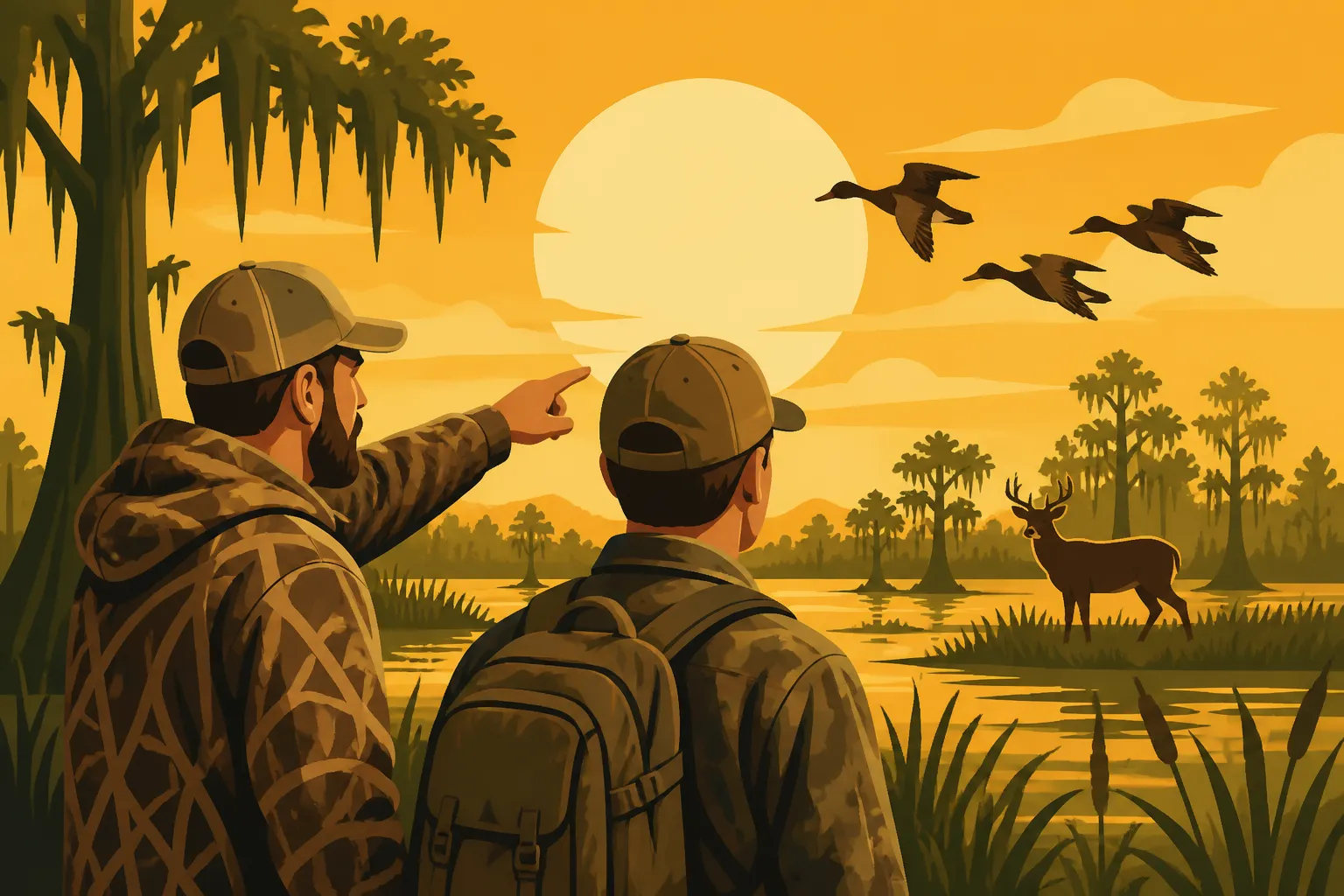
Imagine walking a WMA that looks fairly uniform on a map. A local guide might point out a barely visible rise that funnels deer movement from a bedding thicket to a distant food source, or an old abandoned logging road that acts as a natural travel corridor when water levels rise. They might show you the subtle difference between a fox squirrel trail and a buck trail, or where the deepest cypress sloughs hold resident bucks even during the hottest days. These "hidden gems" are the keys to unlocking productive hunting spots that other hunters might walk right past. When it comes to understanding things like Wind and Thermals in Swamp Bottomland, a guide's local experience is simply invaluable.
Interpreting Sign Without Leaves
The off-season, particularly late winter and early spring before the full green-up, offers the clearest view of deer sign. Guides are masters at interpreting this sign. They can differentiate between old rubs from the previous fall and fresh ones that indicate early buck activity. They can show you where to look for shed antlers, not just randomly, but in specific bedding areas or along primary travel routes.
A guide can explain why a particular scrape line might be important, even if it's old and grown over. They can walk you through a potential bedding area and show you the subtle depressions where deer have laid, pointing out the wind direction those beds offer. They'll help you recognize key browse species, identify mast trees (like oaks and persimmons) that will be critical food sources, and even show you how to read tracks in the soft Louisiana mud to determine size and direction of travel. This skill set is foundational for effective scouting, and a guide compresses years of learning into a single trip.
Accessing Difficult Terrain and Private Leases
Many prime hunting spots in Louisiana are difficult to access, whether it's navigating dense cypress swamps, crossing deep bayous, or knowing the intricacies of private land boundaries. A guide often has the right equipment—whether it's an airboat, a mud boat, or simply a robust ATV—to get you into areas you couldn't reach on your own. For example, exploring the remote pockets of a vast area like the Richard K. Yancey Wildlife Management Area can be daunting without local expertise and specialized transport.
Furthermore, if you're considering leasing private land, a guide can be an invaluable asset in assessing its potential. They can accompany you on a walkthrough, helping you identify prime hunting features, assess timber value, or spot any red flags that might not be obvious to an untrained eye. Some guides even manage private leases and can offer insights into the health of the herd and what management strategies might benefit the property. This access to their resources and knowledge of diverse properties, whether public or private, can save you immense time and effort.
Planning Your Off-Season Scouting Adventure
Deciding to invest in a guided off-season scouting trip is a smart move, but like any good hunt, it requires careful planning. From choosing the optimal time of year to vetting the right guide, each step ensures you get the most value from your experience.
Choosing the Right Time of Year
The "off-season" is a broad term, and different times offer different scouting advantages:
- Late Winter (January-February): This is arguably the best time. Leaves are mostly down, revealing the terrain. Rubs, scrapes, and old trails from the previous season are still visible and distinct. This is also peak shed hunting season, offering direct evidence of buck presence and size. Without the oppressive summer heat and mosquitoes, it's a more comfortable time to cover ground. You'll get a real sense of what the woods look like when the season is cold, perfect for stand placement.
- Early Spring (March-April): Still good for terrain analysis, but new growth might start to obscure some ground sign. However, it's an excellent time to identify early green-up food sources, locate turkey roosts if you're also a turkey hunter, and observe early spring buck activity, though sheds will be harder to find as other hunters or critters may have found them. If you're planning a spring turkey hunt, this is perfect for Run-and-Gun Turkey Tactics on Public Land.
- Summer (May-August): Challenging due to dense foliage, heat, and insects. It's tough to see distant features, and ground sign gets quickly covered. However, it's a good time to identify summer food sources (like certain agricultural fields or natural browse), locate watering holes, and observe deer movement patterns that might be different from the fall. If you're hunting near Hunting a Standing Cornfield in Farm Country, summer scouting can help you identify entry points before harvest.
Recommendation: If your primary goal is deer stand placement and understanding core deer movement, late winter (January-February) is your prime window.
What to Expect from a Scouting Trip
A typical guided off-season scouting trip isn't just a leisurely stroll. It's a deep dive into the hunting ground. Here's what you can generally expect:
- Extensive Walking: Be prepared to cover significant ground, often through challenging terrain like thickets, swamps, and uneven forest floors. Wear appropriate footwear and clothing.
- Detailed Analysis: Your guide will constantly be pointing out and explaining sign: old rub lines, historical scrape locations, prominent trails, bedding areas, water sources, and food plots. They'll show you how to identify primary buck travel routes versus general doe trails.
- Digital Tools Integration: Many modern guides will use mapping apps (like GoHunt) to mark points of interest, potential stand sites, and optimal entry/exit routes directly on your phone or their tablet. This gives you a tangible, digital map to reference later.
- Discussion of Strategy: You'll discuss potential stand setups, wind direction considerations, concealment options, and how hunting pressure might impact deer movement in various spots.
- Question and Answer: This is your chance to ask every question you've ever had about deer behavior, local flora, habitat management, or specific hunting scenarios.
Think of it as an interactive classroom experience in the woods, where you're learning to "read" the landscape with an expert by your side. You'll come away with a much clearer picture of the property and a concrete plan for the upcoming season.
Finding and Vetting Your Guide
Finding the right guide is crucial. You're looking for someone with not only extensive local hunting knowledge but also a passion for teaching and a willingness to share their insights.
- Start Local: Ask around at local sporting goods stores, bait shops, and hunting clubs. Word-of-mouth recommendations are often the best.
- Online Resources: Websites like BookYourHunt can be a good starting point for finding guides, but always do your due diligence beyond their platform. Look for guides specifically offering "scouting services" or "land consultation." GoHunt's forums or community sections might also connect you with experienced locals.
- Check References: Don't hesitate to ask a potential guide for references from past clients, especially those who have used them for scouting trips. Ask specific questions:
- What kind of knowledge did they gain?
- Was the guide responsive and knowledgeable?
- Did the scouting trip translate into hunting success?
- Interview Potential Guides: Have a detailed conversation. Explain your goals for the scouting trip. Do you want to learn general deer patterns, identify specific buck sign, or find stand locations for a particular weapon? A good guide will listen carefully and articulate how they can help you achieve those goals.
- Discuss Logistics and Costs: While we can't share specific numbers, discuss their rates for a half-day or full-day scouting trip. Ask what's included (e.g., use of their ATV, mapping support, lunch). Ensure there's clarity on what you're paying for and what you need to bring.
Vetting your guide helps ensure that your investment of time and money pays off with invaluable knowledge and a real edge for the upcoming hunting season. Consider what they cover beyond just scouting, such as Trail Camera Services Offered by Louisiana Outfitters or even Food Plot Consulting From a Louisiana Outfitter if you have a private lease.
Here's a quick comparison of what you might get from self-scouting versus guided scouting:
| Aspect | Self-Scouting (Typical) | Guided Scouting (Off-Season) |
|---|---|---|
| Knowledge Base | Personal experience, general maps, online research | Local expert knowledge, specific property history, game patterns |
| Efficiency | Slow, trial-and-error, prone to overlooking key details | Highly efficient, focused on productive areas, accelerated learning |
| Terrain Interpretation | Relies on aerial maps, may miss subtle ground features | Expert interpretation of drainages, funnels, bedding, travel routes |
| Sign Reading | Basic identification of rubs/scrapes, limited context | In-depth analysis of sign, age, buck identity, behavior patterns |
| Access | Limited by personal vehicle/equipment, public access laws | Specialized equipment, knowledge of private/difficult access points |
| Time Investment | Significant, often spread out over many visits | Concentrated, highly effective learning in a shorter period |
| Confidence | Growing, but with lingering doubts | High confidence in stand placement and hunting strategy |
| Cost | Gear, fuel, time (unquantified) | Guide fees, but potentially higher success rate and reduced frustration |
A guided off-season scouting trip is an investment, but it's one that pays dividends in knowledge, confidence, and ultimately, a more successful and enjoyable Louisiana hunting experience. It's about turning guesswork into a strategic advantage, ensuring you're ready when the season finally arrives.
Disclaimer
This article is for general informational purposes only and does not constitute professional advice. Laws, prices and regulations vary by location and change over time. Consult a qualified professional for guidance on your specific situation.