Finding a Basin Camp for Hunting Season
Oh, the Atchafalaya Basin. Just the name conjures up images of cypress knees, Spanish moss, and the deep, wild heart of Louisiana. But if you’ve ever dreamed of setting up a hunting camp in this majestic, sprawling swamp, you know the dream can quickly turn into a logistical nightmare. It’s not like finding a spot in a piney woods clear-cut; the Basin demands a different kind of planning, and this guide is here to walk you through exactly what it takes to find and set up your perfect base camp amidst the cypress and tupelo for hunting season.
Why a Basin Camp is Crucial and Challenging
Let's be real, hunting the Atchafalaya Basin isn't for the faint of heart or the casually prepared. It's a vast, dynamic ecosystem that changes with the water levels, the seasons, and even the whims of Mother Nature. Without a solid camp strategy, you're essentially heading into a wilderness that can swallow you whole.
The Allure of the Atchafalaya Basin
There's a reason so many of us are drawn to the Basin, despite its challenges. It's home to some incredible wildlife, including some truly impressive whitetails that thrive in its dense cover and abundant food sources. The sense of isolation and immersion in true wilderness is unparalleled in Louisiana. You can truly feel like you've stepped back in time, away from the hustle and bustle, deep into a primal hunting ground. For many, a successful hunt in the Basin carries a unique badge of honor, a testament to skill, endurance, and respect for the wild. It’s a place where the history of Louisiana feels alive, and every paddle stroke or boat ride deeper into the swamp feels like an adventure. Plus, the diversity of game, from deer and hogs to waterfowl, means a Basin camp can be a multi-species hub throughout the year. If you're looking for more general information on Hunting the Atchafalaya Basin, we've got you covered there too.
Understanding Basin Logistics: Water, Access, and Isolation
The primary challenge, and what makes a Basin camp so distinct, is the water. The Atchafalaya River itself, along with its intricate network of bayous, canals, and sloughs, dictates everything. Water levels fluctuate dramatically, affecting access, travel routes, and even where deer will be found. What might be a navigable bayou in September could be a bone-dry mud flat in November, or vice-versa. This means scouting isn't just about deer sign; it's about understanding hydrology. Then there's the access itself. Most areas are boat-only, meaning every piece of gear, every gallon of water, every bite of food has to be transported by watercraft. And once you're there, you're isolated. Cell service can be spotty to non-existent, and help is often a long way off. This isn't just about convenience; it's a critical safety consideration that demands thorough planning and preparation. The isolation is part of the appeal, but it also means you are truly self-reliant.
Types of Basin Camps and Their Realities
When you're thinking about a Basin camp, you're not picturing a typical camper pull-behind in a campground. The Basin offers unique, often rustic, camping experiences, each with its own set of pros and cons.
Houseboats and Floating Camps
These are the Cadillac of Basin camps, offering a level of comfort and mobility that's hard to beat. Imagine a fully equipped floating home, complete with beds, a kitchen, and sometimes even air conditioning or heating, all nestled deep in a secluded slough. The beauty of a houseboat is its ability to move with the seasons or the game. If the water drops in one area, you can sometimes relocate to a spot with better access. They also provide a secure, dry base for extended stays.
However, houseboats are a significant investment, both to acquire and to maintain. They require regular upkeep, can be expensive to fuel, and need careful navigation through shallow waters and tight passages. Finding a spot to moor one permanently can also be tricky, as many prime locations are already claimed or leased. Plus, the logistics of getting one into a truly remote area and keeping it stocked can be a considerable undertaking. You're essentially managing a small vessel in a very dynamic environment.
Elevated Land Camps (If You Can Find Them)
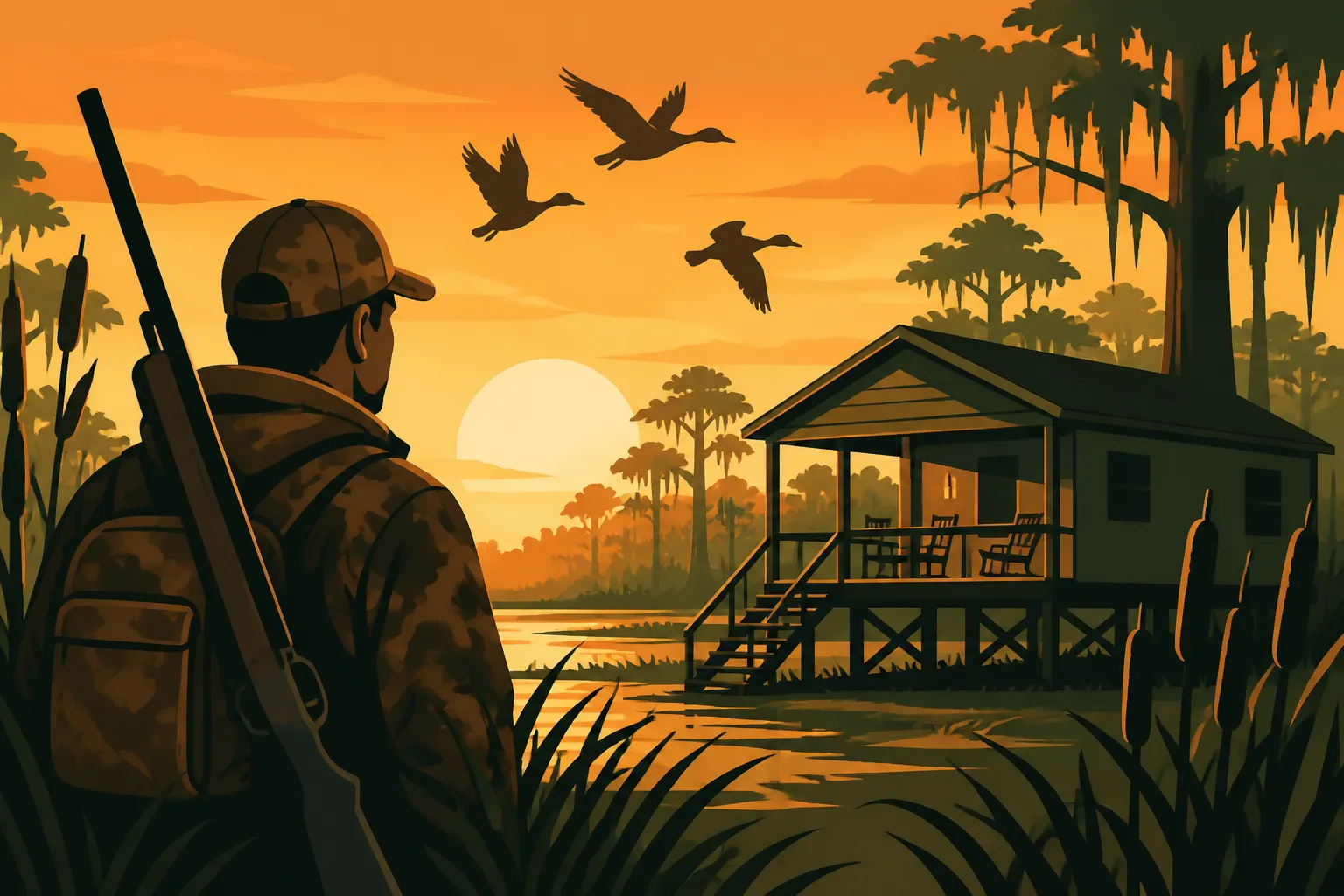
These are the holy grail for many Basin hunters, but they are incredibly rare and highly sought after. An elevated land camp is typically a small, primitive cabin or platform built on one of the few natural high spots, or "ridges," within the Basin. These spots stay dry even during high water, providing a stable, reliable base regardless of the river's mood. They often have established trails leading to them (though usually boat-access only) and offer a solid, weather-proof shelter.
The challenge? Finding available land to build or lease one is nearly impossible. Most are generational, passed down through families, or on private parcels within the Basin that rarely come up for sale or lease. If you do stumble upon one, expect to pay a premium. The construction and maintenance in such a remote, wet environment are also immense. You're battling rot, insects, and the sheer difficulty of hauling materials in. But if you have access to one, it truly unlocks the full potential of Basin hunting, offering a consistent home base year after year.
Primitive Bank or Tent Camps
This is the most accessible, yet most demanding, type of Basin camp. It involves finding a suitable patch of dry ground along a bayou bank or a small island that stays above water, then setting up a tent or a simple tarp shelter. This is the true minimalist experience, embracing the raw wilderness. You carry everything in, and you carry everything out.
The pros are low cost and maximum flexibility. You can set up almost anywhere that's legal and suitable, allowing you to chase game based on current conditions. This is often the best way for newcomers to experience Basin hunting without a massive investment. The cons, however, are significant. You're exposed to the elements, from torrential rain to biting insects. Security for your gear can be an issue if you leave camp unattended. You need to be acutely aware of rising water, as your dry spot could quickly become submerged. A good knowledge of Wind and Thermals in Swamp Bottomland becomes crucial, not just for hunting, but for picking a comfortable, safe camp spot that minimizes insect exposure. This approach demands resilience, self-sufficiency, and a serious commitment to the "leave no trace" ethos.
How to Scout and Secure Your Spot
Finding that perfect camp spot in the Basin isn't something you do on a whim. It requires dedication, a lot of homework, and some serious legwork (or boat-work!).
Leveraging Technology for Initial Scouting
Before you even launch a boat, you can do a massive amount of preliminary scouting from your couch. This is where digital mapping tools truly shine. Platforms like onX Hunt and GoHunt are indispensable for the Basin. You can zoom in on high-resolution satellite imagery to identify potential dry ground, old logging roads or trails that might indicate higher elevations, and crucial boat access points. Look for subtle changes in vegetation that suggest drier ground, or patterns that might indicate old homesteads or camp clearings.
Use the layering features to check land ownership, especially if you're venturing beyond public lands. Pay attention to contour lines (if available in a flat area like the Basin, they might just be a few inches apart, but those inches matter!). You can mark potential camp spots, entry routes, and even potential hunting areas for later physical inspection. These tools also allow you to measure distances, check water depths (where available), and get a sense of the scale of the area. I often spend hours on Scouting Louisiana Public Land Before Season using these apps, marking dozens of waypoints before I ever step foot in the swamp.
Boots (or Boat) on the Ground Reconnaissance
Once you've identified some promising spots on your map, it's time for real-world verification. This means getting in your boat and physically exploring those areas. Go in the off-season, or at least before hunting pressure kicks in. Check water levels in person. What looked like solid ground on a satellite image might be knee-deep muck or heavily flooded timber. Look for signs of previous camps, which often indicate reliable dry ground. Examine the tree species – cypress and tupelo grow in water, while oaks and other hardwoods suggest higher, drier elevations.
Pay attention to natural funnels, sloughs, and bayous that would offer good hunting access from your camp. Consider prevailing winds and sun angles for comfort and scent control. Test the ground firmness. You don't want to wake up to a sinking tent. This is also your chance to verify boat routes, identify potential hazards like submerged stumps or shallow sandbars, and understand the actual travel time from a public launch point. Remember, the deeper you go, the longer the commute, so factor that into your daily hunting plan. For tips on Atchafalaya Basin Boat Access Points, check out our dedicated guide.
The Importance of Timing and Persistence
Finding a good camp spot in the Basin is often about being in the right place at the right time, but more importantly, about persistent effort. Many prime spots are known by local hunters, and competition can be fierce, especially on opening weekends. Start your scouting early, well before the season. The more time you invest in reconnaissance, the better your chances of discovering a hidden gem.
If you're planning a primitive tent camp, the earlier you can get in to claim and set up your spot, the better. Be prepared to adapt. If your first choice is taken, have a backup (or two, or three). The Basin's dynamic nature means what was a great spot one year might be less ideal the next due to changes in water flow or vegetation. Persistence means continually exploring new areas and not giving up after one failed scouting trip. It also means understanding that some of the best spots are found through years of accumulated knowledge and experience.
Essential Considerations for Basin Camp Life
Once you've secured your slice of Basin paradise, the real work (and fun!) of setting up and living in camp begins. It’s not just about a place to sleep; it’s about creating a functional and safe base of operations.
Safety and Preparedness
The Basin is beautiful, but it's also unforgiving. Your safety starts with proper preparation. Always inform someone reliable of your exact location and your expected return time. Carry redundant communication devices – a fully charged cell phone (don't rely on service), a satellite messenger, or a two-way radio. Pack a comprehensive first-aid kit, and know how to use it. Think about self-rescue scenarios.
Water is paramount. Bring more than you think you'll need for drinking, cooking, and hygiene, or have a reliable water purification system. A portable generator can be a lifesaver for charging electronics, running lights, or even powering a small fan in warm weather. Remember that the Basin is home to alligators, snakes, and other wildlife, so practice awareness and respect for their territory. Secure your food to prevent attracting unwanted visitors. When you're successful and need to retrieve a deer, understanding Recovering a Deer From a Basin Slough or Dragging a Deer Out of a Swamp are skills you'll want to have dialed in, and safety is key during these strenuous tasks.
Minimizing Your Impact
The old adage "take only pictures, leave only footprints" couldn't be more true in the Basin. This fragile ecosystem is easily impacted by human activity. Pack out everything you pack in, and then some. This includes all trash, food scraps, and even human waste (especially when camping primitively). Burying waste is generally not recommended in flood-prone areas.
Use biodegradable soaps and minimize chemical use. If you have a fire, ensure it's completely extinguished before you leave, and only use deadfall wood. Avoid cutting live trees or disturbing vegetation unnecessarily. The goal is to leave your campsite looking as if no one was ever there, preserving the wilderness experience for future generations. This respect for the land is a core part of Louisiana Deer Camp Traditions and a responsibility every Basin hunter shares.
Gear Up for the Elements
The weather in Louisiana can be highly unpredictable. One day it's shirt-sleeve warm, the next a biting cold front pushes through. Be prepared for everything. Layered clothing is your best friend. Waterproof outer shells are non-negotiable. Bring extra dry clothes, especially socks. A good quality tent that can withstand heavy rain and strong winds is essential for primitive camps. Even on a houseboat, having warm, dry gear for when you're out hunting is key.
Mosquitoes and other biting insects are a year-round reality. Pack strong insect repellent, head nets, and even mosquito coils for camp. Consider a screened tent or pop-up shelter for meal times. A reliable light source, like a headlamp and extra batteries, is critical once the sun dips below the cypress trees. And finally, don't forget sturdy, waterproof boots and perhaps waders, as you'll be navigating mud, water, and uneven terrain constantly. Being properly equipped isn't just about comfort; it's about making sure you can safely and effectively hunt and live in the Basin.
Disclaimer
This article is for general informational purposes only and does not constitute professional advice. Laws, prices and regulations vary by location and change over time. Consult a qualified professional for guidance on your specific situation.