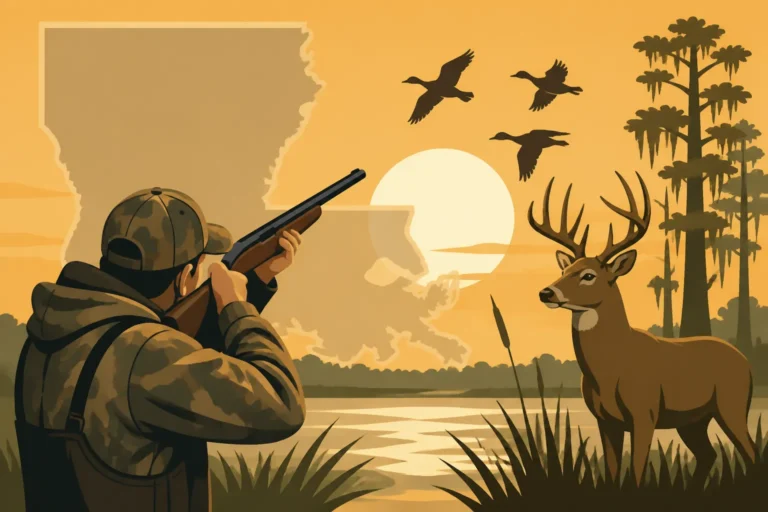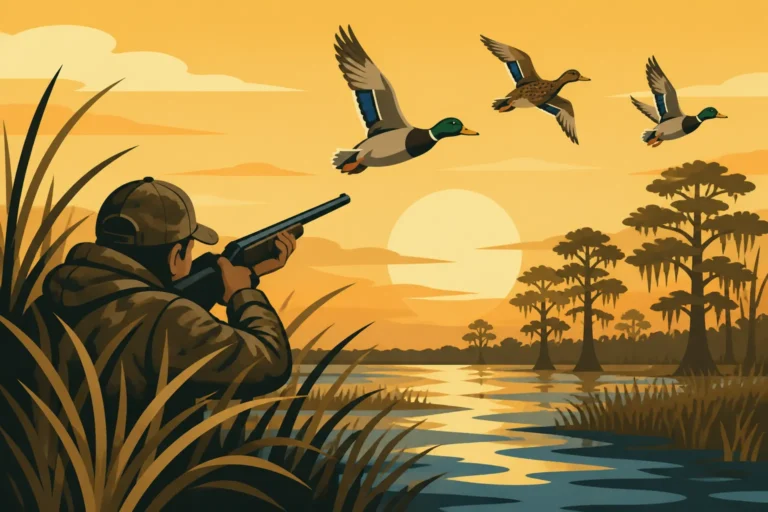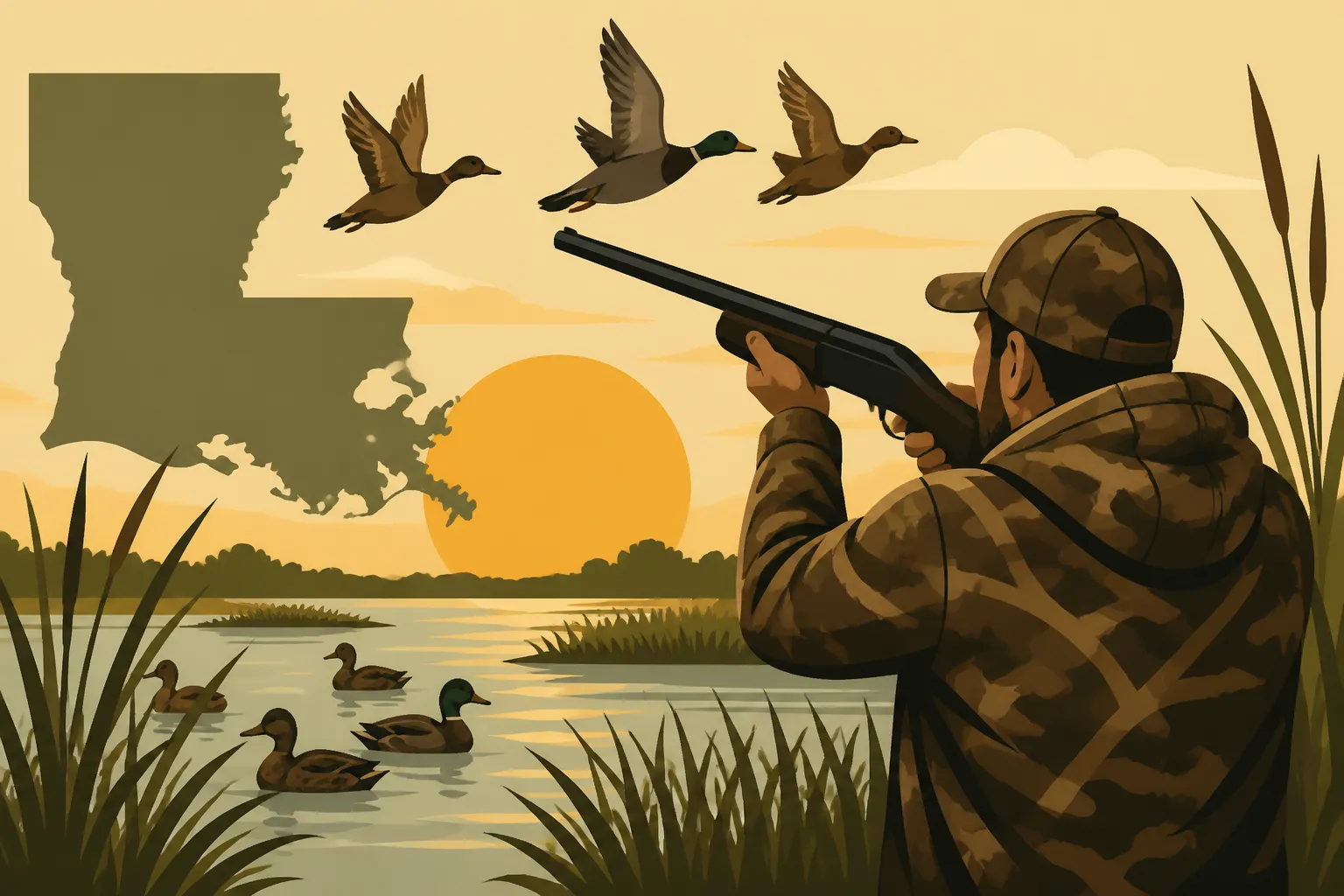
Hunting Louisiana’s Coastal Marsh Parishes
The call of the Louisiana coastal marsh is unlike any other hunting experience. It's a vast, intricate labyrinth of water, mud, and grass, where the tides dictate your movements and the weather can change on a dime. For hunters drawn to the raw, untamed beauty of our southern wetlands, understanding this unique environment is key to success. This guide will walk you through the distinct challenges and incredible opportunities that await when you venture into the coastal marsh parishes, helping you prepare for an unforgettable hunt.
The Allure and Challenges of Louisiana's Coastal Marsh
The coastal marsh parishes of Louisiana offer a hunting experience steeped in tradition and wild beauty. Imagine poling a pirogue through winding bayous at dawn, the air thick with the scent of salt and marsh grass, and the sounds of countless waterfowl filling the sky. It's a place that demands respect, patience, and a deep understanding of its ever-changing landscape. But for all its allure, it presents a host of unique challenges that separate it from timber hunting or farm country.
A Landscape Defined by Water and Tides
Unlike the rolling hills or bottomland hardwoods inland, the coastal marsh is a dynamic, fluid environment. Water is the dominant feature, with land existing as a network of fragile islands, cheniers, and muddy flats. The daily ebb and flow of tides, influenced by the moon and wind, dramatically impact access, game movement, and even your hunting strategy. A spot that was knee-deep at dawn might be completely dry by midday, or vice-versa. Understanding these tidal shifts is paramount, not just for hunting success but for safe navigation. Getting stuck in the mud far from your boat or vehicle is a real concern, and a rising tide can quickly swamp a poorly chosen blind location.
Navigating this watery world requires specialized knowledge and equipment. GPS is essential, but so is a keen eye for subtle changes in current and vegetation that indicate deeper channels or hidden oyster beds. It's not a place for the faint of heart or the ill-prepared, but those who embrace its complexities are rewarded with some of the most memorable hunts Louisiana has to offer. The sheer scale and wildness are humbling.
Weather Extremes and Unpredictable Conditions
Louisiana's coastal marsh is subject to extreme and often unpredictable weather. While the mild winters are generally a boon for waterfowl, sudden cold fronts can drop temperatures dramatically, creating dangerous conditions for those on the water. Conversely, late-season warmth can make for slow hunting, as migratory birds might not feel the urgency to move. Beyond temperature, the marsh is highly susceptible to strong winds, which can turn calm waters into choppy, white-capped seas in a matter of minutes, making boat travel treacherous and setting decoys a Herculean task.
Fog is another common adversary, especially during colder mornings, often rolling in thick and fast, reducing visibility to mere feet. This can be disorienting and dangerous, particularly in an environment with few distinguishable landmarks. Hurricane season, though outside the main hunting months, can also leave lasting impacts, altering marsh topography, creating new channels, and shifting game patterns for years to come. Hunters here learn quickly to watch the forecast with vigilance and to always have a contingency plan.
Key Game Species and Seasons in the Coastal Marsh
When you talk about hunting the Louisiana coastal marsh, one species immediately comes to mind: waterfowl. Our position on the Mississippi Flyway makes us a critical wintering ground for millions of ducks and geese. But beyond the diverse array of feathers, the marsh also offers opportunities for alligators and feral hogs, each presenting its own unique challenge and reward.
Waterfowl: The Marsh's Crown Jewel
The sheer volume and diversity of waterfowl that winter in Louisiana's coastal marsh is legendary. From the fast-flying teal and diving scaup to the majestic pintails and ubiquitous gadwalls, hunters here have a chance at a mixed bag unlike almost anywhere else. The vast, nutrient-rich estuarine environment provides abundant food sources, from marsh grasses and seeds to invertebrates, sustaining huge populations of birds throughout the season.
Hunting ducks and geese here is typically done from blinds, either permanent structures built into marsh ponds or temporary setups like layout blinds in cut rice fields. Waterfowl Hunting the Louisiana Coastal Marsh goes into more detail about the specific tactics. Understanding flight patterns, decoy spreads, and calling techniques specific to the marsh environment are critical. The seasons are generally split into early and late segments, with specific bag limits that vary by species, so checking current regulations with the Louisiana Department of Wildlife and Fisheries (LDWF) is always a must. Expect to see blue-winged teal, green-winged teal, gadwalls, widgeon, pintails, shovelers, and sometimes even mottled ducks, which are our resident nesters.
Alligators: A Unique Marsh Pursuit
For those seeking a truly unique and thrilling experience, Louisiana's coastal marsh offers recreational alligator hunting. This isn't your typical spot-and-stalk or blind hunt; it's a specialized pursuit that requires specific tags, methods, and a healthy respect for these ancient reptiles. The season is relatively short, usually running from late August through September, and tags are typically allocated through a lottery system due to the high demand and limited supply.
Alligator hunting in the marsh primarily involves setting lines with bait, checking them regularly, and then skillfully subduing and dispatching the gator once it's on the line. Louisiana's New Recreational Alligator Season provides a deeper look into the regulations and application process. This isn't just a hunt; it's an immersive experience that puts you directly into the heart of the marsh's apex predator territory. It requires specialized equipment, often involving sturdy boats capable of navigating shallow water and dense vegetation, as well as an understanding of alligator behavior and their preferred habitats within the marsh's intricate network of bayous and ponds.
Feral Hogs: Year-Round Opportunity
While not as historically associated with the marsh as ducks or alligators, feral hogs have made their presence known throughout Louisiana's coastal wetlands. These destructive invaders thrive in the dense cover and often find rich food sources in the marsh, tearing up vegetation and impacting sensitive ecosystems. The good news for hunters is that this destructive behavior means year-round hunting opportunities, often with no bag limits on private land.
Marsh hogs can be elusive, often sticking to thicker islands of roseau cane or higher ground like cheniers. Hunting them can involve still-hunting, ambushing them along natural travel corridors, or using dogs where allowed. The challenge is often more about access and navigating the terrain than locating the animals, as their rooting sign is usually unmistakable. For landowners and leaseholders, hunting feral hogs is as much about land management as it is about sport, helping to mitigate the significant damage these animals cause. Feral Hogs Across Louisiana offers a comprehensive overview of these prolific animals and their impact.
Navigating Public Access in Louisiana's Wetlands
For many hunters, public land is the only option, and Louisiana offers some incredible opportunities in its coastal marsh. However, "public" doesn't always mean "easy access." The unique topography of the marsh presents distinct challenges for hunters trying to find and utilize public hunting grounds.
Wildlife Management Areas and Refuges
Louisiana is blessed with numerous Wildlife Management Areas (WMAs) and National Wildlife Refuges (NWRs) that encompass significant portions of the coastal marsh. Areas like the Salvador WMA, Point-aux-Chenes WMA, and the vast Sabine National Wildlife Refuge offer prime waterfowl habitat and, in some cases, opportunities for other species. These areas are managed by the LDWF or U.S. Fish and Wildlife Service, respectively, and each has its own specific set of rules and regulations.
Hunters often need special permits, follow specific sign-in/sign-out procedures, and adhere to limited hunting days or zones. Boat-in access is often the norm, requiring careful navigation and a vessel suited to shallow water. Knowing the specific boundaries, legal hunting methods, and bag limits for each WMA or NWR is absolutely crucial. A common frustration for public land hunters is the sheer volume of other hunters, especially on opening day. But by doing your homework, Scouting Louisiana Public Land Before Season with tools like onX Hunt, and being willing to push deeper into less accessible areas, you can often find unpressured pockets of game.
Using Technology for Public Land Navigation
Modern technology has been a game-changer for public land hunters, especially in the marsh where landmarks are scarce and boundaries can be confusing. GPS-enabled mapping apps like onX Hunt are invaluable tools for identifying public land boundaries, tracking your location, and marking key features. You can preload maps for offline use, which is critical in areas with no cell service.
Imagine being deep in the marsh, surrounded by miles of identical-looking cane. With onX Hunt, you can instantly see if you're drifting into private land, locate the nearest public boat launch, or mark a productive marsh pond for future reference. These apps often overlay different land ownership types, showing you where WMAs begin and end, and can even display contours or past satellite imagery that might reveal old duck blinds or channels. This technology drastically reduces the stress of navigating complex marsh systems, making it safer and more efficient to find your hunting spot and get out confidently.
Securing Private Land Opportunities in the Marsh
While public land offers great options, many of the most productive marsh hunting experiences come from private land, whether through direct landowner permission, leasing, or hunting club memberships. Gaining access to these parcels often provides better-managed habitat, less pressure, and potentially more consistent success.
Leasing and Hunting Clubs
Leasing land or joining a hunting club is a common way to gain consistent access to prime marsh habitat. Many extensive marsh tracts are owned by private individuals, timber companies, or oil and gas corporations, and they often lease hunting rights. A lease typically grants exclusive access to a specific piece of land for a set period, giving hunters the freedom to develop blinds, manage habitat, and hunt without public pressure.
Hunting clubs pool resources, with members sharing the cost of a lease and often sharing responsibilities for maintenance and habitat work. These clubs can range from informal groups of friends to highly organized operations with established lodges and designated guides. While the cost can be significant, the benefits of consistent access to productive marsh, often with less competition, can be well worth the investment for dedicated waterfowl hunters. For those considering this route, Louisiana Hunting Lease Costs can provide more information on what to expect.
Respecting Landowner Rights and Building Relationships
Even if you're not joining a club or signing a formal lease, sometimes opportunities arise for permission on smaller private marsh tracts. This is often the case with local landowners who may own a few acres along a bayou or canal. The key here is building relationships based on respect and trust. Always ask for permission well in advance, understand and adhere to any specific rules the landowner has, and offer to help with chores or share some of your harvest.
It’s about being a good neighbor and showing that you value their property. This might mean being extra careful about trash, avoiding damage to fragile marsh vegetation, or offering assistance with nuisance hogs. Using tools like onX Hunt can help you identify landowners and their boundaries, allowing you to approach them directly and professionally. Remember, a good reputation goes a long way in rural Louisiana, and word spreads quickly. Securing these informal permissions can unlock incredible hunting, but only if you consistently demonstrate respect and responsibility.
Essential Gear and Boat Setup for Marsh Success
Hunting the coastal marsh isn't just about knowing where to go; it's about having the right tools to get there and stay safe. The unique environment demands specialized gear that can withstand saltwater, mud, and extreme conditions. Cutting corners on equipment here can quickly turn a memorable hunt into a miserable, or even dangerous, ordeal.
The Right Boat is Non-Negotiable
Your boat is arguably the most critical piece of equipment for marsh hunting. It needs to be capable of navigating shallow water, dense vegetation, and potentially choppy conditions, all while carrying your gear and harvest. Many marsh hunters rely on specialized vessels like flat-bottomed boats with mud motors or airboats, designed to skim over very shallow water and push through thick grass beds.
Outboard motors should be well-maintained and have props that can handle encounters with mud, submerged stumps, and oyster shells. A spare prop and the tools to change it are not optional. Additionally, you'll need reliable navigation equipment, including a GPS unit (like a dedicated marine GPS or a rugged tablet with onX Hunt) and physical maps as a backup. Don't forget safety gear: life jackets for everyone on board, a first-aid kit, a fire extinguisher, distress signals (flares or an air horn), and a fully charged cell phone (though service can be spotty). Recovery gear, like a strong anchor, a push pole, and a powerful winch, can be lifesavers if you get stuck.
Apparel and Accessories for the Elements
Given the unpredictable nature of marsh weather, layering your clothing is essential. Waterproof and windproof outer layers are non-negotiable. Quality waders, chest-high, are a must for setting decoys, retrieving birds, and navigating muddy blind areas. Look for durable, insulated waders that can withstand punctures from marsh grass and provide warmth in cold water.
Beyond clothing, a good pair of waterproof boots or mud shoes for non-wader situations, sturdy decoy bags, and a reliable headlamp are critical. Don't forget insect repellent – mosquitoes and gnats can be brutal, especially during warmer spells or calm days. A thermos with hot coffee or soup on cold mornings can be a real morale booster, and plenty of water is essential year-round to stay hydrated. Think about everything you might need for a full day exposed to the elements, and then pack a little extra. For Warm-Weather Sitting Strategy in Louisiana during early season, light, breathable clothing even in waders can make a huge difference.
Effective Hunting Tactics for Coastal Conditions
Hunting the coastal marsh requires specific strategies that account for its unique environment. What works in a flooded timber hole might not apply here, where the horizon is flat, the water is tidal, and cover is often sparse. Adapting your approach to these conditions is the key to filling your bag.
Decoy Spreads and Blind Placement
Waterfowl hunting in the marsh heavily relies on effective decoy spreads and well-placed blinds. Unlike timber hunting, where overhead cover is abundant, marsh blinds often need to be brushed in meticulously to blend with the surrounding vegetation, which might be roseau cane, cattails, or Spartina grass. Decoy spreads should mimic feeding or loafing birds, and often benefit from movement provided by jerk cords or motion decoys, especially on calm days.
Consider the prevailing wind direction when setting up your spread. Ducks typically land into the wind, so position your blind to offer clear shots at birds approaching from downwind of your decoys. Spreads should usually be set in shallower ponds or cuts where ducks naturally feed. In larger, more open ponds, a "U" or "J" shape spread with an open landing zone directly in front of your blind is often effective. Reading a Marsh Pond for a Morning Flight can give you insights into how to pick the right spot. For larger groups or varying wind directions, adapting your spread is crucial.
Calling and Concealment
Calling ducks and geese effectively in the marsh is an art. The open environment means sounds carry further, so you might not need to call as aggressively as in timber. A variety of calls, including greeting calls, feeding chuckles, and comeback calls, are essential to draw birds closer. Learning to read the birds' reactions to your calling is paramount; sometimes a subtle feed call is more effective than an aggressive hail call.
Concealment cannot be overstated. Ducks and geese have incredible eyesight, and a poorly hidden hunter or blind sticks out like a sore thumb in the flat marsh landscape. Use natural vegetation to brush in your blind, ensuring there are no gaps or reflective surfaces. Face paint or a face mask is highly recommended, as a hunter's bare face can flare birds. Minimize movement in the blind, only moving to call or shoot. Even the flash of a hand can send wary birds packing.
Alligator and Hog Hunting Tactics
Alligator hunting is largely a waiting game once lines are set, but the skill comes in line placement. You'll want to place your baits in areas where gators are known to travel or feed, such as along main bayous, near cut-throughs, or in larger ponds where they bask. Understanding the specific regulations for line length, bait type, and checking frequency is critical. Once an alligator is hooked, the real work begins, requiring teamwork, strong ropes, and careful boat handling to bring the animal alongside. Hook-and-Line Alligator Setups delves into the specifics.
For feral hogs in the marsh, scouting for fresh rooting, tracks, or trails through dense vegetation is your starting point. Hogs often travel along higher ground or shell ridges within the marsh. Setting up a stand or ground blind overlooking a well-used trail or an area with heavy rooting can be effective. Night hunting with lights is often legal on private land, offering a distinct advantage due to hogs' nocturnal habits and their aversion to daytime heat. This can be an intense experience, requiring thermal optics or night vision and precise shot placement.
Conservation, Safety, and Environmental Stewardship
Hunting in Louisiana's coastal marsh isn't just about the harvest; it's about connecting with a truly wild place and understanding our role in its preservation. The marsh is a fragile ecosystem, facing significant threats, and every hunter has a responsibility to act as a steward of this precious resource.
The Impact of Coastal Land Loss
Louisiana's coastal marsh is one of the most rapidly disappearing landscapes on Earth, largely due to a combination of subsidence, sea-level rise, and the alteration of natural sediment delivery by the Mississippi River. This land loss directly impacts hunting, as vital habitat for waterfowl, alligators, and other marsh species literally vanishes beneath the waves. Channels widen, ponds merge, and once-productive hunting grounds become open water.
Hunters often see these changes firsthand, year after year. This reality underscores the importance of conservation efforts and respectful practices. Supporting organizations that work on coastal restoration projects, advocating for sustainable management, and strictly adhering to hunting regulations all play a part in preserving what remains. Being aware of land loss also means adapting your hunting locations, as what worked last year might be underwater this season.
Prioritizing Safety in a Remote Environment
Safety in the marsh should always be your top priority. The remote nature of many hunting areas, combined with the dynamic environment, means that help can be a long way off. Always tell someone your float plan: where you're going, your planned route, when you expect to return, and who is with you. Carry redundant communication devices—a fully charged cell phone (in a waterproof bag), a VHF radio, and ideally a satellite messenger or EPIRB.
Hypothermia is a real risk in cold weather, especially if you fall into the water. Wear appropriate layered clothing and a PFD. Be mindful of dehydration in warmer weather. Understand basic first aid and carry a well-stocked kit. When handling firearms, adhere strictly to all safety rules, and be extra cautious when climbing in and out of boats or navigating slippery marsh terrain. Alcohol and hunting are a dangerous combination, especially in the marsh. It's also vital to be aware of Louisiana Hunter Education Requirements before heading out.
Respecting the Ecosystem and Minimizing Your Footprint
Every hunter has a responsibility to minimize their impact on the fragile marsh ecosystem. This means leaving no trace: pack out everything you pack in, including spent shotgun shells, empty food wrappers, and anything else. Avoid damaging marsh vegetation unnecessarily, as it plays a crucial role in preventing erosion. Use existing channels and boat lanes whenever possible to prevent creating new, erosive paths.
Proper disposal of game carcasses is also important; never leave large amounts of offal in a way that attracts unwanted scavengers or becomes an eyesore for others. Be mindful of noise pollution, especially near nesting or roosting areas. By practicing ethical hunting and demonstrating environmental stewardship, you not only ensure the longevity of our hunting heritage but also contribute to the health and beauty of Louisiana's irreplaceable coastal marsh.
| Parish (Examples) | Primary Game | Typical Habitat Features | Access Considerations |
|---|---|---|---|
| Cameron | Waterfowl, Alligator, Hog | Vast open marsh, rice fields, coastal prairies | Boat access, some limited road access to public WMAs |
| Vermilion | Waterfowl, Alligator, Hog | Intermediate marsh, brackish ponds, agricultural fields | Boat launches, some public hunting on leased lands |
| Terrebonne | Waterfowl, Alligator, Hog | Freshwater to brackish marsh, bayous, islands | Extensive boat access, numerous private leases |
| Plaquemines | Waterfowl, Alligator, Hog | Deltaic marsh, deep bayous, active pass systems | Boat-in only for many areas, strong currents |
| St. Mary | Waterfowl, Alligator, Hog | Coastal freshwater marsh, transition zones, cypress swamps | Good boat access, near Atchafalaya Basin |
| St. Bernard | Waterfowl, Alligator, Hog | Eastern brackish marsh, island chains, Chandeleur Sound | Primarily boat-in, vulnerable to strong winds |
Looking Towards the Future of Marsh Hunting
The coastal marsh is a place of immense natural wonder and unparalleled hunting opportunities. While it faces significant challenges, from land loss to climate change, dedicated conservation efforts and responsible hunting practices are working to preserve this unique landscape for future generations. For those willing to embrace its complexities, the Louisiana marsh offers an adventure unlike any other, connecting hunters to a rich heritage and a truly wild frontier. Whether you're chasing greenheads over a decoy spread or matching wits with an ancient alligator, the marsh will test your skills and reward your perseverance, leaving you with memories that will last a lifetime.
Disclaimer
This article is for general informational purposes only and does not constitute professional advice. Laws, prices and regulations vary by location and change over time. Consult a qualified professional for guidance on your specific situation.