Camping Rules on Kisatchie Forest Land
It’s easy to get excited about planning a hunting trip to Louisiana’s Kisatchie National Forest – with its sprawling pine forests, hardwood bottoms, and rolling hills, it’s a truly unique place to pursue deer, turkey, and small game. But that excitement can quickly turn to a little bit of head-scratching when you start trying to figure out where exactly you can set up camp. Public land camping rules can feel like a maze, full of unspoken expectations and confusing signage. This guide will clear up the mystery of camping rules on Kisatchie Forest Land, ensuring you know exactly where to pitch your tent, park your RV, or simply enjoy a quiet night under the stars, all while staying on the right side of the regulations.
Understanding Kisatchie's Camping Zones and Types
Kisatchie National Forest, spread across parts of Central and North Louisiana, offers a variety of camping experiences, from primitive backcountry sites to more developed campgrounds with amenities. Knowing the difference and where each type is permitted is the first step to a smooth and legal stay. It’s not just about finding a flat spot; it’s about understanding the intent behind the regulations to protect the forest and ensure everyone has a positive experience.
Developed Campgrounds: The Amenities-Rich Option
For those who appreciate a few creature comforts while out in the woods, Kisatchie offers several developed campgrounds. These sites are typically found in popular recreation areas and come equipped with designated campsites, fire rings, picnic tables, and often access to vault toilets or even flush restrooms and potable water. Some might even offer electrical hookups, which is a real luxury when you’re out for an extended hunt and need to charge batteries for your GPS or phone.
Booking a spot in a developed campground usually involves a fee, and popular periods, especially during deer season openers or holidays, can require reservations far in advance. Think of places like the Red Bluff Camp near the Kisatchie Hills Wilderness, or areas within the more accessible ranger districts. These campgrounds are perfect if you're bringing the family, have an RV, or simply want the peace of mind that comes with a well-maintained site and nearby facilities. They offer a solid base camp for operations, allowing you to venture out into the forest for your hunt and return to a comfortable spot. It's always a good idea to check the specific Kisatchie district's website or call ahead for current availability and any seasonal closures, as these can change without much notice due to weather or maintenance.
Dispersed Camping: Roughing It on Forest Land
Now, if you're like many hunters, the idea of truly roughing it, pulling off a forest road, and finding your own private slice of wilderness is the ultimate appeal. This is where dispersed camping comes in. Dispersed camping means setting up your camp anywhere outside of a developed campground, usually along existing forest roads or in clearings, as long as it's not explicitly prohibited. The beauty of dispersed camping is the solitude and flexibility it offers. You’re not confined to a small, numbered site; you can truly get away from it all.
However, with this freedom comes responsibility and specific rules. Generally, you need to be a certain distance from developed recreation sites, paved roads, and water sources. These distances are put in place to protect sensitive ecosystems, prevent contamination, and maintain the aesthetic value of the forest for all users. For instance, being at least 100-200 feet from a stream or lake is a common guideline. You also need to consider your impact on the land. Remember, there are no trash cans or restrooms out here, so everything you pack in must be packed out. This is a crucial element of the "Leave No Trace" ethic, which we'll delve into more later. When trying to figure out if a spot is legal for dispersed camping, digital mapping tools like onX Hunt are incredibly helpful. They often show public land boundaries, forest roads, and sometimes even recreation areas where camping might be restricted, helping you avoid accidental trespassing or rule violations.
Specific Camping Considerations for Hunters
For us hunters, camping isn't just about finding a place to sleep; it's an integral part of the overall hunting strategy. You might want to camp close to your hunting area to maximize morning and evening prime times, or simply to immerse yourself more fully in the hunting experience. National Forest Camping Near Your Stand can be a huge advantage.
When camping in Kisatchie while hunting, consider a few additional points. First, firearm safety is paramount, even in camp. Always ensure firearms are unloaded and stored securely when not actively being used for hunting. Second, if you harvest an animal, especially a large one like a deer, having your camp nearby can simplify the arduous task of retrieval. While you can't drive off-road willy-nilly, a strategically placed camp might cut down on dragging distance. Check the local district rules regarding game retrieval using ATVs or other vehicles, which typically are restricted to designated trails or roads, as covered in ATV Rules on Louisiana Forest Roads. Finally, be mindful of where you place your tree stand or ground blind in relation to your camp. While you might be tempted to put it right outside your tent, consider hunting pressure and visibility. Sometimes a little distance can pay off, keeping your campsite from impacting your hunting success.
Navigating the Rules: What's Allowed and What's Not
The regulations on Kisatchie National Forest Land are designed to balance public access with conservation. It can feel like a lot to remember, but understanding the reasoning behind the rules makes them much easier to follow, leading to a more enjoyable and responsible experience for everyone.
Stay Limits and Seasonal Restrictions
One of the most common questions about dispersed camping is, "How long can I stay?" Generally, there are limits on how many consecutive days or cumulative days you can camp in a single area within a certain timeframe. These limits prevent long-term residency and ensure that sites remain available for other visitors and that the natural environment doesn't suffer from prolonged human impact. Typically, a 14-day stay limit within a 30-day period is common for dispersed camping on national forest lands. This means if you camp for 14 days, you’ll need to move your camp a significant distance, usually a few miles, or leave the forest entirely for a period before returning.
It’s also critical to be aware of any seasonal restrictions or temporary closures. During periods of extreme fire danger, burn bans might be implemented, prohibiting campfires. Heavy rains can lead to road closures, making certain areas inaccessible or unsafe. Always check the Kisatchie National Forest website or contact a local ranger district office before your trip for the most current conditions and any special orders in effect. This is especially important during hunting season, as certain areas might have specific rules to manage increased traffic.
Fires, Food, and Waste Management
Fire is a hunter's best friend on a chilly morning, but it can also be the forest's biggest enemy if not managed correctly. When camping in Kisatchie, whether in a developed campground or dispersed, always practice extreme fire safety. Use existing fire rings where available. If dispersed camping, make a small, contained fire in a cleared area, away from overhanging branches, dry leaves, and other flammable materials. Never leave a campfire unattended, and always ensure it is dead out – cool to the touch – before you leave it, even for a short hunt. Keep a shovel and water nearby. Always check for current burn bans; a single spark can devastate hundreds of acres, and you definitely don't want to be responsible for that.
Proper food storage is another critical aspect, particularly in areas with wildlife. Bears, hogs, raccoons, and even smaller critters are highly attracted to human food. Store all food, cooking supplies, and scented items (like toothpaste) in bear-resistant containers, hung from a tree, or secured in a locked vehicle. Never leave food scraps or trash out. When it comes to waste, remember the mantra: "Pack it in, pack it out." This applies to all trash, including food scraps, toilet paper (if not properly buried), and especially anything artificial. Leaving anything behind pollutes the environment and degrades the experience for others. Nobody wants to stumble upon a used MRE bag or an empty water bottle while Hunting the Kisatchie Ranger District for Deer.
Vehicle and ATV Use in Camp Areas
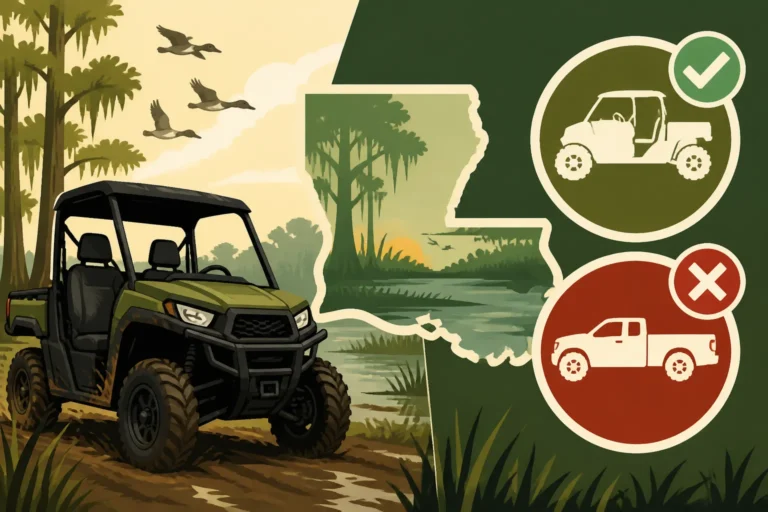
Vehicle access and use are often hot-button topics on public lands. In Kisatchie National Forest, you’ll generally find that vehicles (cars, trucks, RVs) are restricted to designated roads and parking areas. Off-road vehicle use is typically prohibited to prevent habitat damage and soil erosion. If you're dispersed camping, you might be able to pull off a forest road a short distance to set up your camp, but you should not be driving through the woods to reach a spot. Stick to existing pull-offs or clearings right off the main track.
ATVs and UTVs have more specific rules, which you can read up on in ATV Rules on Louisiana Forest Roads. Generally, these vehicles are allowed only on designated trails or roads that are open to them. They are not to be used for joyriding through the forest or for accessing hunting spots off-trail. If you use an ATV to get to your hunting area, park it legally and continue on foot. The rules are in place not just for safety, but to protect the very landscape that draws us all to Kisatchie. Respecting these boundaries ensures that these areas remain accessible and healthy for future generations of hunters and outdoor enthusiasts.
Planning Your Kisatchie Camping Hunt
A successful hunting trip often hinges on thorough preparation, and camping in Kisatchie National Forest is no exception. Taking the time to understand the lay of the land, acquire necessary permits, and adopt responsible practices will make your experience much more rewarding.
Permits, Maps, and Local Knowledge
First things first: understand the permit requirements. While dispersed camping often doesn't require a specific permit on national forest land, some areas or activities might. For instance, specific recreation areas or group camps might have their own permit systems. Always double-check with the Kisatchie National Forest office or their website for any specific requirements before heading out. Beyond camping, remember you'll need all the appropriate Louisiana hunting licenses and tags for the game you intend to pursue.
As for navigation, having good maps is non-negotiable. While the LDWF app can be incredibly useful for general public land information and reporting harvests (check out Using LDWF Without Cell Service for tips on offline use), dedicated mapping apps like onX Hunt or GoHunt are fantastic for detailed topography, property boundaries, and identifying forest roads. These tools, especially with the onX Layers for Louisiana Land Status, can help you identify not just where you can legally hunt, but also where you can legally camp, steering you clear of private land or restricted zones. Don't solely rely on your phone, though. A good old-fashioned paper map and a compass are invaluable backups, especially in areas with spotty cell service, which is common in many parts of Kisatchie. Finally, local knowledge is golden. A quick call to the relevant Kisatchie Ranger District office can often provide invaluable, up-to-the-minute information on conditions, closures, or specific regulations you might not find online.
Setting Up a Safe and Respectful Camp
Choosing the right campsite is more than just picking a pretty spot. It's about safety, minimizing impact, and being respectful of other forest users. When looking for a dispersed campsite, try to find a spot that has clearly been used before, rather than creating a new impact area. Avoid setting up camp in sensitive ecological zones, such as stream banks, wetlands, or fragile meadows. Consider potential hazards like dead trees or branches that could fall.
For hunters, thinking about wind direction is crucial not just for hunting, but also for campfire smoke. Nobody wants their tent filled with smoke! Also, consider noise. While deep in the woods, sounds travel. Keep generators, loud music, or excessive shouting to a minimum, especially during hunting season when others might be trying to locate game or enjoy the quiet of the forest. If you're hunting deer, for example, setting up your camp too close to a known bedding area or travel corridor could inadvertently push deer out of the area before you even step foot in your stand. Balancing convenience with stealth is key. Take a moment to Scouting Louisiana Public Land Before Season to identify suitable camping spots well in advance of opening day.
Embracing the "Leave No Trace" Ethic
The "Leave No Trace" principles are the golden rules for all outdoor enthusiasts, and they are particularly vital for maintaining the wild character of Kisatchie National Forest. As hunters and campers, we have a responsibility to leave the land as we found it, or even better.
Here are the seven principles applied to camping in Kisatchie:
- Plan Ahead and Prepare: As discussed, this includes knowing the rules, checking conditions, and having the right maps and gear. Don't show up unprepared.
- Travel and Camp on Durable Surfaces: Stick to existing roads, trails, and established campsites. When dispersed camping, choose a spot on bare soil, rock, or dry grass away from sensitive vegetation.
- Dispose of Waste Properly: "Pack it in, pack it out" for all trash. This includes food waste, which can attract animals. For human waste, dig a cathole 6-8 inches deep and at least 200 feet from water, trails, and camp. Pack out all toilet paper.
- Leave What You Find: Resist the urge to collect souvenirs like pinecones or rocks. Leave natural objects, cultural artifacts, and other items as you discover them so others can enjoy them.
- Minimize Campfire Impacts: Use existing fire rings. Keep fires small. Ensure fires are completely out and cold to the touch before leaving. Avoid building fires under low-hanging branches.
- Respect Wildlife: Observe wildlife from a distance. Never feed animals, as it can alter their natural behaviors and health. Store food securely. If you encounter an animal, give it space.
- Be Considerate of Other Visitors: Yield to others on trails. Keep noise levels down. Respect privacy. Be a good neighbor, especially during peak hunting seasons when many people are trying to enjoy the same resources.
By diligently following these principles, you not only ensure your own legal and enjoyable trip but also contribute to the long-term health and accessibility of Kisatchie National Forest for everyone, from the seasoned hunter tracking a big buck to the casual hiker enjoying a quiet afternoon.
Camping Rules on Kisatchie Forest Land: Quick Reference
| Feature | Developed Campgrounds | Dispersed (Primitive) Camping |
|---|---|---|
| Location | Designated, numbered sites | Anywhere not restricted, typically off forest roads |
| Amenities | Fire rings, picnic tables, restrooms, water, some with hookups | None (pack everything in/out) |
| Cost | Typically fee-based (check current rates) | Free |
| Reservations | Often required, especially for popular seasons | Not applicable |
| Stay Limit | Varies by campground, usually shorter than dispersed | Typically 14 days in a 30-day period |
| Fires | Use provided fire rings, check for burn bans | Small, contained fires in cleared areas, check for burn bans |
| Vehicles | Park in designated spots | Park on or immediately adjacent to open forest roads |
| Wildlife | Store food securely | Store food securely (bear bags/canisters or locked vehicle) |
| Impact | Lower individual impact due to existing infrastructure | High potential for impact; "Leave No Trace" is critical |
| Maps Needed | Basic forest map, campground map | Detailed topographical maps (e.g., onX Hunt, GoHunt) and paper maps |
Always verify specific rules with the Kisatchie National Forest office or website before your trip. Enjoy your time in Louisiana’s beautiful national forest!
Disclaimer
This article is for general informational purposes only and does not constitute professional advice. Laws, prices and regulations vary by location and change over time. Consult a qualified professional for guidance on your specific situation.