Hunting the Atchafalaya Basin
For many hunters, the mere mention of the Atchafalaya Basin conjures images of deep, dark cypress swamps, winding bayous, and a labyrinth of waterways that can be as intimidating as they are rewarding. It's a place where the landscape itself dictates how you hunt, challenging even the most seasoned outdoorsmen with its ever-changing water levels, dense cover, and sheer scale. This guide is here to demystify hunting the Atchafalaya Basin, offering insights into how to navigate its unique environment, understand its game, and prepare for an unforgettable Louisiana swamp hunt.
Understanding the Atchafalaya Basin's Unique Ecosystem for Hunters
The Atchafalaya Basin isn't just a hunting area; it's an entire ecosystem, a hydrological marvel that profoundly impacts everything from deer movement to duck migration. For hunters, understanding this dynamic environment is the first step toward success, transforming what might seem like insurmountable challenges into exciting opportunities. It's a place that demands respect, preparation, and a willingness to adapt.
What Makes the Basin Different
Unlike upland pine forests or agricultural fields, the Atchafalaya Basin is defined by water. It’s the largest river swamp in North America, a vast floodplain where the Atchafalaya River, a distributary of the Mississippi, carves its path. This means fluctuating water levels are a constant, driven by rainfall upstream and local weather. The terrain is a mix of ancient cypress-tupelo forests, willow thickets, open lakes, and countless bayous, sloughs, and canals. Deer, hogs, and small game have adapted to this aquatic environment, often swimming between islands of higher ground, while waterfowl flock to its abundant food sources and secluded resting areas. The sheer wildness of it all, the feeling of being truly immersed in an untamed landscape, is what truly sets it apart.
Hunting here isn't about walking logging roads or sitting over a food plot; it's about navigating by boat, reading the water, and understanding how animals utilize scattered high ground and flooded timber. You're not just hunting game; you're hunting an environment, learning its rhythms, and becoming part of its flow. It's an experience that deeply connects you to the raw power of Louisiana's natural heritage.
The Challenges of Swamp Hunting
Let's be real, hunting the Atchafalaya Basin isn't for the faint of heart. The challenges are numerous, and they demand a different kind of preparation and mindset than a typical hunt. First and foremost is navigation. Miles of identical cypress trees and winding waterways can disorient even experienced outdoorsmen. You'll need reliable mapping tools, like those found on onX Hunt or GoHunt, to avoid getting lost.
Then there's the ever-present water itself. It dictates access, changes daily, and can make tracking nearly impossible. Mud is another constant companion, often deep and tenacious, clinging to boots and gear. The wildlife you pursue has an advantage; they're at home in this environment, moving silently through thick brush and swimming across channels with ease. Beyond the terrain, you're dealing with the elements: humid heat, biting insects, and sudden thunderstorms that can turn a calm bayou into a rough passage. These aren't just minor inconveniences; they are integral parts of the Basin hunting experience that must be planned for.
Why Hunters Love the Basin
Despite its demanding nature, the Atchafalaya Basin holds a special allure for many Louisiana hunters. There's a profound sense of wildness here that's hard to find elsewhere. The deer are often bigger, having grown up wild and free, not accustomed to seeing human faces or the easy meals of a food plot. Every animal harvested feels like a true accomplishment, earned through grit, skill, and an intimate understanding of the swamp.
For duck hunters, the Basin offers unparalleled opportunities, with vast expanses of prime habitat drawing in thousands of migratory birds each winter. The sound of whistling wings and splashing water in the predawn dark is something truly magical. And for those seeking adventure, the Basin provides it in spades. It's a place where you can feel the pulse of nature, where every rustle in the palmettos or ripple on the water could be your next target. It's a place that tests your limits and rewards you with memories that last a lifetime, fostering a deep connection to the land and the tradition of hunting.
Key Game Species and Seasons in the Basin
The Atchafalaya Basin is a biological melting pot, supporting a diverse array of game species that thrive in its unique swamp habitat. Each species presents its own set of challenges and rewards, and understanding their behavior within this flooded environment is paramount to a successful hunt. Whether you're after a elusive swamp buck or a limit of greenheads, the Basin offers something for every type of hunter.
Deer: The Primary Target
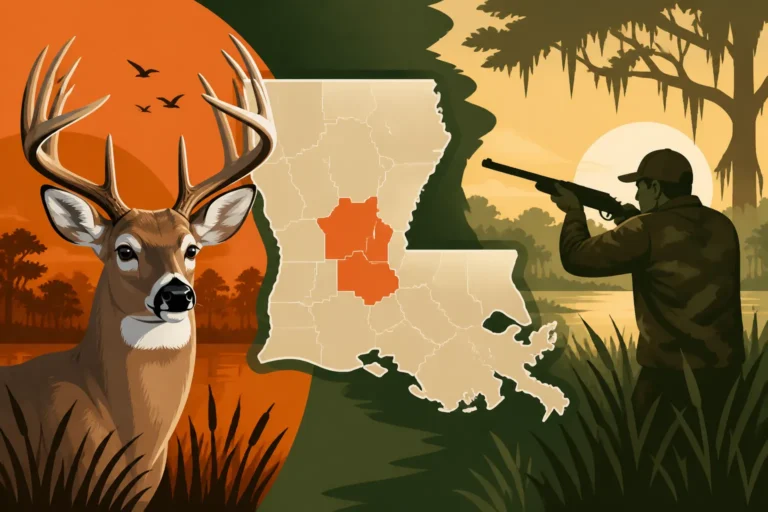
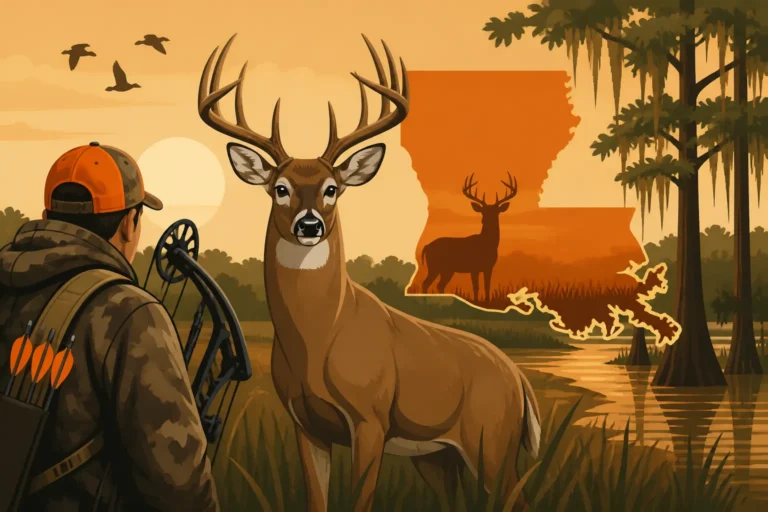
White-tailed deer are undoubtedly one of the crown jewels of Basin hunting. These aren't your typical farm-country deer; they're lean, tough, and masters of their flooded domain. The Atchafalaya Basin falls largely within Louisiana's Deer Area 3, which offers a robust season. Deer here have adapted to the fluctuating water levels, often bedding on slightly elevated hummocks, cypress knees, or whatever dry ground they can find. During high water events, they concentrate on ridges or spoil banks that remain above the flood. Finding Where Atchafalaya Basin Bucks Bed involves keen observation of these subtle elevation changes.
Hunters often focus on the edges of sloughs, bayous, and canals, or on areas where the water has receded, leaving behind exposed mud flats where deer feed. The rut in this area typically peaks in late October to early November, offering exciting opportunities for hunters who understand the unique dynamics of swamp buck movement during this critical time. A successful deer hunt in the Basin is a testament to perseverance and a deep understanding of the local environment.
Waterfowl: A Winter Paradise
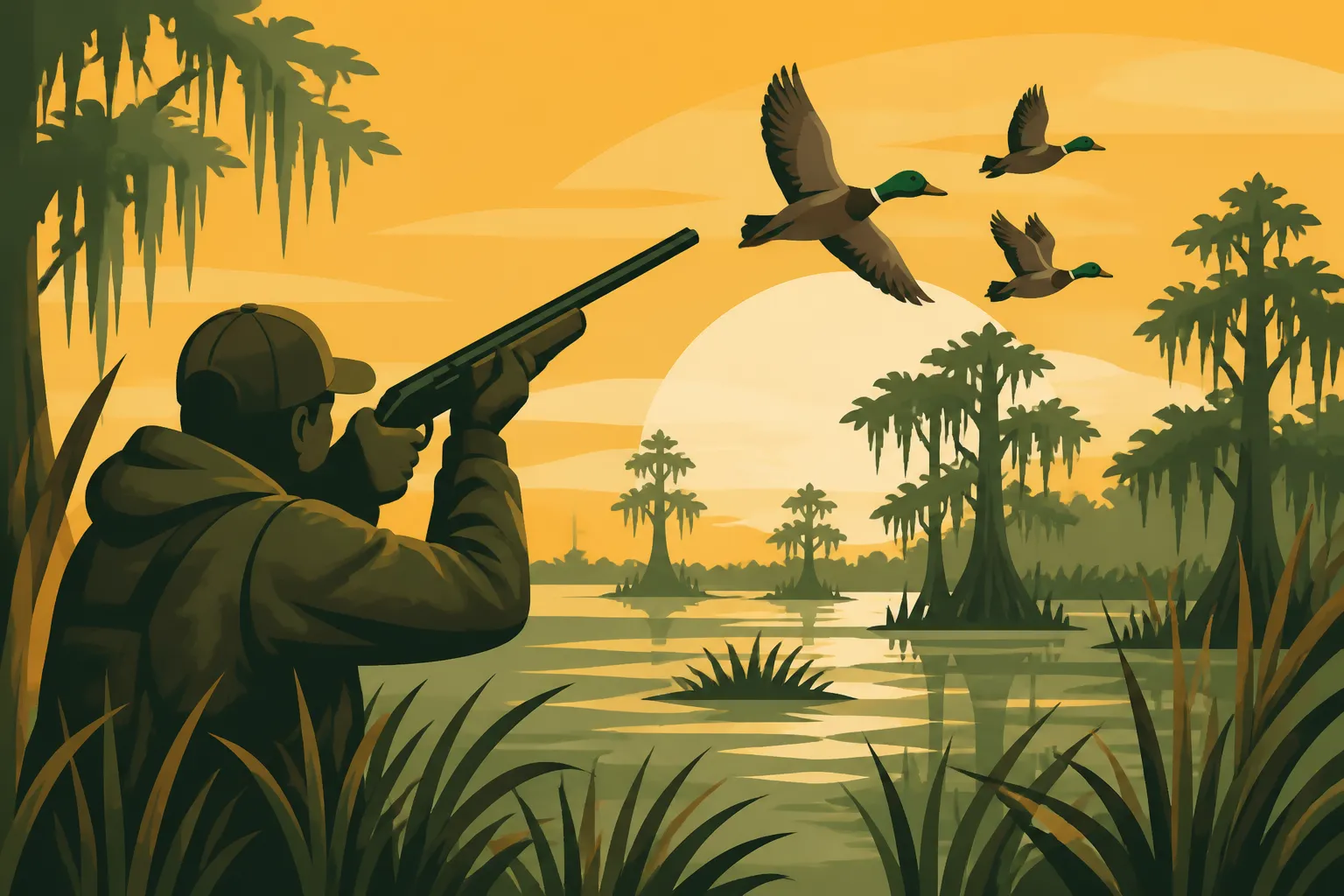
When winter descends, the Atchafalaya Basin transforms into a crucial wintering ground for countless migratory waterfowl along the Louisiana Waterfowl on the Mississippi Flyway. Ducks, especially mallards, gadwall, teal, and wood ducks, flock to the Basin's rich aquatic vegetation and abundant food sources. The maze of sloughs, cypress breaks, and open water areas provides ideal feeding and resting habitat. Hunters here often navigate small boats, pushing into secluded areas that are inaccessible to larger craft.
The varying water levels again play a huge role, influencing where ducks will feed and roost. During periods of low water, ducks may concentrate in remaining pools or deeper sloughs, while high water can open up vast expanses of flooded timber, spreading birds out. Setting up a decoy spread in a cypress hole or along a brushy bank, listening to the cacophony of whistling wings at dawn, is an experience that many waterfowlers cherish. Success often depends on scouting, understanding current migration patterns, and adapting your setup to the prevailing water conditions.
Hogs and Small Game: Year-Round Opportunities
Beyond deer and ducks, the Atchafalaya Basin offers fantastic opportunities for Hunting Louisiana's Year-Round Feral Hogs and various small game species. Feral hogs are an invasive species, prolific breeders, and a nuisance to the ecosystem, making them a year-round target for hunters without bag limits on private lands. They thrive in the dense cover and rich food sources of the swamp, often found rooting along bayou banks, in willow thickets, or on higher ground during floods. Their destructive rooting can be a key indicator of their presence.
For small game enthusiasts, the Basin provides ample opportunities for squirrel and rabbit hunting. Squirrels, both gray and fox, are abundant in the cypress and hardwood forests, particularly along ridge lines or older timber stands. Rabbits, especially cottontails, hide in the thick cane breaks and willow stands, often pushed to higher ground during flood events. Hunting small game in the Basin is a great way to stay active during the off-season or to add variety to a deer or duck hunt. The dense cover and often challenging terrain make these hunts an engaging experience, requiring sharp eyes and quick reflexes.
Navigating the Basin: Access and Logistics
Navigating the Atchafalaya Basin is an adventure in itself, a testament to the wild nature of this sprawling swamp. Unlike hunting a tract of land with marked boundaries and roads, the Basin demands a different kind of navigational prowess. It's a place where the journey is as much a part of the hunt as the actual pursuit of game, requiring careful planning and the right tools to ensure both success and safety.
Boat Access Points and Launching
The vast majority of access into the Basin is by boat, and choosing the right launch point is critical. There are numerous public boat launches scattered around the perimeter of the Basin, offering entry into its intricate network of waterways. Popular access points can be found along major highways that traverse the Basin, such as I-10 and US-190, or from towns like Morgan City, Butte La Rose, and Krotz Springs. These Atchafalaya Basin Boat Access Points often lead to main channels and larger bayous, which then branch off into smaller, more secluded areas.
When launching, consider the size of your boat and motor. Many areas are accessible only by smaller skiffs, mud boats, or even pirogues, especially if you plan to explore shallow sloughs or flooded timber. Always check current water levels, as some ramps might be unusable during extreme high or low water. Plan your route carefully, understanding that even a short run can take longer than expected due to hidden debris, shallow spots, or heavy currents. Securing your vehicle and trailer at the launch is also important, as some remote spots can be targets for theft.
Understanding Water Levels and Currents
The lifeblood of the Atchafalaya Basin is its water, and understanding its levels and currents is non-negotiable for a safe and successful hunt. Water levels can fluctuate dramatically, sometimes by several feet in a matter of days, due to rainfall, river stages upstream, and tidal influences in the lower basin. These changes impact everything: where deer will be, which sloughs are navigable, and how fast currents will run. Low water might expose mudflats and create dry ground for deer, but it can also make many areas impassable by boat. High water might flood more timber, dispersing game but also opening up new hunting avenues.
Currents, especially in the main channels and during periods of high water, can be surprisingly strong and dangerous. Always motor upstream first when possible, so your return trip is easier. Pay attention to floating debris, especially after heavy rains, as logs and other hazards can damage your boat or propeller. Local weather forecasts and river stage predictions from the National Weather Service are invaluable resources for planning your trip and making real-time adjustments. Never underestimate the power of the water in the Basin.
Mapping and Navigation Tools
In a place as confusing as the Atchafalaya Basin, reliable mapping and navigation tools are your best friends. Gone are the days of solely relying on paper maps (though a laminated backup is still a good idea). Modern GPS devices and smartphone apps have revolutionized Basin navigation. Tools like onX Hunt offer detailed satellite imagery, topo maps, and the ability to mark waypoints, track your path, and see property lines, which is crucial when hunting near WMA boundaries or private leases. Scouting With the LDWF App can also provide valuable insights into public land regulations and access points.
Always carry a fully charged phone or GPS unit, along with a portable power bank. Download offline maps before you go, as cell service is often nonexistent deep in the swamp. Learn how to use your chosen navigation system proficiently before your hunt. Being able to confidently navigate to and from your hunting spot, even in the dark or heavy fog, is essential for safety and efficiency. Don't just rely on a device; learn to read the water, the tree lines, and key landmarks. The more you hunt the Basin, the more intuitive navigation becomes, but technology provides an invaluable safety net.
Essential Gear and Preparations for a Basin Hunt
Hunting the Atchafalaya Basin isn't like heading to a deer camp in the piney woods. The environment demands specialized gear and meticulous preparation to ensure not only a successful hunt but also your safety and comfort. Every item in your pack should be chosen with the unique challenges of swamp hunting in mind. Forgetting a crucial piece of equipment or failing to prepare properly can quickly turn an exciting adventure into a miserable ordeal.
Waterproof Gear and Clothing
This might sound obvious, but it bears repeating: in the Basin, you will encounter water. And mud. Probably more than you expect. High-quality waterproof gear is not a luxury; it's a necessity. Start with a good pair of waterproof boots, preferably knee-high rubber boots or waders, depending on how deep you anticipate wading. They need to be comfortable enough for long treks and stout enough to withstand submerged branches and sharp vegetation.
Your outer layers of clothing should also be fully waterproof. A reliable rain suit, including jacket and pants, is indispensable. Even on a clear day, you might get splashed by the boat, encounter dripping foliage, or need to wade through shallow sloughs. Layering is key, as Louisiana weather can be unpredictable, swinging from chilly mornings to warm afternoons. Choose moisture-wicking base layers to keep sweat away from your skin, and avoid cotton which retains moisture and can lead to dangerous chilling. Don't forget waterproof gloves and a hat to protect from sun, rain, and insects.
Transportation: Boats and ATVs
As discussed, a boat is your primary mode of transportation in the Basin. A shallow-draft boat, like a flat-bottomed skiff or a mud boat with a surface drive motor, is often ideal for navigating the shallow sloughs and dense cover. Ensure your boat is well-maintained, with a reliable motor, a spare propeller, and a full tank of fuel (plus extra in approved containers). Don't forget oars or a trolling motor as a backup for propulsion.
For accessing areas once you've launched your boat, or for moving gear around a small dry island, an ATV might be useful on specific leases or WMAs where allowed. However, always check the specific regulations for any public land, as ATV use is often restricted to designated trails or prohibited entirely. If you plan to use an ATV, ensure it's in good working order, with appropriate tires for muddy conditions, and always ride responsibly and safely. Remember, anything you take into the Basin needs to be able to handle the mud and wet conditions.
Safety Equipment and Emergency Plans
Safety should be your top priority when hunting the Atchafalaya Basin. The remote nature of the area, combined with its environmental hazards, makes preparedness crucial. Essential safety gear includes:
- Personal Flotation Devices (PFDs): One for every person on the boat, and wear them when underway.
- First-Aid Kit: Comprehensive enough for cuts, scrapes, insect bites, and minor emergencies. Include snakebite kit if venturing deep.
- Communication Devices: A fully charged cell phone (with offline maps), a marine radio, and potentially a satellite communicator like a Garmin InReach for areas without cell service.
- Lights: Headlamps, flashlights, and navigation lights for your boat. Always carry spare batteries.
- Signaling Devices: Whistle, air horn, and flares.
- Knife/Multi-tool: Always handy.
- Basic Repair Kit: For your boat or ATV (e.g., wrench, pliers, duct tape).
Beyond gear, have an emergency plan. Share your float plan with someone reliable, including your destination, expected return time, and alternate contacts. Know basic first aid and self-rescue techniques. Recovering a Deer From a Basin Slough often means wading in deep water, so be aware of your capabilities. Be especially mindful of alligators and venomous snakes, particularly during warmer months. The Basin is wild, and respecting its dangers is the first step in enjoying its bounty.
Hunting Strategies for Basin Whitetails
Hunting whitetails in the Atchafalaya Basin requires a complete shift in tactics from more traditional hunting grounds. Here, the deer are creatures of habit born from necessity, driven by the ebb and flow of water and the sparse distribution of dry ground. To consistently find success, hunters must become intimately familiar with these patterns and adapt their strategies to the swamp's unique rhythm. It's a game of observation, patience, and a willingness to get a little (or a lot) wet.
Reading the Water and Terrain for Deer Sign
In the Basin, water is the primary sculptor of deer movement. Learning to read the water levels and how they influence the terrain is critical. During periods of low water, look for exposed mud flats and newly accessible islands where deer might be feeding on aquatic vegetation or browsing on exposed browse. As water rises, deer will be pushed to higher ground – even small hummocks, cypress knees, or old logging roads that remain above the flood. These areas become natural funnels and congregation points. Fresh tracks, droppings, rubs, and scrapes on these isolated bits of dry land are prime indicators of deer activity. Reading a Basin Chute for Deer Movement can help predict where deer will cross waterways.
Additionally, pay close attention to any subtle changes in elevation, no matter how small. A foot or two of rise can mean the difference between flooded timber and dry bedding cover. Look for trails that lead up onto these higher spots, or distinct travel corridors along the banks of bayous and sloughs where deer are funneled by water. Understanding Wind and Thermals in Swamp Bottomland is also vital, as air currents behave differently in dense, wet environments, often flowing along watercourses.
Stand Placement in Flooded Timber
Setting up a treestand in flooded timber is a common, and often highly effective, strategy in the Atchafalaya. This isn't always easy, as finding suitable trees in deep water can be a challenge. Look for clusters of cypress or oak trees that offer good concealment and overlook potential travel corridors or feeding areas. Often, hunters will construct sturdy ladder stands or hang stands well in advance of the season, ensuring they are stable and safe for repeated use.
The key is to place your stand where deer are naturally funneled. This could be where a slough narrows, where a small ridge meets the water, or along the edge of a willow thicket. Consider prevailing winds and sun direction for your setup. Access to your stand usually means a quiet paddle or electric motor ride, as gas motors can spook game from a distance. The advantage of a stand in flooded timber is that it puts you above the deer's line of sight and often provides a better vantage point for spotting movement in the dense understory. Remember to always use a safety harness, especially when climbing in potentially unstable conditions.
Still-Hunting and Drives in the Swamp
For the more adventurous or those without permanent stands, still-hunting and small deer drives can be incredibly productive methods in the Basin. Still-hunting involves moving slowly and deliberately through the swamp, pausing frequently to observe and listen. This technique requires patience and stealth, using the dense cover to your advantage. Focus on areas with good deer sign, moving into the wind, and staying alert for subtle movements or sounds. Look for deer holding tight in thick palmetto patches or dense willow stands, often only moving when you are very close.
Small, organized deer drives with a few hunters can also be effective, especially during high water when deer are concentrated on higher ground. A common tactic is for one or two "drivers" to slowly push through a known bedding area or island of dry land, while "standers" are positioned along the logical escape routes, typically water crossings or narrow strips of land. Communication is vital during a drive, often using radios or pre-arranged signals. These drives are particularly well-suited to the Basin's patchy dry land, as deer are often reluctant to cross open water if they can avoid it. Just be sure to always prioritize safety and clearly communicate shooting lanes and positions.
Waterfowl Hunting in the Atchafalaya Basin
For many, the Atchafalaya Basin truly shines as a waterfowl hunting destination. As winter approaches, the cypress and tupelo swamps, the open lakes, and the winding bayous become alive with the sounds of migrating ducks and geese. Waterfowlers here don't just hunt; they immerse themselves in a tradition as old as the Basin itself, blending intimate knowledge of the waterways with strategic setup to intercept passing birds.
Setting Up for Ducks in Cypress Sloughs
Cypress sloughs are iconic duck hunting spots in the Atchafalaya. These narrow, often shallow waterways, flanked by ancient cypress trees, provide natural corridors and feeding grounds for various duck species. Setting up in a cypress slough involves carefully positioning your boat (or hiding it) against a bank or in thick cover, and then deploying your decoys. The key is to blend into the natural environment. Many hunters use natural blinds made from willow branches, cane, or whatever local vegetation is available.
Focus on areas where water flow creates slight eddies, or where submerged vegetation is abundant, as these are prime feeding spots. Wood ducks are especially fond of these shaded, timbered sloughs, often zipping through the trees at incredible speeds. Mallards, gadwall, and teal will also frequent these areas, especially if there's available food. Pay attention to how the wind is blowing, as ducks prefer to land into the wind. Your setup should allow for easy shooting lanes while keeping you well-hidden.
Decoy Spreads for Basin Birds
Decoy spreads in the Basin are often less about massive numbers and more about strategic placement. In the dense, often limited open water of sloughs and flooded timber, a smaller, realistic spread often works best. A typical spread might consist of a dozen to two dozen decoys, primarily mallards, gadwall, and pintails, with a few wood duck or teal decoys mixed in, depending on what's flying. Motion decoys, such as spinners or jerk rigs, can add life to your spread and attract the attention of distant birds.
The shape of your spread is also important. A common tactic is to create a "landing zone" directly in front of your blind, leaving an open pocket for ducks to commit to. Place decoys in natural-looking groups, mimicking ducks feeding or resting. Avoid straight lines or overly symmetrical patterns. In shallower, timbered areas, place decoys among the cypress knees and stumps to give a more natural appearance. Remember, the goal is to make your setup look like a safe, inviting resting or feeding spot for weary migratory birds.
Understanding Duck Behavior in Fluctuating Water
Just like deer, duck behavior in the Basin is heavily influenced by fluctuating water levels. When water is low, ducks will concentrate in deeper sloughs, permanent ponds, or the remaining pools of water that offer sufficient depth for feeding and resting. These can be prime locations as birds are funneled into smaller areas. However, low water can also make access extremely challenging, requiring lighter boats or even pushing through mud.
Conversely, high water can open up vast new feeding areas, such as flooded timber or agricultural fields on the Basin's fringes, dispersing ducks over a much larger area. While this makes finding them more challenging, it can also lead to spectacular hunting in areas that are usually dry. Keeping an eye on river stages and local rainfall is crucial for predicting where the birds will be. Observing which areas hold ducks on consecutive days is also key – they are creatures of habit once they find a good food source and a safe place to rest. Adapting your hunting location to these water dynamics is a hallmark of a successful Basin waterfowler.
Hunting Feral Hogs and Other Small Game in the Swamp
While deer and ducks often get the spotlight, the Atchafalaya Basin also offers phenomenal opportunities for hunting feral hogs and a variety of small game. These pursuits provide exciting action, often year-round, and are a great way to experience the swamp's bounty beyond the primary seasons. Hunting these resilient creatures in their element adds another layer of challenge and reward to a Basin adventure.
Locating Hog Hotspots
Feral hogs are ubiquitous across the Basin, but finding their hotspots requires understanding their habits in this unique environment. Hogs are constantly on the move, but they gravitate towards areas with abundant food and thick cover. Look for fresh rooting on banks, islands, or any exposed ground, especially after water levels drop and new forage becomes available. They also love dense willow thickets, cane breaks, and palmetto patches, which offer excellent concealment and shelter.
Hogs are also keen on water sources and will often travel along bayous, sloughs, and canals. Game cameras can be invaluable tools for identifying travel routes and feeding areas, though always check WMA rules regarding their use. Building and Freshening a Hog Bait Site is a common tactic on private land, but baiting is strictly prohibited on public lands and WMAs in Louisiana. Focus on areas with soft ground where rooting is easily visible, and listen for their distinctive grunts and snorts. During high water, hogs will concentrate on any remaining dry ground, making these areas prime targets.
Tactics for Swamp Rabbits and Squirrels
Hunting small game like rabbits and squirrels in the Atchafalaya Basin is a classic Louisiana experience, offering a different pace than big game hunting. For rabbits, focus on the dense, brushy cover found along bayou banks, logging roads, and on elevated islands of willow and cane. Be prepared to push through thick vegetation. Hunting with a small group, with some hunters walking slowly through the brush to jump rabbits while others are positioned on escape routes, can be very effective. A good pair of snake boots is highly recommended, as rabbits love the same thick cover where snakes might be lurking.
Squirrels, both gray and fox, are abundant in the mature cypress and hardwood stands, particularly those with a good mast crop. During early season, look for them feeding on acorns, pecans, or cypress cones. Often, you'll hear them before you see them, chattering or dropping cuttings from the trees. Squirrel Hunting Louisiana Bottomland Hardwoods is a timeless tradition. Still-hunting slowly through the timber, pausing frequently to scan the canopy, is a productive method. A .22 caliber rifle or a shotgun with light shot is ideal for these nimble targets. Both rabbit and squirrel hunting require patience and a keen eye for movement in the dense, often shadowy swamp environment.
Dealing with Water and Mud for Small Game
Just like with deer and waterfowl, water and mud are constants when hunting small game in the Basin. During periods of low water, more ground is accessible, but it's often soft and muddy. Be prepared for knee-deep mud in places, which can be exhausting to walk through. High-quality waterproof boots are, once again, essential. If you're running dogs for rabbits or hogs (where allowed), ensure they are accustomed to working in water and mud, and fitted with appropriate protective gear if needed.
When crossing smaller sloughs or flooded areas, a pirogue or kayak can be incredibly useful, allowing you to quietly access areas that would be too deep to wade or too thick for a larger boat. Remember that water can change quickly, so always be aware of your surroundings and potential escape routes. The challenge of traversing the wet terrain is part of the experience, and it often leads to areas less pressured by other hunters, offering a more pristine hunting experience.
Safety and Conservation in the Atchafalaya Basin
Hunting in the Atchafalaya Basin offers unparalleled adventure, but it also comes with inherent risks and significant responsibilities. The wild, untamed nature of this ecosystem demands a heightened awareness of safety and a steadfast commitment to conservation. As stewards of this incredible landscape, hunters have a duty to not only protect themselves but also to preserve the Basin's unique environment and wildlife for future generations.
Navigating Hazards: Alligators, Snakes, and Submerged Obstacles
The Basin is teeming with wildlife, and some of it can be dangerous. Alligators are common residents, and while generally shy, they can be aggressive if provoked, cornered, or if they perceive a threat to their nests or young. Always be aware of your surroundings, especially near water's edge, and never feed alligators. Venomous snakes, such as cottonmouths (water moccasins) and rattlesnakes, are also present, particularly on drier ground or around logs and brush piles. Wear snake boots, watch where you step, and avoid reaching into blind spots. If you encounter a snake, give it a wide berth.
Beyond wildlife, the water itself presents hazards. Submerged logs, stumps, and debris can damage boats, motors, and propellers, potentially leaving you stranded. Always travel at a safe speed, especially in unfamiliar areas or during low light. Pay attention to changes in water color or texture that might indicate a shallow area or an obstruction. Strong currents, particularly in deeper channels, can also be dangerous, especially for smaller boats. Having a detailed map, such as those on GoHunt, and understanding the terrain can help you avoid these hidden dangers.
Emergency Preparedness and Communication
Given the remote nature of many Basin hunting areas, emergency preparedness is paramount. As mentioned earlier, a comprehensive first-aid kit is non-negotiable. Carry sufficient water and high-energy snacks, even for day trips, in case you are delayed. A waterproof container for all electronics and emergency supplies is also a must.
Reliable communication is your lifeline. While cell service is spotty at best, carrying a fully charged satellite communication device (like a Garmin InReach or Spot device) is highly recommended. These devices allow you to send emergency messages and share your location even without cell signal. Always inform someone of your exact hunting location and your estimated return time, including details about your boat and vehicle. If something goes wrong, rescuers will have a much better chance of finding you quickly. Remember to check your equipment before each trip – a dead battery is useless in an emergency.
Responsible Hunting Practices and Ethics
Hunting in the Atchafalaya Basin also carries a profound responsibility to practice sound conservation and ethical hunting. This means strict adherence to all Louisiana Feral Hog Regulations and general hunting laws, including bag limits, season dates, and legal hunting methods. Ensure you have all required licenses and permits, and that you understand any specific WMA regulations for the area you are hunting. Reporting your harvest, as required for deer and turkeys in Louisiana, is a critical component of wildlife management.
Leave no trace. Pack out everything you pack in, including spent shell casings, food wrappers, and any other trash. Respect private property boundaries and obtain proper permission if hunting on private land adjacent to public areas. Treat the animals you pursue with respect, striving for quick, ethical kills and efficient recovery. In the unique environment of the Basin, where every resource is precious, responsible hunting practices ensure that this magnificent hunting ground remains a vibrant, healthy ecosystem for generations of hunters to come. The future of hunting areas like the Atchafalaya Basin depends on it.
Disclaimer
This article is for general informational purposes only and does not constitute professional advice. Laws, prices and regulations vary by location and change over time. Consult a qualified professional for guidance on your specific situation.