Louisiana Cottonmouth Range in Swamp Country
Navigating Louisiana's rich, watery landscapes is an experience like no other, but for many, the thought of encountering a cottonmouth—or water moccasin, as they're often called—can cast a shadow of anxiety over an otherwise perfect day in the swamp or out on the bayou. It’s a very real concern for anyone spending time outdoors here, whether you're fishing a quiet slough, running trotlines, or hunting deep in the lowlands. This guide is here to shed light on exactly where these venomous snakes call home in Louisiana's swamp country, helping you understand their true range, identify them correctly, and most importantly, how to share their habitat safely and with confidence.
Understanding the Louisiana Cottonmouth and Its Habitat
When you think of Louisiana, you probably picture cypress trees draped in Spanish moss, murky bayous, and vast stretches of marshland. These iconic scenes are not just beautiful postcards; they are also the preferred domain of the cottonmouth. To truly understand where you might run into one, it helps to first understand the snake itself and why our unique environment is such a perfect fit for them.
What is a Cottonmouth and Why Does it Call Louisiana Home?
The cottonmouth (scientific name Agkistrodon piscivorus) is North America's only venomous water snake, and it thrives in the southeastern United States, with Louisiana being right in the sweet spot of its range. Locally, you'll often hear them referred to as water moccasins, a name that strikes a certain fear into the hearts of many, and for good reason—they are venomous, and a bite can be serious. However, understanding them helps demystify some of that fear.
These snakes are semi-aquatic, meaning they spend a significant portion of their lives both in and around water. Louisiana's extensive network of rivers, bayous, lakes, swamps, and coastal marshes provides an ideal habitat. They feast on fish, amphibians like frogs and salamanders, small mammals such as rats and mice, and even small birds, all of which are abundant in our state's wetlands. The constant availability of food and water, coupled with dense vegetation for cover, makes Louisiana a cottonmouth paradise. They play a vital role in our ecosystem, helping to keep rodent and amphibian populations in check.
Key Characteristics and Identification Tips
Identifying a cottonmouth correctly is crucial, as many non-venomous water snakes in Louisiana are often mistaken for them, leading to unnecessary fear or, worse, harm to a harmless creature. Cottonmouths are typically thick-bodied snakes with a distinctively triangular head that is noticeably wider than their neck. They also possess heat-sensing pits located between their eyes and nostrils, a characteristic of pit vipers. Their coloration can vary widely, from dark olive or brown to almost black, often with darker crossbands that may be obscure, especially in older individuals. The most famous identifying feature, from which they get their name, is the stark white interior of their mouth, which they display as a warning when threatened.
One key difference from non-venomous water snakes, such as the broad-banded water snake or diamondback water snake, is how they hold their head and body. Cottonmouths often swim with their entire body, including their head, riding on top of the water, while most non-venomous water snakes swim with only their head visible above the surface, their body submerged. Another subtle but important detail: water snakes often have round pupils, whereas cottonmouths, like other pit vipers, have elliptical, cat-like pupils. When you approach one, a cottonmouth's first instinct is often to hold its ground, coil up, and open its mouth to flash that white interior, sometimes vibrating its tail—this is a clear warning sign, not an act of aggression, indicating it feels threatened and wants you to back off.
Where You're Most Likely to Encounter Cottonmouths in Louisiana
Louisiana is basically a giant sponge, and where there's water and a bit of cover, there's potential for cottonmouths. But some areas are undeniably more concentrated than others, and knowing these hotspots can help you prepare and stay vigilant.
The Heart of Swamp Country: Basin and Coastal Marshes
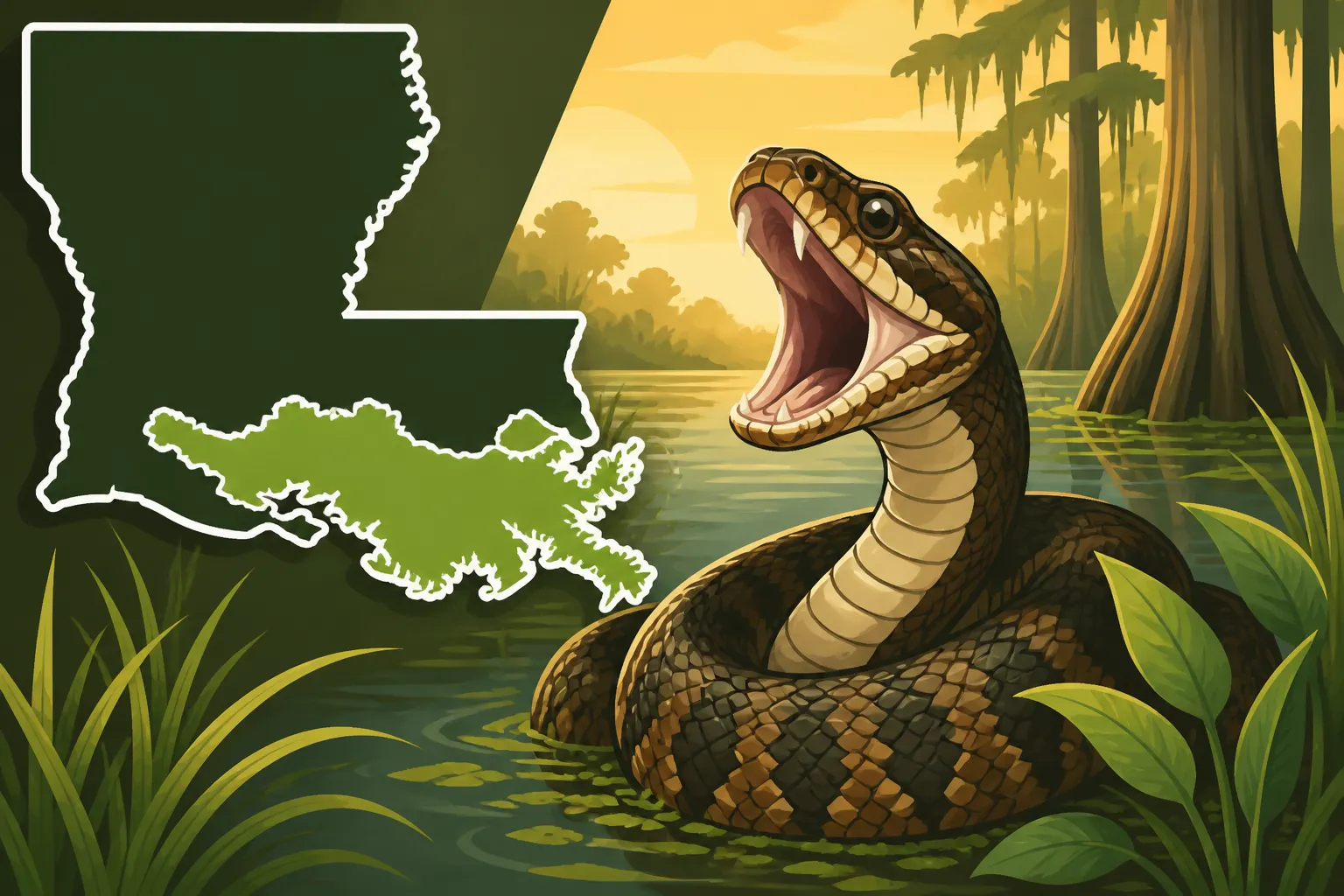
When we talk about "swamp country" in Louisiana, we're really talking about the prime real estate for cottonmouths. The Atchafalaya Basin is arguably the epicenter. This vast, intricate network of cypress-tupelo swamps, bayous, and sloughs provides everything a cottonmouth could ever want: abundant prey, perennial water, and endless nooks and crannies for basking and hiding. Hunters wading through the Basin's backwaters or fishing its channels should be acutely aware of their surroundings, particularly along logging roads or high spots that offer dry basking areas. Hunting the Atchafalaya Basin is a truly unique experience, but it means you're entering their domain.
Beyond the Basin, areas like the Pearl River WMA and the expansive coastal marshes of parishes like Terrebonne, Lafourche, and Cameron are also brimming with them. Think about the Pearl River's dense bottomland deer ground, where sloughs and oxbow lakes abound; these are ideal cottonmouth haunts. Pearl River WMA Bottomland Deer Ground and Hunting the Pearl River Wildlife Management Area offer incredible hunting, but also high chances of encountering these snakes. Similarly, navigating the edges of the coastal marsh, whether you're duck hunting or fishing, puts you squarely in their territory. The transition zones between water and land, where vegetation is thick and prey is easily ambushed, are particularly favored. The numerous ponds and canals found in areas like the Terrebonne Parish Marsh Public Access are classic cottonmouth hangouts.
Beyond the Deep Swamp: Canals, Ditches, and Pond Edges
It's not just the remote, deep swamps where you'll find cottonmouths. They are incredibly adaptable and will readily inhabit any slow-moving or stagnant water body that offers food and cover. This includes countless man-made features that crisscross our landscape. Agricultural ditches, irrigation canals, and even quiet pond edges on private land or suburban fringes can hold these snakes. For those living or hunting in farm country, walking a levee alongside a drainage ditch or checking a pond for fishing can lead to an unexpected encounter.
These "less wild" areas can sometimes be more surprising, simply because people don't expect to see venomous snakes there. A fishing pond behind a rural property, a canal running beside a sugar cane field, or a slow-moving creek can all provide ideal habitat. They use these corridors to travel, hunt, and find mates. Even seemingly mundane spots like overgrown culverts or brush piles near water can harbor a cottonmouth. If you're out Scouting Louisiana Public Land Before Season or even exploring a small private tract, remember that any water source—no matter how small—could potentially hold one. Always approach these areas with caution and an awareness of your surroundings.
Practical Advice for Navigating Cottonmouth Country Safely
Understanding their range is the first step; the next is knowing how to minimize your risk and react appropriately if you do encounter one. Safety in cottonmouth country is all about awareness, preparedness, and respect for the wildlife around you.
Awareness and Prevention in the Field
When you're out in Louisiana's wetlands, your eyes and ears are your best tools. Always look where you're stepping, especially when moving through dense vegetation, tall grass, or along the banks of bayous and ditches. Cottonmouths are masters of camouflage, blending seamlessly with leaf litter, mud, and water. Avoid placing your hands or feet where you cannot see, such as under logs, in thick brush, or into dark holes. If you're climbing over obstacles, peer over them first. A good pair of snake boots or sturdy, high-top leather boots can offer crucial protection for your lower legs and ankles.
Carrying a long walking stick or hiking pole isn't just for balance; it's an excellent tool to probe ahead of you in thick cover, or to gently push aside vegetation to reveal what might be lurking. Never wade blindly into murky water. If you must cross, shuffle your feet to create vibrations that might encourage any submerged snakes to move away. And a critical point: never, ever handle a snake, even if it appears dead. A freshly deceased snake can still reflexively bite for a surprising amount of time. Tools like the GoHunt app can help you visualize terrain and identify potential snake habitats like dense marsh or cypress breaks on a map before you even step foot in an area. This proactive approach to understanding the landscape can make a huge difference in your overall safety.
What to Do if You Encounter a Cottonmouth
The most important rule if you encounter a cottonmouth is simple: give it space. They are not inherently aggressive; their primary goal is to avoid conflict. If you see one, stop, assess the situation, and slowly back away. If the snake is blocking your path, try to go around it with a wide berth. If it's coiled and displaying its white mouth, it's telling you very clearly that it feels threatened. Respect that warning. Don't poke it, try to move it, or attempt to kill it. Unprovoked bites almost always occur when people try to interact with or harm the snake.
Should the unfortunate happen and you or someone in your party is bitten, the immediate priority is to remain calm and seek medical attention as quickly as possible. Panic will only accelerate your heart rate and potentially spread the venom faster. Call 911 or get to the nearest hospital immediately. While waiting for help, remove any jewelry or tight clothing near the bite area, as swelling will occur. Keep the bitten limb still and lower than the heart if possible. Do NOT try to cut the wound, suck out the venom, apply a tourniquet, or apply ice. These old wives' tales do more harm than good. Focus on getting professional medical help. Knowing this protocol is just as important as knowing where they live, especially when you are far afield, such as when Dragging a Deer Out of a Swamp after a successful hunt.
Dispelling Myths and Understanding Their Ecological Role
A lot of the fear surrounding cottonmouths comes from misconceptions and exaggerated stories. While they are venomous and warrant respect, understanding their true behavior can help us coexist more peacefully.
Common Misconceptions About Cottonmouths
One of the most pervasive myths is that cottonmouths are "aggressive" and will chase people. This is simply not true. Like most snakes, their instinct is to avoid humans entirely. A cottonmouth's famous defensive display—coiling up, opening its mouth, and sometimes vibrating its tail—is a warning. It's the snake's way of saying, "Hey, I'm here, you're too close, please back off before I have to do something I don't want to do." If you give them space, they will almost always retreat. We hear wild tales of snakes swimming aggressively towards boats or people, but typically, what's happening is a defensive reaction to feeling cornered, or perhaps the snake is trying to get away and its escape route happens to be in your direction.
Another common misconception is that they can't bite underwater. While it's true they can't deliver the full force of a strike underwater as effectively as on land, they absolutely can bite while submerged. However, they are generally not hunting humans, and most underwater bites occur when someone accidentally steps on one or grabs one while fishing or reaching into murky water. Remember, cottonmouths are an integral part of the swamp ecosystem. They are nature's pest control, eating rodents, fish, and amphibians, which helps maintain a healthy balance in their environment. Wind and Thermals in Swamp Bottomland are often what guide hunters to deer, but they also guide cottonmouths to their prey, making awareness in these natural environments key.
Coexisting with Louisiana's Native Reptiles
Living in Louisiana means sharing our beautiful, wild spaces with a diverse array of wildlife, and that includes our native snakes, both venomous and non-venomous. Rather than viewing cottonmouths as a terrifying threat, it's more productive to understand them as another piece of the puzzle in our unique bayou and swamp habitats. By educating ourselves about their behavior, identifying characteristics, and preferred habitats, we can significantly reduce the likelihood of negative encounters. This includes using tools like GoHunt to study the topography and water features of an area before heading out, allowing for better planning and awareness.
Respecting their space and giving them the courtesy of avoidance is the best strategy. They are crucial to the food web and the overall health of our wetlands, just like the alligators, deer, and waterfowl we love to pursue. Their presence is a sign of a healthy ecosystem. Understanding their range and habits empowers us to enjoy our outdoors responsibly, appreciating all aspects of Louisiana's incredible natural heritage. This goes for all wildlife, from managing nuisance alligators which can sometimes be mistaken for large snakes in murky water (Louisiana Alligator Nuisance Calls Rise in Summer) to understanding general Louisiana Wildlife Disease Monitoring efforts.
Cottonmouth vs. Common Non-Venomous Water Snakes
To help solidify your identification skills, here's a quick comparison of key features.
| Feature | Cottonmouth (Venomous) | Non-Venomous Water Snakes (e.g., Diamondback, Broad-banded) |
|---|---|---|
| Head Shape | Distinctly triangular, wider than neck | Usually narrower, less distinct neck |
| Pupils | Vertical, elliptical (cat-like) | Round |
| Snout | Blunt, often with an 'overhang' | More rounded or pointed |
| Heat Pits | Present (small hole between eye and nostril) | Absent |
| Body Build | Thick, heavy-bodied | Thinner, more slender |
| Swimming Style | Often swims with entire body on surface (like a boat) | Usually swims with only head visible, body submerged |
| Defensive Display | Coils, opens mouth to show white interior, vibrates tail | May flatten head/body, musk, flee |
| Color/Pattern | Variable (dark olive to black), often with dark crossbands (may be obscure) | Highly varied, often distinct patterns (bands, blotches) |
| Habitat Preference | Slow-moving/stagnant water, swamps, ditches, marsh edges | All types of freshwater, often more active in open water |
Disclaimer
This article is for general informational purposes only and does not constitute professional advice. Laws, prices and regulations vary by location and change over time. Consult a qualified professional for guidance on your specific situation.