Louisiana Bison History Before Settlement
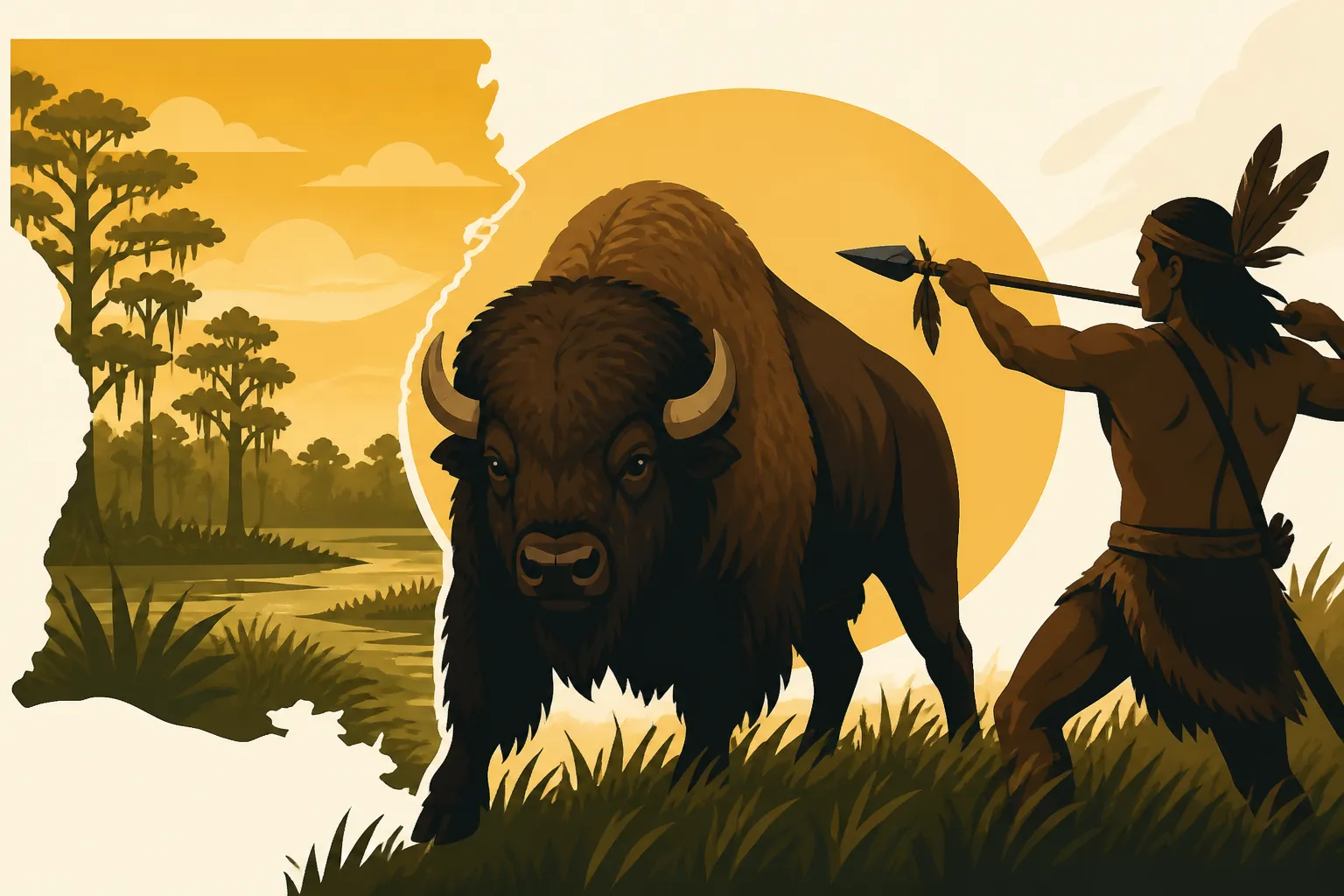
It's a surprising thought for many, but the vast, untamed lands that would one day become Louisiana were once home to majestic American bison. When we think of these powerful beasts, our minds often drift to the sweeping prairies of the Great Plains, but the truth is, their historical range stretched much further east, deeply into the woodlands and coastal plains of the Southeast. This guide will explore the forgotten history of bison in Louisiana, delving into their ancient presence, their ecological impact, and the factors that ultimately led to their disappearance long before permanent European settlement truly took hold.
The Ancient Footprint: Tracing Bison's Presence in Pre-Colonial Louisiana
Before the arrival of European explorers, and for millennia before, the landscape of what we now call Louisiana was a wild mosaic of dense forests, open savannas, river cane thickets, and expansive coastal prairies. This diverse habitat, often rich in forage and punctuated by vital waterways, was perfectly suited for grazing animals like the American bison. These weren't just fleeting visitors; archaeological evidence and early historical accounts confirm their established presence.
Archaeological Discoveries and Fossil Records
Imagine vast herds, not quite the numbers of the western plains, but significant enough to shape the landscape, moving through the bottomlands and pine uplands. While intact bison skeletons are less common than in other states due to Louisiana's acidic soils and humid environment, paleontologists and archaeologists have unearthed enough fragmented remains to solidify their historical residency. Teeth, bone fragments, and even a few more complete specimens have been found in various parts of the state, particularly in riverbeds and older geological formations. These discoveries often date back thousands of years, offering a direct window into a past where bison roamed freely alongside mammoths and other megafauna during the late Pleistocene, eventually adapting to the changing Holocene climate. The distribution of these finds suggests that while they likely favored the more open, prairie-like habitats, they were also comfortable in the transitional zones leading into the dense forests.
Early European Accounts and Indigenous Knowledge
When the first European explorers, like Hernando de Soto's expedition in the 16th century, ventured into the region, their journals occasionally mentioned "cattle" or "buffalo" in areas that would later become Louisiana. While these accounts are sometimes vague and can be confused with other large game, a consistent pattern emerges indicating the presence of these animals. More importantly, the oral traditions and cultural artifacts of various Indigenous nations, such as the Caddo, Tunica, and Houma peoples, offer even stronger evidence. Their narratives, passed down through generations, often speak of hunting bison, utilizing their hides and meat, and respecting their spiritual significance. These stories provide crucial context, showing that bison were not just an animal of the distant past but an integral part of the ecosystem and human survival for centuries before intense colonial pressure began. GoHunt, while focused on modern game, helps us understand how crucial ecological features like water sources and forage areas have always been for wildlife, even for species no longer present.
Shaping the Landscape: Bison's Ecological Impact
The presence of any large grazer significantly impacts its environment, and bison were no exception. Their sheer size, grazing patterns, and migratory movements played a critical role in shaping the very structure and composition of Louisiana's pre-settlement ecosystems. They were, in essence, ecosystem engineers.
Grazing and Forest Dynamics
In a state predominantly known for its forests and wetlands, it might seem counterintuitive to imagine bison, but their role in maintaining open spaces was vital. Bison are prodigious grazers, consuming vast quantities of grasses and forbs. This constant cropping prevented the encroachment of woody vegetation, helping to maintain natural prairies, savannas, and open woodlands that might otherwise have transitioned into denser forests. Picture expansive glades within pine forests or grassy openings along river systems – these areas were likely kept clear and fertile by generations of bison munching their way through. Their selective grazing also encouraged the growth of specific plant species that could tolerate or even thrive under grazing pressure, creating a richer, more diverse flora than might have existed without them. This dynamic interaction meant that the plants and trees evolved alongside the bison, creating a resilient and interconnected ecosystem. White-Tailed Deer Across Louisiana today also influence vegetation, but on a much smaller scale compared to historical bison herds.
Creating Habitat and Nutrient Cycling
Beyond simply eating plants, bison were masters of environmental modification. Their powerful hooves churned the soil, creating "buffalo wallows" – depressions where they would roll to shed fur and deter insects. These wallows, particularly after rains, collected water, forming temporary ponds that became micro-habitats for amphibians, insects, and a crucial water source for other animals. Their droppings fertilized the soil, recycling nutrients back into the ecosystem and boosting plant growth. Furthermore, their trails through dense vegetation acted as natural corridors, easing travel for other wildlife and even early human hunters. The movement of these large animals also dispersed seeds, contributing to plant propagation across wider areas. Essentially, a historical Louisiana landscape with bison would have been a more dynamic, open, and biologically rich place, benefiting a cascade of other species from insects to birds to Louisiana Small Game and Furbearers.
The Vanishing Herd: Decline and Extirpation
While often overshadowed by the dramatic slaughter on the Great Plains, the disappearance of bison from Louisiana was a gradual, complex process that began long before the industrial-scale hunting of the 19th century. Their extirpation was a combination of factors, largely driven by the increasing presence and activities of European settlers.
Early Colonial Pressures and Habitat Loss
As European settlements expanded from coastal areas and major river systems, the available habitat for bison began to shrink and fragment. Unlike the expansive, contiguous prairies of the West, Louisiana's bison range was already a patchwork of forests and smaller prairies. Settlers cleared land for agriculture, built towns, and introduced livestock, all of which directly competed with bison for resources and space. This initial wave of habitat alteration slowly pushed the herds into smaller, more isolated pockets. The very act of settlement disrupted ancient migratory routes, making it harder for bison to move between different foraging areas or escape hunting pressure. The subtle changes in the environment, compounded by increasing human presence, began to chip away at the resilience of the local bison populations. Public Hunting Land in Louisiana today faces intense management to provide habitat for various species, a stark contrast to the vast, untamed ranges of the past.
Intensified Hunting and Disease
While Indigenous peoples had hunted bison sustainably for millennia, the arrival of Europeans introduced new hunting technologies and, more significantly, a different economic model. Bison became a commodity for hides, meat, and even sport. Firearms allowed for more efficient, long-distance kills, and the commercial demand, though perhaps not as extreme as the later buffalo hide trade, still put immense pressure on localized populations. The vulnerability of bison herds, especially if they were already isolated, made them easy targets. Additionally, European livestock brought diseases that native wildlife had no immunity to. While direct evidence of disease devastating Louisiana's bison herds is scarce, it's a known factor in the decline of other native species during this period. A combination of increased, often unsustainable, hunting pressure and the compounding effects of habitat loss and potential disease pushed Louisiana's bison populations past their tipping point. By the early 1800s, confirmed sightings became extremely rare, and by the mid-19th century, they were entirely gone from the state. Understanding this history can help us appreciate the challenges faced by conservation efforts for species like Louisiana's Recovering Black Bear today.
A Legacy in Absence: What Remains of the Bison Story
Though the mighty bison no longer roam the bayous and piney woods of Louisiana, their historical presence leaves a subtle, yet significant, legacy. Understanding this part of our natural heritage enriches our appreciation for the state's ecological past and offers lessons for contemporary wildlife management.
Echoes in Place Names and Cultural Memory
Even without live animals, the memory of bison persists in a few corners of Louisiana. Place names, though rare, like "Buffalo River" or "Buffalo Bayou," serve as linguistic markers of where these animals once grazed. These names are more common in other southeastern states, but their occasional appearance here underscores the historical range. While Indigenous cultures held a profound, spiritual connection to bison, the colonial narrative largely erased their presence. However, for those who delve into the deeper history, the bison's story becomes a powerful reminder of Louisiana's wilder, more untamed past. It encourages us to look at our landscapes with a different eye, imagining them not just as they are now, but as they once were, teeming with different forms of life. Modern mapping tools like GoHunt allow us to explore terrain, and sometimes these maps reveal subtle clues that hint at historical features or animal movements, though clearly not for bison today.
Lessons for Conservation and Restoration
The extirpation of bison from Louisiana serves as a poignant historical case study in the consequences of unchecked human impact on wildlife and habitat. While there are no active plans to reintroduce bison to Louisiana's wild, the story highlights the importance of large, connected habitats and careful management for species survival. It underscores how quickly even robust populations can disappear when faced with multiple pressures. This history informs current conservation efforts for native species, such as deer and turkey, ensuring we learn from past mistakes. The focus on preserving critical habitats, managing harvest levels, and understanding ecological interdependencies for species like White-Tailed Deer Across Louisiana or Wild Turkeys in Louisiana draws lessons from the fate of Louisiana's bison. We can use this historical context to better manage our existing game and preserve the natural heritage we still have.
Conclusion: Remembering the Giants of the Past
The thought of bison roaming Louisiana's landscape might initially seem like a misplaced image from a documentary about the American West. Yet, the evidence is clear: for thousands of years, these magnificent animals were an integral part of the state's rich and complex ecosystems. Their grazing habits helped shape the savannas and open woodlands, influencing plant diversity and creating microhabitats. But as European settlement advanced, a combination of habitat loss, disease, and unsustainable hunting led to their quiet disappearance, long before the iconic herds of the plains faced their ultimate demise.
Today, while we won't see bison while out hunting Louisiana Deer Hunting Area by Area or Hunting Louisiana's Feral Hogs, their story is a vital chapter in Louisiana's natural history. It reminds us of the profound changes our landscape has undergone and the responsibility we bear to protect the wildlife that remains. By understanding the past, we gain a deeper appreciation for the present and a clearer vision for the future of conservation in the Pelican State.
Disclaimer
This article is for general informational purposes only and does not constitute professional advice. Laws, prices and regulations vary by location and change over time. Consult a qualified professional for guidance on your specific situation.